

How to clean a sofa at home without a vacuum in Singapore
In this article
- Check the care label and the fabric before you touch anything
- Dry methods that lift dust and crumbs without a vacuum
- Spot clean stains with a barely damp cloth
- Dry the sofa fast, because Singapore humidity will not do it for you
- Cost and time of each way to clean a sofa in Singapore
- When DIY is not enough and how often to repeat it
- Comparison at a glance
- Frequently asked questions
- Sources
- Related Athena cleaning services in Singapore
To clean a sofa at home without a vacuum in Singapore, check the care label, beat and brush the loose dust off, sprinkle baking soda to lift odour, then wipe the fabric with a barely damp microfibre cloth. Dry it fast with a fan, because our humid air is what turns a damp sofa into a mouldy one.
This guide walks through each step for HDB, BTO and condo living rooms, shows what each method costs in SGD, and says honestly when a DIY clean stops being enough.
Check the care label and the fabric before you touch anything
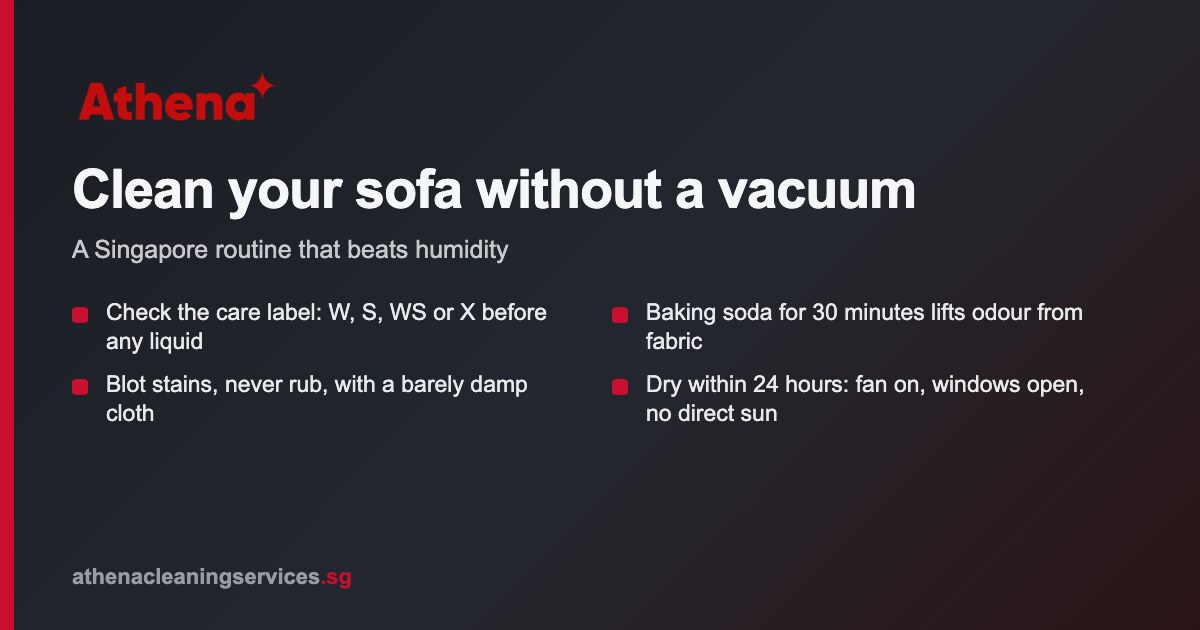
Every cleaning mistake we see on sofas starts with skipping the tag. Lift a seat cushion and look for a small label with a code. W means water-based cleaning is fine. S means solvent only, so water can leave rings. WS accepts either, and X means brush or vacuum only, with no liquid at all. If your sofa is X-coded, the dry methods below are your whole toolkit, and anything wetter should go to a professional.
Singapore sofas also come in materials the label does not always spell out. Cotton and polyester blends are the most forgiving. Velvet crushes and water-marks. Linen shrinks. Microfibre from the usual furniture chains tolerates a damp wipe but hates soaking. Leather and PU need a different approach entirely, and our guide to 5 expert tips for leather sofa cleaning in singapore covers that properly.
Do a hidden patch test
Dab a little of your cleaning mix on the underside of a cushion or the back skirt. Press a white cloth on it and wait ten minutes. If colour transfers to the cloth or the patch dries stiff, stop and use dry methods only.
What you need from the kitchen cupboard
- A soft-bristled brush (a clean clothes brush or a new paintbrush works)
- Two or three white microfibre cloths
- Baking soda, around S$2 to S$4 a box at most supermarkets
- Mild dish soap and a spray bottle
- A standing fan, or the ceiling fan on its highest setting
Dry methods that lift dust and crumbs without a vacuum
Dust, skin flakes and crumbs sit on the surface and between the cushions, and most of it comes off without a single drop of water. Start by taking the cushions off and carrying them to the balcony or the service yard. Hold each one and beat it firmly with a clean broom handle or your hand. You will see the dust leave, and this alone is worth doing monthly.
Next, brush the fabric in one direction with the soft brush, working from the top of the backrest down to the seat, then along the arms. Short strokes stop dust from just moving around. For the gaps along the seams, wrap a cloth around a butter knife or a ruler and run it through the crevice. A rolled strip of masking tape or a lint roller pulls out pet hair and fine fluff that brushing leaves behind.
Baking soda for odour
Sprinkle a thin, even layer of baking soda over the fabric and leave it for at least 30 minutes, longer if the sofa smells of cooking or damp. Then brush it off with the soft brush and wipe the surface with a dry cloth. Without a vacuum, you will need patience here, so work in sections and shake the cloth outdoors as you go. Keep the layer thin. A thick coat is harder to clear and can leave a pale film on dark fabric.
Dust mites are a common trigger for sneezing and eczema in Singapore homes. HealthHub's healthy living resources are a good place to read about managing household allergens, and regular dry cleaning of upholstery is one practical step.
Spot clean stains with a barely damp cloth
Once the dry pass is done, deal with marks. The rule is to blot, never rub. Rubbing pushes the stain deeper into the foam and frays the weave. Mix a few drops of mild dish soap into a cup of lukewarm water, dip a cloth in it, wring it until it is only just damp, and press it onto the stain from the outside edge inward. Swap to a clean patch of cloth often so you lift the stain instead of spreading it.
Rinse by blotting with a second cloth dampened in plain water, then press a dry cloth on top to pull moisture out. On W or WS fabrics, a 1:1 mix of white vinegar and water can help with sweat rings and light odour, but test it first and never use it on S-coded fabric. Skip bleach, which leaves permanent pale patches, and skip any strong spray not made for upholstery.
Common Singapore stains and what works
- Kopi and teh: blot at once, then soap mix, then plain water rinse.
- Curry and oil: sprinkle baking soda for 15 minutes to soak up the grease, brush off, then spot clean.
- Sunscreen and body oil on the headrest: the same grease routine, repeated twice if needed.
- Child or pet accidents: blot, treat with soap mix, and dry thoroughly, since lingering moisture holds smell.
If a stain is old, dark or covers a whole cushion, DIY rarely fully clears it. That is the point to compare it against professional options, covered below.
Dry the sofa fast, because Singapore humidity will not do it for you
Drying is where most home cleans go wrong here. Singapore's relative humidity usually sits between 70 and 90 per cent, and an air-conditioned room that is switched off while you are out can trap damp air against fabric all day. A sofa that stays wet for more than a day or two can start to smell musty, and mould can follow. The US EPA mould cleanup guidance advises drying wet materials within 24 to 48 hours to prevent mould growth, which is a sensible target for any sofa you have dampened.
After cleaning, point a standing fan straight at the damp areas from about a metre away and leave the windows open for cross ventilation. Prop the cushions on their sides so air reaches both faces. Switching on air conditioning in dry mode also pulls moisture out of the room. Expect a spot-cleaned patch to feel dry in two to four hours, and a fully wiped sofa in four to six hours with a fan running.
Do not dry in direct sun
Putting cushions on a west-facing balcony in the afternoon looks like a shortcut, but strong sun fades dyed fabric and can warp foam. Choose bright shade with a breeze instead. Our steam clean mattress save time money singapore article makes the same point about drying: airflow beats heat.
For general advice on keeping indoor air healthier while you clean, the US EPA indoor air quality guidance explains how ventilation and moisture control work together.
Cost and time of each way to clean a sofa in Singapore
The table below compares the realistic options for a standard 3-seater in a Singapore flat. Figures are typical ranges for 2026 and will shift with sofa size, fabric and how stained it is, so treat them as a planning guide and ask for a written quote before booking anyone.
Dry brushing and baking soda cost almost nothing and suit monthly upkeep. A damp spot clean handles everyday marks. A handheld steamer or a rented wet extractor goes deeper but raises the drying risk, because both leave more water in the foam than a cloth does. A professional job uses controlled extraction and fast-drying equipment, which is why it is the safest route for X-coded, velvet or heavily soiled sofas.
If you are weighing a pro visit, our page on sofa cleaning services singapore sets out what a team brings and what a typical visit involves. The Consumers Association of Singapore (CASE) is also worth checking for general advice on getting written quotes and understanding your rights before you pay a service provider.
When DIY is not enough and how often to repeat it
A home clean without a vacuum keeps a sofa presentable, but it has limits. Call a professional when you see any of these: a musty smell that returns within a day of cleaning, dark patches or spots that look like mould, stains older than a few weeks, an X-coded fabric that needs more than brushing, or a sofa that has taken in water from a spill or a leaking window. Mould in particular needs proper treatment, not a cloth and vinegar, so do not rub it dry.
For frequency, a sensible Singapore routine is to beat and brush the cushions weekly or fortnightly, apply baking soda and spot clean monthly, and book a deep clean every 6 to 12 months. Homes with children, pets, smokers or family members with allergies lean towards the 6-month end. In a humid, older block with poor airflow, do not stretch past 12 months.
Treat the rest of the living room too
A fresh sofa beside a dusty rug brings the smell straight back. Our guide on how often clean carpets singapore gives a schedule that pairs well with the sofa routine above, so you can clean both in one weekend and let the fan do the drying for both.
Finally, keep the sofa away from the wall by a few centimetres, leave a cushion gap for air, and wipe up spills the moment they happen. Those three habits stretch the time between deep cleans more than any product will.
Comparison at a glance
| Method | Typical cost (SGD) | Time needed | Drying time in SG humidity | Best for |
|---|---|---|---|---|
| Beat, brush and baking soda | S$2 to S$5 for a box of baking soda | 30 to 60 minutes | About 1 hour | Monthly upkeep, light odour, dust |
| Damp microfibre spot clean | S$0 to S$10 for soap and cloths | 1 to 2 hours | 2 to 4 hours with a fan | Fresh stains, kopi, oil, small marks |
| Handheld fabric steamer | S$40 to S$120 to buy | 1 to 2 hours | 3 to 6 hours with a fan | Sanitising W or WS fabric, light refresh |
| Rented wet extractor | S$60 to S$120 per day | 2 to 3 hours | 6 to 12 hours, higher mould risk | Whole-sofa clean if you are confident drying it |
| Professional sofa cleaning | S$100 to S$200 for a 3-seater | 1 to 1.5 hours on site | 4 to 8 hours | X-coded or velvet fabric, old stains, allergy homes |
Frequently asked questions
Can I clean a sofa at home without a vacuum in Singapore?
Yes. Beat the cushions outdoors, brush the fabric in one direction with a soft brush, sprinkle baking soda for 30 minutes, brush it off, and wipe with a barely damp microfibre cloth. Run a fan on the sofa afterwards so it dries within a few hours rather than a day.
How do I remove odour from a sofa without a vacuum?
Spread a thin layer of baking soda over dry fabric, leave it for 30 minutes to a few hours, and brush it off. Then air the sofa near an open window with a fan running. If the smell comes back within a day, there may be damp or mould inside the foam, and that needs a professional check.
How long does a sofa take to dry in a Singapore HDB flat?
A spot-cleaned patch usually dries in two to four hours with a fan, and a fully wiped sofa in four to six hours. Rooms with closed windows and no airflow can take much longer. Aim to have everything dry within 24 hours, since prolonged damp encourages mould.
Is it safe to use vinegar on my sofa?
A 1:1 mix of white vinegar and water is fine on many W or WS coded fabrics, but test it on a hidden patch first. Never use it on S-coded fabric, leather or velvet. If your label says X, skip liquids completely and stick to brushing.
How much does professional sofa cleaning cost in Singapore?
As a typical range for 2026, a 2- or 3-seater fabric sofa costs about S$100 to S$200 for a professional clean, with L-shaped sofas costing more. Price depends on fabric, size and stain level. Ask for a written quote and what is included before you book.
How often should I deep clean my sofa in Singapore?
Every 6 to 12 months is a sensible range for most homes. Choose the shorter gap if you have pets, young children, smokers or allergy sufferers, or if your flat has poor ventilation. Between deep cleans, brush and spot clean monthly.
Sources
- HealthHub's healthy living resources
- US EPA mould cleanup guidance
- US EPA indoor air quality guidance
- CASE
Related Athena cleaning services in Singapore
Looking for help? See our house cleaning service in Singapore.
Related articles


