

How to Get Rid of Dust Mites in Your Mattress: A Comprehensive 2026 Guide
In this article
- Key Takeaways
- Table of Contents
- The Science of Dust Mites: Why Your Mattress is the Perfect Host
- Immediate DIY Methods to Kill Dust Mites in Your Bedding
- Beyond the Surface: Deep-Extraction and Filtration Tactics
- Long-Term Prevention: Creating a Dust-Mite-Proof Environment
- When to Call the Specialists: Professional Mattress Deep Cleaning
- Reclaim Your Sanctuary: The Path to Allergen-Free Sleep
- Frequently Asked Questions
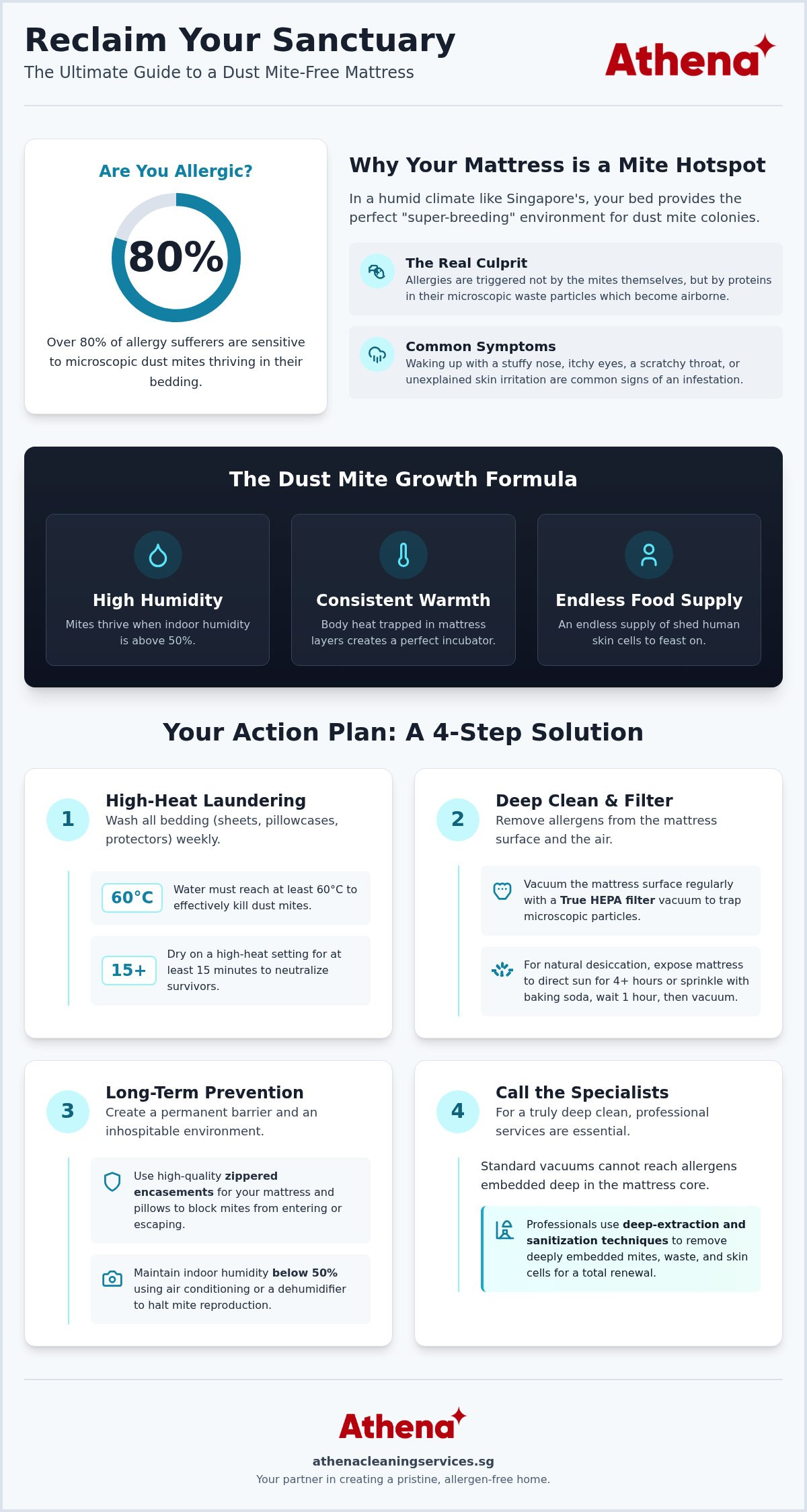
Did you know that more than 80% of allergy sufferers are sensitive to microscopic pests currently thriving in their bedding? In Singapore's persistent humidity, your bed can quickly become a sanctuary for invisible colonies, making it vital to understand how to get rid of dust mites in mattress materials effectively. You've likely felt the frustration of waking up with a stuffy nose or persistent skin irritation, feeling as though your home's hygiene is slipping away despite your best efforts. It's a common struggle for those who value a pristine living space but find that standard cleaning routines aren't enough to combat these resilient allergens.
This guide provides a definitive, science-backed plan to reclaim your health and elevate your sleep environment. You'll discover how to transform your bedroom into a true sanctuary of freshness and clarity through professional-grade strategies. We'll walk you through essential steps including high-temperature laundering at 60°C, the implementation of True HEPA filtration, and the specialized deep extraction techniques required to remove allergens that basic tools cannot reach. By the end of this article, you'll have a clear roadmap to a meticulously maintained sleep environment and the lasting peace of mind you deserve.
Key Takeaways
- Understand the biological triggers that make mattresses a haven for microscopic allergens in Singapore's humid climate.
- Master the 60°C wash rule and high-heat drying methods to learn how to get rid of dust mites in mattress linens and protectors.
- Implement True HEPA filtration and humidity controls to maintain a pristine, allergen-free atmosphere throughout your bedroom.
- Secure your bedding with high-quality zippered encasements that provide a sophisticated barrier against future infestations.
- Leverage professional sanitization services for deep-extraction cleaning that removes deeply embedded debris standard home vacuums cannot reach.
The Science of Dust Mites: Why Your Mattress is the Perfect Host
Your mattress is more than just a place to rest; it's a complex ecosystem that can either support your health or compromise your well-being. For many residents in Singapore, understanding The Science of Dust Mites is the first step in reclaiming a healthy sleep environment. These microscopic arachnids aren't just "dust" particles. They're active scavengers that thrive in textile fibers where they find an endless supply of their primary food source: dead human skin cells. Because we spend roughly one-third of our lives in bed, the mattress becomes the ultimate reservoir for these pests.
Dermatophagoides: Meeting the Microscopic Invader
Dust mites belong to the genus Dermatophagoides, and they're invisible to the naked eye. Dust mites are microscopic scavengers that thrive in textile fibers. While they don't bite like bed bugs, their presence is felt through the potent allergens they produce. A male mite typically lives for 10 to 19 days, while females can survive for up to 70 days, laying dozens of eggs to sustain the colony. The true culprit behind your morning congestion isn't the mite itself, but a specific protein found in their waste particles. These particles are light enough to become airborne when you toss and turn, triggering immediate respiratory or skin reactions.
Humidity and Temperature: The Dust Mite Growth Formula
Singapore's tropical climate provides a "super-breeding" environment that few other regions experience. With average outdoor humidity hovering between 70% and 80%, indoor spaces naturally exceed the 50% humidity threshold that mites require to survive and reproduce. When you factor in the body heat and perspiration trapped within mattress layers, you create a biological incubator. Even if you run your air conditioning, the localized humidity deep within the mattress fibers often remains high enough for colonies to flourish. This is why learning how to get rid of dust mites in mattress materials requires more than just cooling the room. It demands a targeted approach to the mattress's internal environment.
Identifying an infestation starts with your physical symptoms. If you wake up with itchy eyes, a scratchy throat, or unexplained skin irritation, your mattress likely hosts a significant population. These microscopic pests settle deep into the core of your bed, far beyond the reach of standard surface cleaning. Addressing this requires a combination of strategic DIY habits and professional-grade sanitization to ensure a total renewal of your sleeping space and the peace of mind you deserve.
Immediate DIY Methods to Kill Dust Mites in Your Bedding
Eradicating a colony starts with your weekly laundry routine. To truly understand DIY Dust Mite Removal, you must prioritize thermal shock over simple agitation. Cold water washing merely rinses away surface debris; it doesn't kill the resilient mites clinging to the fibers. Research confirms that water temperatures must reach at least 60°C to eliminate the mite population effectively. If you're researching how to get rid of dust mites in mattress protectors and linens, consistency is your greatest ally in maintaining a healthy home.
The Thermal Shock Strategy for Linens
Wash all bedding weekly at a minimum. This frequency is essential for active allergy sufferers who need to disrupt the mite life cycle constantly. After the wash, transfer your linens to a dryer on a high-heat setting for at least 15 minutes. This secondary sterilization step ensures that any survivors from the wash cycle are neutralized. For delicate fabrics like silk or wool that cannot withstand 60°C, place them in a sealed bag in the freezer for 24 hours. While the cold kills the mites, you'll still need a gentle rinse afterward to remove the allergenic waste they leave behind.
UV Exposure and Natural Desiccants
In Singapore's high-rise environments, "sunning" a mattress requires a bit of strategy. If you have a balcony with direct sunlight, exposing your mattress for four hours can help desiccate the core and reduce moisture. For those without outdoor access, baking soda is an excellent alternative. Sprinkle a generous layer over the mattress surface and let it sit for at least an hour before vacuuming. This powder acts as a natural desiccant, absorbing the perspiration and oils that serve as a food source for mites.
Many homeowners also turn to handheld UV-C light wands. While these devices use medical-grade technology, their effectiveness depends on exposure time. A quick sweep isn't enough; you must hold the light over each area for several seconds to disrupt the mites' DNA. You might also consider adding eucalyptus or tea tree oil to your cleaning routine. These essential oils act as natural deterrents when added to a wash cycle or used in a light misting spray. For deep-seated infestations that these surface-level methods cannot reach, a professional sanitization service offers the industrial-grade extraction required to truly elevate your living environment.
Beyond the Surface: Deep-Extraction and Filtration Tactics
While laundering linens provides immediate relief, addressing the core of your mattress requires a more sophisticated approach. Dust mites possess microscopic hooked legs that allow them to anchor firmly into textile fibers, resisting standard suction. If you're serious about how to get rid of dust mites in mattress layers, you must look beyond surface-level dust and focus on deep-extraction technology. This process involves using high-frequency vibration, often referred to as the "beater bar" effect, to loosen debris and fecal matter from the deepest layers of the mattress core before it's extracted. Many homeowners consider steam cleaning as a solution, but this requires extreme caution in Singapore. Excessive moisture can permeate the mattress, and if it's not dried with professional precision, it creates a damp environment that actually accelerates mite reproduction or leads to mold growth. A better path involves dry extraction or medical-grade sanitization that targets the Health Risks of Dust Mites without compromising the integrity of your mattress.
Why Your Standard Vacuum Might Be Spreading Allergens
Standard household vacuums often lack the filtration necessary to trap microscopic allergens. Without a True HEPA (High-Efficiency Particulate Air) filter, your machine might actually be re-emitting fine dust and mite waste back into your bedroom through the exhaust. This "re-emission" problem can turn a cleaning session into an allergy trigger. To maximize recovery, employ a slow-stroke technique. Move the vacuum head at a rate of roughly one inch per second. This deliberate pace allows the airflow to penetrate deeper into the fabric, ensuring a more comprehensive removal of the particles that trigger respiratory distress. It's a meticulous process that requires patience, but the results are essential for a truly allergen-free space.
Anti-Allergen Sprays and Chemical Barriers
For an added layer of protection, some residents utilize anti-allergen sprays containing tannic acid or other denaturing agents. These substances work by neutralizing the proteins in mite waste, making them less reactive to the human immune system. Acaricides are substances specifically designed to kill mites and ticks. While these can be effective, always prioritize safety by choosing formulas that are non-toxic for children and pets. These chemical barriers serve as a temporary measure. They are most effective when applied to a surface that has already undergone thorough deep-extraction to remove the bulk of the population. Using these tools with precision ensures your home remains a safe, fresh sanctuary for your entire family.
Long-Term Prevention: Creating a Dust-Mite-Proof Environment
Achieving a pristine sleep environment is an investment in your long-term health. Once you've successfully cleared your bedding of allergens, the focus shifts to maintaining that standard of excellence. Prevention in Singapore requires a disciplined approach to environmental management. It's not enough to simply clean; you must transform your bedroom into a space where these microscopic pests cannot survive. This proactive strategy ensures the peace of mind that comes from a meticulously maintained sanctuary. While you've learned how to get rid of dust mites in mattress fibers through extraction, encasement locks them out permanently.
Selecting the Right Mattress Encasement
Investing in a high-quality encasement is a non-negotiable step for a healthy home. Don't confuse a standard mattress protector with a full encasement. A protector typically only covers the top surface, leaving the sides and bottom vulnerable. A true encasement features a micro-zipper that surrounds the entire mattress, creating a total barrier. Pore size matters. To block microscopic waste particles effectively, you need a fabric weave smaller than 10 microns. This precision ensures that even the finest allergens remain trapped. Wash your linens weekly, but you only need to launder the encasement every few months to preserve the integrity of its specialized fibers.
Climate Control and Indoor Air Quality
Humidity is the primary driver of mite reproduction in our tropical climate. To inhibit their growth, use a dedicated dehumidifier to keep indoor air below the 50% survival threshold. While air conditioning provides some relief, it often fails to reach the deep moisture trapped within mattress layers. Set your dehumidifier to a precise target and maintain it daily. Regularly service your air conditioning filters to prevent them from becoming reservoirs for dust accumulation. Standalone HEPA purifiers also play a vital role by capturing airborne waste before it can settle back into your textile surfaces. This multi-layered approach is the most effective way to ensure a fresh, allergen-free atmosphere.
Decluttering your bedroom is another essential step for anyone mastering how to get rid of dust mites in mattress environments for the long haul. Remove "dust collectors" like heavy drapes, upholstered headboards, and excess plush toys that provide additional breeding grounds. Replace thick carpets with hard flooring where possible to simplify your maintenance routine. For a complete elevation of your living space that goes beyond DIY capabilities, consider a professional sanitization service to reset your home's hygiene standards. By combining these preventive measures with expert deep cleaning, you create a sustainable, healthy lifestyle for your family.
When to Call the Specialists: Professional Mattress Deep Cleaning
While previous sections detailed how to get rid of dust mites in mattress surfaces using DIY methods, there comes a point where home equipment meets its physical limit. Most residential vacuums lack the motor power and static pressure needed to reach the core of a modern six-inch mattress. This is where professional intervention becomes a necessity rather than a luxury. By aligning your home maintenance with the standards of a top professional cleaning company singapore, you ensure that invisible allergens are physically removed from the deepest layers of your bed. This level of care provides a total renewal that DIY efforts simply cannot replicate.
Extraction vs. Sanitization: The Professional Difference
Athena Team Cleaning utilizes industrial-grade deep extraction equipment that far surpasses the capabilities of handheld consumer units. This specialized process doesn't just move air; it uses high-frequency vibration to dislodge mites and their waste from deep within the fibers. We pair this mechanical removal with medical-grade sanitization services that neutralize pathogens without leaving toxic residues behind. This sophisticated approach doesn't just protect your respiratory health. It also preserves the structural integrity of your mattress, effectively extending the lifespan of your expensive investment through meticulous maintenance.
What to Expect During a Professional Mattress Service
Our process is methodical, transparent, and designed for your peace of mind. It begins with a thorough inspection of the fabric and core condition to identify specific problem areas. This is followed by the deep-extraction phase, where industrial-strength suction removes years of accumulated debris and skin cells. Finally, we apply a safe, high-efficacy disinfectant to ensure total sanitization. In Singapore's humid climate, moisture control is paramount to prevent mold. We use specialized drying techniques to ensure no dampness remains, leaving your mattress fresh and ready for use.
For most households, a bi-annual deep clean is the gold standard for maintaining an allergen-free environment. This frequency ensures that even the most resilient colonies are disrupted before they can trigger severe health issues or morning congestion. It's about more than just simple maintenance; it's about reclaiming your right to a restorative, healthy night's sleep. Experience a truly hygienic sleep with Athena Team Cleaning and remove the burden of invisible pests from your home today.
Reclaim Your Sanctuary: The Path to Allergen-Free Sleep
Mastering a healthy home environment requires a blend of consistent daily habits and specialized deep-cleaning interventions. You now understand that while the 60°C wash rule and humidity control are vital first steps, they're only part of a larger strategy. True relief from persistent morning allergies comes when you address the microscopic allergens buried deep within your bedding. By combining high-quality encasements with the right extraction techniques, you've learned exactly how to get rid of dust mites in mattress fibers for the long term.
When DIY methods reach their limits, our dedicated specialists are here to provide the heavy lifting your home deserves. We utilize specialized high-suction extraction technology and comprehensive sanitization to ensure a complete elevation of your living space. Our experienced technicians are trained specifically in thorough allergen removal, giving you the clarity and freshness that only professional-grade care can deliver. Schedule your professional mattress deep cleaning with Athena Team Cleaning today and invest in the restorative, worry-free sleep you've been searching for. It's time to wake up feeling truly refreshed in a home that supports your well-being.
Frequently Asked Questions
Can I kill dust mites by just vacuuming my mattress?
Vacuuming your mattress with a standard household machine only removes surface-level dust and debris. It doesn't effectively kill the mites themselves, as they possess microscopic hooked legs that anchor them deep within the fabric. To understand how to get rid of dust mites in mattress layers, you need a combination of high-heat laundering and industrial-grade extraction that reaches the core of the bedding.
Is it possible to completely get rid of dust mites forever?
It's impossible to eliminate dust mites entirely from a home environment forever. These microscopic pests are a natural occurrence in human living spaces. However, you can manage their population so effectively that they no longer trigger allergic reactions. By maintaining indoor humidity below 50% and using high-quality zippered encasements, you create an inhospitable environment that prevents colonies from flourishing in your sleeping area.
Do UV light vacuums actually work on mattresses?
UV-C light vacuums can neutralize dust mites by disrupting their DNA, but their efficacy depends on prolonged exposure. A quick pass with a handheld wand often fails to provide the necessary contact time to kill resilient mites. For a truly hygienic result, these tools should be used as a supplement to professional-grade extraction. Specialized equipment ensures that allergens are physically removed from the mattress core rather than just neutralized on the surface.
How often should I professionally clean my mattress in a humid climate?
In Singapore's persistent 70-80% humidity, a bi-annual professional cleaning is the recommended standard for maintaining a healthy home. This six-month interval prevents mite populations from reaching critical levels that trigger morning congestion or skin irritation. If you're researching how to get rid of dust mites in mattress layers during the humid months, specialized sanitization services ensure your sleep environment remains pristine and free from deep-seated allergens.
Can dust mites live in memory foam or latex mattresses?
Dust mites can indeed inhabit memory foam and latex mattresses, though these materials are often denser than traditional spring beds. While latex is naturally more resistant to pests, mites still thrive on the surface and within the cover where skin cells and moisture accumulate. Regardless of your mattress type, implementing a strict hygiene routine and using a total encasement is the most effective way to protect your health.
What is the best temperature to wash bedding to kill mites?
The gold standard for eliminating dust mites in your linens is 60°C. Cold or warm water cycles often fail to kill the mite population, merely rinsing away surface dust without neutralizing the source of the allergen. After washing, use a high-heat dryer setting for at least 15 minutes to provide a secondary layer of sterilization. This thermal shock is essential for breaking the reproductive cycle of these resilient pests.
Are there natural ways to get rid of dust mites without chemicals?
You can manage mite populations naturally by focusing on environmental control. Lowering indoor humidity below 50% through dehumidification is one of the most powerful chemical-free tools available. Additionally, exposing your mattress to direct sunlight for four hours helps desiccate the core and reduce moisture. Using essential oils like eucalyptus or tea tree in your laundry routine also acts as a natural deterrent while keeping your bedding smelling fresh.
Should I throw away my mattress if I have a dust mite allergy?
You don't need to discard your mattress unless it has structural damage or severe mold growth. Most mattresses can be fully restored through professional-grade deep extraction and sanitization. Once the deep-seated allergens are removed, applying a high-quality, zippered encasement will prevent new mites from entering the core. This approach is a much more sustainable and cost-effective solution than replacing an expensive mattress prematurely.
Frequently Asked Questions
Can I kill dust mites by just vacuuming my mattress?
Is it possible to completely get rid of dust mites forever?
Do UV light vacuums actually work on mattresses?
How often should I professionally clean my mattress in a humid climate?
Can dust mites live in memory foam or latex mattresses?
What is the best temperature to wash bedding to kill mites?
Are there natural ways to get rid of dust mites without chemicals?
Should I throw away my mattress if I have a dust mite allergy?
Related articles