
How to Remove Coffee Stains from Your Sofa: A Professional Step-by-Step Guide
In this article
- Key Takeaways
- Table of Contents
- The Anatomy of a Coffee Spill: Why Immediate Action Matters
- Identifying Your Upholstery: The Secret Cleaning Codes
- How to Remove Coffee Stains from Sofa: Step-by-Step DIY
- Dealing with Stubborn or Dried Coffee Stains
- When to Call a Professional Cleaning Company
- Elevate Your Environment with Expert Upholstery Care
- Frequently Asked Questions
Last Saturday morning, Sarah discovered how quickly a quiet moment with a latte can turn into a crisis when a sudden slip sent a dark splash across her pristine sofa. In that split second, the peace of a weekend dissolves into a frantic search for a cloth and the sinking fear of permanent damage. You likely share this worry, knowing that a failed attempt at how to remove coffee stain from sofa could leave a lasting watermark or ruin the delicate fabric texture forever. It is a stressful experience because your furniture is a significant investment and the centerpiece of your home.
Precision matters. This guide provides you with the professional clarity needed to lift stubborn tannins and return your living space to its original, fresh state. We will explore the critical importance of furniture cleaning codes, the science of pH-balanced agents, and the precise blotting techniques used by specialists to avoid fiber pilling. By following these expert-approved steps, you can confidently eliminate unsightly residues and ensure your home remains a meticulously maintained sanctuary of comfort.
Key Takeaways
- Act within the "Golden Hour" to prevent acidic coffee tannins from bonding with fabric fibers and becoming a permanent dye.
- Always verify your sofa’s care code before applying any liquid to ensure you're using the correct water-based or solvent-only treatment.
- Master the professional technique of how to remove coffee stain from sofa using a gentle, pH-neutral solution that lifts residue without causing pilling.
- Use specialized enzyme cleaners for coffee drinks containing milk or cream to break down proteins and fats that standard detergents might miss.
- Understand the limits of DIY methods and when to seek professional extraction to protect your furniture's internal foam from mold and moisture damage.
The Anatomy of a Coffee Spill: Why Immediate Action Matters
Coffee is more than just a morning ritual; it is a potent natural dye. The dark pigments found in your favorite brew, known as tannins, are the same organic compounds used historically to dye leather and textiles. When a spill occurs, these tannins immediately begin to bond with the organic or synthetic fibers of your furniture. Understanding how to remove coffee stain from sofa starts with recognizing that you are racing against a chemical bonding process that seeks to permanently alter your fabric's color.
Professional cleaners often refer to the first 60 minutes after a spill as the "Golden Hour." During this critical window, the liquid remains primarily on the surface or within the upper layers of the fabric. Once this time passes, the coffee begins to migrate through the upholstery deck and into the polyurethane foam core. This deep penetration makes total extraction significantly more difficult and increases the risk of "wick-back," where the stain reappears days later as the internal moisture evaporates. Act with urgency to ensure the spill stays on the surface where it can be managed.
The Science of Tannin Stains
Tannins are acidic polyphenols that carry a pH level typically between 4.8 and 5.2. This acidity allows them to act as a mordant, essentially fixing the color into the fabric. When coffee is served hot, the thermal energy causes the individual fabric fibers to expand and open their pores, creating a direct path for the pigment to enter the fiber's heart. Capillary action refers to the process where liquid is drawn into the narrow spaces of fabric fibers through surface tension, pulling the stain deeper into the upholstery weave. As the fabric cools and dries, these pores close, locking the tannin dye inside the fiber structure.
The Blotting Technique: Professional First Response
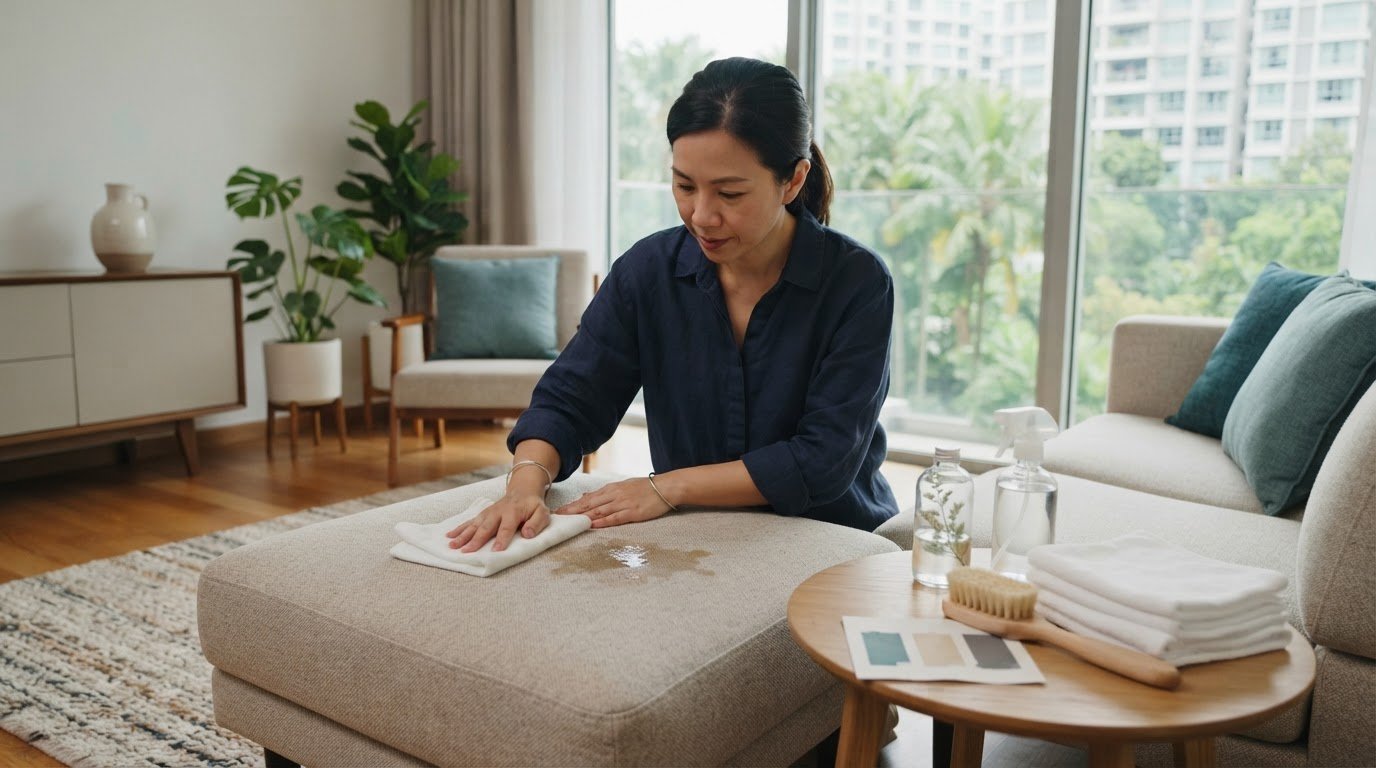
Your initial response determines whether the stain remains a temporary nuisance or becomes a permanent blemish. Follow this disciplined approach to manage the spill with precision:
- Work from the outside in: Always start at the perimeter of the spill and move toward the center to prevent the liquid from spreading to unaffected areas.
- Apply firm, vertical pressure: Use a clean, white microfiber cloth to lift the liquid without pushing it deeper into the padding.
- Avoid all friction: Never rub or scrub the fabric; friction creates heat and physical abrasion that leads to irreversible pilling and fiber distortion.
High-quality microfiber is the preferred choice for this task because its split fibers provide a much larger surface area for absorption than standard paper towels. If paper towels are your only option, ensure they are plain white to avoid dye transfer. By maintaining this level of meticulous care during the first few minutes, you preserve the integrity of your upholstery and simplify the process of how to remove coffee stain from sofa.
Identifying Your Upholstery: The Secret Cleaning Codes
Before you attempt any cleaning method, you must identify the chemical tolerance of your furniture. Every sofa carries a specific "DNA" recorded on its care label, which dictates exactly which cleaning agents are safe for the fibers. You will typically find this tag tucked beneath the seat cushions, attached to the deck fabric, or located along the bottom dust cover. Ignoring these instructions is the most common reason a simple spill turns into a permanent disaster, as learning how to remove coffee stain from sofa safely requires a thorough understanding of these industry standards.
Decoding the Upholstery Care Label
The Joint Industry Committee uses four primary codes to guide your maintenance efforts. Use this breakdown to determine your next move:
- W (Water-based): This is the most DIY-friendly code. It indicates that you can safely use water-based cleaning agents, such as mild liquid dish soap or specialized upholstery shampoos.
- S (Solvent-based): Water is the enemy here. These fabrics must only be treated with water-free dry-cleaning solvents. Applying water to an "S" coded fabric often results in permanent rings, shrinkage, or dye bleeding.
- S/W: This code offers the most flexibility, allowing for either water-based or solvent-based treatments. It's the safest middle ground for home rescue attempts.
- X: This is the most restrictive category. These fabrics should only be cleaned via vacuuming or light brushing. Any liquid application, even plain water, can cause irreparable damage.
Fiber-Specific Risks and Considerations
Even with the correct code, different materials react uniquely to moisture. Natural fibers like linen and cotton are highly porous and prone to "cellulosic browning" if they remain damp for too long. They require minimal moisture and rapid drying to maintain their integrity. Conversely, synthetic fibers like polyester or olefin are remarkably resilient and easier to rescue, though they can still suffer from oil-based shadows if your coffee contained milk or cream.
Delicate fabrics such as silk or velvet present the highest risk. These materials often suffer from pile distortion, where the texture of the fabric becomes crushed or flattened after getting wet. If you are dealing with high-end materials or feel uncertain about your fabric's reaction, choosing professional upholstery cleaning ensures a risk-free restoration that preserves the sophisticated appearance of your room.
Always perform a "spot test" before proceeding with a full treatment. Apply a small amount of your chosen cleaner to an inconspicuous area, such as the back of the sofa or the inside of a skirt. Wait ten minutes and blot with a white cloth to check for color transfer or texture changes. This meticulous step is the ultimate safeguard for your investment.
How to Remove Coffee Stains from Sofa: Step-by-Step DIY
Once you've confirmed your sofa carries a "W" or "S/W" code, you can move forward with a targeted home treatment. Success in how to remove coffee stain from sofa relies on chemical precision and moisture control. Your goal is to lift the pigment from the fibers without saturating the internal padding, which can lead to mold growth or "wick-back" stains. Prepare your workspace by gathering a clean sponge, several white microfiber cloths, and your pH-neutral cleaning kit ingredients.
The Professional DIY Solution Recipe
A reliable home remedy uses common household items to create a powerful yet gentle surfactant. Mix one tablespoon of liquid dish soap with one tablespoon of white distilled vinegar in two cups of cool water. This combination is effective because the vinegar's mild acidity helps break the hydrogen bonds of the coffee tannins, while the soap lifts the particles away from the fabric weave.
Always use cool water for this mixture. High temperatures can cook the proteins in milk-based coffees or permanently set the tannins into the fabric, making the blemish impossible to remove later. pH-neutral soaps maintain the structural integrity of delicate upholstery fibers, whereas alkaline detergents can cause chemical burns or permanent color shifting. This balance ensures you're cleaning the material rather than degrading it.
The Application and Extraction Process
Dampen a clean sponge in your solution and squeeze it thoroughly until it's just moist. Dab the stain gently, starting from the outer edges and working toward the center to prevent the liquid from spreading. You'll see the coffee pigment begin to transfer onto the sponge. Rinse the sponge frequently in plain water to avoid reapplying the lifted coffee back onto the sofa.
After the stain disappears, you must perform a "rinse blot." Use a fresh cloth dampened with only cool water to dab the area again. This step is vital because soap residue remains "active" even after it dries, acting as a magnet for household dust and body oils that will eventually create a new, dark spot. Finally, use the upholstery attachment of your vacuum to assist in the extraction phase. Run the nozzle firmly over the damp area to pull moisture out of the fibers and encourage airflow. This mechanical extraction is a simplified version of what professionals use to ensure the fabric dries quickly and evenly, completing the process of how to remove coffee stain from sofa with a polished finish.

Dealing with Stubborn or Dried Coffee Stains
Dried stains present a significantly higher level of difficulty because the tannins have oxidized and formed a semi-permanent bond with the upholstery fibers. Mastering how to remove coffee stain from sofa becomes more complex once the liquid has dried, as you must reverse the dehydration process without causing water rings or over-saturating the internal padding. The goal is to soften the residue just enough to lift it, while maintaining the structural integrity of the fabric weave.
Rehydrating Set-In Stains
To safely tackle a set-in blemish, you must gently reintroduce moisture. Place a clean, damp white microfiber cloth over the area and allow it to "dwell" for five to ten minutes. This controlled rehydration softens the dried coffee particles, making them easier to lift during the subsequent blotting phase. You may need to use a soft-bristled brush to very lightly agitate the surface, but stop immediately if you notice any fiber fraying or pilling. If the stain remains visible after two controlled attempts, cease DIY efforts to avoid permanent fiber damage.
The Milk and Sugar Factor
Coffee drinks containing milk, cream, or sugar require a more sophisticated chemical approach than black coffee. Sugar acts as a natural adhesive, creating a sticky residue that attracts household dust and skin cells long after the spill appears gone. Even more concerning are the milk proteins and lipids, which can spoil and produce sour odors if they aren't fully extracted from the deep layers of the sofa. For these dairy-heavy spills, utilize a specialized enzyme-based cleaner designed to break down organic proteins and fats.
In high-humidity environments like Singapore, managing the drying process is just as important as the cleaning itself. Excess moisture trapped in the foam core can lead to mold growth within 24 to 48 hours. After you have blotted the area dry, apply a thin layer of baking soda to the surface. This powder acts as a desiccant, drawing out deep-seated moisture and neutralizing lingering odors. If you find yourself struggling with a large or particularly old spill, book an upholstery cleaning service to ensure total extraction and a healthy, disinfected environment.
When to Call a Professional Cleaning Company
While the DIY methods discussed in this guide are essential for immediate crisis management, they often reach a physical limit. Home techniques are designed for surface-level treatment, yet a significant spill frequently migrates deep into the upholstery deck. When you are mastering how to remove coffee stain from sofa, it's vital to recognize that the visible blemish is often just the tip of the iceberg. Liquid that remains trapped in the polyurethane foam core can lead to internal degradation and persistent odors that a cloth simply cannot reach.
Professional intervention serves as a comprehensive reset for your furniture. It moves beyond simple spot removal to address the structural health of the piece. In high-humidity climates, the risk of mold growth within the internal padding is a genuine concern if moisture is not extracted with industrial-grade force. Choosing a specialist ensures that your sofa is not just visually clean, but deep-sanitized and structurally preserved.
The Professional Extraction Advantage
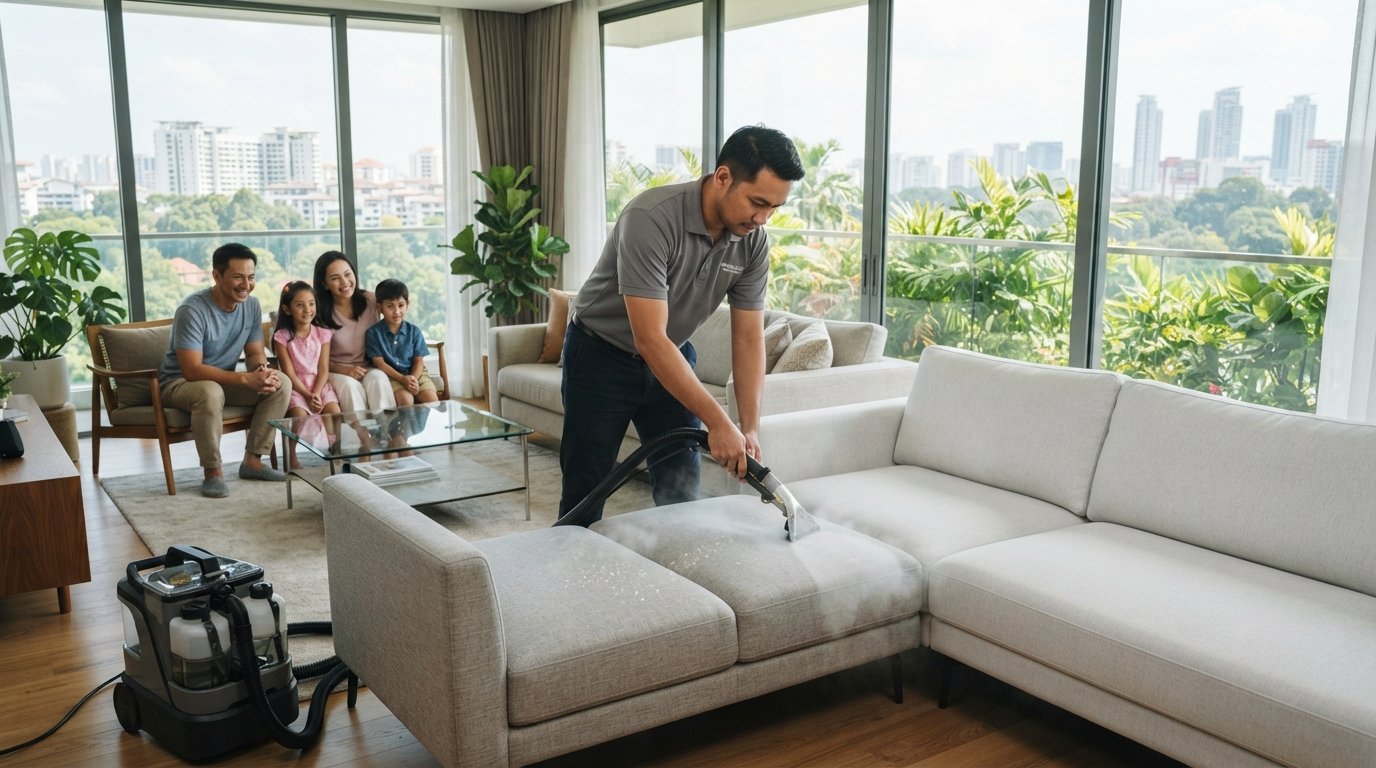
Industrial hot water extraction is fundamentally different from manual dabbing. While home efforts focus on dilution and absorption, specialized machinery uses controlled high-pressure steam to break the molecular bonds between tannins and fabric fibers. The most critical difference lies in the vacuum power. Professional motors provide the lift necessary to pull moisture and dissolved solids from the very heart of the cushion, preventing the "wick-back" effect where stains reappear during the drying phase.
This process also addresses health factors that DIY cleaning ignores. High-temperature extraction eliminates deep-seated allergens, dust mites, and microscopic debris that accumulate in the weave over years of use. It transforms your sofa from a potential allergen trap back into a clean, safe sanctuary for your family. For more information on identifying high standards in the industry, you can review this professional cleaning company singapore resource to understand what quality reliability looks like in practice.
Protecting Your Investment
Your furniture is a significant investment in your home's comfort and aesthetic. Maintaining its pristine appearance requires transitioning from reactive cleaning to proactive care. Professional fabric protection treatments can be applied after a deep clean to create an invisible, hydrophobic barrier. This barrier gives you more time to blot future spills before they can penetrate the fibers, making your daily maintenance much simpler.
Meticulous care is the hallmark of a well-maintained home. By scheduling recurring deep cleans, you ensure a healthier living environment and extend the lifespan of your upholstery materials. Experience the peace of mind that comes from a space restored to its original excellence. For a meticulous and premium result, trust the experts at Athena Team Cleaning upholstery services to elevate your environment and protect your furniture for years to come.
Elevate Your Environment with Expert Upholstery Care
Mastering how to remove coffee stain from sofa requires balancing immediate action with long-term fabric preservation. By acting within the "Golden Hour" and strictly adhering to your furniture's care codes, you've taken the first vital steps toward protecting your investment. You now understand that while pH-neutral solutions address surface blemishes, true restoration often lies beneath the weave in the delicate foam padding where moisture can linger.
When DIY attempts reach their limit, turning to an industry leader ensures a complete renewal of your living environment. As meticulous fabric restoration specialists, we provide expert stain removal for residential and commercial spaces at affordable rates for premium residential cleaning. Our specialized equipment removes deep-seated allergens and tannins that hand-blotting simply cannot reach, ensuring your home remains a healthy sanctuary.
Don't let a temporary spill lead to permanent damage or hidden mold growth. Book a Professional Upholstery Deep Cleaning with Athena Team Cleaning Today to experience the peace of mind that comes with professional excellence. Your home is ready for its meticulous reset.
Frequently Asked Questions
Can I use salt to remove a coffee stain from my sofa?
You shouldn't use salt for this task because its abrasive nature can damage delicate upholstery fibers. While salt is sometimes recommended for red wine spills, it is ineffective against the acidic tannins in coffee and may actually help set the pigment. To successfully learn how to remove coffee stain from sofa, stick to the professional blotting techniques and pH-neutral solutions discussed earlier to ensure a safe restoration of your furniture.
How do I remove coffee stains from a white fabric sofa?
Removing coffee stains from white fabric requires extreme precision to prevent yellowish rings or permanent shadows. If your sofa is water-safe, a mixture of one part dish soap and two parts hydrogen peroxide can act as a gentle bleaching agent. Always perform a spot test in an inconspicuous area first. For white sofas, professional extraction is often the safest choice to ensure every trace of residue is removed from the internal padding.
Is baking soda safe for all sofa fabrics?
Baking soda is safe for most water-tolerant fabrics; however, it should be avoided on delicate materials like silk, wool, or velvet. On "W" or "SW" coded sofas, it serves as an excellent desiccant to draw out moisture and neutralize acidic odors. Ensure you vacuum the powder thoroughly after it has done its work. Leaving particles behind can attract household dust and lead to a gritty texture that degrades the fabric weave over time.
What happens if I leave a coffee stain on the sofa for too long?
Leaving a coffee stain on the sofa for too long allows the tannins to oxidize and create a permanent chemical bond with the fibers. This process essentially turns the spill into a dye that is incredibly difficult to lift with home remedies. If the coffee contained milk or sugar, the organic matter can begin to spoil. This leads to sour odors and the potential for bacterial growth deep within the foam core.
How long does a sofa take to dry after cleaning in Singapore?
In Singapore's high-humidity environment, a sofa typically takes between 6 to 12 hours to dry completely after a professional cleaning. Proper ventilation is critical to this process. We recommend keeping your windows open and using ceiling fans or air conditioning to encourage consistent airflow. This prevents moisture from lingering in the internal padding, which is the primary cause of mold development and unpleasant, musty smells in tropical climates.
Can I use a hair dryer to speed up the drying process?
You should avoid using a hair dryer because concentrated heat can permanently set any remaining coffee tannins into the fabric fibers. High temperatures also risk melting synthetic materials like polyester or damaging the glue bonds within the upholstery structure. For a safer result, use a cool-air fan or a dehumidifier to accelerate evaporation. This method protects the integrity of your furniture while ensuring the moisture is removed evenly from the surface.
Does professional upholstery cleaning remove old coffee stains?
Professional upholstery cleaning is highly effective at removing old, set-in coffee stains that DIY methods can't touch. Industrial extraction machines use high-pressure steam and specialized chemical pre-treatments to break down oxidized tannins and draw them out from deep within the cushions. While total removal depends on the fabric type, our meticulous restoration techniques for how to remove coffee stain from sofa significantly improve the appearance and hygiene of even stubborn blemishes.
Will vinegar leave a permanent smell on my sofa?
Vinegar won't leave a permanent smell on your sofa; the sharp scent typically dissipates completely once the fabric is dry. Because white distilled vinegar is a volatile liquid, it evaporates quickly into the air along with the moisture. If you're sensitive to the initial aroma, ensure the room is well-ventilated during the cleaning process. The long-term benefit of using vinegar is its ability to neutralize organic odors rather than just masking them.
Frequently Asked Questions
Can I use salt to remove a coffee stain from my sofa?
How do I remove coffee stains from a white fabric sofa?
Is baking soda safe for all sofa fabrics?
What happens if I leave a coffee stain on the sofa for too long?
How long does a sofa take to dry after cleaning in Singapore?
Can I use a hair dryer to speed up the drying process?
Does professional upholstery cleaning remove old coffee stains?
Will vinegar leave a permanent smell on my sofa?
Related articles