

How to Remove Rust Stains from Marble in Singapore: A Complete 2026 Guide
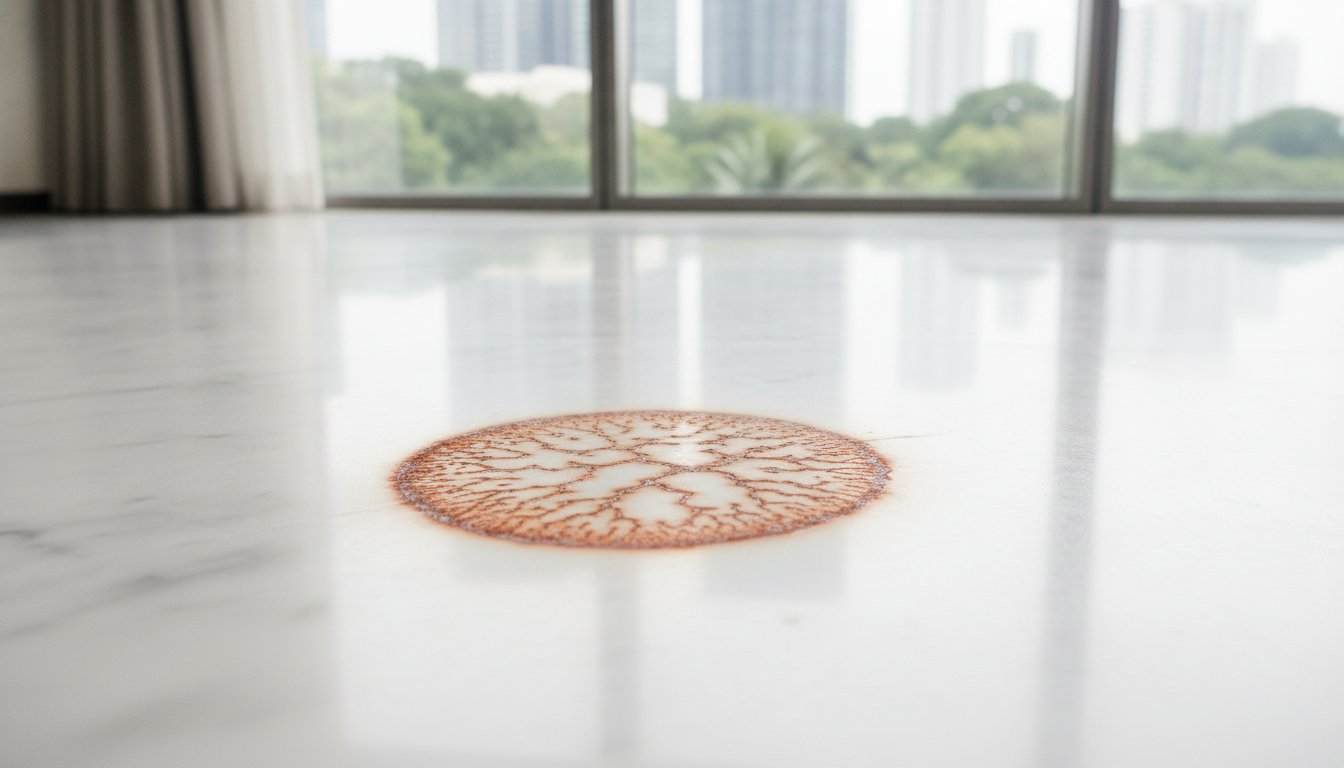
Did you know that Singapore's relentless 84% humidity acts as a silent catalyst, turning a forgotten metal canister into a permanent orange blemish on your pristine flooring? It's a heart-stopping moment when you realize your luxury stone has absorbed a metallic shadow. If you're currently staring at an unsightly mark and wondering how to remove rust stains from marble Singapore weather has caused, you aren't alone. Many homeowners mistakenly reach for acidic pantry staples like vinegar or lemon juice, only to find they've traded a stain for a permanent, dull etch mark that no amount of scrubbing can fix.
We understand the deep pride you take in a meticulously maintained home and the anxiety that comes with potential property damage. This comprehensive 2026 guide provides the expert-approved, safe methods you need to restore your surfaces to their original, polished glory. You'll discover the precise chemistry required to lift deep-seated oxidation without compromising the stone's integrity. We'll walk you through effective DIY poultice techniques, explain how to distinguish natural iron veins from external rust, and provide clear criteria for when a professional marble polishing service is the only way to achieve a total environment renewal.
Key Takeaways
- Learn how Singapore’s high humidity accelerates oxidation between metal objects and your stone surfaces.
- Avoid common DIY mistakes by understanding why acidic cleaners like vinegar cause permanent etching on marble.
- Discover the expert-approved chemistry behind a wicking poultice, the most effective method for how to remove rust stains from marble Singapore residents can apply at home.
- Identify the critical signs that a stain has penetrated too deep for manual cleaning, necessitating professional restoration.
- Master the essential maintenance steps and sealing schedules required to protect your investment from future rust migration.
Understanding Why Marble Rusts in Singapore Homes
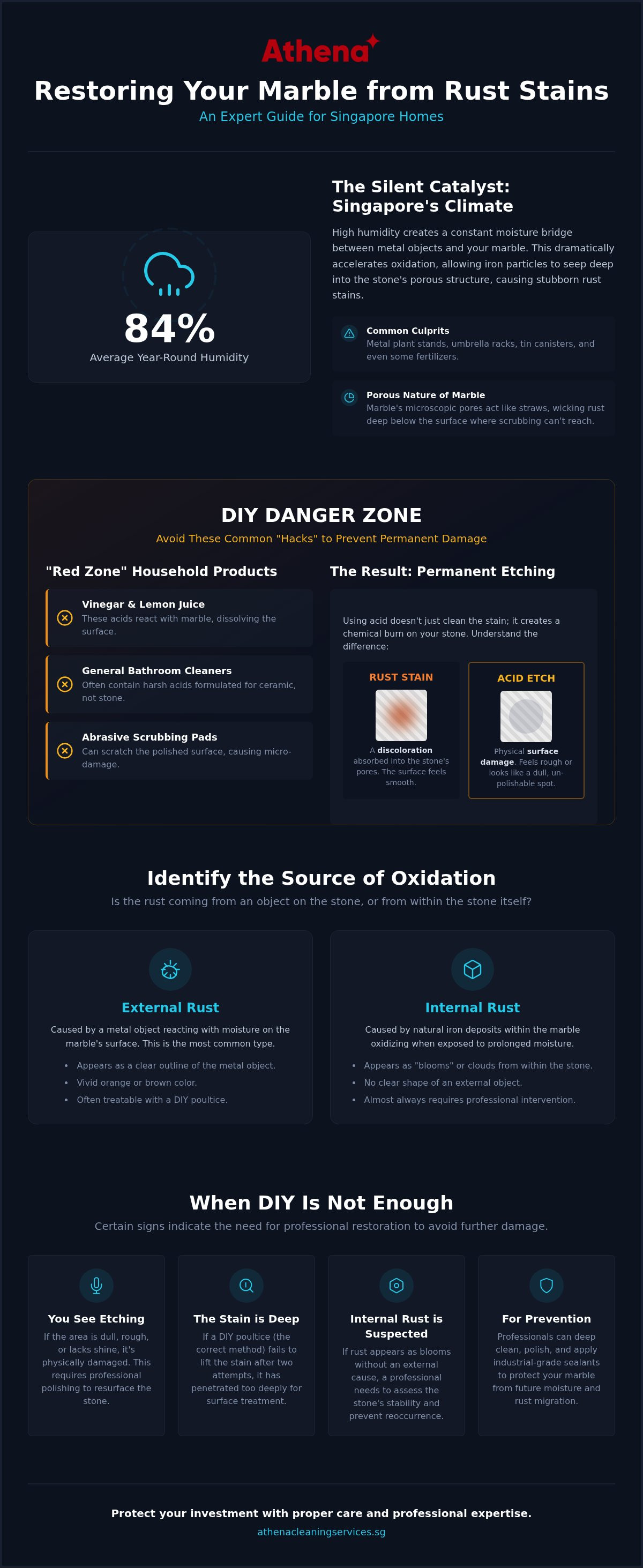
Rust stains on marble aren't just surface smudges that you can wipe away with a damp cloth. They are the result of iron oxide deposits that have physically migrated into the stone's porous structure. In our local context, the environment plays a decisive role. Singapore's relentless humidity, which averages 84% year-round, acts as a high-speed catalyst for oxidation. This moisture creates a bridge between metal objects and your floor, allowing iron particles to break down and seep into the stone with surprising speed. If you're looking for how to remove rust stains from marble singapore weather has impacted, you're likely dealing with a chemical bond rather than a simple spill.
Several common household items are the primary culprits behind these blemishes. Metal plant stands, umbrella racks, and even the iron-rich fertilizers used for indoor greenery can leave behind stubborn marks. When moisture gets trapped beneath these objects, the oxidation process begins almost immediately. It's also vital to distinguish between a stain and "pitting." While a rust stain is a change in color, pitting is actual physical damage where the stone has begun to crumble or dissolve. If the surface feels smooth but looks orange, you're dealing with a stain; if you feel a physical indentation, the stone's integrity has been compromised.
The Porosity of Marble: Why Stains Sink In
To understand why these marks are so difficult to erase, we must look at what marble is made of. Primarily composed of calcium carbonate, marble is a metamorphic rock characterized by a network of microscopic pores. Think of these pores as tiny straws that wick liquids deep beneath the surface. When rust forms on top of the stone, these capillaries pull the iron oxide deep into the "body" of the marble. This is why surface-level scrubbing rarely works for established stains. The discoloration isn't just sitting on the stone; it's living inside it, requiring a more sophisticated extraction approach to achieve a total renewal of the surface.
Identifying the Source of the Oxidation
Identifying whether the rust is external or internal is the first step toward a solution. External rust typically appears as a vivid orange-brown halo that perfectly mirrors the shape of a metal object, such as a furniture leg or a tin canister. However, some marble varieties naturally contain iron minerals within their own structure. In high-moisture areas like Singaporean balconies or kitchens, stagnant water can cause these internal minerals to oxidize, creating "blooms" of rust that appear from within the stone itself. Distinguishing between these two types is essential, as internal rust often requires professional intervention to stabilize the stone and prevent the cycle from repeating.
The Danger of Acidic Cleaners: Why DIY "Hacks" Can Fail
While searching for how to remove rust stains from marble singapore, you'll likely encounter well-meaning social media advice suggesting common household staples. Stop right there. These "quick fixes" often trigger a devastating chemical reaction that causes more damage than the rust itself. Marble is a base material, and when it meets an acid, the two don't just sit together; they react. This reaction physically dissolves the calcium carbonate in your stone, leading to a permanent loss of shine and a rough, damaged texture.
Many standard "bathroom cleaners" or "rust removers" found in local hardware stores are formulated for ceramic or porcelain. These surfaces are acid-resistant, but your marble is not. Using these products can turn a simple orange blemish into a "dull spot" disaster. You might successfully lift the color, but you'll replace it with a permanent, cloudy patch that looks like a smudge you can't wipe away. To keep your stone safe, you must only use pH-neutral cleaners or specifically formulated alkaline solutions designed for natural stone.
What is Marble Etching?
Etching is a chemical burn that occurs when an acidic substance eats away the polished top layer of the stone. It's vital to understand the difference between a stain and an etch. A stain is a change in color where a foreign substance has entered the pores. An etch is a change in the stone's physical structure. If the area looks dull or feels rough when you run your fingers over it, you've etched the surface. Because this is physical damage to the stone's "skin," it typically requires professional marble floor polishing to grind down the damage and restore the original mirror-like finish.
Common Household Products to Avoid
Avoid these "Red Zone" cleaners at all costs to protect your investment:
- Vinegar and Lemon Juice: These are high-acid liquids that will etch marble in seconds.
- Bleach: While it may lighten a stain, it's too harsh for the stone's delicate minerals.
- Abrasive Scouring Pads: These create micro-scratches that trap more dirt and moisture.
- Citrus-based Cleaners: Even "natural" orange or lemon oils can be acidic enough to cause damage.
Don't fall for the popular myth of mixing baking soda and lemon juice. While baking soda is alkaline, the addition of lemon creates an acidic paste that acts as a marble killer. For daily maintenance, a pH-neutral cleaner (one with a pH level of exactly 7) is the only safe baseline for professional-grade stone care. If you're unsure about a product's safety, it's always wiser to consult a specialized cleaning expert before applying any chemicals to your luxury surfaces.
DIY Poultice vs. Commercial Rust Removers
Selecting the correct restoration strategy is a pivotal decision for any homeowner. You're essentially choosing between the rapid chemical dissolution of a commercial product and the slow, methodical wicking action of a manual poultice. It's vital to recognize that rust removal is a marathon, not a sprint. Success requires patience and, occasionally, multiple applications to achieve a total renewal of the stone's clarity. If the stain has been present for months, a single five-minute treatment won't be enough to reach the minerals trapped deep within the capillaries.
Safety must remain your primary concern throughout this process. While you want to eliminate the orange blemish, you don't want to compromise the stone's structural integrity or your own health. Commercial products offer convenience, but they often contain concentrated chemicals that require proper ventilation. Conversely, the poultice method uses milder ingredients but demands a significantly longer time commitment. Understanding these trade-offs is the first step in learning how to remove rust stains from marble singapore residents often encounter due to high humidity levels.
When to Use a Commercial Gel
Specialized gels are often the first line of defense for light, surface-level oxidation. When you're investigating how to remove rust stains from marble singapore retailers offer, look for non-acidic formulas that use liquid surfactants. These ingredients reduce the surface tension of the stone, allowing the cleaner to reach the iron particles more effectively than standard soap. The primary advantage here is speed and convenience, particularly for small spots on vanity tops or kitchen counters. However, you must be vigilant about reading labels; any product containing phosphoric or hydrofluoric acid will cause immediate, irreparable etching.
The Benefits of the Poultice Method
Deep-seated stains that have lived within the stone's pores for weeks require the "draw-out" mechanism only a poultice can provide. This process involves creating a thick paste that stays moist against the stone, slowly re-hydrating the rust and then trapping it as the paste dries. It's an incredibly cost-effective solution, often requiring nothing more than high-grade hydrogen peroxide and an absorbent powder like flour or shredded paper towels. Because this method avoids aggressive solvents, it's a safer choice for both your family and the stone's long-term health. Manual extraction might take 24 to 48 hours to complete, but the results are often more thorough, lifting the "shadow" of the stain that liquid cleaners might leave behind.
Step-by-Step Guide: Safely Removing Rust Stains at Home
Restoring your stone requires a disciplined, methodical approach. When you're tackling how to remove rust stains from marble singapore humidity has worsened, precision is your best ally. Before applying any treatment, you must prepare the surface by cleaning it with a pH-neutral stone soap. This initial step removes surface oils and debris that could block the extraction process. Ensuring the stone's pores are clear allows the poultice to make direct contact with the deep-seated iron oxide deposits.
The poultice method is the gold standard for stain extraction because it reverses the process that created the mark. Instead of pushing the stain deeper with scrubbing, you're using a wicking action to draw the oxidation out of the stone and into an absorbent material. This process demands patience, as the chemical bond between the rust and the calcium carbonate takes time to break down. You'll need to allow the treatment to sit undisturbed to achieve a total renewal of the stone's clarity.
The Hydrogen Peroxide Poultice Recipe
To create an effective extraction paste, mix 12% hydrogen peroxide with plain white flour. Add the liquid slowly until you reach a consistency similar to peanut butter. This specific texture is critical; it must be thick enough to stay in place on vertical surfaces like vanity backsplashes but moist enough to saturate the marble's capillaries. Always wear protective gloves during this stage. Concentrated peroxide can cause significant skin irritation, and maintaining high safety standards is essential for a successful DIY project.
Critical Application Tips for Success
Apply the paste over the stain in a layer exactly one-quarter inch thick. Cover the area with plastic wrap and tape down all four edges with painter's tape to create an airtight micro-environment. This step prevents the paste from drying too quickly, forcing the reactant to travel deep into the stone. After 24 hours, poke three or four small holes in the plastic. This allows the paste to begin drying slowly, which is the exact moment the "drawing out" action occurs. If you're unsure about the severity of the blemish, learning how to remove rust stains from marble singapore professionals recommend often involves these controlled drying phases.
Once the paste is bone-dry, usually after 48 hours, remove it gently using a plastic spatula or a used credit card. Never use metal scrapers, as they will leave permanent scratches on the softened stone. If the stain persists after two attempts, the oxidation may have reached the core of the marble. At this stage, manual cleaning has reached its limit. You should consider a professional marble floor polishing assessment to safely restore your surfaces and remove the burden of technical restoration from your shoulders.
Professional Restoration: When DIY Is Not Enough
Even with the most disciplined application of a home poultice, some oxidation proves too resilient for manual extraction. If you've attempted the process twice and still see a faint orange "shadow" or a persistent ring, the iron particles have likely bonded with the stone's core. At this stage, continuing with DIY chemicals risks over-saturating the marble without achieving further results. When you're researching how to remove rust stains from marble singapore experts recommend, professional restoration becomes the only viable path to a flawless finish.
Professional intervention isn't just about cleaning; it's about precision engineering. While home methods focus on pulling the stain up, a specialist uses mechanical means to address the damage from the top down. This is particularly crucial when the rust has caused physical pitting or when previous cleaning attempts have left the stone etched and dull. By removing the burden of technical cleaning from your shoulders, you ensure that your luxury surfaces receive the meticulous care they deserve.
The Diamond Grinding and Polishing Process
Our specialists utilize industrial-grade equipment fitted with diamond-impregnated pads to restore your stone's original glow. This process involves a systematic progression from coarse to fine grits, gently removing a microscopic layer of the damaged marble surface. This isn't just a surface scrub; it's a complete resurfacing that eliminates both the rust shadow and any accompanying etch marks. Once the stone is perfectly level and smooth, we apply high-grade sealants. These act as a sophisticated barrier, providing the best possible defense against future moisture-driven oxidation.
Protecting Your Investment with Athena
Choosing a professional solution is an investment in the longevity and well-being of your home environment. At Athena Team Cleaning, we don't just offer a quick fix; we provide a total renewal that elevates your entire space. Our dedicated specialists understand the unique challenges posed by Singapore’s climate and use forward-thinking techniques to ensure your marble remains a centerpiece of elegance. We take immense pride in our craft, ensuring every inch of your floor meets our uncompromising standards for clarity and shine.
Don't let stubborn blemishes diminish the beauty of your property. If you're struggling with how to remove rust stains from marble singapore weather has compromised, let our team provide the seamless, expert solution you need. Explore Athena’s Marble Floor Polishing services to request a bespoke assessment and experience the peace of mind that comes with a professionally maintained space.
Elevating Your Space Through Expert Stone Care
Maintaining the timeless elegance of marble in a tropical climate requires a precise balance of chemical awareness and patience. You've discovered that avoiding acidic pantry staples is the first rule of stone preservation. Instead, utilizing a pH-neutral poultice allows you to safely draw out oxidation without scarring the delicate surface of your flooring. While these home methods are effective for minor blemishes, deep-seated oxidation often requires a more technical approach to achieve a total renewal of the stone's clarity.
Mastering how to remove rust stains from marble singapore weather has impacted is essential for protecting your property's long-term value. If your surfaces still show shadows of past stains, it's time to lean on specialized expertise. Trusted by residential and commercial clients for our precision and high standards, we bring deep experience in high-humidity stone maintenance to every restoration. Request a Marble Restoration Quote from Athena Team Cleaning today to return your surfaces to their original, polished perfection. Your home deserves a meticulously maintained environment that reflects your commitment to excellence.
Frequently Asked Questions
Is it safe to use WD-40 on marble to remove rust?
No, you shouldn't use WD-40 on marble surfaces. It's a petroleum-based lubricant that can easily penetrate the stone's microscopic pores and leave behind a permanent, greasy shadow that's often harder to remove than the original rust. While it might loosen oxidation on metal tools, it creates a new chemical blemish on natural stone. Stick to pH-neutral cleaners or specialized stone gels to ensure you don't trade one stain for another.
How long does a poultice take to work on deep rust stains?
A standard poultice typically requires 24 to 48 hours to effectively extract deep-seated oxidation. The process relies on a slow wicking action where the paste rehydrates the iron particles and then pulls them into the absorbent material as it dries. If the blemish is particularly old or dense, you might need to repeat the application two or three times to achieve a total renewal of the stone's original clarity and shine.
Can I use a steam cleaner to lift rust from marble floors?
You should avoid using steam cleaners to treat rusted marble. The intense heat and high-pressure moisture can actually drive the iron oxide deeper into the stone's capillaries, making the stain much more difficult to remove later. Additionally, excessive moisture in a humid environment like Singapore can trigger internal iron minerals to oxidize, potentially creating new rust blooms. Stick to dry extraction methods or professional-grade chemical surfactants for safer, more predictable results.
What happens if I accidentally used vinegar on my marble?
Vinegar causes an immediate chemical reaction called etching, which is a physical burn on the stone's surface. If you've used it, the marble will likely appear dull or feel rough to the touch. This damage isn't a stain you can wipe away because the polished "skin" of the stone has been dissolved. You'll likely need a professional marble floor polishing service to grind down the damaged layer and restore the mirror-like finish you're used to.
Will a rust stain come back after it has been professionally removed?
A rust stain won't return on its own once the iron oxide has been fully extracted and the stone is properly sealed. However, if the original source, such as a metal furniture leg or a leaking appliance, remains in contact with the marble, new oxidation will occur. Professional restoration includes high-grade sealing that provides a robust barrier, but regular maintenance is still required to prevent moisture from being trapped beneath metal objects in our humid climate.
Are there specific metal furniture protectors recommended for Singapore homes?
In Singapore's high humidity, we recommend using non-reactive protectors made of high-density plastic or silicone. Avoid metal-capped sliders or thin felt pads that can absorb moisture and trap it against the stone. For heavy furniture, clear acrylic coasters are an excellent choice because they provide a waterproof barrier that prevents any metallic components from reacting with the air and migrating into your marble's porous structure. This small step prevents future restoration needs.
How much does professional marble rust removal cost in Singapore?
Professional restoration costs depend on the stain's depth, the stone's variety, and the size of the affected area. Most specialist companies offer a complimentary on-site assessment to determine if a simple chemical extraction is sufficient or if a full diamond-pad polishing is necessary. Since every stone's porosity is different, a bespoke quote ensures you only pay for the specific level of restoration required to elevate your space back to its premium, factory-fresh standard.
Can I use baking soda by itself to scrub away rust?
Scrubbing marble with dry baking soda is risky because it's a mild abrasive that can leave fine scratches on the polished surface. While baking soda is a common ingredient in a poultice, it must be mixed into a thick, wet paste rather than used as a dry scouring agent. When you're learning how to remove rust stains from marble singapore experts advise against any mechanical scrubbing that could dull the stone's finish and require professional resurfacing.
Frequently Asked Questions
What is Marble Etching?
Is it safe to use WD-40 on marble to remove rust?
How long does a poultice take to work on deep rust stains?
Can I use a steam cleaner to lift rust from marble floors?
What happens if I accidentally used vinegar on my marble?
Will a rust stain come back after it has been professionally removed?
Are there specific metal furniture protectors recommended for Singapore homes?
How much does professional marble rust removal cost in Singapore?
Can I use baking soda by itself to scrub away rust?
Related articles