
Studio Apartment Cleaning Service: Tasks and Prices
In this article
- Key Takeaways
- What do cleaning services include?
- Cleaning of floors, bathrooms, kitchens, and surfaces
- Part-time and one-time home cleaning prices
- Choosing a cleaning service for household needs
- Scheduling flexibility and cleaner availability
- Athena Team Cleaning: Sanitization Services
- Make your next cleaning visit work for you
A studio apartment cleaning service should focus on the areas that matter most in a compact home: floors, kitchen and bathroom surfaces, and accessible, dust-prone areas. The task list depends on the apartment’s condition and whether you need regular upkeep or a more detailed one-time clean.
A professional clean should have a clear scope, since “cleaning” can mean different things from one booking to the next. This guide covers the tasks to consider, how to choose between recurring and one-time cleaning in Singapore, and what affects the work required. You’ll also find practical ways to describe your priorities so the visit fits your schedule and your apartment’s needs.
Key Takeaways
- Match the cleaning scope to the job, whether you need routine upkeep, a spring clean, or a post-renovation or end-of-tenancy clean.
- Understand how attention to floors, bathrooms, kitchens, and surfaces shapes the work required in a compact home.
- Compare recurring and one-time cleaning by session length and task scope, not just by the booking label.
- Choose a service around your priorities, home condition, and preferred schedule to set clear expectations.
- See how professional sanitization can support a fresher, more carefully maintained living space.
What do cleaning services include?
A professional clean is planned around the apartment’s condition and the reason for booking. Routine upkeep may focus on everyday surfaces, while a tenancy change or spring clean calls for a broader scope. Specify the areas you want covered, such as kitchen cupboards, bathroom fittings, floors, and accessible surfaces, when arranging the work.
Post-renovation cleaning focuses on residue left by building work. Fine dust can settle on ledges, skirting boards, cabinet fronts, and surfaces beyond the work area. A cleaning plan may include removing loose dust, wiping suitable surfaces, cleaning floors, and addressing marks. For example, dust around a newly installed kitchen may require attention to counters and cupboard exteriors. Delicate finishes need appropriate methods to help avoid damage.
Post-tenancy cleaning prepares a home for its next occupant or helps restore order before handover. The team can give attention to commonly used areas such as the bathroom, kitchen, appliances’ exterior surfaces, and floors. The agreed scope matters: cleaning inside cupboards, treating stubborn marks, or addressing neglected areas can require extra work. For a larger home in Singapore, a deep or end-of-lease clean could take 4 to 8 hours or more. That timing is not a direct estimate for a studio, where condition and requested tasks shape the schedule.
Spring cleaning is a broader reset than a routine visit. It can include corners and less frequently cleaned areas, such as accessible ledges, cabinet fronts, and spaces behind movable furniture. Name the rooms and tasks you want covered rather than relying only on the label “spring clean.” In a studio, priorities might include kitchen grease, bathroom grime, and dust on shelves.
- Renovation: Focus on post-work dust, residue, and affected surfaces.
- Tenancy change: Set priorities for handover areas and deeper cleaning.
- Spring cleaning: Add overlooked spots to the agreed room-by-room scope.
Spring-cleaning costs depend on the apartment’s condition, size, and requested tasks; a quote is provided after a quote request. A focused clean of floors and bathroom surfaces differs from a broader visit covering cupboards and detailed areas. Share the priorities and any delicate fixtures when arranging the work. That information helps define a practical scope and keeps expectations clear before cleaning begins.
When discussing a booking, describe the areas you want covered so the requested work can be matched to the intended scope. If the property has water features, provide their size and maintenance needs as well. That information helps the cleaning and maintenance company plan the work. Sharing these details alongside the cleaning priorities gives the company useful context for planning the requested cleaning and maintenance.
Cleaning of floors, bathrooms, kitchens, and surfaces
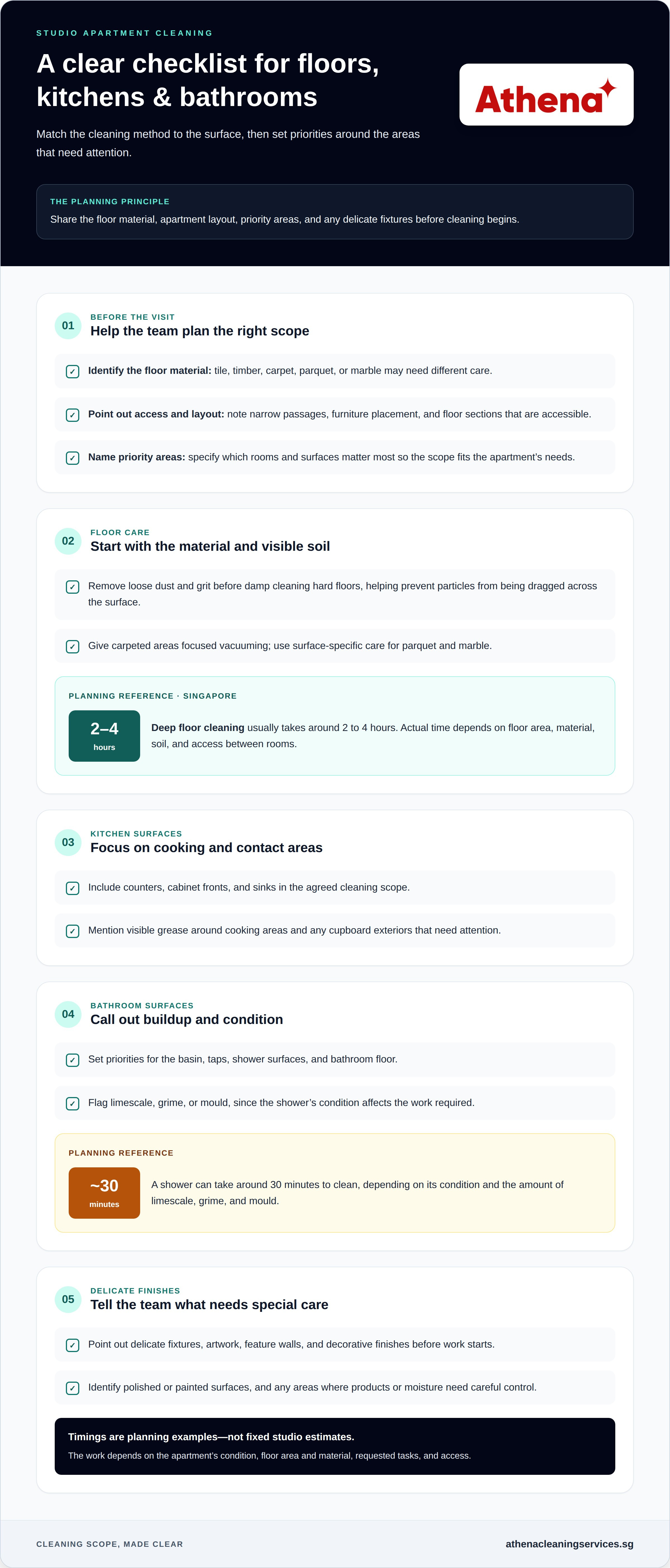
Before cleaning begins, share the floor material, apartment layout, priority areas, and any delicate fixtures or artwork. Mention narrow passages, feature walls, and surfaces needing special care. These details help the team plan suitable methods and focus on the areas that matter most.
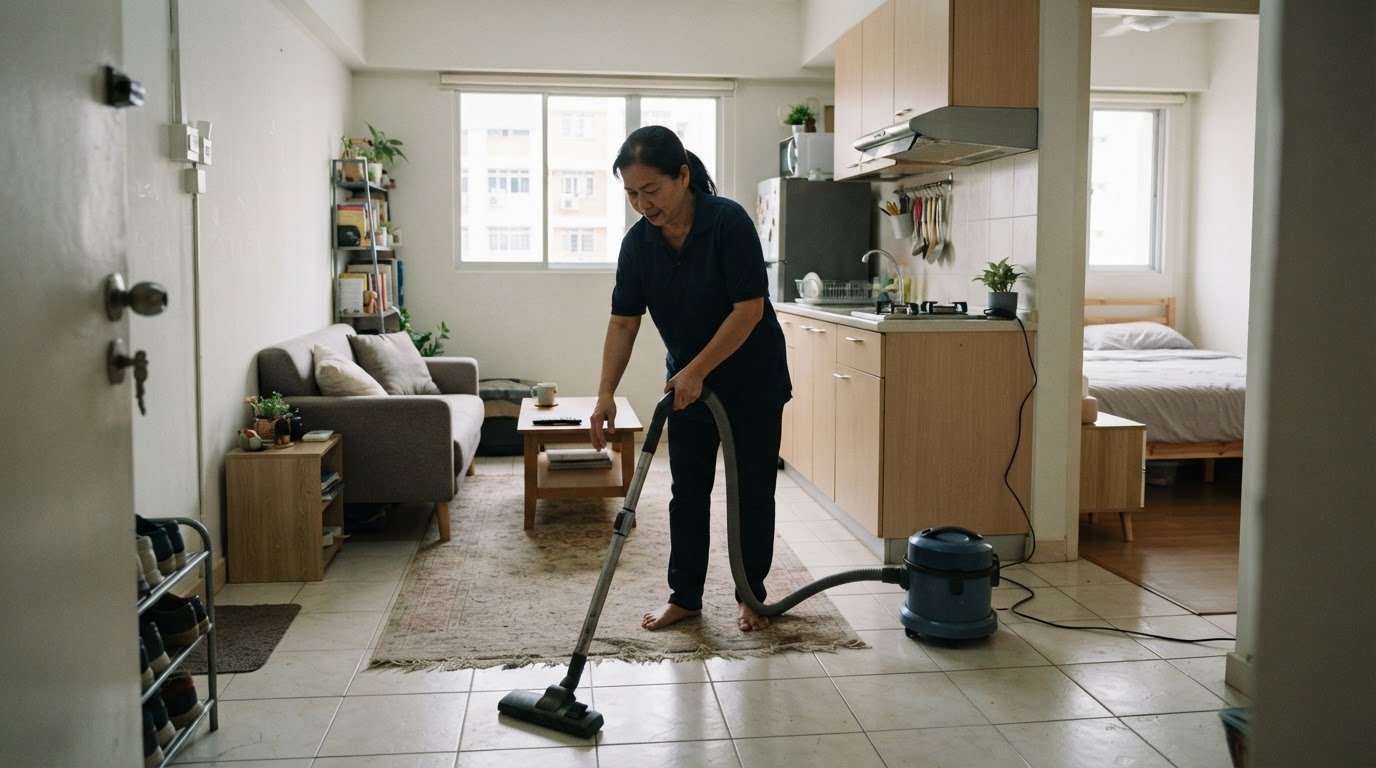
Floor care starts with identifying the surface. Tile, timber, and carpet need different approaches, so cleaning methods should match the material and visible soil. Removing loose dust and grit before damp cleaning helps prevent particles from being dragged across hard floors. Carpeted areas may need focused vacuuming, while parquet and marble require surface-specific care.
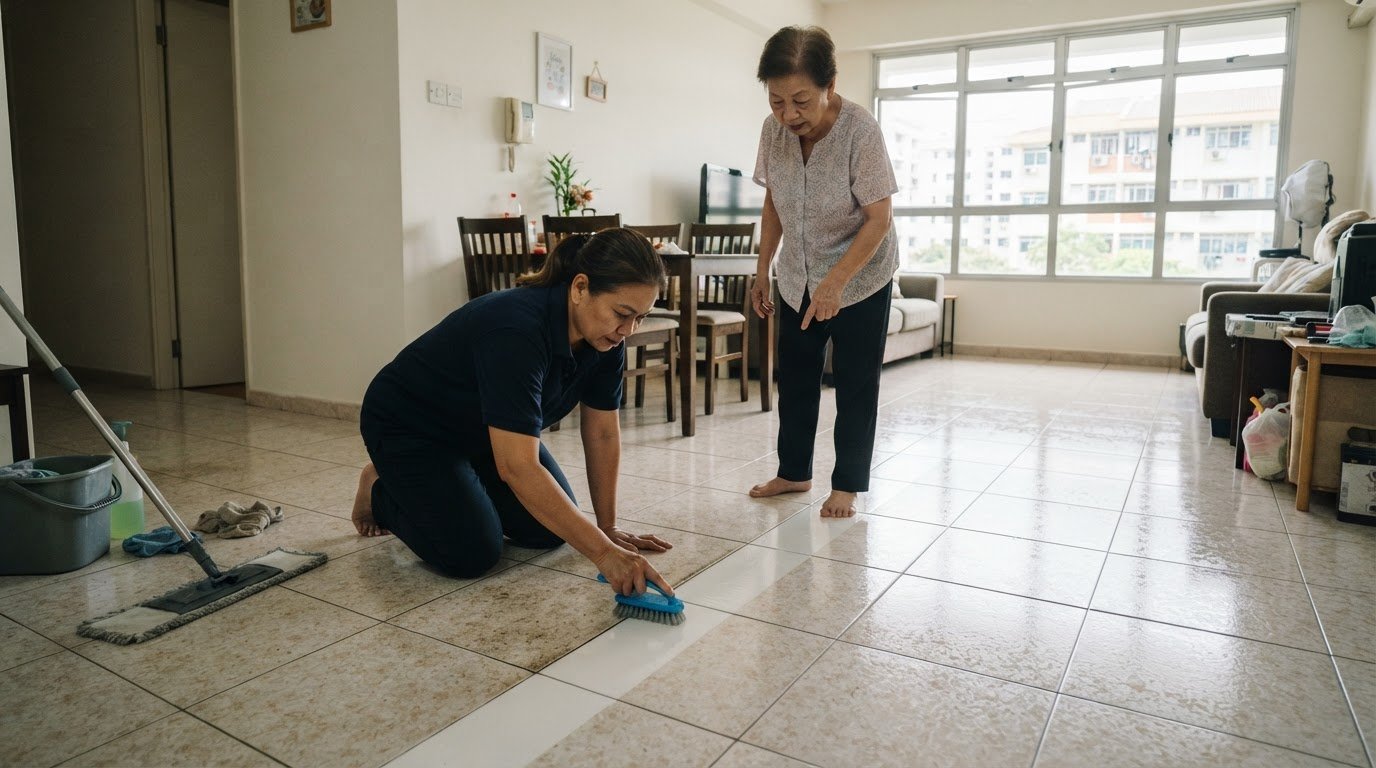
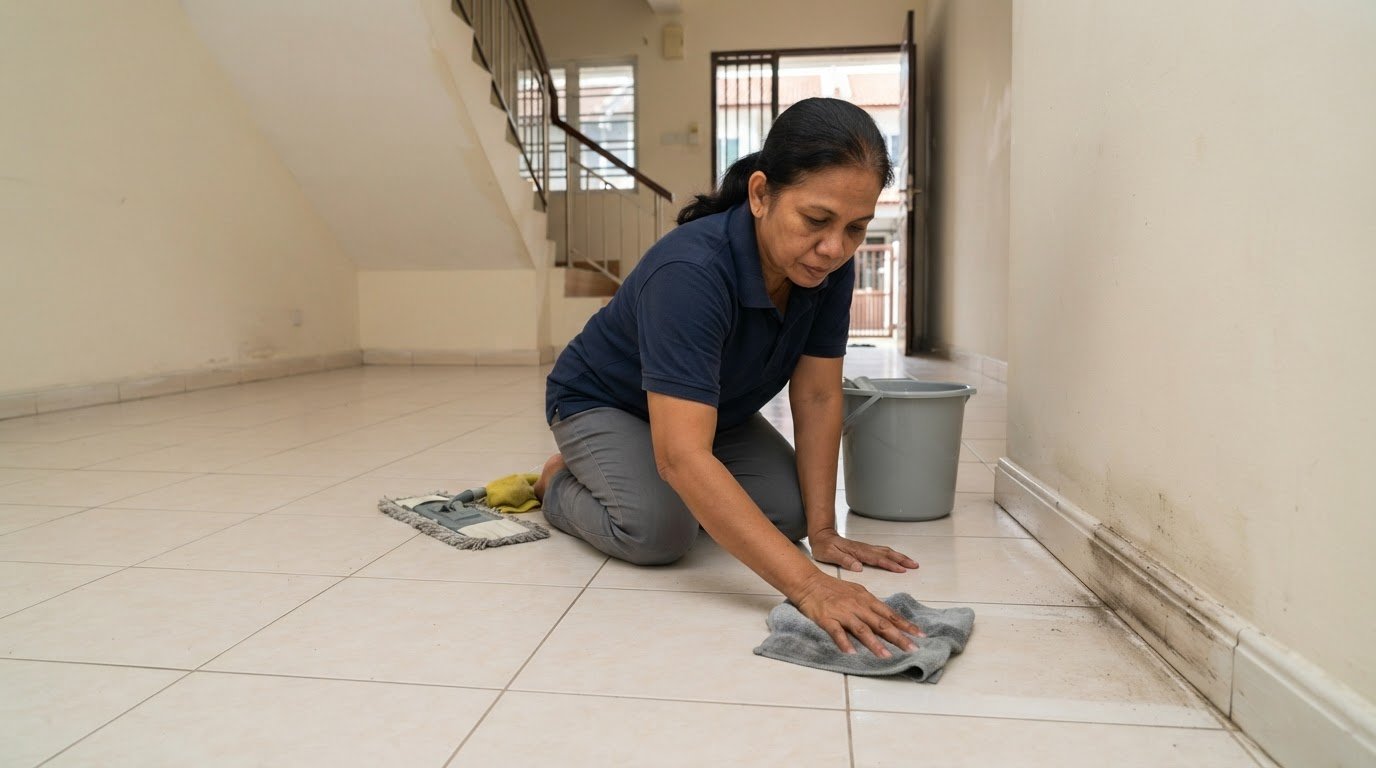
In Singapore, deep floor cleaning usually takes around 2 to 4 hours. The actual work depends on floor area, material, soil, and access between rooms. A shower can take around 30 minutes to clean, depending on its condition and the amount of limescale, grime, and mould. These examples help with planning, but they aren’t fixed timings for every studio.
Kitchen cleaning commonly focuses on counters, cabinet fronts, sinks, and visible grease around cooking areas. Bathroom tasks may include the basin, taps, shower surfaces, and floor. For example, limescale around a shower fitting needs different attention from everyday dust on a shelf. Clear priorities help balance detailed work in compact spaces.
Tell the team about delicate fixtures, artwork, and feature-wall materials before work starts. A polished surface, painted wall, or decorative finish may need a gentler method than a standard tile floor. Point out surfaces where products or moisture need careful control to help protect finishes while addressing everyday residue.
For a larger property, a floor plan can show narrow corridors, unusual room shapes, and access constraints. Describe the interior floor area rather than the land area, since the layout guides the cleaning plan. In a studio, a simple room layout and notes about furniture placement can clarify which floor sections are accessible.
Cleaning prices depend on floor material, condition, requested tasks, and access; a quote is provided after a quote request. A floor-focused visit differs from one that also covers kitchen counters, bathroom fittings, and detailed surfaces. For a clearer scope, prioritise the rooms and surfaces that need attention. This keeps the plan aligned with the apartment’s condition and cleaning needs.
For a tailored approach to hard flooring, explore professional floor care. A clear description of the material and affected areas helps the cleaning team plan suitable work, from routine surface care to deeper floor cleaning.
Part-time and one-time home cleaning prices
In Singapore, part-time cleaning is usually arranged as recurring sessions, while one-time cleaning covers a single visit. The total depends on the time booked, the home’s condition, and the task list. A standard clean for a two-bedroom apartment may take around 2 to 3 hours. Domestic cleaning can take between 1 and 4 hours, depending on home size and requested work. A studio’s compact layout may shorten some tasks, but heavy buildup or detailed cleaning can add time.
Recurring sessions suit homes that need regular attention to floors, kitchen surfaces, and bathrooms. A one-time booking may suit a move, a seasonal reset, or a specific cleaning priority. To compare options fairly, assess the same tasks in each: for example, kitchen counters, bathroom fittings, and accessible floors. A shorter visit can focus on those priorities, while a broader scope may include more detailed tasks.
Shower-cleaning time depends on condition, including limescale, grime, and mould. Cost also varies with the amount of work and the service scope. House-cleaning prices in Singapore similarly depend on apartment size, condition, session length, and requested tasks. The price for a studio clean is given after a quote request, based on those factors and the chosen scope.
Air-conditioning servicing is a separate task from general home cleaning. Its price depends on the number of units and the servicing work requested. Keep it separate when planning a cleaning budget, since a home-cleaning quote covers cleaning tasks rather than air-conditioning maintenance.
Mattress and sofa cleaning costs depend on the item’s material, size, condition, and treatment required. A small sofa with light surface soiling differs from a larger upholstered piece with embedded marks. For upholstery, the price depends on the items and their condition, and is given after a quote request. Include the number of pieces and any visible stains when describing the job.
To request a useful quote, provide the apartment’s floor area, preferred visit type, and priority areas. Include examples such as a shower with limescale, a heavily used kitchen, or a sofa needing attention. This helps define the scope before work begins and distinguish routine cleaning from a detailed one-time visit. Compare options by the tasks covered, not just the session length.
When comparing recurring cleaning with a single visit, consider both the booked duration and the tasks included. The right option is the one that gives enough time to address your priorities.
The session amounts make it easier to estimate a regular visit against an hourly rate, but check that the chosen duration gives enough time for the priority tasks. A clear task list helps ensure the quote reflects the cleaning needed rather than an assumed standard package.
Choosing a cleaning service for household needs
Choose a service by matching its scope to your home’s priorities. For a studio, that might mean regular attention to the bathroom and kitchen, or detailed care before a tenancy handover. A clear task list makes it easier to understand what the visit covers and which items may need separate treatment.
Insurance arrangements vary between cleaning businesses, so cleaners in Singapore shouldn’t be assumed to share one standard coverage policy. If an item is damaged, the response depends on the applicable policy and service terms, along with how quickly the incident is reported and documented.
Scope is a useful starting point when choosing a cleaning service. A routine visit may focus on accessible surfaces and floors, while a spring or end-of-tenancy clean can involve more detailed work. Cleaning a bathroom and kitchen differs from cleaning those areas plus cupboard interiors and accumulated marks. Look for a defined task list rather than relying only on a broad service label.
Consider the apartment’s finishes and belongings, too. Marble flooring, parquet, upholstered seating, and delicate artwork each need suitable handling. Identify these details before work begins so the cleaning methods can match the surfaces. For example, a polished stone floor should not be treated like ordinary ceramic tile.
- Scope: Match the task list to routine upkeep, a tenancy change, or a deeper clean.
- Materials: Identify flooring, upholstery, and delicate fixtures requiring careful treatment.
- Communication: Set out priority areas and access details before the scheduled visit.
- Damage process: Understand reporting steps, documentation, and the terms that apply.
For damage documentation, note the affected item, its location, and the condition observed. Photographs can help create a clear record, while a written incident description preserves the sequence of events. The applicable service terms and insurance policy determine how a claim is assessed; no specific outcome should be assumed without those details.
Scheduling and access also affect how well a service fits. A compact apartment may have limited room around a bed, desk, or sofa, so the plan should account for those obstacles. Share access instructions, fragile items, and priority areas. Identifying a narrow walkway, for instance, helps the team plan how to reach the floor edges without disturbing furniture.
Compare services by their stated scope, communication, and suitability for your home, not by a single label. A useful plan names priority rooms, surface types, and special concerns. That gives the team a practical brief and helps you understand what the visit is designed to accomplish.
Scheduling flexibility and cleaner availability
Start planning a cleaning schedule with the reason for the visit. Recurring appointments support regular upkeep, while a one-time booking may suit a move or focused refresh. Choose the purpose first, then identify a time window that fits your household routine. This makes the booking request specific and helps align the visit with your priorities.
Think about how you use the studio during the day. If you work from home, you may prefer cleaning while you’re away; a changing routine may call for a different arrangement. Share your preferred days and times, along with any periods when the apartment is occupied. Clear timing details help the schedule fit around work, rest, and access needs.
Recurring visits make routine tasks easier to plan. You might set a regular day for attention to floors, bathroom surfaces, and kitchen areas. If a particular week needs extra work, such as cleaning before guests arrive, explain that when arranging the visit. Match the task list to the time window so the priorities remain realistic.
One-time visits call for a different kind of planning. A tenancy handover, renovation completion, or spring clean may require more detailed work than routine upkeep. Share the target date and reason for cleaning when making your booking request. A handover date helps identify when the apartment needs to be ready, while renovation details clarify which areas need attention.
When requesting a booking, provide your preferred timing, visit length, and work scope. Offer an alternative time window if your schedule allows, and describe the apartment’s access arrangements. Include building entry procedures or lift restrictions so the visit can be planned appropriately.
- Purpose: Identify recurring upkeep, a one-time reset, or a handover clean.
- Timing: Share preferred days, time windows, and any access constraints.
- Scope: Describe priority rooms and any extra tasks for that visit.
- Changes: Communicate schedule changes early so the plan can be adjusted.
Before confirming a visit, make sure the requested tasks fit the planned scope. A studio needing focused bathroom and floor cleaning differs from one requiring detailed kitchen attention and upholstery care. Naming your priorities helps shape a sensible plan without assuming every task fits every booking. Keep the schedule and scope together in one clear request.
For a cleaning plan that suits your routine, discuss your scheduling needs. Share your preferred timing, the apartment’s access details, and the areas you want prioritised.
Athena Team Cleaning: Sanitization Services
Athena Team Cleaning provides Disinfection / Sanitization Services for spaces needing focused attention to cleanliness. This can complement routine care when frequently touched surfaces and shared-use areas need additional treatment. The scope depends on the space and the surfaces requiring attention.
These services address different settings and cleaning priorities, so the work can be matched to the task. Carpet care focuses on floor coverings, while sanitization addresses a separate need.
If you’re planning cleaning for a studio apartment, describe the areas needing attention and your preferred schedule. Contact Athena Team Cleaning to discuss your cleaning requirements and the service that fits them.
Make your next cleaning visit work for you
A well-planned studio apartment cleaning service starts with deciding what matters most after the visit. That might mean a tidier work corner, a cleaner kitchen, or a more comfortable living space. These priorities guide the cleaning scope and help make each booking purposeful.
Think beyond the next appointment, too. A consistent plan can help you maintain a home that feels ready for daily routines, unexpected guests, and changing needs. Share your priorities and preferred schedule when arranging service, then shape the visit around the way you live.
Take the next step toward a cleaner, more comfortable home. Contact Athena Team Cleaning today to discuss your requirements and find a suitable way forward.
A studio clean can cover dusting, mopping, and cleaning kitchen and bathroom areas. The exact tasks depend on the selected scope and the apartment’s condition. Someone preparing for guests might prioritise bathroom surfaces and kitchen counters, while a tenancy handover may need more detailed attention. Mention delicate finishes or items needing care so the plan accounts for them.
How much does studio apartment cleaning cost in Singapore?
The cleaning plan depends on the apartment’s floor area, condition, requested tasks, and selected package. A focused visit for key areas differs from a more detailed clean, so the scope shapes the quote. Share priorities such as accumulated kitchen grease or a bathroom needing extra attention when requesting a quote.
How do I book a studio apartment cleaner in Singapore, and what information is required?
Request a quote online or contact the team by phone, email, or WhatsApp for a quote. Share your apartment size, preferred schedule, cleaning priorities, and whether you need a one-time or recurring visit. Include access instructions and any delicate surfaces. To secure the date, pay a 50% deposit by PayNow; the balance is due after the job is completed.
Frequently Asked Questions
What does a studio apartment cleaning service in Singapore typically include?
How much does studio apartment cleaning cost in Singapore?
How do I book a studio apartment cleaner in Singapore, and what information is required?
Looking for help? See our house cleaning service in Singapore.
Related articles