
Tile and Grout Cleaning Price by Area and Project
In this article
- Key Takeaways
- Tile And Grout Cleaning Cost Factors: What Determines the Price?
- Professional tile and grout cleaning rates per square metre
- Average project cost and national price range
- Comparing quotes from tile cleaners
- Estimated tile and grout cleaning price per square foot
- Athena Team Cleaning
- Plan the Next Step for Your Space
A square-foot estimate can help, but it is not the only way to assess tile and grout cleaning price in Singapore. Deep cleaning may be priced by bathroom or kitchen, or by square foot, depending on the area and the severity of staining or mould. The final price depends on the project and is provided after a quote request.
It makes sense to want a clear way to compare costs before deciding. Area size matters, as do the tiles’ condition and material, the state of the grout, and whether the job involves more than routine cleaning. A low figure may not cover the same work as a more detailed quote.
This guide explains how area-based estimates work, which project details can affect the price, and what to compare when reviewing quotes. You’ll also learn when extra treatments or grout repairs may be separate from deep cleaning, so you can understand what a proposed job includes.
Key Takeaways
- Use floor area as a starting point, then account for tile and grout condition, material, and the cleaning required.
- Understand why Singapore quotes may be based on a room or project rather than a standard square-metre rate.
- Separate routine deep cleaning from additional work such as grout recolouring, sealing, or regrouting.
- Compare quotes by their scope, included work, and any separately priced treatments, not just the headline amount.
- Use a square-foot estimate as a planning guide, while recognising that staining and mould severity can affect the project scope.
Tile And Grout Cleaning Cost Factors: What Determines the Price?
The tiled area, surface condition, tile material, and cleaning scope all shape a project estimate. In Singapore, cleaning precautions also matter because a product suitable for ceramic may damage a delicate stone surface.
Factors That Increase Project Costs
Project costs can rise when a larger area, heavier soil, or delicate tiles require more time and careful treatment. A stained kitchen floor, for example, may need focused work on grout lines, unlike a lightly soiled entryway. Tile type, property location, and fragile surfaces also affect the work involved. The tile and grout cleaning price depends on the project and is provided after a quote request.
Included and Excluded Estimate Costs
A cleaning estimate generally covers materials, transport to the property, and labour. These inclusions help explain the quoted scope, but they don’t automatically cover separate restoration work. Grout sealing, recolouring, repairs, or regrouting may be priced separately from deep cleaning in Singapore. Compare the listed tasks, so you can distinguish the cleaning itself from additional treatments or repairs.
Grout condition can change the work required. Cement-based grout is porous, so grime may settle below its surface and darken the lines. Professional cleaning can often restore grout close to its original colour. Persistent marks, however, may be removable deposits, surface damage, or permanent discolouration. Cracked or severely stained grout may need recolouring or replacement through a separate regrouting job. Cleaning may not remove all mould or mildew.
Take care when choosing products for different tile and grout types. Test a cleaner on a small, inconspicuous area before applying it across the floor, and never mix cleaning products. Acidic cleaners and descalers can damage acid-sensitive stone, including marble and limestone. For coloured grout, confirm product compatibility with the grout, sealants, and nearby surfaces. These precautions help prevent surface damage or changes to grout colour.
For an accurate comparison, look beyond the room name and consider what the estimate actually covers. A bathroom with fragile tiles or damaged grout may need different work from one with sound surfaces and ordinary soil. Keep routine cleaning distinct from restoration, and note whether the estimate includes materials, transport, and labour. This clarifies the scope before work begins.
Professional tile and grout cleaning rates per square metre
A per-square-metre estimate helps relate the tiled area to the work involved. Professional tile and grout cleaning may be quoted by job, bathroom, kitchen, or square foot, depending on the area and the severity of staining or mould. A square-metre figure can still help with planning, provided you compare the same type of surface and scope of service.
To understand a tile and grout cleaning price, first identify which floors are included. A bathroom with a separate tiled shower area may involve more surface than its floor plan suggests. A kitchen estimate may include only the floor, not a tiled backsplash. The measurement in the quote should match the actual surfaces being cleaned, rather than the property’s overall floor area.
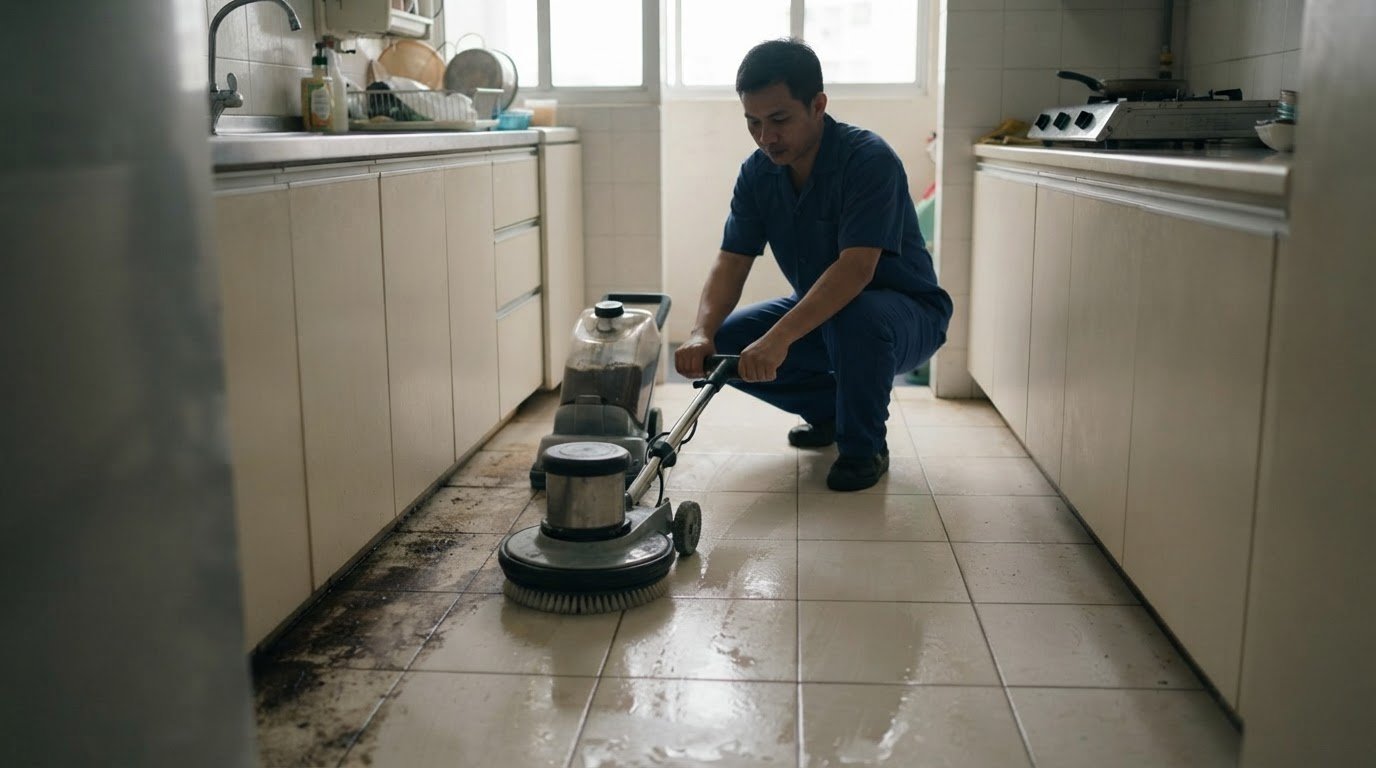
The cleaning method also affects what a rate represents. Professional cleaners typically use specialised cleaning agents and scrubbing machines to loosen and extract dirt. Steam cleaning can loosen surface grime on tiles and grout, but it is usually slower than using a scrubbing machine. The selected method depends on the surface and the soil, so two square-metre estimates may cover different processes.
DIY cleaning can work for everyday grime on accessible, durable tiles. A stiff brush, warm water, and a proprietary grout cleaner may address surface dirt. However, supermarket grout cleaners generally treat the surface, while professional equipment and treatments can reach deeper into porous grout lines. For persistent soil, compare the likely result and effort, not just the initial cost of supplies.
A cleaning service can take anywhere from a couple of hours up to a full day. Professional cleaning of an average-sized family bathroom takes 1 to 2 hours. Before the appointment, move items and furniture away from tiled surfaces, then sweep or mop to clear loose dirt. These preparations give the cleaning team access to the floor and help the work proceed efficiently.
When reviewing a tile and grout cleaning price, check whether the estimate covers deep cleaning or only surface treatment. Sealing, recolouring, and regrouting may be separate work. Confirm that the quoted area, rooms, and treatments are clearly described. A per-square-metre rate is most useful when those details match across the estimates you’re comparing.
For a project-specific tile and grout cleaning price, consider the tiled area, surface condition, and work included. A quote for your case gives context that a simple rate per square metre cannot provide.
Average project cost and national price range
In Singapore, project estimates are best understood through the area, rooms, and work involved, rather than a single figure applied to every home. A local pricing guide describes a standard 2- to 3-bedroom condominium or 4-room HDB flat as measuring 801-1,000 sq ft. That gives a useful scale for discussing a project, but the floor area alone doesn’t define the cleaning scope.
Professional tile and grout cleaning may be priced by bathroom or kitchen, by square foot, or as a job. These approaches can produce different-looking estimates for similar spaces. A room-based quote focuses on the named room; an area-based quote ties the estimate to measured flooring. A job quote may account for the project as a whole. Compare estimates on the same basis before judging their totals.
The exact figure for your project depends on the area, tile and grout condition, staining or mould severity, and the work included. For example, a tiled kitchen with persistent staining may need a different scope from a lightly soiled bathroom, even if their floor areas are similar. An estimate should reflect the surfaces being cleaned and the conditions that affect the work.
Separate cleaning from restoration when considering the project total. Deep cleaning aims to remove accumulated dirt from tile surfaces and grout lines. It does not automatically include grout recolouring, sealing, repair, or replacement. Cracked grout or discolouration that remains after cleaning may call for a separate restoration decision. Treating these tasks as distinct helps explain why two estimates may cover different outcomes.
A practical comparison starts by identifying the measurable area. Note which rooms contain tile, whether the estimate covers the whole floor or selected sections, and whether adjoining tiled spaces are included. Then compare the described service: routine cleaning, deeper treatment, or additional grout work. For a condominium or HDB flat in the 801-1,000 sq ft range, the total property size isn’t necessarily the tiled area; only the surfaces in the cleaning scope should guide an area-based comparison.
Comparisons across countries also need context. A figure in another country or currency does not establish the cost of a local project, because the premises, measurement method, and work included may differ. For instance, property maintenance providers such as rbz-technical.ae follow regional service benchmarks and pricing models that reflect their specific local markets. Use local estimates for local decisions, and compare like with like. If one quote covers only bathroom tiles while another includes a kitchen floor and separate grout treatment, their totals are not directly comparable.
Finally, judge the estimate by its scope as well as its total. A clear project description should identify the rooms or measured area, the cleaning work, and any separate restoration tasks. This makes it easier to see whether the proposed work aims to refresh tiled surfaces through cleaning or address damaged grout through additional work.
Comparing quotes from tile cleaners
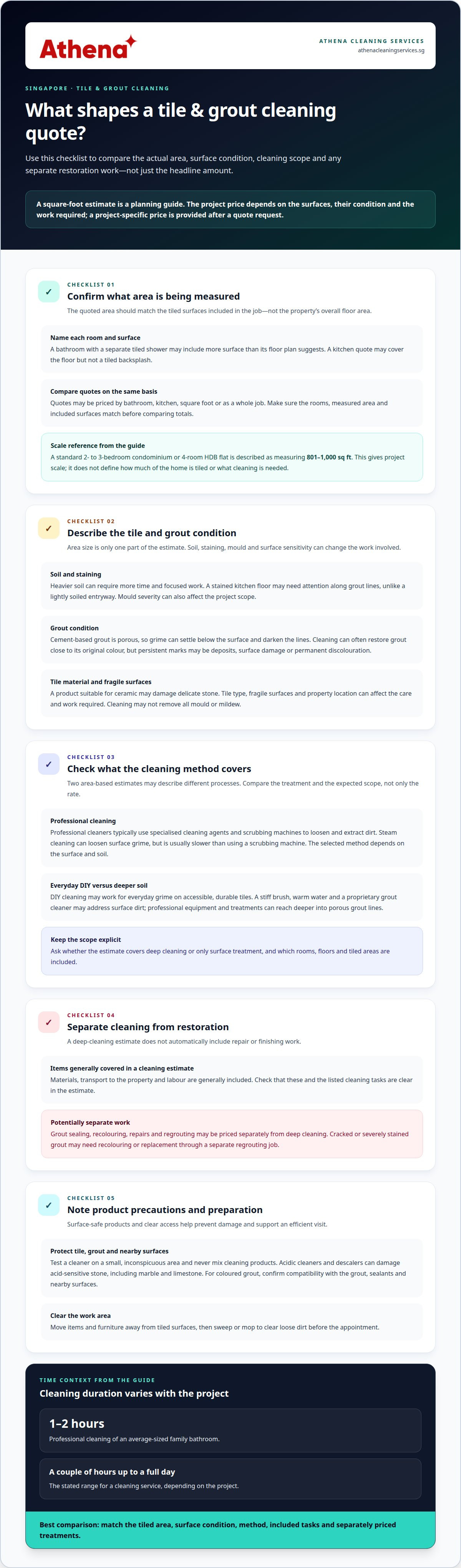
Compare quotes by scope, not headline total. Tile and grout deep cleaning may be priced by bathroom, kitchen, or square foot, depending on the area and the severity of staining or mould. A quote for one bathroom cannot be compared directly with one covering several floors. First, match the rooms and surfaces included in each estimate.
Then check what the cleaning method covers. A quote may describe deep cleaning, while another may cover a more limited surface clean. Ask whether the work addresses grout lines as well as tile faces, and whether the cleaning solution and equipment suit the floor material. For example, a kitchen floor with ingrained grime calls for a different scope from lightly soiled tiles in a low-traffic room.
Keep restoration separate from cleaning. In Singapore, grout recolouring, sealing, anti-slip treatment, and epoxy regrouting are usually quoted separately from tile and grout deep cleaning. The existing grout condition informs those additional tasks. If one estimate includes sealing and another excludes it, the totals represent different work. Compare the base cleaning and each added treatment as distinct items.
- Area: Match the rooms or measured floor space.
- Condition: Note staining, mould, and grout damage.
- Method: Compare the described cleaning approach and surfaces covered.
- Extras: Separate cleaning from sealing, recolouring, or regrouting.
Look for a clear project description before agreeing to work. It should identify the tiled areas, the cleaning scope, and any additional treatment. Agree on a fixed price before tile and grout cleaning begins. This makes the agreed amount and included work clear, especially when the estimate separates deep cleaning from restoration.
Traffic and soil patterns can help explain differences between areas. A frequently used kitchen may have more embedded grime than a guest bathroom, while an outdoor tiled space may collect different deposits. The quote should reflect the areas and conditions being treated, rather than relying only on the property’s overall floor area. Compare like-for-like rooms and note any excluded sections.
Finally, read the quote as a description of the intended work, not just a total. Check whether the same rooms, cleaning method, and optional treatments appear in each proposal. If a quote lists only a broad service label, its scope may be harder to compare with a detailed breakdown. A consistent comparison helps you understand what each estimate covers before work starts.
Estimated tile and grout cleaning price per square foot
A square-foot estimate relates the tiled area to the project scope; it is not a universal rate. Tile and grout deep cleaning may be priced by bathroom or kitchen, or by square foot, depending on area size and the severity of staining or mould. The useful takeaway is to measure the area being cleaned, then compare estimates covering the same surfaces and work.
Start with the floor plan. For a straightforward rectangular room, multiply its length by its width to estimate square footage. For an L-shaped kitchen, split the floor into rectangles, calculate each section, and add them together. Leave out untiled areas, such as carpeted rooms or spaces with another floor finish—which require dedicated care from specialists like Cleaning Guru Carpet and Home Cleaning. This gives a more relevant measurement than using the entire property area.
Next, match the measured area to the quote’s stated basis. If the quote uses a per-square-foot rate, multiply that rate by the included tiled area. If it uses a bathroom or kitchen rate, compare the listed rooms instead. Do not treat these methods as interchangeable: a room-based estimate may include a defined space, while an area-based estimate depends on the measured square footage.
Grout cleaning cost also reflects more than the tile footprint. A large, lightly soiled floor may require a different scope from a smaller area with persistent staining or mould. Grout condition, tile material, and access can affect the work required. For example, heavily marked grout lines may need focused attention even when the surrounding tiles appear clean. The area measurement helps frame the job, but condition helps explain its scope.
Check what each measured area includes. A quote might cover the kitchen floor but omit a tiled service area, or include a bathroom floor without tiled walls. Note those boundaries before comparing totals. Also separate deep cleaning from sealing, recolouring, or regrouting, since those treatments are typically quoted apart from deep cleaning in Singapore. That distinction prevents an incomplete scope from looking like a lower like-for-like estimate.
Use the per-square-foot approach as a planning tool, not a promise of the final total. Record each tiled room, mark the surfaces included, and note visible staining or grout damage. Then compare the same room list and treatment scope across estimates. A measured square-foot figure is most helpful when it supports a clear project description rather than replacing one.
For broader premises cleaning needs beyond floor-area estimates, explore cleaning support suited to your space.
Athena Team Cleaning
Athena Team Cleaning can help when your cleaning needs extend beyond tiled floors to the wider property. Considering these needs together can help you define the scope of a wider cleaning project alongside your tile and grout plans.
If you’re planning work across different areas, consider which spaces need attention and what outcomes matter most.
Contact Athena Team Cleaning to discuss your cleaning needs.
Plan the Next Step for Your Space
Turn your estimate into a clear plan by deciding what matters most for the space: a refreshed appearance, attention to persistent marks, or coordination with wider property cleaning. This gives your next conversation a practical focus. The tile and grout cleaning price is most useful when considered alongside the result you want and the work your space needs.
Before discussing the project, note which tiled rooms are involved and describe the main concerns, such as discoloured grout or visible wear. These details keep the conversation focused on your priorities, not just a number. If your property needs attention beyond its tiled areas, consider how a wider cleaning plan can help maintain the space.
For a tailored discussion of your cleaning needs, contact Athena Team Cleaning. A considered next step can make it easier to move from comparing estimates to planning a cleaner, more comfortable space.
Professional cleaning can reach grime within porous grout lines more effectively than surface wiping. A tile and grout cleaning price reflects the work involved, including the surface condition and cleaning scope. Professional treatment can be useful when routine brushing leaves dark marks in a frequently used kitchen or bathroom. The method and solution should suit the tile and grout; for example, a cleaner suitable for ceramic may not suit acid-sensitive stone.
Can I save money by doing it myself?
Yes, DIY cleaning can be a practical choice for light, accessible soil if you already have suitable supplies. A brush and compatible grout cleaner may handle everyday residue, while persistent grime may need more thorough treatment. Avoid mixing products, and test a cleaner on an inconspicuous spot first. If a surface is delicate or grout is damaged, the risk of harm may outweigh the savings.
What is the average tile and grout cleaning price in Singapore?
There isn’t one average figure that applies to every property. A quote may be based on the bathroom or kitchen, the measured area, and the condition of the tiles and grout. Staining, mould, and the work included affect the estimate. Compare quotes for matching areas and scope, since estimates for different rooms or treatments do not represent the same project.
How much do tile and grout cleaning services charge per square foot in Singapore?
There is no single per-square-foot rate for every Singapore project. Some deep-cleaning estimates use square footage, while others are based on a bathroom, kitchen, or full job. The area being cleaned and the severity of staining or mould shape the quote. Make sure the measured figure refers to tiled surfaces only, rather than the property’s total floor area.
How do prices vary by tile type, grout condition, and floor area?
A larger tiled area generally means more surface to clean, while delicate or fragile tiles can require more careful handling. Grout condition also changes the work: sound grout with light soil differs from cracked lines or persistent discolouration. For example, cleaning a small area of fragile stone may involve different care from cleaning a larger, durable ceramic floor.
How do professional tile and grout cleaning prices compare with DIY costs?
A tile and grout cleaning price covers professional labour, transport, materials, and equipment, while DIY costs centre on supplies and your time. A home cleaner may manage everyday surface dirt, but porous grout can hold grime below the surface. Compare the effort and equipment needed for your specific floor, rather than assuming DIY cleaning will address deep-set soil.
What is included in a standard tile and grout cleaning service?
A standard cleaning scope focuses on the specified tile surfaces and grout lines. Estimates generally account for materials, transport to the property, and labour. They do not automatically include restoration work such as sealing, recolouring, repairs, or regrouting. For instance, a cleaning job may remove surface soil while cracked grout still needs separate attention.
How can I compare tile and grout cleaning quotes and avoid hidden charges in Singapore?
Compare the same rooms, tiled surfaces, and cleaning scope, then separate deep cleaning from optional treatments. In Singapore, grout recolouring, sealing, anti-slip treatment, and epoxy regrouting are usually quoted separately. Agree on a fixed price before work begins, with included tasks and separate charges stated. This helps prevent a lower headline estimate from masking a narrower scope.
Frequently Asked Questions
Why should I get grout cleaning done professionally?
Can I save money by doing it myself?
What is the average tile and grout cleaning price in Singapore?
How much do tile and grout cleaning services charge per square foot in Singapore?
How do prices vary by tile type, grout condition, and floor area?
How do professional tile and grout cleaning prices compare with DIY costs?
What is included in a standard tile and grout cleaning service?
How can I compare tile and grout cleaning quotes and avoid hidden charges in Singapore?
Looking for help? See our house cleaning service in Singapore.
Related articles