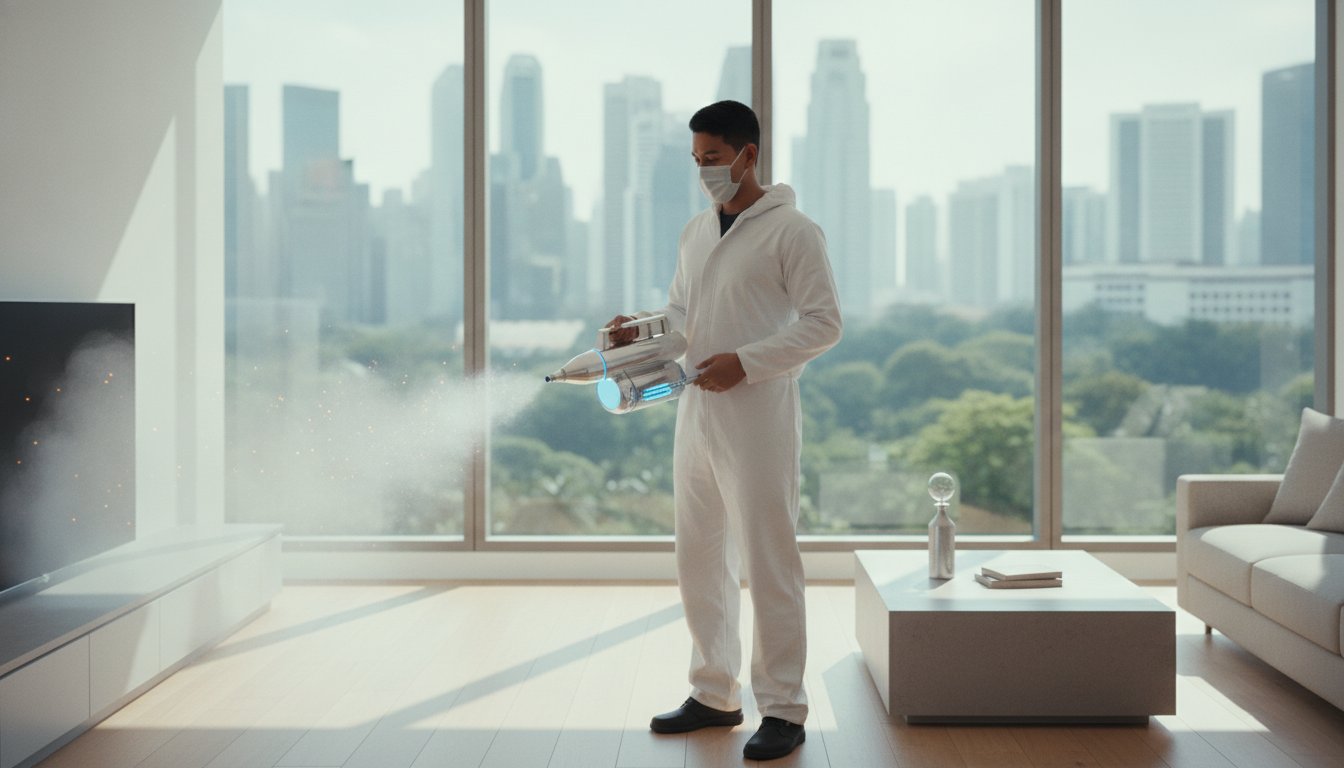

Commercial Kitchen Cleaning Checklist Singapore: The 2026 Operational Excellence Guide
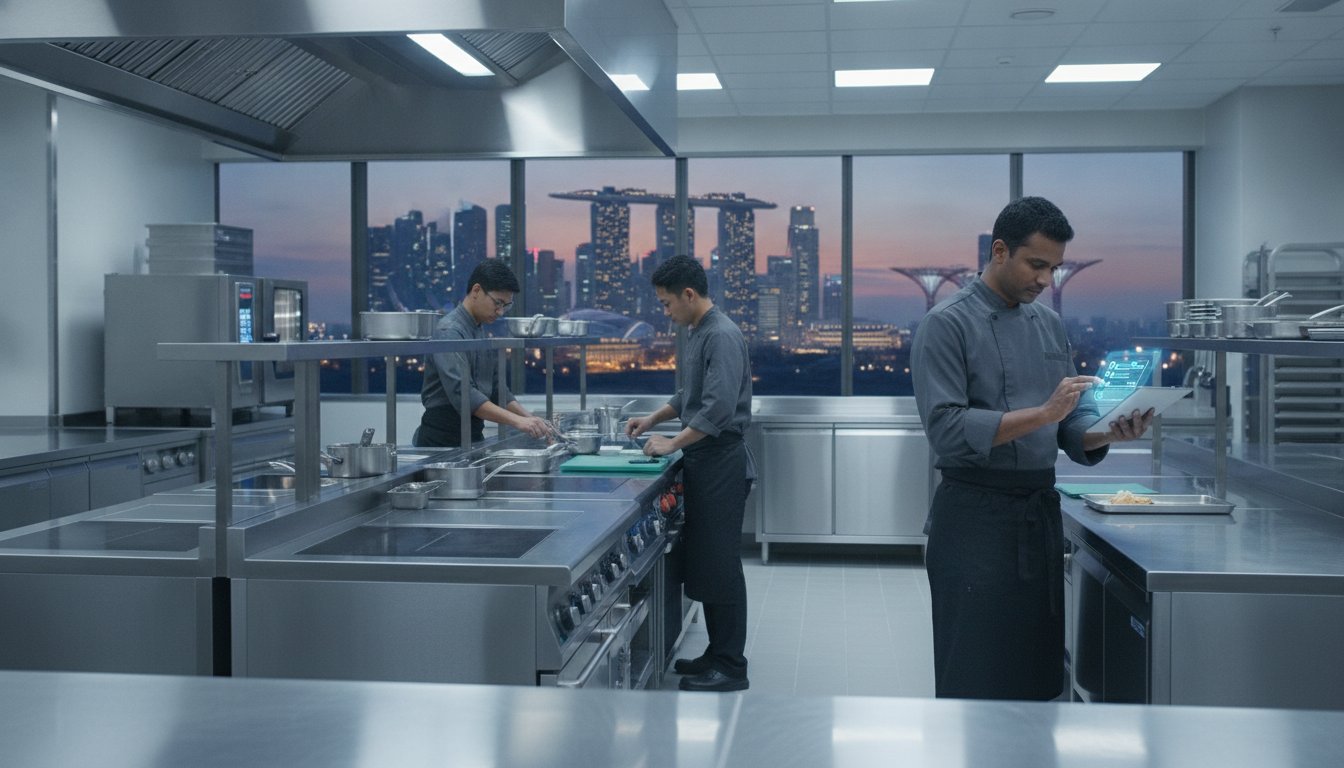
Your SFA license's QR code is now the most transparent window into your kitchen's soul, and in 2026, there is no room for a "snapshot" approach to hygiene. It's exhausting to manage high staff turnover while worrying that a single overlooked grease trap might trigger a demerit point or a grade drop under the new SAFE framework. You likely feel the constant pressure of maintaining a gold-standard environment when standards fluctuate between shifts and staff training feels like a never-ending cycle. We understand that your reputation relies on the invisible precision of your cleaning protocols.
This professional-grade commercial kitchen cleaning checklist singapore is designed to help you master SFA compliance and transform your facility into a model of operational excellence. By following this framework, you can move beyond simple maintenance to achieve a complete elevation of your workspace. We'll guide you through the transition from annual inspections to continuous monitoring, ensuring your establishment secures that coveted Grade 'A' while protecting your investment in expensive kitchen equipment. Let's explore the essential daily, weekly, and monthly tasks that keep your kitchen safe, pest-free, and ready for any digital audit.
Key Takeaways
- Understand how the 2026 SFA SAFE framework uses continuous digital tracking and QR codes to redefine your food safety grade.
- Implement a professional-grade commercial kitchen cleaning checklist singapore to maintain a pristine food service environment.
- Master the specific weekly and monthly deep-cleaning requirements for heavy-duty equipment. This protects your investment and ensures consistent food quality.
- Discover advanced sanitization techniques, including the use of bio-enzymatic cleaners, to keep your drains and grease traps in peak condition.
- Adopt a hybrid cleaning model that pairs daily staff diligence with expert periodic support to safeguard your business reputation.
Understanding SFA Compliance and Singapore Food Hygiene Standards
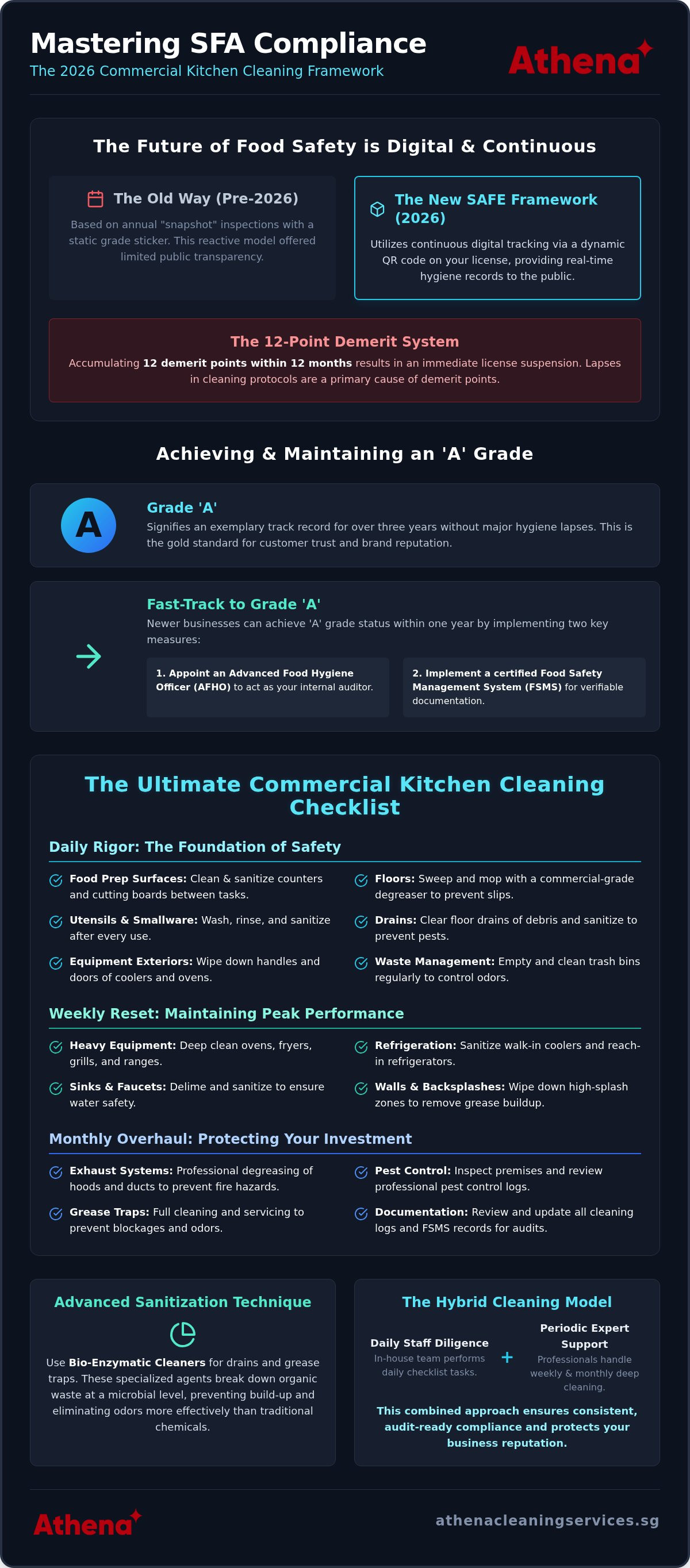
Operating a food business in Singapore requires more than just culinary talent; it demands a rigorous commitment to public health. The Singapore Food Agency (SFA) serves as the primary guardian of these standards, conducting meticulous inspections to ensure every commercial kitchen operates safely. In 2026, the landscape has shifted with the full implementation of the Safety Assurance for Food Establishment (SAFE) framework. This new system moves away from annual snapshots toward a model of continuous monitoring. Your hygiene grade is no longer a static sticker on the window; it's a dynamic QR code that reflects your real-time safety record to every potential customer scanning your license.
The points demerit system remains a formidable tool for enforcement. Accumulating 12 demerit points within a 12-month period leads to an immediate suspension of your license. Lapses such as pest infestations, improper food storage, or failing to maintain a commercial kitchen cleaning checklist singapore can trigger these penalties. Beyond the legal consequences, a drop in your hygiene grade can devastate your brand's reputation. In an era of digital transparency, maintaining a pristine environment is your most valuable marketing asset.
The SFA Grading Framework for 2026
Achieving a Grade 'A' under the SAFE framework signifies that your establishment has maintained an exemplary track record for over three years without major lapses. For newer businesses, the system introduces a 'NEW' category, but you can fast-track to an 'A' grade within one year by appointing an Advanced Food Hygiene Officer (AFHO) and implementing a certified Food Safety Management System (FSMS). The role of the Food Hygiene Officer is critical; they act as your internal auditor, ensuring that every staff member adheres to the precise sanitization protocols required to keep your QR code grade high and your kitchen compliant.
Legal Requirements for Kitchen Maintenance
Compliance isn't just about daily wiping; it involves meeting strict legal mandates for structural maintenance. NEA regulations and SFA standards require specific cleaning frequencies for high-risk areas. Grease traps must be cleared regularly to prevent foul odors and drainage blockages, while exhaust systems require professional degreasing to mitigate fire hazards. Documentation is your primary shield during unannounced audits. You must maintain professional logs for pest control treatments and deep cleaning sessions. These records provide the verifiable evidence needed to prove your facility consistently adheres to the highest levels of hygiene and operational excellence.
The Daily Commercial Kitchen Cleaning Checklist
Operational excellence begins with the repetitive, disciplined execution of daily tasks. It's the silent engine that powers a safe, efficient kitchen. By integrating a meticulous commercial kitchen cleaning checklist singapore into your team's shift rhythm, you create an environment where food safety is an instinctive priority rather than a forced chore. This daily rigor is your primary defense against cross-contamination and the most effective way to ensure your kitchen is always ready for a scan of your SFA QR code.
Food Preparation and Surface Sanitization
Every surface in your kitchen is a potential vector for cross-contamination. Meticulous care must be taken with cutting boards, countertops, and prep tables. These surfaces require cleaning and disinfection every time you switch between different food groups, such as moving from raw poultry to fresh vegetables. Smallware and utensils follow the same rule; they must be washed, rinsed, and sanitized after every use to maintain total renewal of the workspace. Don't overlook the exteriors of your reach-in coolers and ovens. Grease and fingerprints accumulate quickly on handles and doors, creating a dull environment and providing a foothold for bacteria. A swift, professional wipe-down during every shift keeps these high-touch areas pristine and reinforces a culture of precision among your staff.
Floor Care and Waste Management
The kitchen floor is the most high-traffic zone in your facility, demanding constant attention to remain safe and sanitary. Daily sweeping and mopping using commercial-grade degreasers are essential to remove the inevitable spills and organic matter that accumulate during service. This isn't just about aesthetics; it's about preventing slips and removing the food sources that attract pests. Floor drains require similar dedication. Clearing and sanitizing these drains daily prevents the buildup of foul odors and ensures smooth drainage throughout the day. While your team handles these immediate prep areas, our specialized sanitization services can provide that deeper level of protection for high-frequency commercial zones, ensuring every corner meets your high standards.
Waste management is the final pillar of your daily routine. Trash bins should never reach capacity before being emptied, and they must be sanitized regularly to prevent the growth of pathogens. A clean bin is a simple but powerful signal of a well-managed kitchen. As the closing shift finishes, these waste protocols ensure the facility is reset for a fresh, pest-free morning start. This transition from a busy service to a meticulously cleaned space provides your morning crew with the peace of mind they need to perform at their best.
Weekly and Monthly Deep Cleaning Requirements
Daily routines maintain the visible surface, but weekly and monthly deep cleaning tackles the hidden grease and carbon buildup that compromise both safety and efficiency. Integrating these intensive tasks into your commercial kitchen cleaning checklist singapore prevents minor issues from escalating into expensive equipment failures or fire hazards. It's about moving beyond the surface to achieve a total renewal of your facility's operational capacity. This disciplined approach ensures that the mechanical heart of your kitchen continues to beat with precision and reliability.
Equipment and Appliance Deep Cleaning
Heavy-duty equipment requires technical attention to maintain peak performance and extend its lifespan. Boiling out deep fryers once a week is essential to remove the polymerized oil and carbonized food particles that degrade oil quality and affect the flavor profile of your dishes. Similarly, commercial dishwashers and steam tables must be de-limed monthly to prevent mineral deposits from clogging internal jets and reducing heating efficiency. Don't neglect your refrigeration units; vacuuming condenser coils every month is a simple yet powerful way to ensure energy efficiency and prevent the compressors from overheating in our tropical climate.
- Boil out deep fryers: Remove stubborn carbon deposits to maintain oil integrity and food quality.
- De-lime dishwashers: Ensure optimal water pressure and heat by removing scale buildup from internal components.
- Refrigeration maintenance: Clean condenser coils on walk-in chillers to prevent energy spikes and mechanical failure.
- Deep-tissue appliance care: Move stationary equipment to clean the floor and wall spaces that are usually inaccessible.
Structural and Ventilation Maintenance
In Singapore's humid environment, grease accumulation on walls and ceilings happens faster than many operators realize. This isn't just an aesthetic concern; it's a significant food safety risk. Monthly scrubbing of these surfaces prevents organic matter from dripping into food preparation areas. Ventilation efficiency is equally critical for a healthy workspace. You must degrease exhaust hood filters weekly to comply with local fire safety codes and ensure that smoke and odors are effectively removed from the kitchen. Maintaining these standards within your commercial kitchen cleaning checklist singapore protects your staff and keeps your environment fresh and inviting.
Storage areas also demand regular, meticulous hygiene to prevent the hidden threats of pests. Emptying dry storage shelves monthly allows your team to wipe down surfaces and inspect for signs of weevil infestations or dampness that can spoil expensive inventory. Walk-in chillers should be completely cleared out to sanitize shelving and floor surfaces, preventing the growth of mold in cold, damp environments. These proactive actions safeguard your inventory and ensure your kitchen remains a safe, pest-free zone that consistently meets the highest SFA standards.
Specialized Degreasing and Sanitization Strategies
Maintaining operational excellence requires a deep understanding of the chemical interactions between your cleaning agents and the kitchen environment. In Singapore, the persistent high humidity accelerates organic growth and causes grease to congeal rapidly on surfaces. Your commercial kitchen cleaning checklist singapore must move beyond basic detergents to incorporate specialized degreasing agents that penetrate carbonized fats without damaging expensive stainless steel. Choosing the right pH-balanced chemicals ensures your equipment remains pristine while preventing the microscopic pitting where bacteria often hide.
Bio-enzymatic cleaners represent a forward-thinking approach to grease trap and drain maintenance. These solutions utilize live, beneficial bacteria to digest fats, oils, and grease (FOG) naturally. By integrating these into your routine, you prevent the localized blockages and foul odors that often lead to SFA demerit points. It is also vital to distinguish between sanitization and disinfection. Sanitization reduces bacteria to safe levels on food-contact surfaces, whereas disinfection is a more aggressive process required for high-traffic, non-food zones to eliminate pathogens entirely. Balancing these two processes creates a comprehensive shield for your facility.
Industrial Degreasing for Fire Prevention
Grease accumulation within hidden ductwork is a significant fire hazard that daily surface wiping cannot address. While your staff may keep the exterior of the exhaust hood gleaming, the internal filters and ducts collect flammable residues that require technical extraction. Compliance with Singapore Civil Defence Force (SCDF) fire safety regulations is mandatory for all F&B establishments. Professional degreasing reaches the deep-tissue areas of your ventilation system, ensuring that airflow remains efficient and the risk of a flash fire is minimized. This level of precision protects your staff and your property from catastrophic loss.
Professional Sanitization for High-Traffic Areas
High-touch points such as door handles, POS systems, and light switches are often the most overlooked areas in a busy kitchen. These surfaces act as reservoirs for germs that can easily spread between front-of-house and back-of-house teams. Utilizing commercial sanitization services singapore provides an added layer of security by treating these hotspots with food-safe disinfectants. These professional solutions are engineered to be effective against a broad spectrum of pathogens without leaving harmful residues that could contaminate your culinary creations. Protect your team's health and your brand's integrity by investing in professional sanitization services that ensure a complete elevation of your working environment.
Implementing the Checklist with Professional Support
A commercial kitchen cleaning checklist singapore serves as the strategic blueprint for your operations, but its true power lies in consistent execution and team accountability. Training your staff to view hygiene as a core value rather than a secondary task is the first step toward operational excellence. When your team understands the "why" behind every wipe and scrub, the quality of work naturally elevates, creating a culture where high standards are the baseline. This human element is what transforms a simple list into a robust defense against contamination and demerit points.
Training and Accountability Systems
Visual clarity is essential in a fast-paced F&B environment. Laminated checklists and clear, multi-lingual signage act as constant, non-verbal guides that reduce the mental load on your staff during peak hours. We recommend conducting internal spot checks to mirror the unannounced nature of SFA audits. These checks shouldn't be punitive; instead, use them to identify training gaps and celebrate successes. Incentivizing hygiene excellence through a "Cleanliness Champion" program can transform routine chores into a point of professional pride. This proactive management ensures your commercial kitchen cleaning checklist singapore remains a living document that evolves with your kitchen's specific needs.
The Value of Professional Kitchen Maintenance
Even the most diligent staff cannot reach every crevice or manage technical restoration tasks effectively. A hybrid cleaning model is the most successful way to maintain long-term hygiene and structural integrity. While your team handles the daily prep areas, specialized building maintenance services singapore are essential for the deep-tissue cleaning of ventilation systems and heavy machinery. This professional intervention removes the physical burden from your culinary team, allowing them to focus entirely on food quality and service speed.
The customer's perception of your kitchen often starts at the front door. Maintaining a seamless transition between a pristine kitchen and an elegant dining area is crucial for your brand reputation. Services like marble floor polishing singapore restore the natural glow of your stones, ensuring that your front-of-house aesthetics match the high standards of your back-of-house hygiene. We offer flexible scheduling to accommodate F&B split-shifts, ensuring that deep cleaning and floor restoration happen without disrupting your service hours. This comprehensive approach prepares you for any SFA inspection with total confidence, knowing every inch of your establishment reflects a commitment to excellence.
Elevating Your Culinary Standards for 2026
Mastering the 2026 SAFE framework requires more than just occasional effort; it demands a relentless commitment to precision and hygiene transparency. By implementing a professional-grade commercial kitchen cleaning checklist singapore, you protect your brand's reputation and ensure your SFA QR code remains a symbol of trust for every diner. We've explored how daily staff diligence paired with specialized deep cleaning creates an environment of total renewal and operational excellence. This disciplined approach is what separates a standard kitchen from one that leads the industry in safety and quality.
Maintaining this level of meticulous care doesn't have to be a burden on your culinary team. We bring expertise in SFA-compliant sanitization and comprehensive floor restoration to F&B businesses across Singapore. Whether you need to restore your front-of-house elegance or ensure your heavy-duty equipment is fire-safe, we're here to support your journey toward a consistent 'A' grade. Our team understands the unique pressures of the Singaporean food service landscape and offers the reliable, high-standard solutions you need to thrive.
Take the next step in safeguarding your facility's future. Request a Professional Commercial Kitchen Cleaning Quote today and experience the peace of mind that comes from a perfectly maintained space. Your commitment to excellence deserves a partner who shares your high standards.
Frequently Asked Questions
How often does SFA conduct hygiene inspections for Singapore restaurants?
SFA inspections are unannounced and their frequency depends on your establishment's risk category and past hygiene performance. Under the 2026 SAFE framework, the focus has shifted toward continuous monitoring of food safety records. However, physical audits remain a critical part of the process to verify that your digital logs match the actual conditions of your facility. Maintaining high standards daily ensures you are always ready for a surprise visit from an SFA officer.
What are the most common reasons for failing an SFA kitchen inspection?
Pest infestations and cross-contamination are the most frequent triggers for inspection failure in Singapore. Other common issues include improper food storage temperatures and poor personal hygiene among handlers. If your team fails to document tasks using a commercial kitchen cleaning checklist singapore, it signals a lack of oversight to auditors. These lapses can lead to immediate demerit points or even the suspension of your license if the risk to public health is deemed significant.
Is it mandatory to hire a professional cleaning company for grease traps?
You aren't legally required to outsource grease trap cleaning, but you must ensure they function perfectly to prevent blockages and foul smells. Neglecting this area often leads to environmental hygiene violations. Many businesses find that professional building maintenance provides the technical thoroughness needed to avoid these issues. Outsourcing the heavy lifting ensures that your staff can focus on food preparation while the complex, dirtier tasks are handled by specialists with the right tools.
Can my kitchen staff perform all deep cleaning tasks on their own?
While staff are responsible for shift-based wiping, they often lack the technical training or industrial equipment required for deep-tissue cleaning. Tasks like degreasing hidden exhaust ducts or restoring front-of-house floors require specialized skills. A hybrid model is usually the most effective approach; your team manages the daily commercial kitchen cleaning checklist singapore while professionals handle the monthly deep cleans. This ensures your equipment lasts longer and your environment remains consistently pristine for SFA audits.
What chemicals are approved for food-contact surfaces in Singapore?
You must use sanitizers specifically labeled as food-grade and non-corrosive for stainless steel surfaces. These chemicals, such as certain quaternary ammonium compounds, are designed to kill pathogens without leaving toxic residues that could taint your food. It's vital to follow the manufacturer's instructions for dilution and contact time. Using unapproved or industrial-strength chemicals on food-contact surfaces can result in severe penalties and pose a significant health risk to your customers.
How do I maintain an 'A' grade under the current SFA system?
To secure and keep an 'A' grade, you need a clean track record of more than three years without major hygiene lapses. Under the SAFE framework, Category 1 establishments must also implement a certified Food Safety Management System (FSMS). Appointing an Advanced Food Hygiene Officer (AFHO) is another critical requirement for maintaining top-tier status. This digital-first system rewards businesses that demonstrate a proactive, documented commitment to food safety and operational excellence every single day.
What happens if my restaurant receives demerit points for cleanliness?
Receiving demerit points triggers a series of escalating consequences, starting with formal warnings or fines. If you accumulate 12 or more points within a 12-month period, the SFA will suspend your operations for a specified duration. Beyond the financial loss of closing your doors, your hygiene grade will be updated in real-time via your license's QR code. This transparency means customers will see your safety lapses immediately, which can cause long-term damage to your reputation.
How can I prevent pest infestations in a commercial kitchen environment?
Effective pest prevention relies on removing the food, water, and shelter that pests need to survive. This starts with clearing floor drains daily and sanitizing waste bins to eliminate organic attractants. While we don't offer pest control services directly, our specialized sanitization services remove the deep-seated grease and grime where pests often breed. Combining professional deep cleaning with your staff's daily commercial kitchen cleaning checklist singapore creates a hostile environment for pests and ensures total facility hygiene.
Frequently Asked Questions
How often does SFA conduct hygiene inspections for Singapore restaurants?
What are the most common reasons for failing an SFA kitchen inspection?
Is it mandatory to hire a professional cleaning company for grease traps?
Can my kitchen staff perform all deep cleaning tasks on their own?
What chemicals are approved for food-contact surfaces in Singapore?
How do I maintain an 'A' grade under the current SFA system?
What happens if my restaurant receives demerit points for cleanliness?
How can I prevent pest infestations in a commercial kitchen environment?
Related articles