

Marble Floor Polishing Singapore: The 2026 Guide to Stone Restoration
In this article
- Key Takeaways
- Table of Contents
- Why Marble Floors Lose Their Lustre in Singapore Homes
- The 4-Stage Professional Marble Restoration Process
- Marble Polishing vs. Restoration: Which Do You Need?
- How to Maintain Your Polished Marble: A Premium Care Guide
- Athena Team Cleaning: Singapores Dedicated Specialists in Stone Care
- Bring Back the Brilliance of Your Marble Floors
- Frequently Asked Questions
What if the cleaner you reach for to revive a cloudy marble floor makes the damage worse? Scratches, foot traffic and acidic spills can all dull the stone, while unsuitable products may cause etching. If you’re considering marble floor polishing singapore, first identify what has changed on the surface so you can choose a suitable treatment without risking further damage.
A tired-looking floor can make an otherwise well-kept space feel neglected. You may want a glossier finish, but the right approach depends on whether the problem is residue, light wear or damage to the stone. This guide explains how polishing differs from restoration, what to ask when comparing services and how to care for marble between treatments.
Athena Team Cleaning offers specialized marble floor polishing using professional-grade equipment. Read on for practical guidance on assessing your floor and maintaining its appearance, then contact the team if you would like to discuss a suitable service.
Key Takeaways
- Discover how humidity, tracked-in grit and acidic spills can contribute to a marble floor’s cloudy appearance.
- Learn why a systematic professional process and specialized equipment matter when aiming for an even finish.
- Understand when marble floor polishing singapore may suit minor dullness and when deeper scratches or uneven tiles call for restoration.
- Use dry dusting to clear abrasive grit before mopping, and build a care routine that helps preserve your floor’s appearance.
- See how Athena Team Cleaning’s specialized marble floor polishing can help care for your floor with professional equipment.
Why Marble Floors Lose Their Lustre in Singapore Homes
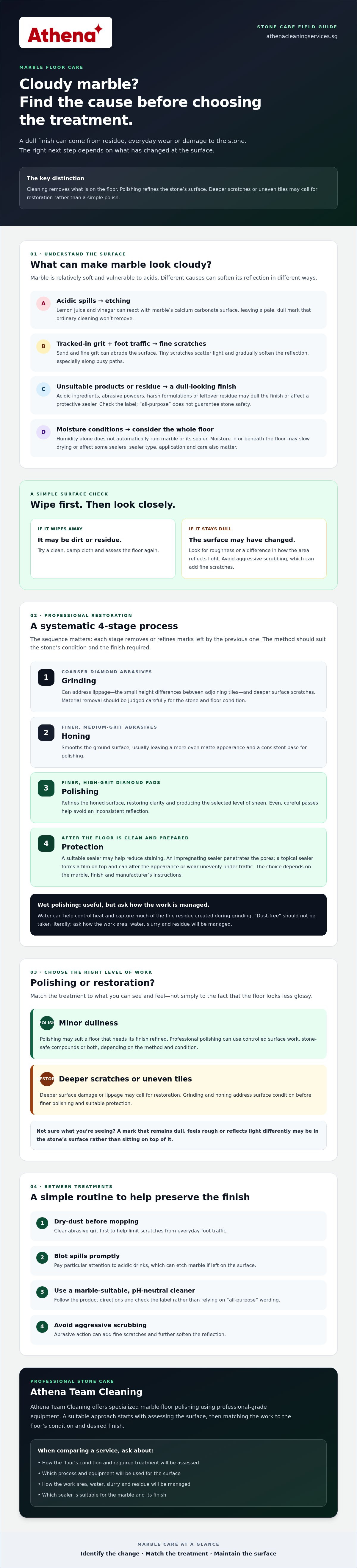
Marble doesn’t lose its shine simply because it needs another coat of cleaner. Its surface can be etched by acids, abraded by grit and dulled by repeated wear. Marble floor polishing singapore services use controlled surface work to improve the finish. Depending on the method and the floor’s condition, this may involve mechanical abrasion, stone-safe compounds or both.
Marble forms mainly from recrystallised calcite, a calcium carbonate mineral. Its geological properties of marble help explain why it can take a polish, but is also relatively soft and vulnerable to acids. Fine scratches scatter light and make a floor appear cloudy. Spills can also penetrate the stone if it is not adequately protected.
Humid conditions deserve consideration, but humidity alone doesn’t automatically ruin marble or its sealer. Stone can exchange moisture with its surroundings, and moisture retained in or beneath the floor may slow drying or affect the appearance and performance of some sealers. The sealer type, its application and ongoing care matter too. Sand and fine grit tracked indoors add another source of wear, especially in busy areas.
The Science of Etching and Scratches
Lemon juice and vinegar are acidic. If left on marble, they can react with its calcium carbonate surface and leave a pale, dull etch mark that ordinary cleaning won’t remove. Foot traffic causes a different kind of wear: grit can create tiny abrasions that gradually soften the reflection, particularly along frequently used paths.
Check the surface in good light. If a mark disappears after wiping with a clean, damp cloth, it may be residue or dirt. If the area stays dull, feels rough or reflects light differently, the change may be in the stone’s surface rather than on top of it. Avoid aggressive scrubbing, which can add fine scratches.
The Role of Improper Cleaning Agents
Marble doesn’t contain natural oils for household cleaners to strip. The main risks are acidic ingredients, abrasive powders, harsh formulations and residues that can dull the finish or affect a protective sealer. “All-purpose” cleaners vary, so check the product label rather than relying on its name. Some products may be too acidic or alkaline for delicate stone.
For routine care, choose a cleaner labelled as suitable for marble and pH-neutral, then follow its directions. Blot spills promptly, especially acidic drinks, and remove grit before mopping. These habits limit avoidable wear and make it easier to tell whether a floor needs routine care or professional attention.
The 4-Stage Professional Marble Restoration Process
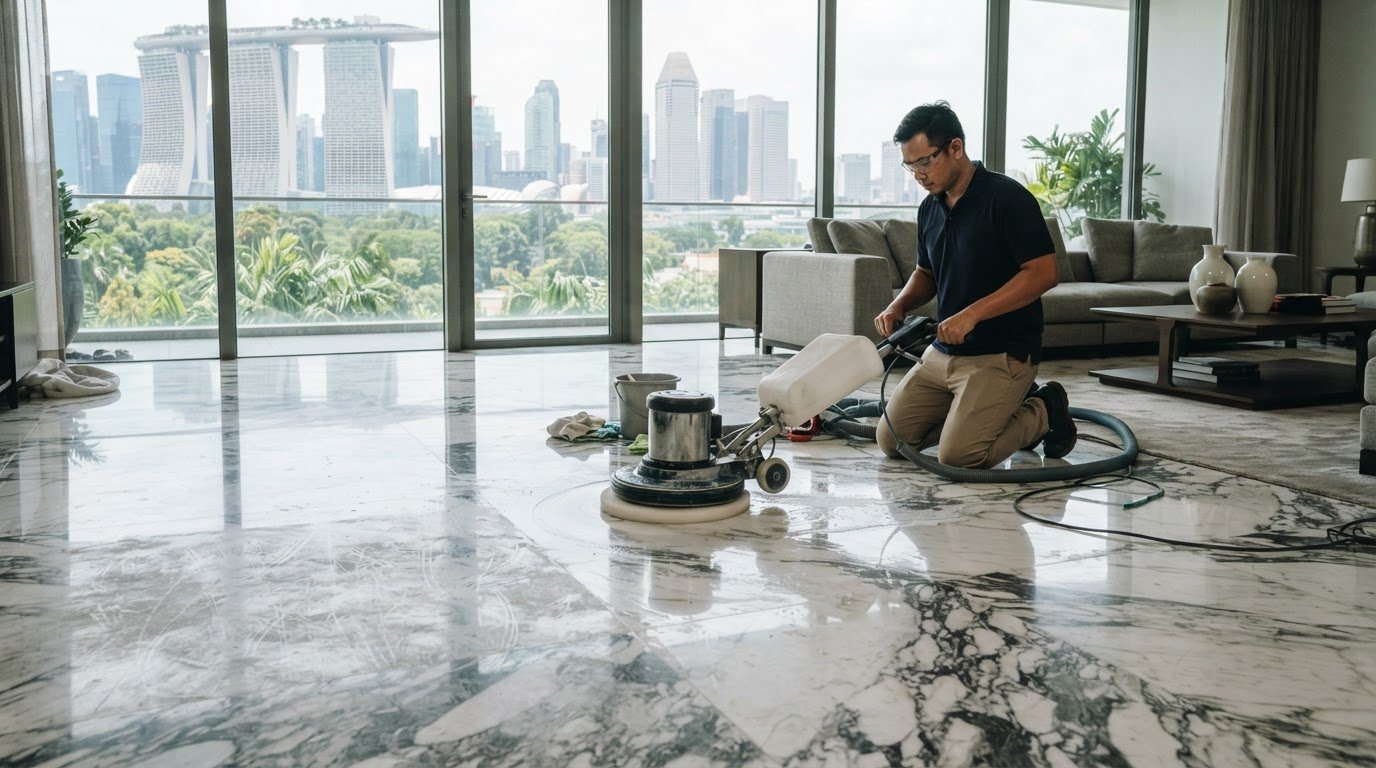
A more even shine takes a sequence of steps, not just a quick pass with a polishing machine. Professional restoration may use a floor grinder fitted with diamond-impregnated pads, progressing through finer abrasives to correct and refine the surface. The professional stone restoration process also illustrates why assessment and preparation matter: the right method depends on the stone’s condition and the finish required.
Many contractors use wet polishing, where water helps control heat and capture much of the fine residue created during grinding. It’s sometimes described as “dust-free,” but that shouldn’t be taken literally. Ask how the work area will be protected and how water, slurry and residue will be managed. The process should be systematic, with each stage removing or refining marks left by the previous one.
Stages 1 and 2: Grinding and Honing
Stage 1, grinding: Coarser diamond abrasives can address lippage, the small height differences between adjoining tiles, and deeper surface scratches. The amount of material removed should be judged carefully according to the stone and the floor’s condition.
Stage 2, honing: The technician moves to finer, medium-grit abrasives to smooth the ground surface. Honing usually leaves a more even matte appearance, creating a consistent base for polishing. This sequence helps prevent deeper scratches from showing through the finished surface.
Stages 3 and 4: Polishing and Protection
Stage 3, polishing: Finer, high-grit diamond pads refine the honed surface, restoring clarity and producing the level of sheen selected for the floor. Even, careful passes matter. Skipping abrasive grades or rushing across worn areas can leave an inconsistent reflection.
Stage 4, protection: Once the floor is clean and prepared, a suitable sealer may help reduce the risk of staining. An impregnating sealer penetrates the stone’s pores and generally leaves the natural surface exposed, while a topical sealer forms a film on top. Topical products can alter the appearance and may wear unevenly under traffic. The appropriate choice depends on the marble, its finish and the manufacturer’s instructions.
Some restoration systems also use a hardening treatment, but this isn’t the same as sealing and isn’t automatically required for every floor. Ask the provider to explain which steps are proposed and why. Athena Team Cleaning offers specialized marble floor polishing services using professional-grade equipment.
Marble Polishing vs. Restoration: Which Do You Need?
Polishing and restoration aren’t interchangeable. Polishing is generally a maintenance treatment for a floor that has lost some shine but remains smooth and free of serious damage. Restoration is corrective work for problems such as deep scratches, stubborn etching, cracks or uneven tile edges. Knowing the difference helps you ask for the right service rather than expecting a light polish to correct damage that needs more intensive work.
Use this quick check as a starting point, not a substitute for a professional assessment:
- Mostly dull, but smooth? Light polishing may be suitable if the floor has no deep scratches, chips or uneven edges.
- Visible scratches or persistent etch marks? Ask whether honing or grinding is needed to refine the damaged surface.
- Stains that remain after appropriate cleaning? The treatment depends on what caused them and how far they’ve penetrated. The Natural Stone Institute’s guide to stain removal from natural stone explains why identifying the stain matters.
- Tile edges at different heights, cracks or chips? Request a professional assessment before deciding on polishing alone.
When to Choose Light Polishing
Light polishing may suit marble that looks dull but has an intact surface. Depending on the floor and method, the work may involve suitable polishing compounds and light mechanical refinement to revive the sheen. It is usually less intensive than restoration and may be a practical refresh before hosting guests or preparing a property for sale. It won’t level uneven tiles or remove deep scratches.
When Full Restoration Is Essential
Restoration may be appropriate for pronounced scratches, deeper etching, some persistent stains and lippage, where adjoining tile edges sit at different heights. Uneven edges can catch the foot, so have them assessed rather than treating the floor as a simple shine problem. Corrective work may involve grinding away a controlled, thin surface layer, followed by finer steps to create a more uniform finish. Cracks or chips may need separate evaluation; polishing alone won’t repair them.
Timely care can help preserve a floor that is sound beneath its surface, potentially avoiding premature replacement. It can’t resolve every underlying issue, so ask the provider what can realistically be improved and which process is suitable. For marble floor polishing singapore, Athena Team Cleaning offers specialized marble floor polishing. Explore its marble floor polishing service to learn more.
How to Maintain Your Polished Marble: A Premium Care Guide
A professional polish can lose its clarity if grit, spills or unsuitable cleaners wear down the surface. Help prevent this by removing abrasive dust before mopping, cleaning spills promptly and using products made for marble. Consistent, gentle care helps preserve the finish and may reduce the need for corrective work.
The Daily Maintenance Routine
Start with dry dusting. Use a clean microfiber dust mop to pick up sand and dirt before they’re dragged across the floor. In a busy household, daily dusting is a practical way to limit fine scratches. Clean or change the mop head regularly so it doesn’t spread grit around.
For routine damp mopping, follow the care guidance for your stone and any sealer. Use a dedicated pH-neutral stone cleaner, or plain distilled water if appropriate, and avoid leaving standing water on the floor. Don’t use vinegar, acidic bathroom cleaners, abrasive powders or unverified all-purpose products. If you vacuum, choose a hard-floor setting or a machine without a rotating beater bar, which can strike tile edges and cause chips.
Long-Term Protection Strategies
Place suitable mats at entrances to catch grit before it reaches the marble, and lift them regularly to clean underneath. Attach felt protectors to furniture legs, replacing them when worn or dirty. Move heavy pieces carefully rather than dragging them, even with protectors in place.
For spills, follow the simple Spill-Blot-Clean rule: blot promptly with a soft cloth, then clean the area using a marble-safe product according to its directions. Don’t rub an acidic spill across the surface. If a mark remains, avoid experimenting with harsh stain removers. The right treatment depends on the type of stain and the stone’s finish.
There’s no universal re-buffing or re-sealing calendar. The need depends on foot traffic, the condition of the finish and the sealer used. Residential guidance commonly suggests professional polishing every 1 to 2 years for well-maintained floors with moderate traffic, but your floor may need attention sooner or later. Ask a specialist to inspect the surface and follow the sealer manufacturer’s care advice before scheduling additional treatment.
For advice on caring for your marble floor, ask Athena Team Cleaning about marble floor polishing.
Athena Team Cleaning: Singapores Dedicated Specialists in Stone Care
Marble is a defining feature of a space, and improving its finish takes more than routine cleaning. Athena Team Cleaning offers specialized marble floor polishing as part of its technical maintenance services, using professional-grade equipment. Careful work can improve the floor’s appearance and help the whole room feel clearer and more refined.
Choosing marble floor polishing singapore is a way to maintain the surface you already have. A suitable treatment may address wear and dullness, while routine care helps protect the finish. Results depend on the stone’s condition and the process required, so ask for a clear explanation of the proposed work. Find out what the assessment identifies, which steps are recommended and what improvements are realistic for your floor.
Why Our Meticulous Approach Matters
The equipment and method should match the marble, the level of wear and the finish you want. Athena Team Cleaning uses professional-grade specialized equipment for marble floor polishing. No restoration process should be casually described as completely dust-free; ask how the work area will be protected and how any water, slurry or residue will be managed in your home.
Clear communication and care for the space being worked in matter too. Athena Team Cleaning also provides residential and commercial cleaning services. Learn more about what to look for in a professional cleaning company in Singapore, including the importance of understanding a provider’s scope and process before proceeding.
Before confirming any work, request a quote and check that it reflects the floor’s condition and the agreed scope. Ask how the team will protect nearby areas, what preparation is expected and what aftercare can help preserve the result. These details make it easier to compare options and set clear expectations.
Take the First Step Towards a Restored Floor
If your marble looks cloudy, worn or uneven, start with an assessment rather than guessing which treatment it needs. Describe what you’ve noticed and ask whether polishing or more involved restoration may be appropriate. Contact Athena Team Cleaning to discuss marble floor polishing and request a quote.
Bring Back the Brilliance of Your Marble Floors
A cloudy finish doesn’t always mean your marble needs replacing. The right treatment depends on the floor’s condition: polishing may refresh light dullness, while deeper scratches, etching or uneven tiles may require more intensive restoration. A careful assessment helps match the work to the stone and set realistic expectations.
After professional work, simple habits make a difference. Dust before mopping, use marble-safe products and blot spills promptly to help protect the renewed finish. For marble floor polishing singapore, Athena Team Cleaning offers specialized marble floor polishing using professional-grade equipment.
Ready to discuss the right approach for your floor? Contact Athena Team Cleaning to discuss marble floor polishing and request a quote.
Frequently Asked Questions
How much does marble floor polishing cost in Singapore?
The cost of marble floor polishing singapore depends on factors such as the floor area, marble condition and work required. Light polishing and restoration involving deeper scratches or uneven tiles use different processes, so a general estimate may not reflect your floor’s needs. Ask for a quote based on an assessment and confirm what work is included. Athena Team Cleaning offers marble floor polishing; contact the team to discuss your floor and request a quote.
How long does the marble polishing process take for a standard HDB or condo?
There isn’t one reliable timeframe for every home because duration depends on the area, the floor’s condition and whether the job involves polishing or more intensive restoration. Repairs, drying requirements and the chosen protection can also affect the schedule. Before work begins, ask the provider to assess the floor and explain the expected process and timing, including how long people and furniture should stay off treated areas.
Will professional marble polishing remove deep stains and scratches?
Professional restoration can improve or remove some scratches and stains, but the outcome depends on their depth, cause and location. Surface polishing may restore shine without correcting damage that extends into the stone. Deeper scratches may need grinding and honing, while cracks or chips may require separate assessment. Share clear details about the marks and ask what results are realistic before agreeing to treatment.
Is the marble polishing process messy or dusty for my home?
Professional polishing can involve water, abrasive pads and stone residue, so ask how the work area will be protected and cleaned. Wet polishing helps control dust, but “dust-free” shouldn’t mean there will be no residue or preparation needed. Move fragile items away from the work zone and confirm whether furniture needs to be shifted. The provider should explain how slurry, equipment and nearby surfaces will be managed.
How often should I have my marble floors professionally polished?
For well-maintained residential marble with moderate foot traffic, professional polishing is commonly suggested every 1 to 2 years, though the right interval varies. Busy areas may lose their sheen sooner, while lightly used floors may need less frequent attention. Watch for persistent dullness or wear rather than relying only on a calendar. Regular dry dusting, prompt spill cleanup and marble-safe products can help preserve the finish between treatments.
Can I polish my marble floors myself with DIY kits?
DIY marble-care products can help with routine upkeep, but polishing kits may not suit every stone or type of damage. Using the wrong abrasive, cleaner or technique can leave uneven shine, fine scratches or etching. Test any approved product in an inconspicuous area and follow its instructions. For deep scratches, persistent stains or a large floor, seek a professional assessment before attempting mechanical polishing yourself.
What is the difference between marble honing and marble polishing?
Honing smooths the stone with abrasives and typically leaves a matte or satin appearance. Polishing uses finer abrasives or suitable compounds to refine the surface further and create more reflectivity. The stages may be combined during restoration, depending on the floor and desired finish. Neither process fixes every problem: deep damage, cracks and uneven tile edges should be assessed separately before treatment is chosen.
Is it safe to use vinegar or lemon to clean my marble floors?
No. Vinegar and lemon juice are acidic, and acids can react with marble’s calcium-based surface, leaving dull etch marks rather than ordinary dirt that wipes away. Blot spills promptly, then clean with a product labelled as suitable for marble and follow its directions. For regular care, avoid acidic or abrasive household cleaners and use a marble-safe, pH-neutral solution to help protect the finish.
Frequently Asked Questions
How much does marble floor polishing cost in Singapore?
How long does the marble polishing process take for a standard HDB or condo?
Will professional marble polishing remove deep stains and scratches?
Is the marble polishing process messy or dusty for my home?
How often should I have my marble floors professionally polished?
Can I polish my marble floors myself with DIY kits?
What is the difference between marble honing and marble polishing?
Is it safe to use vinegar or lemon to clean my marble floors?
Related articles