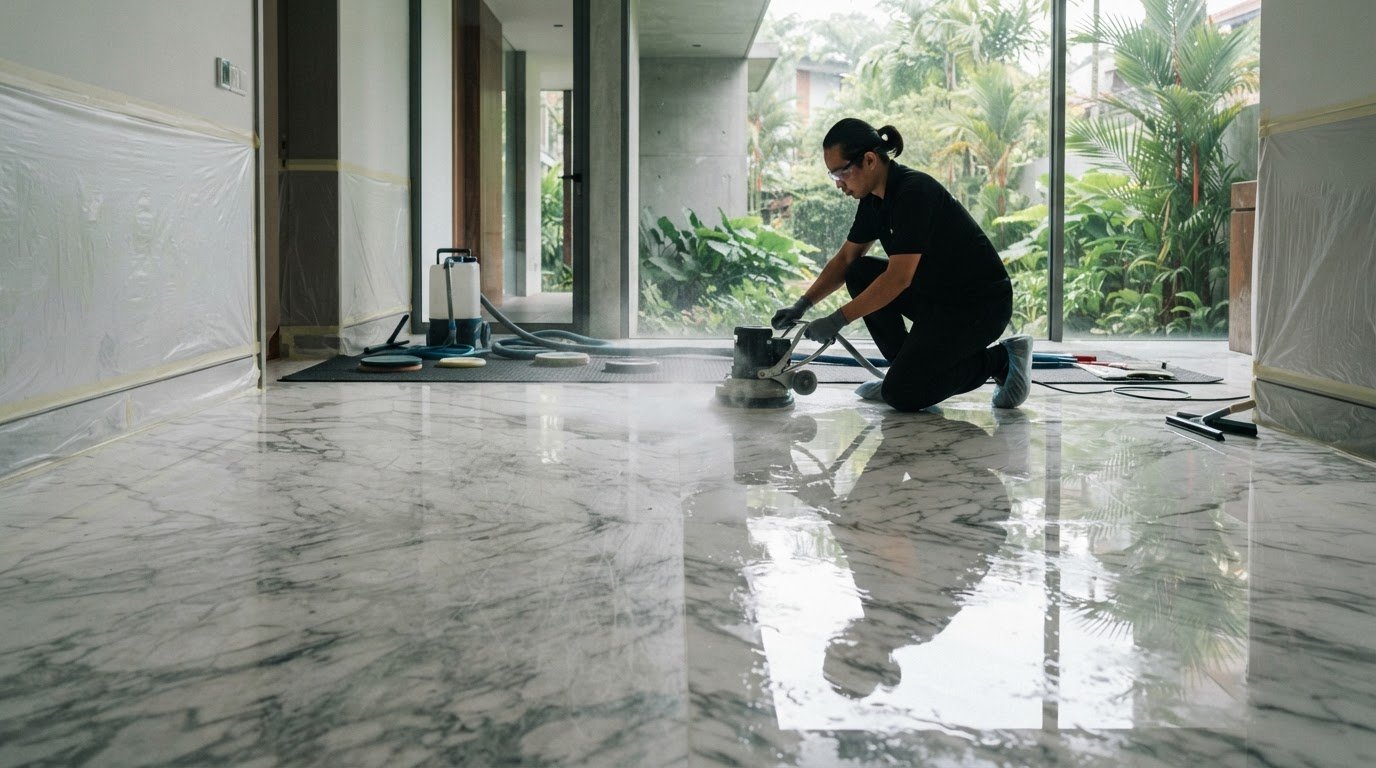

Prevent Marble Floor Etching: 2026 Homeowner Guide
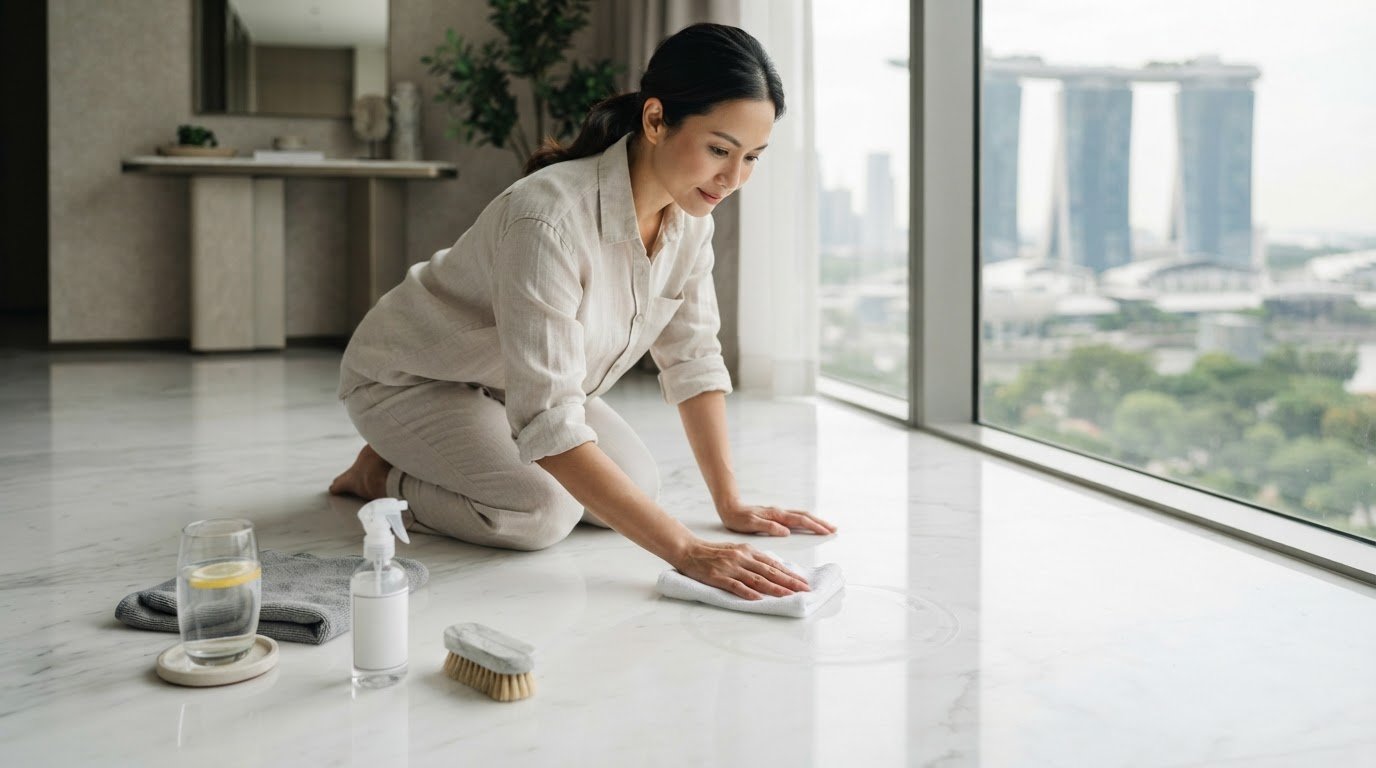
In this article
- Key Takeaways
- Table of Contents
- Understanding Marble Floor Etching: Causes, Chemistry, and Stains vs. Etches
- Common Acidic Culprits and Daily Etch Prevention Habits
- Safe Daily Cleaning Protocols to Protect Your Marble Floors
- The Truth About Marble Sealers: Impregnators vs. Etch Protection
- Restoring Etched Marble: DIY Remedies vs. Professional Stone Polishing
- Preserving the Lasting Brilliance of Your Natural Stone
- Frequently Asked Questions
Last Saturday, Sarah discovered a ghostly, dull ring on her pristine Carrara foyer, right where a guest set down a glass of lemon-infused water. It wasn't a stain she could simply scrub away; it was a permanent chemical change in the stone itself. If you've felt that same sudden panic when spotting mystery patches, you're likely searching for how to prevent marble floor etching before your investment loses its luster.
We understand that maintaining natural stone feels like walking a tightrope between elegance and fragility. You've probably worried that a single misplaced bottle of conventional household cleaner might ruin your floors forever. Our 2026 guide provides the clarity you need, offering master-level daily protocols and chemical safeguards to shield your surfaces from irreversible damage.
You'll discover the specific acidic substances that corrode calcium carbonate, learn a reliable daily cleaning routine using neutral-pH products, and gain the confidence to know when a minor mark is manageable versus when it's time to call in professional stone polishers for a total renewal.
Key Takeaways
- Distinguish between topical liquid stains and chemical etching marks to ensure you're applying the correct treatment for your stone's specific needs.
- Master the definitive strategies on how to prevent marble floor etching by eliminating acidic culprits like vinegar and citrus from your environment.
- Implement a professional four-step daily cleaning protocol using only pH-neutral products to safeguard the delicate calcium carbonate in your floors.
- Clarify the role of penetrating sealers and learn why these products protect against discoloration but offer no defense against chemical corrosion.
- Gain the confidence to identify when to address minor dullness yourself versus when to hire professional marble floor polishing for deep restoration.
Understanding Marble Floor Etching: Causes, Chemistry, and Stains vs. Etches
Many homeowners mistake a dull, cloudy ring for a stubborn stain that just needs more elbow grease. In reality, that mark is a form of physical damage rather than a surface discoloration. Understanding how to prevent marble floor etching begins with recognizing that marble is a sensitive, reactive material. Unlike granite or quartz, marble is primarily composed of calcium carbonate. This mineral is highly susceptible to chemical corrosion, meaning it doesn't just get dirty; it actually dissolves when it meets the wrong substances.
- Stains: Occur when a pigmented liquid like red wine or oil seeps into the stone's pores. The surface remains smooth, but the color changes.
- Etches: Occur when acid eats away the top layer of stone. The surface becomes dull, rough, or light-colored, and the damage is physical.
The Chemistry Behind Calcium Carbonate and Acid Damage
The beauty of marble comes from its crystalline structure, but this same structure makes it vulnerable. When an acidic substance, even something as mild as fruit juice, touches the floor, it triggers a chemical reaction that causes etching. This acid-base reaction essentially "cooks" the surface layer of the calcite. The acid dissolves the mineral bonds, physically eating away the polished finish. High-gloss floors suffer the most dramatic optical loss because the smooth, mirror-like surface is replaced by microscopic craters that scatter light instead of reflecting it.
Etch Marks vs. Stains: How to Identify the Damage
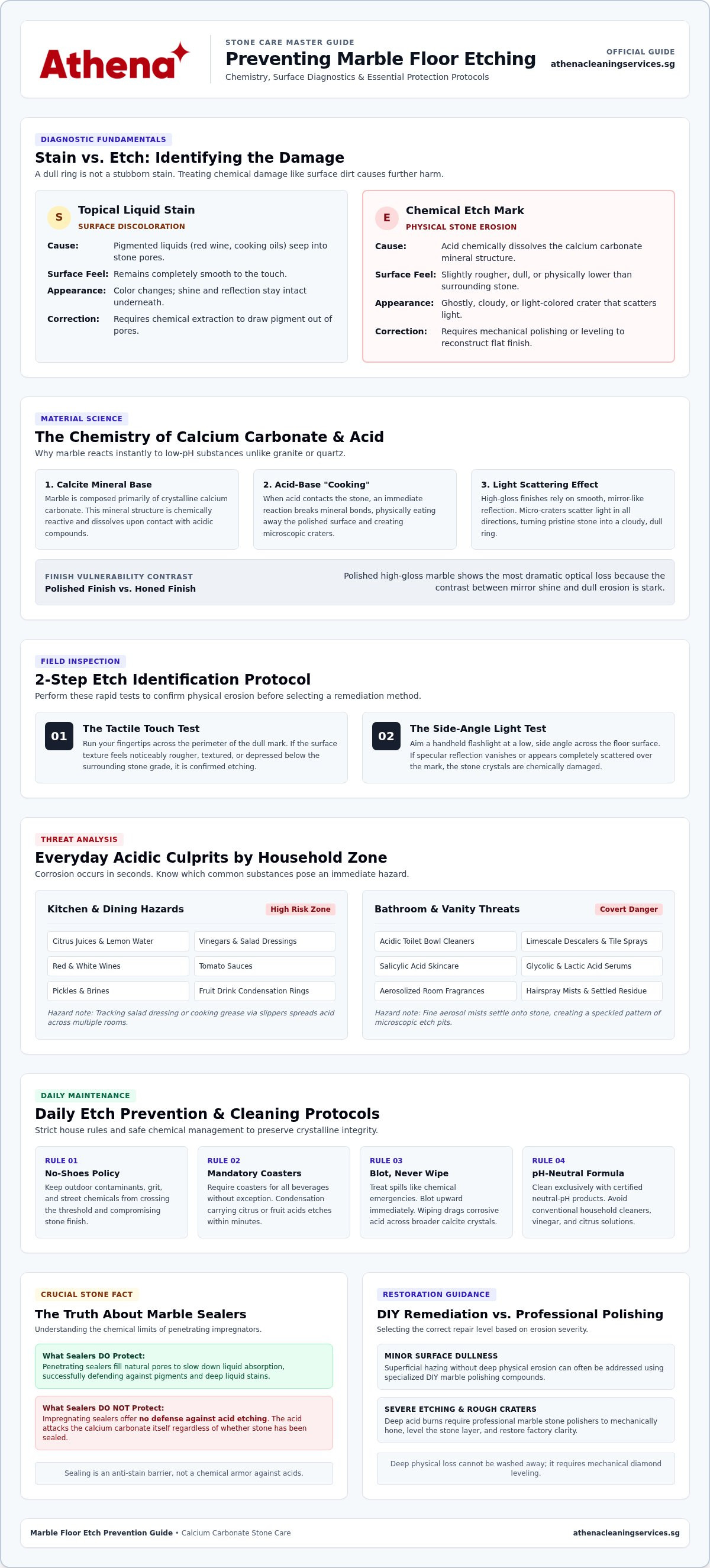
Identifying the problem is the first step toward a solution. You can perform a simple touch test to determine if you're dealing with surface erosion. Run your fingers over the dull patch; if it feels slightly rougher or lower than the surrounding area, it's an etch. You can also use a flashlight at a side angle. If the light disappears or looks scattered in that specific spot, the stone's crystals have been damaged. While stains require chemical extraction, severe etching often requires professional marble floor polishing to mechanically level the stone and restore its original clarity. We've seen that polished marble displays these marks much more visibly than honed finishes, as the contrast between the high-gloss shine and the dull etch is quite stark.
Common Acidic Culprits and Daily Etch Prevention Habits
Protecting your investment isn't just about cleaning; it's about disciplined lifestyle management. Mastering how to prevent marble floor etching requires a shift in how you view your daily household products and movement patterns. You must establish strict house rules to maintain a pristine environment. This starts with a "no shoes" policy to prevent outdoor contaminants from entering your home. It also includes mandatory protective coasters for every beverage, regardless of the container. Effective zone management ensures that high-risk activities are contained to areas with adequate protection, shielding your stone from accidental exposure.
Kitchen and Dining Hazards That Corrode Marble Instantly
The kitchen is the primary high-risk zone in any home. Vinegar, citrus juices, and wine are the usual suspects, but even tomato sauce or pickles can leave a permanent mark in seconds. We often see condensation rings from fruit drinks that leak through napkins or onto unprotected surfaces. It's not just about direct spills; tracked salad dressings or cooking grease on the bottom of slippers can carry acids across your entire home. You should treat every culinary spill as a chemical emergency, blotting it immediately rather than wiping, which can spread the acid further across the calcite crystals.
Bathroom Products and Covert Acidic Cleaners to Avoid
Many homeowners inadvertently ruin their bathroom floors while trying to keep them sterile. Acidic toilet bowl cleaners, descalers, and common tile sprays are catastrophic for natural stone. Even your skincare routine poses a threat. Products containing salicylic, glycolic, or lactic acids will etch the stone upon contact. Be wary of aerosolized room fragrances and hairsprays too. These fine mists eventually settle on the floor, creating a speckled pattern of tiny etch marks that are difficult to buff out. Always spray these products over a rug or vanity rather than directly over the marble tiles.
Physical Protective Barriers for High-Risk Interior Zones
Preventive habits are your first line of defense. We recommend placing non-slip, non-staining rugs beneath dining tables and beverage stations where spills are likely. A dense entrance mat is also vital. It traps abrasive grit that can scratch the surface, making etch marks appear even more pronounced. According to the Natural Stone Institute care guide, keeping these areas dry and grit-free is essential for long-term stone health. Finally, ensure every piece of furniture has felt pads to prevent micro-abrasions. If you've already noticed dull spots despite your best efforts, our specialized floor maintenance experts can restore that lost luster with precision.
Safe Daily Cleaning Protocols to Protect Your Marble Floors
Establishing a rigorous maintenance routine is the most effective way to understand how to prevent marble floor etching over the long term. It's not just about removing dirt; it's about ensuring every tool and chemical that touches your floor is safe for calcium carbonate. Many homeowners reach for mild dish soap, yet this often results in a dulling soap-scum accumulation that masks the stone's natural clarity. True preservation requires dedicated, pH-neutral solutions specifically formulated for natural stone.
Step-by-Step Routine for Neutral-pH Maintenance Mopping
Consistency is your greatest ally. Follow this precise four-step sequence to maintain a mirror-like finish without risking chemical damage:
- Step 1: Dry dust-mop the floor daily using a clean, dry microfiber pad. This lifts scratch-inducing grit and abrasive particles that can weaken the surface finish.
- Step 2: Dilute a dedicated stone soap (pH 7.0) according to the manufacturer's exact water ratios. Using too much concentrate can leave a streaky residue.
- Step 3: Apply the solution using a flat mop that has been thoroughly wrung out. You want minimal moisture; the floor should be damp, never saturated.
- Step 4: Buff the surface dry immediately with a fresh, soft microfiber cloth. Leaving water to air-dry can result in unsightly spotting or mineral deposits.
Dangerous Cleaning Myths: Why Common Remedies Ruin Stone
The "natural cleaning" movement has unfortunately popularized several ingredients that are catastrophic for marble. White vinegar and lemon juice solutions are highly acidic; they'll dissolve your floor's polish on contact. Similarly, bleach and ammonia-based formulas are too harsh, as they degrade the natural stone crystal bonds over time. We also strongly advise against steam mops. While they're popular for sanitization, they force scalding water and pressure into the stone's pores, which can weaken the underlying structure and lead to spalling or cracking in delicate tiles.
The 30-Second Spill Protocol: Neutralizing Acidic Contact
When a spill happens, speed is everything. You have a very narrow window to intervene before the acid begins to eat into the stone. Blot the liquid immediately with a clean paper towel. Don't wipe or spread the spill sideways, as this simply increases the surface area of the etch. Once the bulk of the liquid is gone, flush the contact spot with fresh, clean water to dilute any remaining acidic traces. For specific advice on physical discoloration, the Natural Stone Institute stain removal guide offers detailed methods for lifting pigments, but etching requires this immediate neutralizing flush to stop the burn. Finally, dry the area thoroughly and inspect the sheen at a side angle to ensure no dullness remains.
The Truth About Marble Sealers: Impregnators vs. Etch Protection
One of the most persistent myths in stone care is that a freshly sealed floor is immune to acid damage. While sealing is a vital part of stone maintenance, it's not a silver bullet for those wondering how to prevent marble floor etching. Most homeowners apply penetrating sealers, which are designed to prevent liquid absorption and staining. However, these products offer zero defense against chemical corrosion because they don't cover the surface; they live inside it. Understanding this distinction is the key to maintaining a flawless high-gloss finish.
| Feature | Penetrating Impregnator | Topical Anti-Etch Film |
|---|---|---|
| Primary Purpose | Prevents liquid stains | Stops chemical etching |
| Location | Inside the stone pores | On top of the stone surface |
| Acid Resistance | None | High |
| Visual Impact | Invisible / Natural | Can add artificial sheen |
How Penetrating Impregnating Sealers Actually Work
Penetrating impregnators use fluorochemical or silicone technology to line the internal pores of the stone. This creates a tension that repels oil and water, keeping pigments from sinking into the marble. Because these sealers sit below the surface, the outer calcite crystals remain completely exposed to acidic compounds. You can check your current sealant integrity with a simple twenty-minute water test. Place a tablespoon of water on the floor; if it hasn't beaded up and is absorbed after twenty minutes, your protection has failed and your stone is vulnerable to deep staining.
Topical Films and Sacrificial Coatings: Pros and Cons
Topical films, such as high-performance resin coatings, act as a physical sacrificial layer. These are the only true way to stop acid from touching the stone. While they provide excellent protection, they often come with aesthetic trade-offs. Some films can feel slightly artificial or develop localized yellowing over time. They're also vulnerable to scratching, which can eventually lead to peeling at the edges. Balancing these pros and cons is essential for a long-term maintenance strategy that keeps your home looking its best.
Maintaining a pristine environment requires more than just DIY checks. We recommend partnering with a professional cleaning company for periodic preventative audits. Our specialists can identify early signs of sealant degradation before irreversible damage occurs. If you're ready to elevate your floor care, consider our marble floor polishing services to ensure your stone remains a masterpiece of clarity and strength.
Restoring Etched Marble: DIY Remedies vs. Professional Stone Polishing
Even with a rigorous understanding of how to prevent marble floor etching, accidents are a reality of a lived-in home. When prevention fails, the path to restoration depends entirely on the depth of the damage. For homeowners, the challenge lies in distinguishing between a superficial dullness that can be addressed at home and deep chemical corrosion that requires industrial intervention. Attempting to fix severe damage without the proper tools often leads to "dishing," where hand-buffing a single spot creates a noticeable dip in the stone that catches the light unevenly.
Treating Mild Surface Etches with DIY Marble Polishing Pastes
If you can see a dull mark but cannot feel it with your fingernail, it's likely a superficial etch. You can often manage these light marks using specialized marble polishing powders or pastes. Apply a small amount of the compound to a damp microfiber pad and work in slow, controlled circular motions. It's vital to stay within the boundaries of the mark. Over-polishing the surrounding areas can create an optical halo, a shiny patch that stands out against the rest of the floor's natural patina. If the mark doesn't vanish after two or three attempts, stop immediately; further rubbing will only distort the tile's flatness.
When Deep Etching Demands Mechanical Diamond Restoration
Severe etching is characterized by a rough texture, a chalky white appearance, or a visible indentation in the stone. These marks have bypassed the surface polish and eaten into the stone's crystalline structure. In these cases, DIY pastes are ineffective. Restoration requires a multi-stage mechanical process using industrial diamond-impregnated pads. Professionals use a progressive grit sequence, starting with coarse honing pads to grind down the damaged layer until the surface is level. They then move through progressively finer grits to restore the stone's clarity. This wet-grinding method is the only way to ensure true optical flatness across the entire floor, eliminating the "orange peel" texture left by deep acid burns.
The Athena Team Cleaning Standard for Marble Restoration
We provide a definitive restoration standard that goes beyond simple surface cleaning. Our trained professionals use specialized technical equipment and tailored compounds designed for delicate stone petrology. We don't just scrub; we use a precise mechanical sequence to restore the stone's original factory finish. This process often includes crystallization, a specialized technique that hardens the surface layer for enhanced daily resilience against future mishaps. While you now know how to prevent marble floor etching through better daily habits, scheduling routine marble floor polishing is the best way to maintain your property's value. A showroom-grade reflective clarity isn't just a luxury; it's a testament to meticulous care and a commitment to excellence in your living environment.
Preserving the Lasting Brilliance of Your Natural Stone
Mastering the science of your home's surfaces is the first step toward lasting elegance. You now understand that etching is a permanent chemical alteration, not a simple surface mark. By eliminating acidic cleaners and adopting a strict pH-neutral maintenance routine, you've learned the most effective strategies for how to prevent marble floor etching. These daily habits act as a guardian for your stone's crystalline structure, ensuring the high-gloss clarity remains a centerpiece of your environment.
Even with the best care, accidents happen. When your floors require more than just daily maintenance, trust a dedicated specialist to handle the restoration. As a trusted provider of comprehensive residential cleaning nationwide, Athena Team Cleaning utilizes specialized diamond-abrasive polishing technology to erase deep etches and restore optical flatness. Our trained in-house specialists deliver meticulous surface maintenance that elevates your space to its full potential. Restore your marble floors to showroom brilliance with Athena Team Cleaning today. Your home deserves a level of excellence that only precision craftsmanship can provide.
Frequently Asked Questions
Does a marble sealer prevent acid etching on floors?
No, traditional penetrating marble sealers don't prevent acid etching on floors. These sealers are engineered to absorb deep into the stone's pore network to repel oils and water, which effectively blocks pigment stains. However, they leave the top layer of calcium carbonate completely exposed to chemical corrosion. To stop acid damage entirely, you need a specialized topical anti-etch barrier that forms a physical, acid-resistant shield over the surface.
Can mild vinegar solutions be safely used to clean marble floors?
No, vinegar solutions should never be used on marble floors, regardless of how mild or diluted they are. Vinegar is highly acidic and reacts instantly with the calcium carbonate inside the stone. This reaction dissolves the surface crystals, creating immediate, cloudy dullness. Property owners researching how to prevent marble floor etching must stick strictly to specialized cleaners with a neutral pH of 7.0 to maintain their floor's integrity.
How quickly does acidic liquid cause etch damage to marble?
Acidic liquids cause etch damage to marble instantly upon contact. Substances like lemon juice, wine, or aggressive bathroom cleaners trigger a destructive chemical reaction the second they touch the stone. While a deeper indentation develops the longer the liquid sits, the initial loss of polish occurs within seconds. This immediate reaction is why executing a rapid blotting protocol is vital for protecting your floor's beautiful reflective surface.
Can I buff out marble etch marks myself using baking soda?
We don't recommend using baking soda to buff out etch marks. Baking soda is an alkaline abrasive, and rubbing it against sensitive calcite crystals can create micro-scratches that actually worsen the dull patch. While mild DIY polishing powders work on superficial marks, severe or widespread chemical burns require professional mechanical restoration. Taking a DIY approach to deep damage often results in uneven surfaces and noticeable optical distortion across your tiles.
What is the visual difference between a marble stain and an etch mark?
A stain is a dark or discolored patch caused by a pigmented liquid absorbing into the stone's pores, while an etch mark is a dull, rough, or light-colored spot caused by chemical corrosion. Stains alter the color without changing the texture of the stone. Etches physically alter the stone's surface finish. You can easily identify an etch by shining a flashlight at a side angle to see where the light scatters.
How often should polished marble floors receive professional restoration?
Polished marble floors typically require professional restoration every one to three years, depending on foot traffic and daily maintenance quality. High-traffic areas like entryways or dining zones lose their luster faster due to micro-abrasions and minor spills. When everyday cleaning no longer restores the mirror-like shine, scheduling professional marble floor polishing is the definitive solution to grind away damaged layers and crystallize the stone for renewed surface resilience.
Are honed marble floors immune to chemical etching compared to polished marble?
Honed marble floors are not immune to chemical etching, though they do hide the damage much better than polished surfaces. The chemical reaction between acids and calcium carbonate happens identically on any finish type. Because honed marble already features a matte, low-sheen surface, the contrast created by a dull etch mark is far less visible. It remains an excellent design choice for high-risk zones when considering how to prevent marble floor etching visibility.
Frequently Asked Questions
Does a marble sealer prevent acid etching on floors?
Can mild vinegar solutions be safely used to clean marble floors?
How quickly does acidic liquid cause etch damage to marble?
Can I buff out marble etch marks myself using baking soda?
What is the visual difference between a marble stain and an etch mark?
How often should polished marble floors receive professional restoration?
Are honed marble floors immune to chemical etching compared to polished marble?
Related articles