

Vacuum vs steam clean mattress in Singapore: which one your bed needs
In this article
- The short answer: vacuum often, steam only when the mattress asks for it
- Why Singapore bedrooms make this decision harder
- What vacuuming actually removes
- What steam cleaning does that vacuuming cannot
- Cost, drying time and risk compared
- A routine that works in HDB, BTO and condo bedrooms
- Dry, wet or steam: which professional clean to book
- A home deep clean, step by step
- When to stop DIY and call a professional
- Comparison at a glance
- Frequently asked questions
- Sources
- Related Athena cleaning services in Singapore
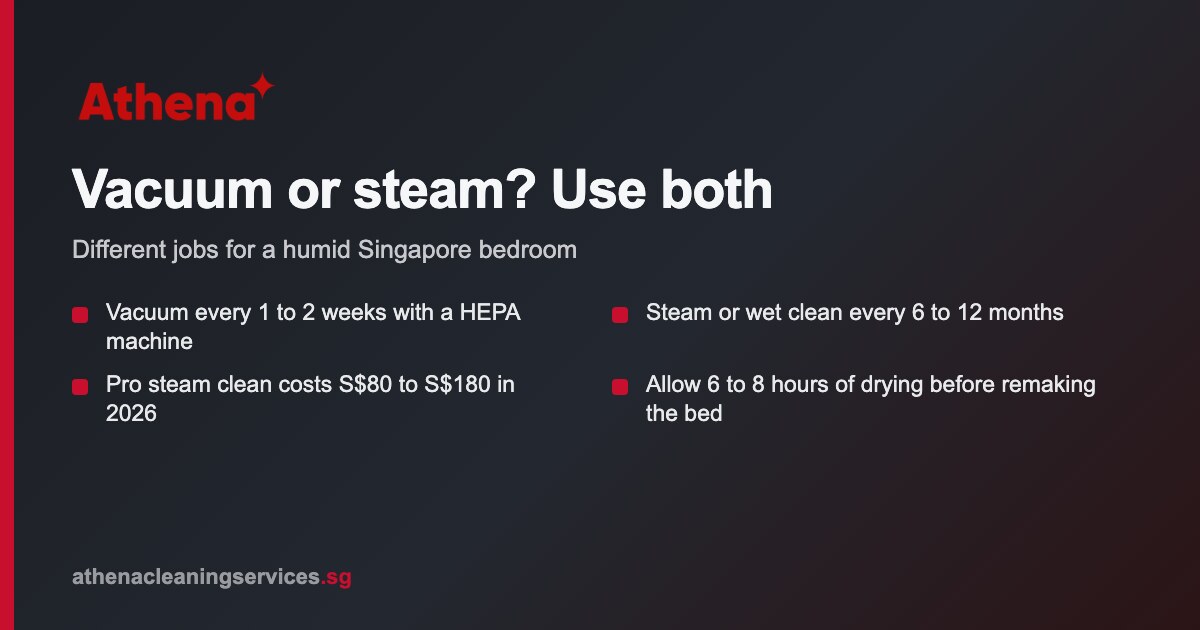
Vacuum your mattress every one to two weeks, and book a steam clean only when it smells, shows sweat stains or sets off allergies at night. For vacuum vs steam clean mattress Singapore homes, vacuuming is the routine job and steam is the occasional deep treatment, because our year-round humidity makes an over-wet mattress slow to dry and quick to turn mouldy.
Vacuuming is free once you own a decent machine and is safe on every mattress type. A professional steam or wet clean typically costs S$80 to S$180 for a single to queen size in 2026, and the part that matters is whether the water is pulled back out afterwards. Here is how to decide, what each method really removes, and how to avoid a damp core.
The short answer: vacuum often, steam only when the mattress asks for it
Most people treat this as an either-or question, and it is not. Vacuuming and steam cleaning do different jobs. A vacuum lifts loose dust, skin flakes, hair and pet fur from the surface. Steam adds heat and moisture to loosen sweat residue, soften stains and kill a share of dust mites. One is maintenance, the other is a periodic reset.
A sensible rhythm for a bedroom in an HDB flat or condo is a weekly or fortnightly vacuum, a spot-clean the same day anything spills, and a deeper steam or wet clean roughly every 6 to 12 months. Households with babies, asthma, eczema or pets sit at the shorter end of that range. Guest rooms that stay shut for weeks sit at the longer end, but still need a vacuum and a sniff test before the next visitor sleeps there.
The mistake we see most is people buying a household steamer and treating it as a stronger vacuum, when steam without extraction pushes moisture into the comfort layers, and in a climate where indoor relative humidity often sits above 70 percent, that moisture has nowhere to go. Our mattress cleaning guide for Singapore covers the full home routine if you want the step-by-step version.
Why Singapore bedrooms make this decision harder
Mattresses in cooler, drier countries can be steamed on a Saturday and slept on that night. In Singapore the hard part is getting it dry again. Singapore has no dry season, daily humidity typically ranges from about 70 to 90 percent, and many bedrooms rely on a fan rather than air conditioning for most of the night. A mattress that picks up moisture releases it slowly.
Heat, sweat and dust mites
Dust mites feed on shed skin and thrive in warm, damp bedding. Studies summarised by the Sleep Foundation point to mite droppings as a common trigger for sneezing, itchy eyes and night-time coughing. Our humidity gives them a comfortable year-round home, which is why a mattress here can need attention more often than the same bed would overseas. We go through the health side in more detail in our piece on dust mites and bacteria in Singapore mattresses.
Open windows and construction dust
HDB and BTO bedrooms often keep windows open for airflow. That lets in fine dust from roads, nearby construction and neighbouring blocks, especially on lower floors. Condo bedrooms that stay shut while owners travel face a different problem: stale air, a musty smell and sometimes mould spots on the underside of the mattress or the slats beneath it.
The US EPA mould cleanup guidance is blunt on one point that applies here: moisture control is the thing that stops mould. Any mattress method that adds water has to be judged by how fast that water leaves.
What vacuuming actually removes
A good upholstery-head vacuum removes what sits on and just under the surface: dust, skin flakes, hair, crumbs, pet fur and some mite debris. It is quick, costs nothing per session and is safe for memory foam, latex, pocket spring and hybrid mattresses alike. For allergy-prone sleepers, a machine with a HEPA filter matters, because a cheap filter can blow the finest particles back into the room.
How to vacuum properly
Strip the bed and wash the sheets first. Go over the top in slow overlapping strips, then the sides, then the seams and piping where debris collects. Flip or rotate the mattress if the manufacturer allows it, and repeat on the other side. Five to ten minutes for a queen is realistic. Rushing with a fast pass removes very little.
What it cannot do
Suction does not reach deep into the comfort layers, lift dried sweat or urine stains, or remove odour. If the mattress still smells after a thorough vacuum, the problem is below the surface and you are looking at a wet or steam treatment. Our mattress cleaning service includes a dry vacuum-and-UV option for mattresses that only need the surface dealt with, which suits most beds that are cleaned on a regular schedule.
What steam cleaning does that vacuuming cannot
Steam reaches temperatures above 100 degrees Celsius at the nozzle, and the Sleep Foundation's cleaning guidance says surface contact at roughly 60 degrees Celsius or higher is generally enough to kill dust mites and loosen bacteria. It also breaks down body oils and sweat residue that hold odour in the fabric. That is the real benefit, and it is why steam earns its place for stained or smelly mattresses.
The catch is the water it leaves behind, since a hand-held household steamer can only treat the top few millimetres of the cover and fills the fabric with condensation, with no way to take the water back out. A professional machine works differently: it applies steam or hot solution and extracts it again with strong suction, so far less water stays behind. That extraction step is the whole difference between a fresh mattress and a damp one.
If you are weighing a rented or bought steamer against a professional visit, the numbers and process are covered in our guides on steam cleaning a mattress to save time and money and the mattress steam cleaner guide for germ-free sleep. Both are worth reading before you spend S$100 or more on a machine you will use twice a year.
Cost, drying time and risk compared
The table below puts the common options side by side using typical Singapore ranges for 2026. Prices are for a single to queen size and differ by provider, mattress thickness and whether stains need pre-treatment, so treat them as a guide and ask for a written quote.
Drying time rises sharply once water is involved, and the difference between a handheld steamer and a proper extraction machine can be a full day. The cheapest option per session is not the cheapest if a damp core leads to mould and a replacement mattress, which easily costs S$600 to S$2,500 depending on the brand.
As a rule of thumb, let any wet or steam clean dry for at least 6 to 8 hours in a room with the fan on or the windows open before putting sheets back. If the mattress still feels cool and damp to the hand, leave it longer. A dehumidifier in a closed bedroom speeds this up noticeably, and the NEA public cleanliness guidance is a reasonable reference for keeping a home hygienic when humidity climbs after heavy rain.
A routine that works in HDB, BTO and condo bedrooms
Small bedrooms and shared rooms are the norm in many HDB and BTO flats, so the routine needs to be short enough that people actually do it. Here is the version we recommend to households who ask us for a plan.
- Weekly or fortnightly: wash sheets in hot water, then vacuum the mattress top and sides with a HEPA machine.
- Same day, every spill: blot with a dry cloth, never rub, and let air and a fan do the drying.
- Every 6 to 12 months: a professional wet or steam clean with extraction, with the room ventilated afterwards.
- After illness, a move-in or a flood: an immediate deep clean rather than waiting for the next scheduled one.
A breathable, washable mattress protector takes most of the sweat and skin flakes so the mattress itself needs the deep treatment less often. If you want to see how clean sleep connects to rest quality, our article on mattress cleaning for better sleep goes through it.
The same logic extends to other soft furnishings. Rugs and sofas face the same dust and humidity, and our guide on how often to clean carpets in Singapore gives a matching schedule so you can bundle jobs in one visit.
Dry, wet or steam: which professional clean to book
Most mattress cleaners in Singapore sell two methods, and the choice depends on what is wrong with the bed.
- Dry clean: very little water, a strong HEPA vacuum and sometimes a UV lamp. The bed is usable the same evening, which suits a routine freshen-up or a household with dust-mite allergies.
- Wet clean with extraction: hot water or steam goes in and a machine pulls it back out. Book this for urine, vomit, blood or old sweat patches, because those soak below the surface and need moisture to lift them. Plan for the bed to stay off-limits for several hours.
Urine is the common case. Toddlers in toilet training, an elderly parent and a pet that sleeps on the bed all leave stains that a dry clean will only freshen. Ask for wet cleaning with extraction and say what the stain is when you book.
Check the care label before any heat goes near a memory foam, latex or gel mattress. Some of these layers soften or crack under high heat and heavy moisture. If the label warns against steam, a dry clean plus spot treatment is the safer route.
A home deep clean, step by step
Between professional visits, this routine is safe for most mattresses and takes an afternoon.
- Strip the bed and wash the sheets, pillowcases and protector at the hottest setting their labels allow.
- Vacuum both sides slowly with a HEPA machine, then run the crevice tool along the seams and piping.
- Dab any stain with a few drops of mild detergent in cool water. Use a clean cloth and do not scrub or soak.
- Sprinkle a thin layer of baking soda over the top, leave it for three or four hours, and vacuum it off.
- Stand the mattress on its side near an open window with a fan on it. A short spell of morning sun is fine; long hours in the afternoon sun can fade the fabric and dry out foam.
- Wait until it feels dry and room-temperature to the touch before you make the bed again.
Rotate the mattress head to foot every three months, and flip it too if it is double-sided. Handheld UV mite vacuums are handy for the weekly pass, though they do the same job as a normal vacuum and will not replace a deep clean.
If the mattress is under two years old, sits under a washable protector, has no stains or smell and nobody at home has night-time allergy symptoms, you can skip professional cleaning for now. Keep up the vacuuming and protector washes and look again in six months.
When to stop DIY and call a professional
There are a few clear signals that a home vacuum or steamer will not be enough. Visible yellow or brown patches, a sour or musty smell that returns after airing, black or green spots on the fabric or underside, and night-time sneezing that eases when you sleep elsewhere all point to something deeper than surface dust.
Moving into a furnished rental or a resale flat with the previous owner's mattress is another good time to book one, before anyone sleeps on it.
Professionals bring extraction machines that remove most of the water they apply, plus the technique to avoid soaking one spot. They can also tell you whether a mattress is past saving. If mould has gone into the foam or the springs rust, replace the mattress, because no amount of cleaning will fix it.
Our mattress service for stains and allergens and our steam cleaning solutions for a fresher bed both include a pre-clean inspection, so you know before we start whether the mattress is a candidate for treatment. For general consumer protection when you compare quotes, the Consumers Association of Singapore is a useful place to check your rights on service contracts and refunds.
Comparison at a glance
| Method | Typical cost (SGD) | Drying time | Best for | Risk in humid homes |
|---|---|---|---|---|
| HEPA vacuum at home | S$0 per use after buying a machine (S$150 to S$500) | None | Weekly dust, skin flakes, hair | Very low |
| Handheld household steamer | S$60 to S$150 to buy, or S$30 to S$60 to rent | 12 to 48 hours if the fabric is soaked | Light surface freshening | High if no extraction |
| Professional dry clean with vacuum and UV | S$60 to S$120 per mattress | 1 to 2 hours | Routine upkeep, mild odour | Low |
| Professional steam or wet clean with extraction | S$80 to S$180 per mattress | 4 to 8 hours | Stains, sweat, strong odour, allergy flare-ups | Moderate if ventilated well |
| Replacement mattress | S$600 to S$2,500 | Not applicable | Mould in the core, rusted springs | Not applicable |
Frequently asked questions
Is it better to vacuum or steam clean a mattress in Singapore?
Do both, but at different intervals. Vacuum every one to two weeks to remove dust, skin flakes and hair, and schedule a steam or wet clean with proper extraction every 6 to 12 months or when stains and odour appear. Steam alone is not a replacement for regular vacuuming.
Can steam cleaning cause mould on a mattress in a humid HDB flat?
Yes, if the mattress stays damp. A household steamer leaves moisture in the comfort layers, and 70 to 90 percent humidity slows drying. Use a machine that extracts water, ventilate the room and give the mattress at least 6 to 8 hours before putting sheets back on.
How much does professional mattress steam cleaning cost in Singapore?
Typical 2026 prices run from about S$80 to S$180 for a single to queen size, with king sizes and heavy stain treatment at the higher end. Dry vacuum-and-UV cleaning is usually cheaper at S$60 to S$120. Ask for a written quote that states the size, method and any add-on charges.
How often should I clean my mattress in a Singapore home?
Vacuum weekly or fortnightly and deep clean every 6 to 12 months. Choose the shorter interval if anyone has asthma, eczema, allergies or pets, or if the bedroom is on a low floor with open windows. Clean sooner after illness, spills or a long period in storage.
Does a steam cleaner kill all dust mites in a mattress?
No. Steam kills mites it reaches at a high enough temperature, but it only penetrates the surface layers of a thick mattress. Combine it with regular vacuuming, hot-water washing of sheets, a protector and lower bedroom humidity for results that last.
Can I use a wet-dry vacuum instead of a steamer?
A wet-dry extractor is closer to what professionals use, because it pulls water back out. It works well on stains if you use light water and strong suction. Test a small hidden patch first, and avoid it on memory foam beds that hold liquid for a long time.
Sources
- Sleep Foundation
- US EPA mould cleanup guidance
- NEA public cleanliness guidance
- Consumers Association of Singapore
Related Athena cleaning services in Singapore
Related articles


