
Workplace Hygiene Standards Singapore: The 2026 Comprehensive Guide
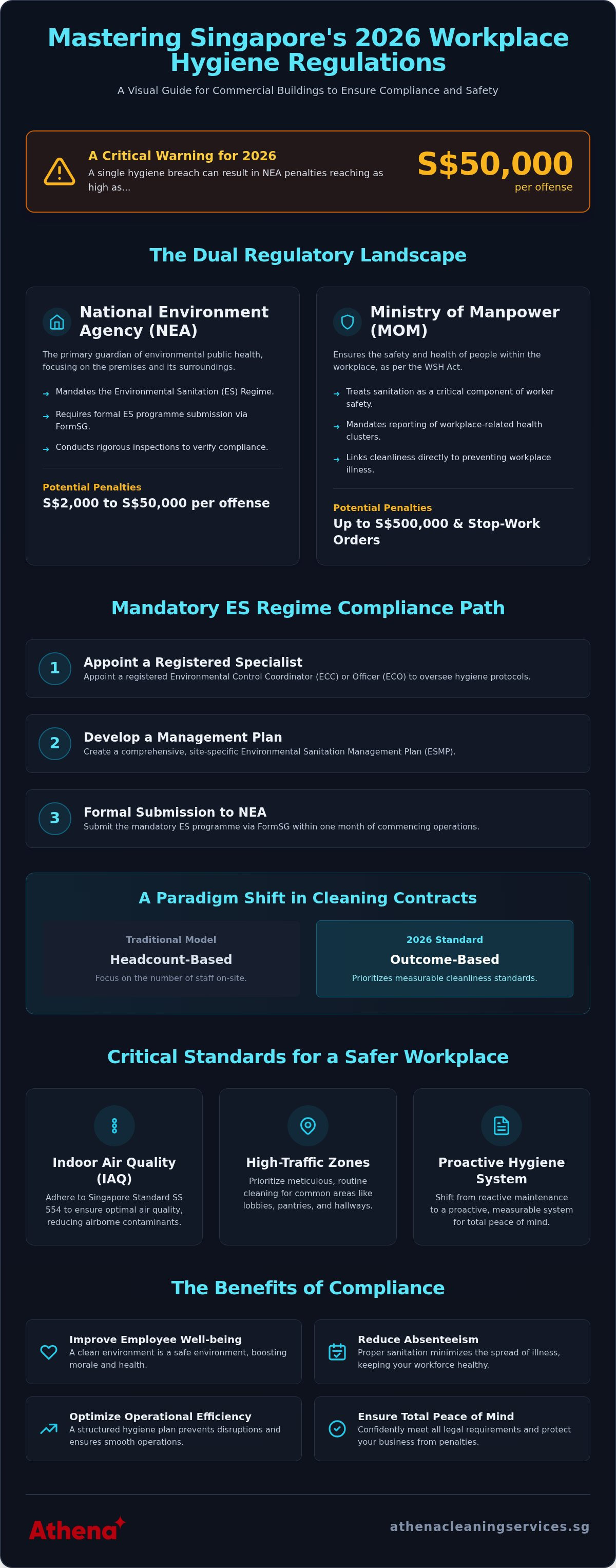
Did you know that a single hygiene breach in 2026 can result in National Environment Agency (NEA) penalties reaching as high as S$50,000 per offense? It's a sobering figure that highlights just how critical professional standards have become for every business in Singapore. You're likely feeling the pressure of balancing complex NEA and Ministry of Manpower (MOM) requirements while trying to maintain a space that feels fresh and inviting. Managing a rigorous schedule for common area cleaning for commercial buildings singapore is no longer just about aesthetics; it's a fundamental pillar of your operational continuity and employee well-being.
We understand the confusion that comes with navigating overlapping regulations and the fear of unexpected penalties. This guide promises to help you master the latest 2026 hygiene regulations to create a safer, fully compliant, and more productive commercial environment. We'll provide a clear roadmap for your office sanitation strategy, covering everything from mandatory Environmental Sanitation programmes to the latest indoor air quality benchmarks. By the end, you'll have the precision and confidence needed to elevate your workplace into a sanctuary of health and professional excellence.
Key Takeaways
- Navigate the complex dual requirements of NEA and MOM with a clear understanding of the 2026 Environmental Sanitation regime.
- Secure your premises by appointing a registered Environmental Control Coordinator and developing a mandatory, site-specific management plan.
- Optimize your operational efficiency by establishing a meticulous routine for common area cleaning for commercial buildings singapore that prioritizes high-traffic zones.
- Improve employee well-being and reduce absenteeism by adhering to the latest Singapore Standard SS 554 for indoor air quality and surface disinfection.
- Transform your workplace culture from reactive maintenance to a proactive, measurable hygiene management system that ensures total peace of mind.
Understanding the Regulatory Landscape of Workplace Hygiene in Singapore
In the corporate landscape of 2026, workplace hygiene has evolved from a secondary maintenance task into a core pillar of business resilience. The post-pandemic era has permanently redefined "clean" as a measurable, data-driven standard rather than a visual assessment. For facility managers, this shift means moving beyond basic janitorial services to embrace a sophisticated co-regulatory framework. Today, professional office environments must meet stringent thresholds that go far beyond the occasional dusting of surfaces. Relying on outdated methods is no longer an option; instead, businesses must prioritize comprehensive common area cleaning for commercial buildings singapore to ensure they remain on the right side of the law.
The transition from voluntary guidelines to mandatory sanitation frameworks is now complete. This evolution ensures that every commercial space contributes to the broader public health of the nation. It requires a meticulous approach to sanitation that balances the requirements of two primary governing bodies: the National Environment Agency (NEA) and the Ministry of Manpower (MOM). Together, these agencies provide the Regulatory Landscape of Workplace Hygiene that every modern enterprise must navigate with precision.
The Role of the NEA in Public Health
The NEA serves as the primary guardian of environmental public health. Under the 2026 amendments to the Environmental Public Health Act, the mandatory Environmental Sanitation (ES) regime has been fully implemented across all specified commercial premises. This regime requires building owners to develop a formal ES programme, which must be submitted via FormSG within one month of commencing operations. NEA officers conduct systematic, rigorous inspections to verify that these programmes are active and effective. A key trust signal in this landscape remains the SG Clean quality mark, which serves as a visible commitment to high standards. Failure to comply with these statutory requirements can lead to significant penalties, with fines ranging from S$2,000 to S$50,000 per offense.
MOM Workplace Safety and Health (WSH) Guidelines
While the NEA focuses on the environment, the MOM ensures that the people within that environment are protected. Under the Workplace Safety and Health Act, employees have a legal right to a hygienic and safe working environment. This framework treats sanitation as a critical safety component, directly linking cleanliness to the prevention of workplace illness. Occupiers are now mandated to maintain strict reporting requirements for any workplace related health clusters or contagious outbreaks. MOM has the authority to impose stop-work orders and fines of up to S$500,000 for serious safety violations. By integrating professional common area cleaning for commercial buildings singapore into your daily operations, you demonstrate a commitment to both regulatory compliance and the genuine well-being of your workforce.
The Environmental Sanitation (ES) Regime for Commercial Buildings
Compliance in 2026 requires a rigorous, site-specific approach that moves beyond simple checklists. Every specified commercial building is now legally mandated to implement a comprehensive Environmental Sanitation (ES) programme. This begins with the appointment of a registered Environmental Control Coordinator (ECC) or Officer (ECO). These dedicated specialists serve as your primary guides, responsible for developing and overseeing the Environmental Sanitation Management Plan (ESMP). Maintaining high standards for common area cleaning for commercial buildings singapore is no longer a choice; it's a structured regulatory requirement submitted directly to the NEA via FormSG.
The industry has shifted decisively away from traditional headcount-based models toward outcome-based cleaning contracts. This modern approach prioritizes measurable cleanliness standards rather than simply counting the number of staff on-site. It allows for a more sophisticated allocation of resources, ensuring that high-traffic zones receive the meticulous attention they deserve. Partnering with a professional building maintenance team can help you navigate this transition, providing the expertise needed to meet these elevated expectations with total confidence.
Key Components of an ESMP
- Risk-Based Frequencies: Establish cleaning schedules based on real-time footfall and area usage. High-touch surfaces require more frequent intervention than low-traffic storage zones.
- Routine vs. Periodic Cycles: Distinguish between daily maintenance and thorough periodic disinfection. The NEA requires deep cleaning and disinfection to be conducted at least every six months.
- Pest Management: Integrate a comprehensive pest management plan, including a mandatory survey every six months to ensure a hygienic environment.
Effective incident management is equally vital. Your ESMP must include clear Standard Operating Procedures (SOPs) for biohazard cleanup and sudden contagious outbreaks. These protocols ensure that your team can respond with precision and speed, minimizing risks to occupants and maintaining business continuity during unexpected health challenges. Precision matters.
Record Keeping and Compliance Audits
Transparency is the hallmark of a successful hygiene strategy. Digital logging systems for all cleaning activities provide an immutable record for NEA enforcement officers during their systematic audits. These logs track everything from routine sweeps to the completion of specialized common area cleaning for commercial buildings singapore. You must also ensure your staff undergoes regular training to maintain the highest levels of technical proficiency and safety.
Non-compliance carries heavy burdens. Beyond the immediate threat of penalties reaching S$50,000, hygiene breaches can lead to stop-work orders and significant reputational damage. By maintaining meticulous records and a proactive audit culture, you protect your investment and demonstrate a genuine commitment to excellence.
Critical Standards for Indoor Air Quality (IAQ) and High-Touch Surfaces
Visual cleanliness is the baseline, but the true frontier of 2026 workplace hygiene lies in what the eye cannot see. Indoor Air Quality (IAQ) has become a non-negotiable metric for corporate health. Neglecting the air your employees breathe can lead to "Sick Building Syndrome," which research suggests can reduce overall productivity by up to 20%. Integrating IAQ monitoring with your common area cleaning for commercial buildings singapore ensures a holistic approach to safety that protects your most valuable assets: your people.
The role of specialized sanitization in shared spaces is to break the chain of cross-contamination before it starts. In a high-density commercial hub, a single contaminated surface can compromise an entire floor within hours. Precision is your best defense. By adopting a scientific approach to both air and surface hygiene, you move beyond simple maintenance toward a total elevation of the working environment.
Achieving Optimal Indoor Air Quality
Singapore Standard SS 554 provides the definitive code of practice for IAQ in air-conditioned buildings. It's a benchmark for excellence that every facility manager must respect. To remain compliant, occupiers should keep carbon dioxide (CO₂) levels below 1,000 ppm and ensure PM2.5 concentrations don't exceed 35 µg/m³ over a 24-hour average. Regular air-con maintenance and specialized duct cleaning are essential to prevent the accumulation of airborne bacteria, which NEA guidelines suggest should stay below 500 CFU/m³. Many modern offices now implement HEPA filtration and industrial-grade air purifiers as standard equipment to meet these rigorous 2026 standards.
High-Touch Surface Protocols
Surfaces in shared spaces act as primary vectors for viral spread. Identifying critical High-Touch Points (HTPs) is the first step in a robust sanitization strategy. These include:
- Lift buttons and handrails in main lobby areas.
- Pantry countertops, water dispensers, and communal fridge handles.
- Door handles, light switches, and biometric scanners at entry points.
Effective disinfection requires more than a quick wipe. You must use NEA-approved disinfectants that are effective against pathogens yet safe for sensitive office electronics. Technique is paramount. The science of "dwell time", the specific duration a disinfectant must remain wet on a surface to be effective, is often overlooked. For most commercial-grade sanitizers, this ranges from one to ten minutes. Rushing this process renders the effort useless. By prioritizing these meticulous details in your common area cleaning for commercial buildings singapore, you create a fortified environment that values precision over speed.
Implementing a Robust Hygiene Management System (HMS) in Your Office
Establishing a Hygiene Management System (HMS) is the definitive step toward building a proactive, measurable hygiene culture. It's no longer enough to wait for a complaint before taking action. Instead, you must anticipate needs. A successful HMS transforms cleanliness from a background task into a core business strategy. This shift requires a disciplined approach, ensuring that your common area cleaning for commercial buildings singapore is both consistent and verifiable. It's about creating a space where employees feel valued and safe every single day. Precision builds trust.
Step-by-Step Hygiene Risk Assessment
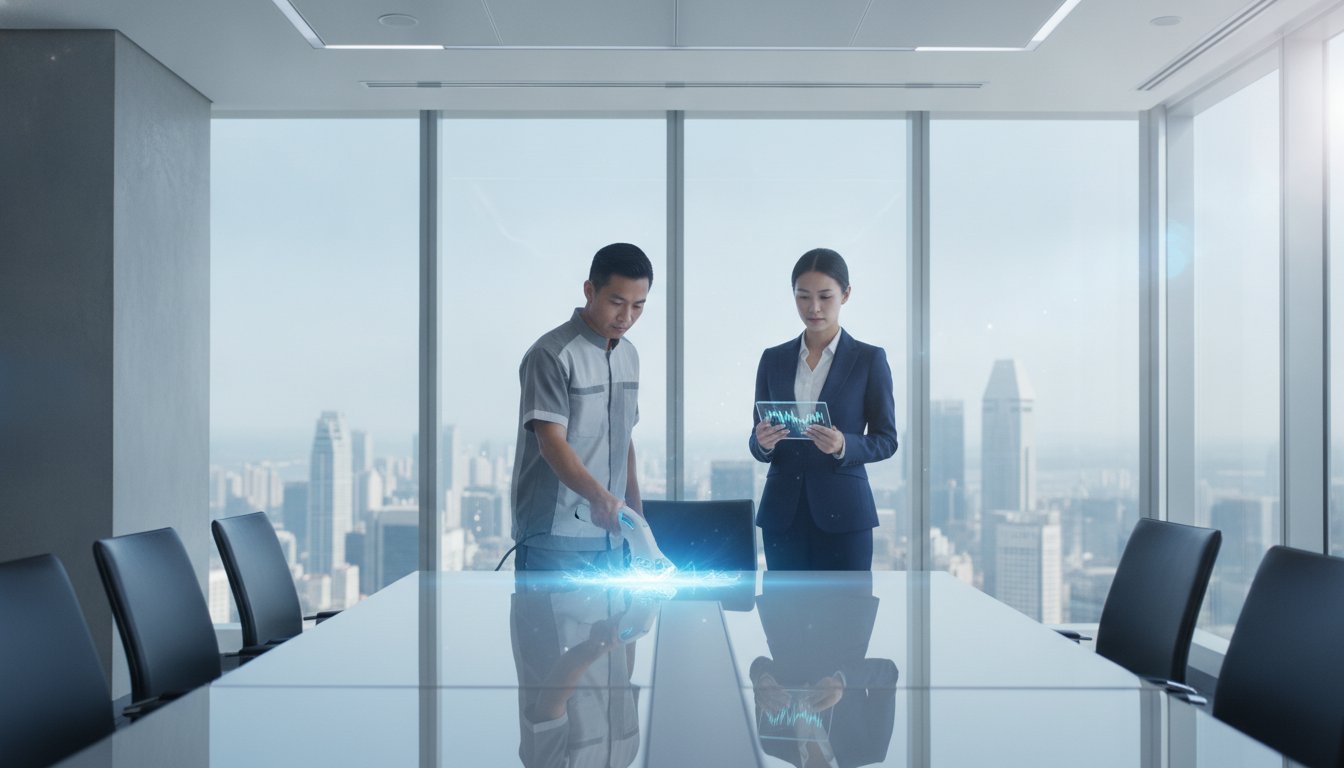
A precise risk assessment is the foundation of your HMS. Start by mapping your office floor plan to identify high-traffic zones and potential contamination hotspots. These typically include elevator lobbies, pantry areas, and shared meeting rooms. Don't rely on guesswork. Evaluate your current cleaning efficacy through scientific methods like ATP bioluminescence testing. This provides immediate, data-driven feedback on surface cleanliness. By identifying the gaps between your current maintenance practices and the 2026 mandatory standards, you can allocate resources with surgical precision. This ensures that every dollar spent on sanitation delivers maximum impact for your facility's health. Knowledge is power.
Scheduling and Monitoring for Excellence
Excellence requires consistency. Create a master cleaning schedule that perfectly balances daily upkeep with monthly deep cleaning cycles. While daily sweeps keep common areas tidy, periodic deep cleaning for carpets and upholstery is essential to eliminate deep-seated allergens and pathogens. Utilize feedback loops from your staff to identify any hygiene lapses in common areas before they become significant issues. This collaborative approach fosters a sense of shared responsibility. When employees see a commitment to high standards, they're more likely to support the hygiene culture themselves. Consistency builds confidence.
Selecting the right partner is critical to the success of your HMS. You should integrate these hygiene standards directly into your professional cleaning company singapore selection process. Look for specialists who understand the nuances of the 2026 regulatory landscape and can provide the technical expertise your building requires. If you're ready to elevate your workplace standards, book a consultation with our hygiene experts to begin your customized risk assessment and secure a safer environment for your team.
Elevating Standards with Athena’s Professional Commercial Cleaning
Choosing a partner for your building's maintenance is a decision that impacts both your regulatory standing and your team's daily well-being. Athena Team Cleaning stands as the preferred partner for Singaporean businesses because we operate as dedicated specialists, not just service providers. We understand that 2026 compliance requires a sophisticated touch. Our team takes immense pride in delivering excellence, ensuring that your common area cleaning for commercial buildings singapore is handled with the highest level of integrity and forward-thinking precision. Precision is our hallmark.
Professional intervention is the most reliable way to secure employee peace of mind. When your staff enters a space that has been meticulously maintained, they feel valued. This environment doesn't happen by accident; it's the result of a disciplined hygiene culture that prioritizes health as a measurable asset. We offer a complete elevation of your workspace, moving beyond simple maintenance to provide a total renewal of your professional environment. It's about creating a sanctuary where productivity can truly thrive.
A Meticulous Approach to Office Sanitation
We utilize hospital-grade disinfectants and advanced cleaning technology to achieve superior results that standard janitorial services simply cannot match. Whether you operate out of a central commercial tower in the CBD or an HDB-based office, our customized cleaning packages are designed to meet your specific needs. We don't believe in one-size-fits-all solutions. Instead, we focus on the nuances of your floor plan, identifying high-frequency areas that require specialized sanitization services. This targeted approach ensures maximum efficacy and safety.
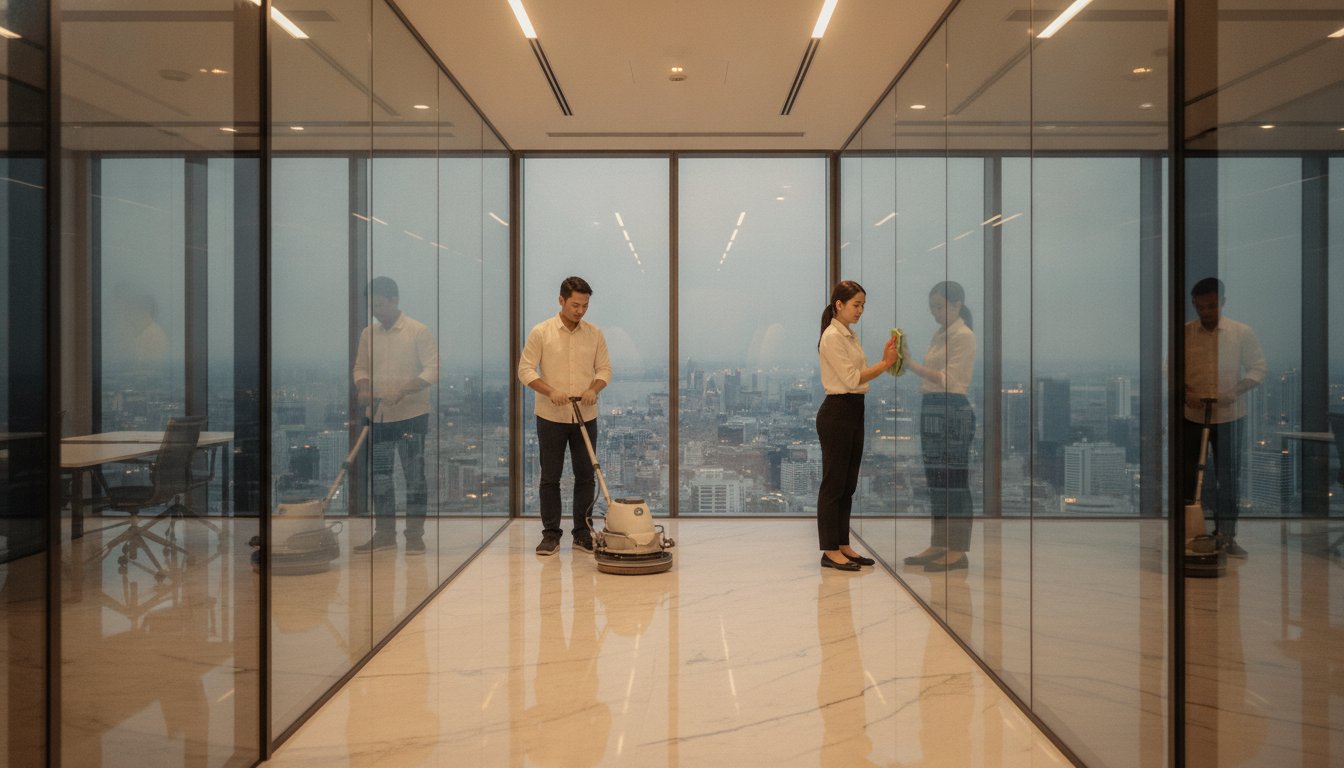
Our expertise extends to specialized surface care, including Marble Floor Polishing and Parquet Floor Polishing, ensuring your building reflects a premium image. We treat every project as a commitment to excellence. By focusing on total renewal, we remove the burden of sanitation management. This allows you to focus on your core business goals while we maintain a healthy environment for your occupants. Excellence is in the details.
The Athena Team Cleaning Advantage: Trust and Precision
Our professionals are rigorously trained to navigate the complexities of the NEA and MOM regulatory frameworks. This deep knowledge ensures that your building remains fully compliant with the 2026 Environmental Sanitation regime, protecting you from significant penalties and stop-work orders. We offer flexible scheduling options to minimize any disruption to your business operations. Whether you require daily common area cleaning for commercial buildings singapore or periodic deep cleaning of carpets and upholstery, our team works around your productivity goals.
Trust is earned through consistency and precision. We provide a seamless, expert solution that guarantees a healthier and more productive lifestyle for your clients and employees alike. Don't leave your compliance to chance. Ensure your workplace meets the highest standards with Athena Team Cleaning and experience the peace of mind that comes from a meticulously maintained space.
Secure Your Workplace Excellence for 2026
Mastering the 2026 regulatory landscape is no longer just a matter of compliance; it's a profound commitment to the health and prosperity of your organization. By integrating the latest NEA and MOM standards into your daily operations, you transform your office into a resilient sanctuary of productivity. From navigating the mandatory Environmental Sanitation regime to achieving the rigorous benchmarks for indoor air quality, every detail contributes to a superior professional environment. Consistent common area cleaning for commercial buildings singapore remains the cornerstone of this transformation, ensuring that high-traffic zones stay safe and inviting for all occupants.
At Athena Team Cleaning, we combine NEA-aligned cleaning protocols with a meticulous attention to detail to deliver a premium workspace experience. Our specialized sanitization for high-traffic commercial offices removes the burden of maintenance from your shoulders, allowing you to lead with total confidence. Take the first step toward a safer, fully compliant future today. Request a Professional Office Hygiene Audit from Athena Team Cleaning and experience the peace of mind that comes from true precision. Your team deserves a workspace that reflects the very highest standards of care and excellence.
Frequently Asked Questions
What are the mandatory NEA cleaning frequencies for Singapore offices in 2026?
Under the 2026 Environmental Sanitation (ES) regime, routine cleaning must be performed daily, focusing specifically on high-touch surfaces. The NEA also mandates that thorough periodic cleaning and disinfection take place at least once every six months. This structured approach ensures that commercial spaces maintain a high baseline of hygiene. By formalizing these frequencies in your ES programme, you create a safer environment that meets all statutory requirements for public health.
Is the SG Clean certification still mandatory for workplaces this year?
The SG Clean quality mark remains a vital trust signal in 2026, though it's distinct from the mandatory Environmental Sanitation (ES) regime. While the ES regime is a legal requirement for specified premises, SG Clean serves as a voluntary certification that demonstrates a commitment to even higher sanitization standards. Many businesses choose to maintain this certification to reassure employees and clients that their facility adheres to the most rigorous hygiene protocols available in Singapore.
How does MOM define a safe and hygienic workplace environment under the WSH Act?
Under the Workplace Safety and Health (General Provisions) Regulations, the Ministry of Manpower (MOM) requires occupiers to ensure a continuous supply of fresh or purified air through effective ventilation. Additionally, workplaces must provide sufficient lighting and maintain all sanitary conveniences in a clean, hygienic condition. These standards are legally binding, and failing to uphold them can result in serious safety violations or stop-work orders that disrupt your business operations.
What must be included in an Environmental Sanitation Management Plan (ESMP)?
An Environmental Sanitation Management Plan (ESMP) must include several critical components to ensure regulatory compliance. These include site-specific cleaning frequencies based on footfall, Standard Operating Procedures for routine and deep cleaning, and a comprehensive pest management plan. Additionally, you must include incident management protocols for biohazard cleanup. These elements ensure your common area cleaning for commercial buildings singapore remains comprehensive, measurable, and fully compliant with all NEA regulations.
How often should office carpets and upholstery be professionally cleaned for hygiene?
For optimal hygiene and compliance, office carpets and upholstery should undergo professional deep cleaning at least every six months. This schedule aligns with the NEA requirement for periodic thorough disinfection of specified premises. Regular maintenance prevents the buildup of dust mites and airborne bacteria, which can compromise indoor air quality. Utilizing specialized extraction methods ensures that deep-seated pathogens are removed, creating a fresher and healthier environment for your entire workforce.
What are the legal penalties for failing to meet workplace hygiene standards in Singapore?
Penalties for hygiene breaches in Singapore are severe and strictly enforced. The NEA can impose fines ranging from S$2,000 to S$50,000 per offense for failures related to the Environmental Sanitation regime. Serious safety violations under the Ministry of Manpower (MOM) can result in fines of up to S$500,000 or the issuance of stop-work orders. Maintaining a proactive hygiene culture is the most effective way to avoid these significant legal and financial repercussions.
Can I manage workplace hygiene in-house or do I need a professional service?
While you can manage basic tasks in-house, professional services are often necessary to meet the technical benchmarks of the 2026 standards. Professionals provide specialized equipment for ATP testing and HEPA filtration that ensures your common area cleaning for commercial buildings singapore is truly effective. Outsourcing these requirements to a dedicated specialist removes the administrative burden from your team and provides the peace of mind that comes from guaranteed regulatory compliance and expert sanitization.
What is the role of an Environmental Sanitation Coordinator in a commercial building?
The Environmental Sanitation (ES) Coordinator is responsible for developing and overseeing the site-specific ES programme. This individual ensures that all mandatory cleaning frequencies and pest management protocols are strictly followed. They serve as the primary point of contact for NEA audits and are tasked with monitoring the overall hygiene standards of the building. Their role is critical in maintaining a safe, compliant environment that protects both the occupants and the building’s reputation.
Frequently Asked Questions
What are the mandatory NEA cleaning frequencies for Singapore offices in 2026?
Is the SG Clean certification still mandatory for workplaces this year?
How does MOM define a safe and hygienic workplace environment under the WSH Act?
What must be included in an Environmental Sanitation Management Plan (ESMP)?
How often should office carpets and upholstery be professionally cleaned for hygiene?
What are the legal penalties for failing to meet workplace hygiene standards in Singapore?
Can I manage workplace hygiene in-house or do I need a professional service?
What is the role of an Environmental Sanitation Coordinator in a commercial building?
Related articles