

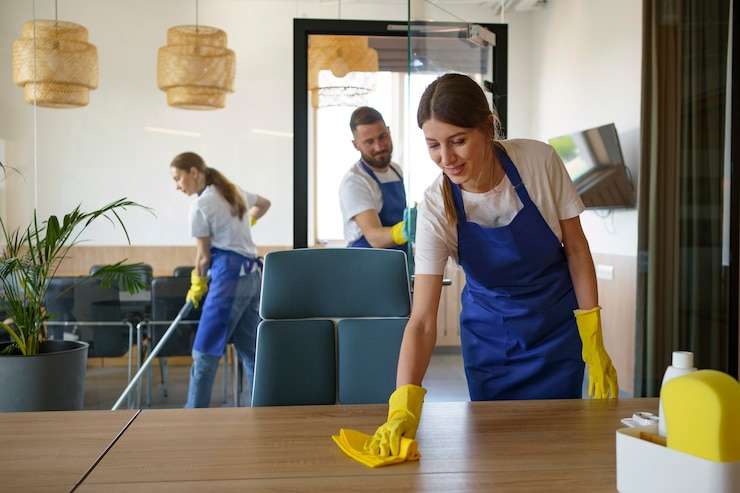
A professional carpet stain removal service in Singapore does what DIY methods cannot: it removes the visible mark along with the bacteria, allergens, and odour trapped deep in the pile. Athena Cleaning Services handles carpet stain removal across Singapore — HDB flats, BTO units, condominiums, and landed homes. Whether the problem is a laksa spill, pet urine, red wine, or ground-in mud from a sudden downpour, a trained technician with the right equipment gets results that no amount of store-bought spray can match.
This guide covers how professional carpet stain removal works, what it realistically costs in SGD, the stains local homes see most often, and how to protect your carpet between sessions. Pricing, process, and when to skip DIY are all covered below.
Why carpet stains behave differently in singapore's climate
Singapore's average relative humidity sits around 84%, and that figure matters when you are dealing with a stain. Moisture trapped under carpet fibres creates the right conditions for mould and bacteria to grow within 24 to 48 hours of a spill. What looks like a dry patch on the surface can still be damp at the base layer — especially for wool and thick nylon pile carpets common in condominiums and landed homes.
The National Environment Agency (NEA) provides guidance on maintaining indoor cleanliness standards in Singapore's climate, where heat and humidity accelerate the growth of biological contaminants. The American Lung Association links poor indoor air quality — including mould spores and dust mites from dirty carpets — to respiratory irritation and worsening asthma symptoms. In Singapore, where air-conditioning keeps windows closed for most of the day, indoor pollutants have nowhere to go.
The practical implication: a stain treated within the first two hours is far easier to remove than one left overnight. Set stains — anything older than 24 hours — often require multiple treatment passes and specialised spotting agents. For HDB flats and condominiums where carpets sit over non-porous flooring, moisture also has nowhere to drain, which means the risk of sub-surface mould is higher than in landed homes with better natural ventilation.
The most common carpet stains in Singapore homes
Every Singapore household sees a different mix of stains, but a few types come up repeatedly. The combination of local cuisine, a tropical climate, and multi-generational households means food, pets, and outdoor dirt each leave their mark on residential carpets. Here is how each type behaves and why each requires a different treatment approach.
Food and drink stains
Kopi, teh tarik, curry, and laksa are among the most reported food stains in Singapore households. The combination of tannins (in coffee and tea), turmeric (in curry), and oils (in coconut milk-based dishes) makes these stains particularly stubborn. Tannins bond to carpet fibres when heated — applying hot water directly to a coffee stain actually sets it deeper. Professional technicians pre-treat these with a cool citrus-based or alkaline solution first, then rinse with controlled hot water extraction.
Pet urine and accidents
Pet urine is a two-phase problem: the visible stain and the invisible uric acid crystals that remain after the moisture dries. Standard cleaning removes the liquid but leaves the crystals, which re-activate when humidity rises — explaining the persistent smell on rainy days. Enzyme-based cleaners break down the crystals directly. Without enzymes, the odour returns within weeks. For older urine stains in HDB flat carpets, a technician may need to treat both the carpet and the underlay separately.
Mud and post-rain footprints
Singapore's afternoon thunderstorms mean muddy footprints are a near-weekly problem from October to January during the Northeast Monsoon. The instinct to wipe mud immediately is wrong — wet mud spreads and pushes particles deeper into the pile. The correct method is to let the mud dry completely, vacuum it, then apply a soil suspension agent before extraction. A professional carpet cleaning Singapore service follows this sequence reliably; most DIY attempts skip the drying step and end up spreading the stain.
Ink, marker, and dye stains
School holidays, children's art projects, and home offices mean ink stains show up regularly. Solvent-based inks from permanent markers or ballpoint pens require a targeted solvent that dissolves the pigment without damaging synthetic fibres. Water-based inks are easier but still require careful application to avoid spreading. Professional technicians test the solvent on an inconspicuous patch first — a step that matters for patterned or dyed carpets in older HDB units where the original dye may be unstable.
How athena's carpet stain removal process works
Athena's process follows a structured sequence that adjusts based on the stain type, carpet fibre, and age of the stain. There is no single-formula-fits-all approach — each job is assessed before any solution is applied. To understand exactly what to expect before your first booking, see what to expect from a quality carpet cleaning Singapore service.
- Pre-inspection: The technician identifies the carpet fibre type (wool, nylon, polyester, or polypropylene), checks for pre-existing damage, and notes the age and type of each stain. This determines which cleaning agents are safe to use.
- Dry vacuuming: Heavy-duty vacuuming removes loose soil and debris before any liquid is applied. Skipping this step causes dirt to turn into mud when wet-cleaning agents are introduced, making extraction harder.
- Pre-treatment and agitation: A targeted spotting agent is applied to each stain and allowed to dwell for 3 to 10 minutes depending on the stain chemistry. The technician then agitates with a soft brush to break the stain's bond with the fibres without damaging the pile.
- Hot water extraction: Industrial-grade extraction equipment flushes the pre-treatment and loosened stain particles out of the carpet. The machine simultaneously injects hot water and recovers it — the carpet is wet for only seconds per pass, controlling the overall moisture level.
- Drying: High-velocity air movers are positioned across the treated area. In Singapore's humidity, drying time typically ranges from 2 to 4 hours for standard residential carpets. Wool or thick pile carpets may take up to 6 hours. The technician checks sub-surface moisture before leaving.
Athena's technicians are trained to work in the tighter spaces typical of Singapore homes — bedroom carpets in condominiums, corridor runners in HDB flats, and full living room carpets in BTO units. All cleaning solutions used are non-toxic and safe for children and pets once the carpet has dried.
Carpet stain removal pricing in Singapore
Pricing for carpet stain removal in Singapore depends on carpet size, stain severity, and the cleaning method used. Most providers charge by carpet area in square metres or by rug dimensions, with a minimum call-out fee that covers travel and equipment setup. The table below compares the main service types and what they realistically cost in 2026, before 9% GST.
Spot-only stain treatment — where a technician targets one or two specific stains without a full clean — typically runs $60 to $100 for the first stain and $20 to $40 for each additional stain. Full-carpet stain removal combined with a deep clean is usually better value for carpets with more than two stains, since the call-out cost is absorbed across a larger job.
When comparing providers, check whether the quoted price includes drying time, multiple treatment passes for stubborn stains, and whether GST is included. Singapore providers are required to disclose whether prices shown are before or after GST. The Consumers Association of Singapore (CASE) advises consumers to request a written quote before work begins and to clarify what is covered in the service fee — including whether a return visit is included if a stain reappears.
For a full breakdown of how to evaluate quotes and what credentials to look for in a carpet cleaning provider, the guide to choosing carpet cleaning service Singapore covers pricing transparency, technician qualifications, and service guarantees in detail.
DIY first-aid vs. calling a professional
Not every stain needs a professional immediately. For fresh spills under 30 minutes old, correct first-aid notably improves the outcome, whether you eventually call a technician or not. The rules are straightforward: blot, never rub; use cold water first; avoid pouring cleaning solution directly onto the stain before you have blotted out the liquid.
Where DIY consistently falls short is on set stains, oil-based stains, and biological stains such as urine, vomit, or blood. Over-the-counter enzyme sprays are available at Cold Storage and NTUC FairPrice, but they typically contain lower enzyme concentrations than professional-grade formulas and require longer dwell times. A bottle labelled as a 15-minute treatment in Singapore's humidity often needs 30 to 45 minutes to work at the same level as a professional enzyme treatment applied at the correct temperature.
The biggest DIY mistake is over-wetting. Pouring too much liquid onto a carpet pushes the stain deeper and saturates the underlay, which then takes days to dry in Singapore's humidity — creating exactly the conditions for sub-surface mould that the cleaning was meant to prevent. Read how often should you schedule carpet cleaning Singapore for healthier home to understand when routine professional cleaning should replace reactive stain treatment entirely.
Call a professional immediately for: urine or faeces from pets or young children (biological contamination that enzyme sprays alone rarely resolve fully), any stain on a wool or natural-fibre carpet (risk of shrinkage or dye bleed if the wrong solution is used), stains that have been present for more than 48 hours, and any situation where the carpet still smells after DIY treatment — persistent odour means bacteria or uric acid crystals are still present in the pile.
Maintaining your carpet between professional services
Singapore's indoor environment — air-conditioned, humid when doors open, and subject to high foot traffic near entrances — means carpets in HDB living rooms and condo bedrooms collect more particulate matter than carpets in drier climates. Weekly vacuuming with a HEPA-filtered machine removes dust mite allergens and fine particulate that accumulate between deep cleans. HealthHub (Singapore Ministry of Health) recommends minimising dust mite exposure in the home, particularly for households with asthma sufferers — and carpets are among the highest-density reservoirs for dust mite allergens indoors.
Placing a quality doormat at every entrance reduces the volume of outdoor particulate tracked onto carpets. Removing shoes at the door cuts tracked-in soil by an estimated 60 to 80 percent — a practice already standard in most Singapore households but often abandoned when entertaining guests. A mat inside and outside the entrance handles the difference.
For households with pets or young children, quarterly professional cleaning is more realistic than annual. For bedroom-only carpets in adult households with no pets, twice a year is usually enough to stay ahead of allergen buildup. If your household has recently moved in after renovation, the post-renovation dust load is notable and requires a different approach — read HIP cleaning service before after handover Singapore and HIP dust proof service pressure washing Singapore guide for context on what post-renovation cleaning covers beyond the carpet itself.
Between professional visits, spot-treat stains within 30 minutes of the spill using the blot-then-clean method. Keep a small bottle of neutral pH carpet spotter (available at most homeware shops in Singapore) and a stack of clean white cloths near the dining table and other high-risk areas. White cloths let you see how much stain is transferring so you know when to stop — coloured cloths can transfer dye onto the carpet and make the problem worse.
Comparison at a glance
| Method | Typical cost (SGD) | Drying time | Best suited for |
|---|---|---|---|
| DIY enzyme spray (store-bought) | $8–$25 per bottle | Immediate surface only | Fresh pet accidents on synthetic carpets |
| Spot treatment only (in-home technician) | $60–$100 first stain, $20–$40 each additional | 30–60 min per spot | One or two isolated stains, any fibre type |
| Dry cleaning / low-moisture encapsulation | $60–$150 per rug | 45–90 min | Delicate, natural-fibre, or antique rugs |
| Portable hot water extraction | $80–$180 per carpet | 2–4 hours | Most HDB and condo residential carpets |
| Truck-mount hot water extraction | $120–$250 per carpet | 1–2 hours | Large carpets, heavy contamination, landed homes |
Frequently asked questions
How much does carpet stain removal cost in Singapore?
Spot treatment for one or two stains typically costs $60 to $100 for the first stain and $20 to $40 per additional stain, before GST. Full-carpet deep cleaning with stain treatment runs from around $80 for a small rug (80 x 180 cm) to $200 or more for a large living room carpet (200 x 270 cm and above). Prices depend on carpet size, fibre type, and stain severity. Always request a written quote and confirm whether the figure is before or after GST — as the Consumers Association of Singapore (CASE) advises for any home service engagement.
How long does a carpet take to dry after professional stain removal in Singapore?
In Singapore's climate, most residential carpets dry within 2 to 4 hours after hot water extraction, provided the room is air-conditioned and the technician uses high-velocity air movers. Thick wool or shag pile carpets can take up to 6 hours. Keep air-conditioning running at around 22 to 24 degrees Celsius and leave the air movers in place until the technician confirms sub-surface moisture is gone. Walking on the carpet before it is fully dry pushes residual soil back into the pile and undoes part of the clean.
Can professional carpet stain removal damage my carpet?
When done correctly with the right chemicals for the fibre type, professional stain removal does not damage carpets. Risk of damage comes from using the wrong cleaning agent (alkaline solutions on wool cause shrinkage and dye bleed), over-wetting (which damages the carpet backing and underlay), or applying excessive heat. Reputable technicians pre-test solutions on a hidden patch before treating the full stain. If your carpet is an antique, a natural-fibre rug, or has an unusual weave, ask specifically about the cleaning method before booking — dry cleaning or encapsulation may be safer than wet extraction for those pieces.
What should I do to limit the damage before the technician arrives?
Blot — do not rub — as much liquid as possible with a clean white cloth, working from the outside edge of the stain inward to avoid spreading. For solid or semi-solid spills (curry, food), scoop up the bulk with a spoon first. Apply a small amount of cold water to dilute the stain, then blot again. Do not apply heat, do not use coloured cloths, and do not pour cleaning solution directly onto the stain — this can spread the pigment and make professional removal harder. Cover the area with a dry cloth to absorb remaining moisture until the technician arrives.
Is carpet stain removal different for HDB flats compared to condominiums or landed homes?
The stain removal process is the same, but logistics differ. HDB flats often have narrower corridors and lifts that limit the size of equipment a technician can bring in, so portable extraction machines are standard. Truck-mount units — which provide stronger suction and higher water temperature — are easier to deploy in landed properties and some condominiums with direct ground-floor access. Both methods produce good results for residential carpet stains. Truck-mount extraction is faster for large areas, but a high-quality portable unit handles the stain types found in HDB and condo homes just as effectively.
Sources
- National Environment Agency (NEA)
- American Lung Association
- Consumers Association of Singapore (CASE)
- HealthHub (Singapore Ministry of Health)