

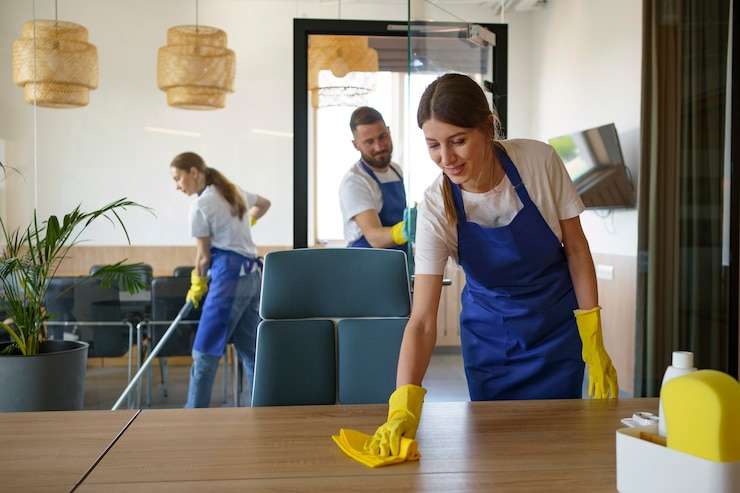
Professional floor polishing service in Singapore is one of the fastest ways to restore an HDB flat's scratched, dull tiles to a near-mirror finish — without tearing up the floor. Whether your HDB is a 1980s resale in Toa Payoh or a fresh BTO handover in Tengah, Singapore's year-round humidity (averaging 84% relative humidity) drives dirt and mineral deposits into tile grout daily. Athena Cleaning Services delivers HDB floor polishing across all 26 HDB towns, using diamond-pad grinding, crystallisation, and nano-coating to bring tired tiles back to showroom condition at a fraction of replacement cost.
This guide covers every floor type common in HDB flats, what each polishing method costs in 2026, how long the results last, and what to look for when comparing service providers in Singapore.
Why HDB floors deteriorate faster than you expect
Singapore sits 1.4 degrees north of the equator. Average relative humidity hovers between 73% and 95% year-round, according to the National Environment Agency (NEA). That moisture does more than make the air heavy — it seeps into microscopic pores in tile grout, depositing mineral salts that cloud the surface from below. Combine that with the coarse sand HDB residents track in from void decks and lift lobbies, and you have a constant grinding action underfoot every time someone crosses the floor in slippers.
HDB flats built before 1995 typically have red-oxide terrazzo or porous ceramic tiles. Post-2000 BTO units use denser homogeneous or porcelain tiles, but even these develop micro-scratches within two to three years of daily foot traffic. North-facing units accumulate more condensation overnight, which accelerates grout staining. By the time a floor looks visibly dull to the eye, the surface damage is often six to twelve months deeper than it appears.
Regular mopping with household detergent can worsen this process. Most commercial mops leave a thin soap residue that dries to a filmy haze, dulling tile gloss over time. A professional floor polishing services singapore athena cleaning appointment strips that residue and replaces it with a crystallised or nano-coated surface that actively repels water and dirt between sessions.
Floor types in Singapore HDB flats and what polishing does for each
The five main floor types found across HDB estates respond very differently to polishing — and using the wrong method on any of them can cause irreversible damage. Knowing your floor type before booking a service is the single most important preparation step.
Homogeneous and porcelain tiles
The most common surface in post-1990s BTO flats. These dense, vitrified tiles can take a diamond-pad polish without risk of surface pitting. The crystallisation process bonds a magnesium fluorosilicate compound into the tile surface under heat and pressure, creating a wet-look shine that typically lasts 12–18 months before refreshing is needed.
Marble
Marble appears in executive flat master bedrooms, DBSS projects, and older 5-room units built in the 1990s. Marble is calcium carbonate, which means even mild acids — orange juice, coffee, most common household cleaners — etch the surface permanently. The Natural Stone Institute recommends pH-neutral cleaners and periodic professional honing to remove etch marks before they deepen into permanent scratches. Singapore's humidity adds a separate risk: unsealed marble absorbs moisture and develops dark sub-surface staining within months. For a full breakdown, see the guide on benefits of professional marble polishing service and how to maintain marble floors professional polishing singapore.
Parquet and timber floors
Solid timber strips or engineered wood parquet appear in pre-1990s resale flats, particularly in 3-room and 4-room living rooms built between 1975 and 1990. Parquet cannot be wet-polished or crystallised — it needs dry sanding followed by varnish or wax coating. The parquet polishing natural floor beauty guide covers the sanding schedule and coating options in detail.
Vinyl plank and vinyl sheet
Vinyl flooring is common in newer BTO units and post-renovation flats because it is affordable and water-resistant. Vinyl should never be diamond-ground or crystallised — grinding through the wear layer destroys the floor permanently. Instead, vinyl responds to spray buffing with a water-based floor finish. Our vinyl floor care tips singapore guide covers the right products and safe maintenance frequencies for Singapore's climate.
What the HDB floor polishing process actually involves
Many homeowners picture floor polishing as someone running a spinning pad over tiles for half an hour. The reality is a multi-stage process that takes three to six hours for a typical 4-room HDB flat, depending on floor condition and whether grinding is required.
Stage 1 — surface preparation
The technician vacuums and wet-mops the floor to clear all loose grit before any machine touches the surface. Skipping this step causes sand particles to embed deeper into the tile surface during polishing, creating more micro-scratches than the process removes. Furniture is cleared from the area, or the technician works room by room if heavy items cannot be moved.
Stage 2 — grinding or scrubbing
For floors with visible scratches or heavy mineral staining, a floor machine fitted with diamond-impregnated resin pads works through progressively finer grits — typically 200, 400, then 800 — to level micro-scratches and lift embedded staining. The process generates a fine slurry that gets vacuumed up immediately. Lightly soiled floors may skip this stage and go straight to crystallisation.
Stage 3 — crystallisation or coating application
A crystallisation powder or liquid is applied and worked into the tile surface with a steel-wool pad under a high-speed buffer. Heat and pressure bond the compound chemically to the tile, building a hard, glassy surface layer. Nano-coating is an alternative: a silicon-dioxide compound fills micro-pores and cures to form a transparent protective film that outlasts standard crystallisation by six to twelve months. For parquet, this stage means applying varnish or wax in thin coats with drying time between each pass.
Stage 4 — final inspection and handover
The technician mops off any residue, checks for uneven sheen, and spot-buffs where needed. Drying times vary: crystallised tiles are walkable in socks within 30–60 minutes. Varnished parquet needs 2–4 hours before foot traffic and 24 hours before furniture goes back. Nano-coatings cure fully in 4–8 hours. Reputable operators walk you through the result and advise on maintenance intervals before they leave the job.
How to compare floor polishing quotes in Singapore
Floor polishing quotes in Singapore are typically given per square foot (psf) or as a flat fee for standard HDB sizes. Understanding what is and what is not included in a quote prevents surprise charges on the day of the job.
Most base quotes cover grinding (where needed), polishing, and one inspection pass. Common exclusions: grout deep-cleaning or re-colouring ($80–$150 extra for a 4-room flat), moving heavy furniture ($30–$60 per large item), sealing for marble or porous tiles (often priced separately), and staircase steps ($8–$15 per step). Always ask for a line-item breakdown before signing anything.
The Consumers Association of Singapore (CASE) advises homeowners to get at least three written quotes from NEA-registered businesses and to verify that the company carries public liability insurance before agreeing to any service. A quote that is 40% below market rate usually means the contractor is skipping the grinding stage and applying only a surface spray that wears off within weeks, leaving tiles looking worse than before once the spray hazes over.
When evaluating providers, ask which grade of diamond pad they use for the finishing pass — reputable operators use 400-grit or finer. Ask whether the crystallisation product is water-based (safer indoors, longer dry time) or solvent-based (faster set, stronger odour — not suitable if you have young children or pets at home). A provider who answers both questions confidently is worth the extra $20–$50 per session compared to the cheapest option.
Pricing guide for HDB floor polishing in Singapore in 2026
The table above shows typical market rates by floor type for a standard 3-room HDB flat. Rates include labour and standard consumables; they exclude grout work, furniture moving, and staircase steps. Prices for other flat sizes scale roughly as follows (tile floors):
- 2-room Flexi / Studio: $120–$200
- 3-room HDB: $180–$300
- 4-room HDB: $250–$380
- 5-room HDB: $320–$480
- Executive / Jumbo flat: $450–$700
Marble polishing costs 30–50% more than homogeneous tile polishing because the honing stage requires finer diamond tooling and more time to produce an even sheen across the full slab. Parquet costs more again due to longer cure times and the need to book a full day rather than a half day. If your flat has mixed materials — tile in the living room and parquet in the bedrooms — ask for a combined quote rather than separate bookings, as most operators offer 10–15% off for full-flat jobs booked together.
Some operators add a travel surcharge of $20–$50 for estates in Jurong West, Woodlands, and Punggol due to longer travel times from their base. Clarify this before confirming your booking so it does not appear on the final invoice as a surprise.
After polishing: maintenance that keeps results lasting in singapore's climate
A freshly polished floor can stay looking sharp for 12–18 months with the right upkeep, or dull within three months with the wrong products. The most damaging mistake is mopping with undiluted floor cleaner — the surfactant concentration strips the crystallised coating within weeks.
Recommended maintenance routine after a professional polish:
- Daily: Dry microfibre mop or robot vacuum to remove grit before it scratches the surface.
- Weekly: Damp microfibre mop with plain water or a pH-neutral floor cleaner diluted to the manufacturer's ratio (typically 20:1 water to cleaner).
- Monthly: Inspect grout lines for early mould growth. Singapore's humidity means grout is the first failure point — early treatment with a grout brush and diluted bleach is cheap, while ignoring it means the next polish job requires deeper grinding and costs more.
HealthHub (Singapore Ministry of Health) notes that damp indoor surfaces are a common trigger for respiratory irritation due to mould and dust-mite accumulation. Polished, sealed floors dry faster after mopping and offer fewer footholds for mould — a practical health benefit for households with children or elderly residents in an HDB flat.
One exception: HDB bathroom and kitchen tiles with anti-slip surface textures should not be crystallised or diamond-polished. The process fills the anti-slip texture and makes the surface dangerously smooth underfoot. These areas need specialist anti-slip treatment or should be explicitly excluded from the polishing scope — confirm this with your provider before the job begins.
Comparison at a glance
| Floor type | Common HDB context | Polishing method | 3-room flat cost (SGD) | Recommended frequency |
|---|---|---|---|---|
| Homogeneous / porcelain tiles | Post-1990 BTO and resale flats | Crystallisation + diamond pad | $180–$280 | Every 12–18 months |
| Ceramic tiles | 1970s–1990s HDB resale estates | Diamond grinding + crystallisation | $150–$250 | Every 18–24 months |
| Marble | Executive flats, DBSS, 1990s 5-room units | Honing + polishing + sealing | $280–$450 | Every 6–12 months |
| Parquet / solid timber | Pre-1990 HDB resale, 3-room and 4-room | Sanding + varnish or wax coating | $350–$600 | Every 3–5 years |
| Vinyl plank / vinyl sheet | Newer BTO units, renovated flats | Spray buffing only (no grinding) | $120–$180 | Every 12 months |
Frequently asked questions
How much does floor polishing cost for a 4-room HDB flat in Singapore?
For a standard 4-room HDB flat with homogeneous or ceramic tiles, floor polishing typically costs between $250 and $380 in Singapore in 2026. Marble adds 30–50% to that figure due to the extra honing steps required. Parquet flooring costs more again — typically $450–$700 for a full 4-room flat — because of longer cure times and the need for a full-day booking. Always get a written quote that specifies whether grinding, grout cleaning, and furniture-moving are included, as these are frequently excluded from headline prices.
How often should I get my HDB floor polished in Singapore?
For homogeneous or ceramic tiles — the most common type in HDB flats — professional polishing every 12–18 months is a reasonable interval given Singapore's humidity and daily foot traffic. Marble needs more frequent attention: every 6–12 months for well-used living areas, since acidic residues from food and drink etch the surface faster in humid conditions. Parquet only needs professional sanding and re-coating every 3–5 years, with annual wax maintenance in between. A simple test: if water drops bead up on your tiles rather than spreading flat, the protective coating is still intact and you can wait.
Is it safe to stay in the HDB flat during floor polishing?
It depends on the method and products used. Crystallisation with water-based compounds produces minimal fumes and the treated area is walkable within 30–60 minutes, making it practical to work room by room while occupants remain at home. Solvent-based crystallisation compounds and parquet varnish produce stronger fumes: good ventilation (open windows, fans running outward) is needed, and young children, elderly residents, or anyone with respiratory conditions should avoid the flat for at least 4–6 hours after the job. Always ask your provider which products they use and request the Safety Data Sheet if you have health concerns.
Can floor polishing remove scratches from HDB tiles?
Light to moderate surface scratches on homogeneous and ceramic tiles can be notably reduced through diamond-pad grinding before crystallisation. The grinding stage removes a very thin layer of the tile surface — typically 0.1–0.3mm — to get below the scratch depth. Deep scratches that extend past the tile's glaze layer (visible as a white line rather than just a surface mark) cannot be fully removed by polishing; those individual tiles usually need replacement. Marble scratches are generally easier to address because marble can be re-honed without the risk of removing a glaze coating.
What is the difference between floor polishing and floor waxing for HDB tiles?
Floor waxing applies a removable wax film on top of the tile surface — it improves gloss temporarily but wears off quickly and builds up over multiple applications into a yellowed layer that is difficult to strip. Floor polishing via crystallisation works by chemically altering the tile surface itself, bonding a harder layer that does not peel or yellow. For HDB tiles in Singapore, crystallisation typically lasts three to four times longer than a wax coat before re-treatment is needed. Wax remains appropriate for parquet floors, where it conditions the timber while adding gloss, but crystallisation or nano-coating is the standard for tile surfaces.
Sources
- National Environment Agency (NEA)
- Natural Stone Institute
- Consumers Association of Singapore (CASE)
- HealthHub (Singapore Ministry of Health)