

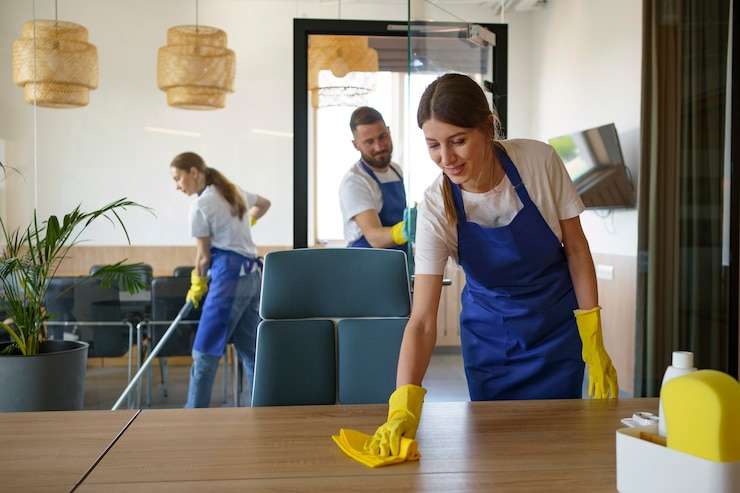
To clean marble countertops in Singapore, wipe the surface daily with warm water and a pH-neutral soap on a soft microfiber cloth, then dry immediately. Skipping the drying step is where most damage starts — Singapore's hard tap water leaves white mineral deposits as it evaporates. Never use vinegar, lemon juice, bleach, or commercial bathroom sprays on marble; all of these react chemically with marble's calcium carbonate surface and leave permanent dull etches that no amount of buffing can reverse.
Singapore's tropical climate — year-round humidity between 73% and 90% — makes marble countertops more vulnerable here than in drier countries. Moisture seeps into unsealed marble and creates staining, mould growth, and a gradual breakdown of the polished surface. Whether you have white Carrara in a Bishan condo kitchen or dark Nero Marquina in a Queenstown landed property, the correct approach is the same: gentle, pH-neutral products, fast spill response, and annual sealing to block moisture absorption.
Why singapore's climate is hard on marble countertops
Marble is calcium carbonate — a mineral that reacts chemically with any acid. Singapore's food culture produces some of the most acid-aggressive kitchen spills you will encounter: tamarind paste, lime juice, fermented black bean sauce, vinegar-based salad dressings. Each has a pH below 4. Left on marble for even a few minutes, these etch the polished surface into a dull, rough patch that cannot be rubbed back to a shine without diamond repolishing.
Singapore's tap water, supplied by PUB, has a neutral pH of around 7.0–7.5, which is fine for marble. The problem is the dissolved calcium and magnesium it carries. As water evaporates on a marble countertop — especially near the sink — these minerals precipitate into white chalky rings. In a humid environment like Singapore, water does not dry as fast as in cooler climates, which gives minerals more time to deposit. The fix is simple: always dry marble surfaces after cleaning. Most homeowners find out too late.
Mould is also a real concern. The National Environment Agency (NEA) notes that Singapore's climate is highly conducive to mould growth on porous surfaces. Marble grout lines and micro-scratches in the stone surface trap moisture and organic matter, creating ideal conditions for mould colonies, particularly in kitchens and bathrooms. Proper sealing and regular cleaning are the primary defences against this.
Daily cleaning routine for marble countertops
The daily cleaning routine for marble countertops in Singapore takes under five minutes. You need: one microfiber cloth dampened with warm water, a small amount of pH-neutral dish soap (pH 6–8, fragrance-free, no citrus), and a second dry microfiber cloth for the final wipe-down. Apply the soap to the damp cloth — not directly to the marble — and wipe in the direction of the marble's veining. Wiping against the veining risks micro-scratches that dull the finish over time. Finish with the dry cloth to remove all moisture.
According to care guidance from the Natural Stone Institute, the single most effective maintenance habit for polished stone is complete drying after every cleaning session. In Singapore's humidity, even surfaces that appear dry can retain enough moisture to cause mineral deposits. A 30-second dry wipe after each session prevents the majority of limescale buildup that homeowners later try to remove with acidic sprays — which then cause etching and a worse problem than the one they were trying to solve.
For high-traffic kitchens in a 4-room or 5-room HDB where three meals are cooked daily, wipe the countertop after each cooking session, not just once at the end of the day. Wok cooking in particular produces oil mist that settles on nearby marble surfaces and, when warm, penetrates the stone's pores faster than cooled oil. A quick wipe while the kitchen is still warm takes 60 seconds and prevents the yellow-brown oil stains that are among the most difficult to remove from marble without professional help.
Removing stains from marble countertops — a Singapore kitchen guide
Singapore cooking produces some of the most stain-aggressive spills you will encounter on marble: turmeric paste, dark soy sauce, sambal belacan, kopi-O, red wine, coconut cream. The single most important rule across all of them is blot, never wipe. Wiping spreads the spill across a wider area; blotting lifts it upward out of the marble's pores. Use paper towels or a clean white cloth, press down firmly, and lift straight up. Repeat until no more colour transfers to the cloth.
Organic stains (coffee, kopi, wine, curry, soy sauce)
Apply a poultice paste made from baking soda and 3% hydrogen peroxide — available at Guardian or Watsons for $3–$6 per bottle. Mix to a thick paste, spread over the stain in a 5mm layer, cover tightly with cling film, tape the edges to seal in moisture, and leave for 24–48 hours. The poultice draws the pigment out of the marble's pores. Remove the film, let the paste air-dry completely, then scrape off with a plastic scraper and rinse with clean water. For turmeric stains — which contain curcumin, a pigment that bonds strongly to calcium carbonate — repeat up to three times before concluding the stain has set permanently.
Oil-based stains (cooking oil, ghee, coconut milk)
Apply cornstarch or talcum powder directly to the stain without adding water first. Water can drive oil deeper into the marble's pores. Leave the powder for 24 hours to absorb the oil, vacuum or brush off gently, then clean the area with pH-neutral soap and warm water. Repeat if the stain persists. For stubborn oil stains in HDB kitchens where deep-frying is common, a second or third application usually resolves the problem.
Hard water rings near the sink
Use a dedicated marble-safe limescale remover — available at Hafary or Tiles of Ezra for $20–$45. These products are formulated to lift calcium deposits without acidic compounds. Never use the bathroom limescale sprays found at NTUC or Guardian; these almost always contain hydrochloric or citric acid and will etch the marble surface visibly on contact.
Marble sealing in Singapore — schedule and method
Sealing is not optional for marble countertops in Singapore. The combination of year-round humidity, daily cooking activity, and acidic food contact means unsealed marble in a Singapore kitchen will show staining within months of installation. The Natural Stone Institute recommends sealing marble countertops every one to two years under normal conditions, but Singapore's climate warrants the shorter end of that range: once a year for kitchen countertops, once every 18 months for bathroom vanity tops with lighter daily use.
To test if your marble needs sealing, place a few drops of water on the surface and wait 60 seconds. If the marble darkens where the water sits — indicating absorption — it needs sealing now. If the water beads and remains on the surface without darkening the stone, the existing sealer is still effective. This simple water bead test costs nothing and takes two minutes; build it into your annual home maintenance checklist.
DIY stone sealers are sold at Hafary, Tiles of Ezra, and major hardware stores. Prices range from $30–$80 for a 500ml bottle covering approximately 5–8 sqm. Apply with a clean lint-free cloth, allow 15–20 minutes for absorption, wipe off the excess before it dries on the surface (dried sealer leaves a white haze that requires professional removal), and allow 24 hours before using the countertop again. Professional sealing — which includes surface preparation and often a machine-applied sealer for deeper penetration — runs $150–$400 for a standard kitchen countertop, depending on size and marble type.
If you have just completed a renovation, clean all construction dust and residue from your marble surfaces before sealing. Renovation dust sealed under a stone sealer creates a permanent haze. See our guide on 5 essential steps for effective post renovation cleaning singapore for the correct preparation sequence. For marble floors treated alongside countertops, our guide to how to maintain marble floors professional polishing singapore covers the floor-specific polishing and sealing requirements.
Products to use and avoid on marble countertops
The Singapore cleaning product market is full of multi-surface sprays that work fine on most surfaces but actively damage marble. The Consumers Association of Singapore (CASE) receives complaints about stone surface damage from cleaning product misuse — often from products that do not clearly indicate on the front label that they are unsafe for natural stone. The safest approach: if the product does not specifically say safe for marble or for natural stone, do not use it on marble.
For HDB homeowners looking for a budget-safe solution, warm water with unscented Castile soap (pH around 7, available at Cold Storage or iHerb for $8–$15 per 500ml bottle) covers daily cleaning needs effectively. It is pH-neutral, cuts grease, and is safe for all marble types. One 500ml bottle typically lasts three to four months of daily kitchen countertop use. For condos and landed properties where marble appears in multiple rooms, a dedicated stone soap like Lithofin MN Stone Soap (available at Hafary for around $28 per 500ml) offers a more targeted clean and leaves a mild protective residue after each use.
Never use any product that includes the words lime remover, scale remover, rust remover, grout cleaner, or tile brightener — these all rely on acidic chemistry that strips marble's polished finish on contact. The same applies to DIY cleaning solutions made from white vinegar, lemon, or orange, which are popular in Singapore home cleaning social media groups but are destructive on marble. Just as with leather sofas — which require material-specific care products as explained in our guide to 5 expert tips for leather sofa cleaning in singapore — marble requires cleaning agents matched to its chemistry, not whatever is already under the sink.
When to call a professional for marble countertop care
DIY marble care handles the majority of maintenance for Singapore homes. But there are situations where professional stone care is the right call — not just for better results, but to avoid making the underlying damage worse. Attempting to buff out deep etching with household products removes more of the marble's surface layer without restoring the shine, leaving a larger area for the professional to repair later at higher cost.
Call a professional stone care service when: deep etching covers more than 10% of the visible surface; stains have not responded to two full rounds of poultice treatment; the marble has visible chips, cracks, or scratches from sharp objects; or you are preparing a property for sale or tenancy handover and the marble needs to be restored to showroom-quality finish. Professional marble countertop restoration in Singapore — involving diamond honing, surface polishing, and resealing — runs $200–$600 for a standard kitchen countertop depending on surface condition, marble type, and the extent of repolishing required. For new BTOs or post-renovation properties, these costs are often unavoidable if the marble was not protected during the works.
Athena Cleaning Services offers home cleaning packages that include safe marble surface care as a standard part of kitchen and bathroom cleaning. Our team uses only pH-balanced, marble-certified products on stone surfaces. For homes that have just come out of renovation works where marble countertops were exposed to construction dust, tile adhesive, and grout residue, see our guide to how to clean floor tiles after renovation best practices for the correct preparation sequence before a professional polish is applied.
Comparison at a glance
| Product / method | pH range | Safe for marble? | Typical SGD cost | Where to buy in Singapore |
|---|---|---|---|---|
| Warm water + unscented Castile soap | 6.5–7.5 | Yes | $8–$15 per 500ml bottle | Cold Storage, iHerb, Redmart |
| pH-neutral dish soap (e.g. Ecover, Method) | 7–8 | Yes | $4–$10 per bottle | NTUC FairPrice, Giant |
| Lithofin MN Stone Soap | ~7 | Yes — formulated for marble | $28 per 500ml | Hafary, tile specialists |
| Baking soda + 3% hydrogen peroxide (poultice) | ~8 | Yes — for stain removal only | $5–$8 combined | Phoon Huat, Guardian, NTUC |
| White vinegar or lemon juice | 2–3 | No — etches marble permanently | $2–$5 | Do not use on marble |
| Standard bathroom limescale spray | 2–4 | No — contains hydrochloric or citric acid | $5–$12 | Do not use on marble |
| Commercial multi-surface spray | Varies (often 4–6) | Check label — many are unsafe for marble | $6–$14 | Verify stone-safe before buying |
Frequently asked questions
How often should I clean marble countertops in Singapore?
Wipe marble countertops daily in a Singapore kitchen — after each cooking session in high-use households. A quick two-minute wipe with a damp microfiber cloth and pH-neutral soap, followed by a dry wipe, prevents the accumulation of oil residue, food stains, and mineral deposits from tap water. For bathroom marble vanity tops, a thorough clean every two to three days is sufficient. Immediate response to spills matters more than any scheduled routine — an acidic spill left for five minutes does more damage than a week of missed daily wipes.
Can I use vinegar to clean marble countertops?
No. Vinegar has a pH of around 2–3 and reacts with the calcium carbonate in marble on contact, dissolving a thin layer of the polished surface and leaving a dull, rough etch mark. This damage cannot be reversed by cleaning — it requires professional diamond honing and repolishing to restore the surface. The same applies to lemon juice, lime juice, orange-based cleaners, and any product marketed as a natural acid cleaner. In Singapore homes where lime juice and tamarind are kitchen staples, the risk of accidental contact with marble is high enough that you should keep a dry cloth nearby and wipe any acidic splash within seconds.
How much does professional marble countertop cleaning cost in Singapore?
Professional marble countertop cleaning included as part of a standard home cleaning package typically runs $80–$150 for a kitchen session. Standalone stone restoration — which includes diamond polishing, stain removal, and resealing — is more expensive: $200–$600 depending on the size of the countertop, the type of marble, and the extent of etching or staining. Sealing alone, performed by a specialist after your own surface preparation, costs $150–$400 for a kitchen countertop. These are typical 2026 Singapore market rates; actual quotes vary by contractor and property location across HDB towns, condos, and landed estates.
Does sealing marble countertops protect them against singapore's humidity?
Yes, sealing notably reduces moisture absorption into marble — the main cause of staining, mould growth, and long-term surface degradation in Singapore's high-humidity climate. An impregnating stone sealer penetrates the marble's pores and creates a barrier that repels water and oil without altering the surface appearance. It does not make marble acid-proof — acidic spills will still etch the surface above the sealer layer. Reseal kitchen marble every 12 months in Singapore. A simple water bead test (a few drops on the surface: if the marble absorbs them within 60 seconds, reseal immediately) tells you when protection has dropped below effective levels.
What should I do if my marble countertop gets etched?
Light, localised etching can sometimes be improved with a marble-specific polishing powder available at Hafary or stone care specialists for $15–$30. Apply with a damp cloth and buff in a circular motion following the product instructions — this works best on light marbles like Carrara white. Deeper or widespread etching requires professional diamond honing to remove the damaged surface layer, followed by repolishing to restore the shine. Do not attempt to sand or grind marble yourself — even fine-grit sandpaper will almost always create uneven scratching that makes the professional repair more expensive. Get two or three quotes from stone restoration specialists before proceeding, as prices and repair methods vary notably.