

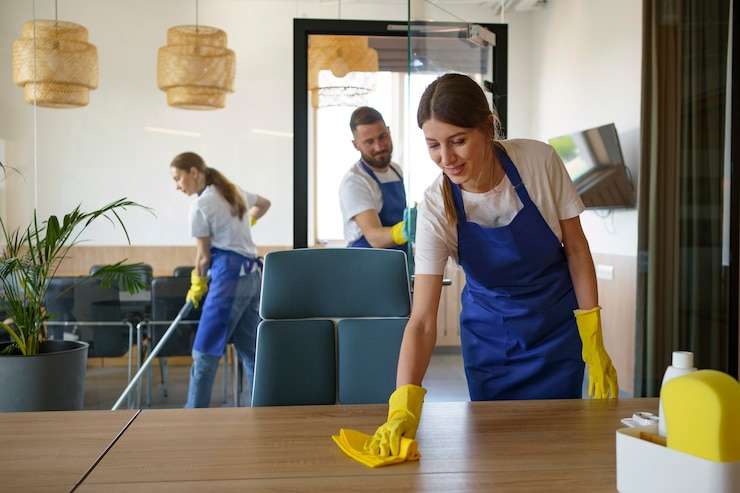
Here is how to clean marble floors in Singapore without causing lasting damage: sweep or dry-mop every day to lift grit before it scratches the stone, then wet-mop with warm water and a pH-neutral stone cleaner. Rinse thoroughly, then dry the surface immediately — standing water in Singapore's 75–85% average relative humidity etches marble and feeds mould within days. Skip vinegar, bleach, baking soda, and generic floor sprays; the calcium carbonate in marble reacts with acids and harsh alkalis, leaving permanent dull patches that no amount of re-mopping will fix.
This guide covers the full routine — from daily sweeping to stain removal to professional polishing cycles — for HDB flat owners, BTO residents, condo tenants, and commercial operators. If your marble is already dull, scratched, or stained, there is a section below on when DIY methods reach their limit and professional restoration becomes the right call.
Why singapore's climate is hard on marble floors
Singapore sits at 1.3°N latitude, with year-round temperatures of 25–34°C and relative humidity that rarely drops below 70% outdoors and hovers around 60–75% indoors without active air-conditioning. Marble is calcium carbonate — a mineral that reacts chemically with acids and is physically soft, rating just Mohs 3–4 compared to Mohs 6–7 for the quartz and feldspar particles commonly tracked in on shoes from Singapore's outdoor surfaces. Put those two facts together and the local environment becomes one of the more demanding contexts for marble maintenance anywhere in the world.
The National Environment Agency (NEA) notes that Singapore's high-density housing and tropical climate accelerate the build-up of indoor pollutants, moisture, and biological contaminants. For marble floors specifically, this translates to mould growth in grout lines, white mineral deposits from water pooling on rainy days, and accelerated etching from food and drink spills in kitchens and dining areas.
HDB flats with open corridors and condos with shared lobbies see the worst abrasion, as residents track outdoor grit indoors without always removing shoes. Marble in wet kitchens faces an additional hazard: acidic cooking residues and cleaning sprays designed for ceramic surfaces but used on the wrong floor type. A consistent dry-mop routine before any wet cleaning is not optional in Singapore; it is the single most protective habit you can build for a marble floor.
The right daily and weekly cleaning routine
Daily: dry mop first, always
Use a flat microfibre dust mop or a soft-bristle broom to collect dry debris before mopping. This step takes two minutes for an average HDB living room and prevents grit from being dragged across the surface by a wet mop head. For households with pets or children who bring in notable outdoor debris, a daily pass is worth it. For adults-only households with a strict shoes-off policy, every other day is fine.
Weekly: wet mopping correctly
Fill a mop bucket with warm — not hot — water and a few drops of a pH-neutral natural stone cleaner (pH 7–8). Brands available in Singapore include Lithofin MN Easy-Care, HG Natural Stone Cleaner, and Faber Stone Floor Cleaner, sold at Homefix, selected NTUC FairPrice hardware sections, and online via Lazada or Shopee. Wring the mop until barely damp, mop in overlapping strokes, and follow immediately with a dry microfibre pass or clean towels to remove residual moisture. For wet kitchens in HDB flats where water is frequently tracked across marble thresholds, a quick dry-wipe after every cooking session adds meaningful protection.
What to avoid entirely
Vinegar, lemon juice, citrus-based sprays, bleach (sodium hypochlorite), ammonia, and baking soda will all etch or discolour marble. This includes popular Singapore household products like Dettol Multi-Surface Cleaner and Mr. Muscle Floor Cleaner, which are formulated for ceramics and laminates. Steam mops are equally damaging: the pressurised heat degrades sealers and forces moisture into micro-cracks. The Natural Stone Institute's care and cleaning guidance recommends testing any unfamiliar product on a concealed tile first and restricting pH to the 7–8 range for all calcareous stones, including marble, limestone, and travertine.
How to remove stains from marble floors
Marble's porosity means stains penetrate fast — a coffee spill left for 30 minutes will absorb deeper than one wiped up immediately. Identify the stain type before treating, because the wrong approach can spread the stain or introduce new damage alongside it.
Stain-specific treatments
Oil-based stains (cooking oil, butter, food grease): Dilute a few drops of mild dish soap in warm water, apply to the stain, cover with a cloth for 15 minutes, then wipe clean and rinse. For older oil stains, make a poultice from diatomaceous earth or white paper towels soaked in acetone — apply in a 5mm-thick layer, cover with plastic wrap sealed at the edges with tape, and leave overnight. Lift the dried poultice, rinse, and dry.
Organic stains (coffee, tea, juice, mould patches): Mix 12% hydrogen peroxide with white flour or talcum powder to a peanut-butter consistency. Apply to the stain, cover with plastic wrap, seal the edges with tape, and leave for 24–48 hours. Rinse with clean water and dry. Do not use hydrogen peroxide above 12% concentration on coloured marble — it will bleach the stone unevenly. Test on a hidden area first.
Etch marks (white cloudy patches from acid contact): Etching is surface damage, not a stain. A thin layer of calcium carbonate has been dissolved, leaving a dull depression in the surface. Light etches on polished marble can be reduced with a small amount of marble polishing powder and a damp cloth, buffed in a circular motion for 2–3 minutes. Deep or widespread etching requires professional honing. Attempting to fix deep etching with abrasive DIY compounds typically makes the damage worse.
If you have recently moved into a BTO or completed a renovation, cement haze and grout residue on marble are common and respond differently from standard stains. Our guide on 5 essential steps for effective post-renovation cleaning Singapore covers how to handle these without etching or scratching the stone surface.
Professional marble floor cleaning in Singapore: costs and what to expect
Not all professional cleaning services produce the same outcome. A general cleaning company and a specialist stone restoration contractor will deliver entirely different results at entirely different prices. Understanding what each service tier actually does helps you ask the right questions before committing to a quote.
Service tiers explained
Basic professional cleaning (SGD $0.80–$2 per sqm): A machine-assisted mop using commercial stone-safe solutions, removing surface dirt, light grease, and general grime. Right for floors still in good condition that need a more thorough outcome than DIY mopping provides.
Deep cleaning (SGD $3–$8 per sqm): Low-speed machine scrubbing with buffing pads and pH-neutral solution, reaching embedded grime that hand-mopping misses. Recommended for any marble floor that has not received professional attention in 12 months or more, and for post-renovation clean-ups where construction dust has worked into the surface. For a broader overview of post-build surface cleaning standards, see our guide on cleaning floor tiles after renovation best practices.
Honing (SGD $10–$18 per sqm): Wet or dry abrasion using diamond-bonded pads in progressively finer grits to remove scratches, etch marks, and surface discolouration. Produces a smooth satin or matte finish. Typically needed every 3–5 years in residential settings, sooner in heavy-traffic areas.
Polishing (SGD $12–$20 per sqm): Follows honing; ultra-fine compounds restore a high-gloss mirror finish. If your marble has lost its reflective shine, this is the step that brings it back. Honing and polishing are almost always performed together in a single visit. To understand the full polishing cycle and plan the right frequency for your home, read our overview of how to maintain marble floors professional polishing Singapore.
Full restoration (SGD $22–$40 per sqm): Diamond grinding to level uneven or severely damaged tiles, followed by honing and polishing. Reserved for floors with deep gouges, heavy lippage between tiles, or damage from years of incorrect cleaning. Sealing (SGD $4–$7 per sqm) is applied after polishing and reduces porosity to slow future staining; it should be reapplied every 1–2 years in high-traffic or wet zones.
Prices above are typical Singapore market rates for 2026. Final costs vary with marble type (Carrara, Calacatta, Emperador, local cream marble), floor area, accessibility, and the degree of existing damage. Always obtain at least two written quotes and confirm the contractor has specific natural stone experience before booking.
How to maintain marble floors long-term
Professional cleaning and polishing restore marble to its best condition; daily habits are what keep it there. A consistent maintenance routine between professional visits can extend the interval before re-polishing from three years to five or more, saving hundreds to thousands of SGD per cycle.
Sealing schedule: A freshly polished floor should be sealed within 24 hours of polishing. In HDB kitchens and bathrooms — the wettest zones in any Singapore home — reseal every 12 months. In living rooms with moderate foot traffic, every 18–24 months is sufficient. The water-bead test tells you when it is time: drop a few water droplets on the floor. If they absorb within 3 minutes rather than beading up on the surface, the sealer has degraded and needs reapplication.
Entry control: Most abrasive particles that scratch marble are tracked in on shoes. A coarse-bristle outdoor mat and a softer indoor mat at each entrance reduce incoming grit by a notable margin before it reaches the stone. In landed homes and condos with private entrances, a clear shoes-off policy at the door is the most effective long-term protection available. This single measure does more for the floor than any cleaning product.
Furniture pads and mat selection: Place felt pads under all furniture legs, including pieces that rarely move such as shoe cabinets and console tables. Even a single unpadded shift can leave a deep scratch. Avoid rubber-backed mats on polished marble — rubber can leave permanent yellow stains within weeks in Singapore's heat. Use cotton or microfibre-backed mats instead. For commercial environments with marble flooring and heavy daily foot traffic, see our guide on how office cleaning services in Singapore affect workplace productivity, which covers commercial stone maintenance scheduling alongside other floor types.
Common DIY mistakes that permanently damage marble floors
The most frequent marble damage seen in Singapore homes comes not from neglect but from well-intentioned cleaning with the wrong products. These mistakes are worth knowing because most of the resulting damage cannot be reversed with further cleaning — it requires mechanical repair by a professional.
Vinegar and citrus sprays: This is the most common cause of marble etching in Singapore households. White vinegar and lemon-based sprays are widely promoted as natural cleaners and work well on ceramic tiles and laminates. On marble, a single application etches the surface visibly. The dull white patch left behind cannot be cleaned away; it must be honed out by a professional. If you have been using these products on marble, stop immediately and book a professional assessment before the damage spreads further.
Leaving water to pool after mopping: After mopping, some residents allow the floor to air-dry. In a wet kitchen or bathroom with limited ventilation, this can take 15–25 minutes — long enough to develop white mineral deposits and early-stage etch marks from the minerals in Singapore's tap water. Always follow wet-mopping with a dry pass using a clean microfibre mop or clean dry towels.
Steam mops: Steam mops are popular in Singapore as an effective and chemical-free cleaning method, and they are — for ceramic tiles and sealed laminates. On marble, the pressurised heat degrades sealers, opens micro-cracks in the stone, and can loosen the epoxy filler used in honed joints. Stick to a barely damp flat mop.
Hiring non-specialist cleaners: A general-purpose cleaning company that brings the wrong machine pads or uses standard floor detergent can strip the sealer and etch a large section of floor in a single session. When hiring specifically for marble, ask the contractor to confirm their experience with natural stone, what products they use, and whether those products are pH-neutral and marble-safe. Contractors with NEA-compliant cleaning certifications and documented stone restoration experience are the safest choice for high-value marble installations.
Comparison at a glance
| Service | What it does | Typical cost (SGD per sqm) | Recommended frequency |
|---|---|---|---|
| Basic cleaning | Machine mop with stone-safe solution; removes surface dirt and light grime | $0.80 - $2 | Monthly or as needed for well-maintained floors |
| Deep cleaning | Low-speed machine scrub; lifts embedded grime and grease missed by hand-mopping | $3 - $8 | Every 6-12 months for residential floors |
| Honing | Diamond abrasion removes scratches, etch marks, and surface discolouration; satin or matte finish | $10 - $18 | Every 3-5 years or after notable wear |
| Polishing | Ultra-fine compounds restore high-gloss mirror finish; always follows honing | $12 - $20 | Every 3-5 years (combined with honing) |
| Full restoration | Diamond grinding + honing + polishing for severely damaged or uneven floors | $22 - $40 | As needed for heavy damage or poor installation |
| Sealing | Impregnating sealer reduces porosity and slows future staining | $4 - $7 | Every 1-2 years after polishing |
Frequently asked questions
What is the safest cleaner to use on marble floors in Singapore?
Use a pH-neutral stone cleaner (pH 7–8) diluted in warm water. Look for products labelled specifically for marble or calcareous stone. Brands available in Singapore include Lithofin MN Easy-Care, HG Natural Stone Cleaner, and Faber Stone Floor Cleaner — sold at Homefix, selected NTUC FairPrice hardware sections, and online via Lazada or Shopee. Avoid anything containing lemon, vinegar, bleach, or ammonia, and any product labelled 'degreaser' that does not explicitly state marble-safe on the label.
How often should marble floors be professionally cleaned in Singapore?
For residential living rooms in HDB flats and condos with moderate foot traffic, a professional deep clean once a year is adequate when paired with a consistent weekly DIY routine. High-traffic zones — foyers, wet kitchens, commercial reception areas — benefit from professional cleaning every six months. A full hone-and-polish cycle is typically needed every 3–5 years, depending on daily wear and whether the floor is sealed and maintained correctly between visits.
Can I use a steam mop on my marble floors?
No. Steam mops apply pressurised heat that degrades marble sealers, opens micro-cracks in the stone, and can loosen grout and epoxy filler in honed joints. The Natural Stone Institute specifically advises against steam cleaning on marble and other calcareous stones. Use a barely damp flat microfibre mop instead, followed immediately by a dry pass.
How much does marble floor polishing cost in Singapore?
Professional marble honing and polishing costs SGD $12–$20 per sqm in 2026. For a typical 90 sqm HDB living and dining area, a full hone-and-polish cycle runs SGD $1,080–$1,800. Full restoration involving diamond grinding costs SGD $22–$40 per sqm. Prices vary with marble type, floor condition, and accessibility. Obtain at least two written quotes and confirm the contractor's experience with natural stone specifically, not just general floor cleaning.
How do I prevent mould on marble floors in singapore's humidity?
Singapore's indoor relative humidity commonly sits at 65–80% without active air-conditioning — well above the 60% threshold at which mould growth accelerates, as noted in the US EPA's mould cleanup guidance. Dry floors thoroughly after mopping, improve ventilation in wet areas, and use a dehumidifier in rooms that stay above 70% humidity. For existing mould on grout lines, diluted hydrogen peroxide (3–6%) applied with a soft brush and left for 10 minutes kills surface mould without etching the stone. Do not use bleach near marble. For affected areas larger than roughly one square metre, book a professional assessment.