

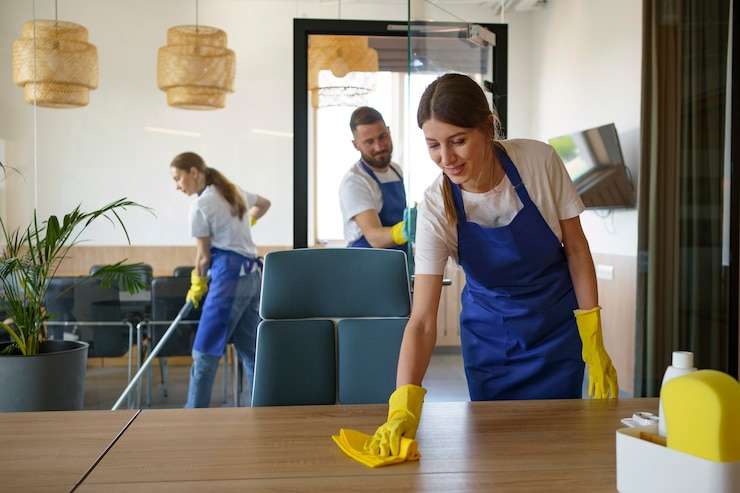
Here is how to clean vinyl floors in Singapore the right way: sweep daily with a soft-bristle broom to lift grit before it scratches, then mop once or twice a week with a pH-neutral cleaner diluted in warm water. Use a barely damp mop, not a soaking wet one, and dry the surface immediately after. That routine handles most of what your floors face day to day.
Singapore's climate makes the stakes higher than most homeowners expect. Average relative humidity stays above 84% year-round, and that moisture seeps under floor edges, softens adhesive in older HDB and BTO installs, and makes surface grime cling more stubbornly than in drier conditions. The sections below walk through every level of care, from the five-minute daily sweep to a full deep clean, so you can keep your vinyl looking good without shortening its lifespan.
Understanding the vinyl floor types found in Singapore homes
Not all vinyl is cleaned the same way. Singapore homes typically feature one of three types: luxury vinyl tile (LVT), sheet vinyl, or the older vinyl composite tile (VCT) common in HDB flats built before the 2000s. The difference matters because each has a different wear layer thickness, and the thinner the wear layer, the more aggressive cleaning will cause micro-scratches that trap dirt permanently.
LVT, the current standard in most new BTOs and condos, has a wear layer between 0.3 mm and 0.7 mm, with higher-end products reaching up to 1 mm. A mid-grade 0.5 mm wear layer handles routine mopping and occasional machine scrubbing without issue. Sheet vinyl, still found in kitchens and bathrooms of older HDB units, has a thinner top coat and is more vulnerable to abrasive cleaners. VCT is dense but porous and needs stripping and resealing periodically, something LVT does not require.
If you are unsure what type of vinyl you have, check for the original floor spec in your renovation invoice or look for a sample tile left by your contractor. The cleaning method you choose should match the material, not just the appearance. For floors installed post-renovation, see our guide on how to clean floor tiles after renovation best practices.
Routine cleaning: daily and weekly steps that actually work
Daily sweeping is the single highest-impact habit you can build. Singapore's open-window culture means fine dust, sand, and outdoor grit enter constantly, and these particles act like sandpaper under foot traffic. A microfibre flat mop or a soft-bristle broom takes two minutes and prevents the micro-scratches that dull vinyl over months.
For weekly mopping, mix 2-3 drops of pH-neutral floor cleaner into a bucket of warm water. Brands like Pledge FloorCare, or the local options sold at NTUC FairPrice, work well. Wring the mop until it is barely damp. Wet vinyl seams are a risk: water that sits in the gaps migrates downward, softening the adhesive beneath and eventually causing the edges to lift. After mopping, open windows or run a fan to dry the floor within 10-15 minutes.
Skip the steam mop for vinyl. Steam drives moisture directly into seams and can warp the planks. The National Environment Agency (NEA) notes that moisture management is one of the leading factors in mould control in Singapore homes, and steam mopping on vinyl floors defeats that goal entirely. For how vinyl care compares with other floor types, see our vinyl floor care tips Singapore page.
Products to keep on hand
- pH-neutral floor cleaner (avoid anything with citrus acid or bleach)
- Microfibre flat mop with a washable pad
- Soft-bristle dry broom or a cordless vacuum on the hard-floor setting
- White microfibre cloths for spot cleaning
Deep cleaning vinyl floors: a step-by-step method
A deep clean targets what weekly mopping misses: grime embedded in the texture grain, scuff marks from furniture legs, and the grey film that builds up in high-traffic corridors. In Singapore conditions, most households benefit from a thorough deep clean every three to four months, with kitchens and entranceways needing attention every six to eight weeks.
What you need
- Vinyl-safe deep cleaner such as Bona Hard-Floor Cleaner, or a diluted white vinegar solution (1 part vinegar to 10 parts warm water) for non-waxed vinyl
- Soft-bristle scrub brush or a non-abrasive floor scrubbing pad
- Bucket and mop
- Dry towels or a floor fan
Step-by-step process
Step 1: Clear and vacuum. Remove all furniture and vacuum thoroughly, including skirting edges. Use a crevice tool to pull out trapped dust from the joins between planks.
Step 2: Pre-treat problem areas. Apply your cleaning solution directly to scuff marks or stained sections and leave for two minutes. Do not let it dry on the surface.
Step 3: Scrub in sections. Work in 1 sq m sections, scrubbing gently in the direction of the grain. Rinse each section with a clean, damp cloth before moving to the next. Letting soapy residue dry leaves a sticky film that attracts more dirt.
Step 4: Dry promptly. Open windows and run the aircon or a standing fan. The floor should be fully dry within 20-30 minutes in Singapore's typical indoor humidity range of 60-75% with air conditioning running.
Step 5: Check for edge lifting. Inspect the room's perimeter. Any lifted edges indicate moisture has been sitting too long at some point. Caught early, this is a five-minute fix with a roller and a few drops of vinyl adhesive. Left another month, it requires re-laying the affected planks. For professional-grade deep cleaning services, see our vinyl cleaning service solutions for every home in Singapore.
Stain removal: tackling the most common marks in Singapore households
Singapore kitchens see chilli oil, soy sauce, turmeric, and curry paste on a weekly basis. Outdoor sandals bring in red laterite soil and tar from freshly resurfaced roads. Here is how to handle the stains that come up most often.
Food and beverage stains
Blot immediately with a dry cloth. Rubbing spreads the stain sideways, so press and lift instead. Apply a small amount of dish soap to a damp cloth and work from the outer edge inward. For turmeric stains, make a paste of baking soda and water, press it onto the mark, leave for five minutes, then wipe clean. Avoid bleach on coloured vinyl: it strips pigment and leaves a pale ghost worse than the original stain.
Grease and oil
Apply a few drops of isopropyl alcohol (70%) on a cloth and press onto the stain without rubbing. The alcohol lifts grease without softening the vinyl finish. Wipe away, then follow with a damp cloth to remove residue. Isopropyl alcohol is widely available at pharmacies like Guardian and Watsons across Singapore.
Scuff marks from furniture
A pencil eraser or a clean tennis ball rubbed over the mark lifts most rubber scuffs. For deeper black marks from metal chair legs, a small amount of WD-40 on a cloth works, but follow immediately with a pH-neutral cleaner to prevent the oil from attracting dust.
Mould and mildew
Mould on vinyl surfaces in Singapore is common near windows and in bathrooms with poor ventilation. Mix one part white vinegar to three parts water, apply with a cloth, let it sit for five minutes, then wipe off. For mould that has penetrated grout lines or edges, the US EPA mold cleanup guidance recommends treating the moisture source first. Otherwise the mould returns within weeks regardless of what cleaning product you use. The HealthHub (Singapore Ministry of Health) links mould exposure to respiratory irritation and worsened asthma, two conditions that affect a notable share of Singapore residents.
Common mistakes that shorten the life of vinyl floors
Most vinyl damage in Singapore homes comes from well-intentioned cleaning done the wrong way. Here are the errors worth avoiding.
Using the wrong mop. A soaking wet string mop is the most common culprit. The excess water sits in seams for minutes at a time, enough to work its way under the planks and begin degrading the adhesive, especially in humid conditions where evaporation is slow. Stick to a microfibre flat mop and wring it until you hear no drips.
Abrasive cleaners and steel wool. Scouring pads, powder cleaners, and anything with a grit rating above zero will scratch the wear layer permanently. Once scratched, the vinyl loses its stain resistance and dulls quickly. The scratches are hard to see individually, so many homeowners only notice the cumulative effect after six to twelve months of damage has already been done.
Wax and polish on LVT. Old-school floor wax was designed for VCT, not LVT. Applying wax to modern vinyl traps dirt in a thick layer that yellows over time and is difficult to strip without damaging the surface underneath. If your floor needs shine restored, a cleaner formulated for LVT will do more than any wax product.
Dragging furniture without felt pads. The rubber wheels of office chairs and the metal feet of dining sets score vinyl in minutes. Self-adhesive felt pads cost around $5-$10 at any hardware store in Singapore and prevent years of damage. For office environments where floor wear is a regular concern, see our article on boosting productivity with office cleaning services in Singapore. Consistent floor hygiene also has measurable health impacts; read how office cleaning services in Singapore keep workplaces safe and healthy.
When to hire a professional vinyl cleaning service in Singapore
DIY cleaning handles routine maintenance well, but there are situations where professional equipment and products get results that home cleaning cannot match. The most common trigger is a floor that looks grey or dull after mopping. This usually means a residue layer has built up from repeated use of the wrong cleaner, and a professional machine scrub is the only way to remove it without replacing the floor.
Professional vinyl cleaning services in Singapore typically charge between $80 and $200 for a standard 3-room HDB flat (roughly 60-70 sq m), and $150 to $350 for a 4-room flat or private condominium unit of similar size. These figures reflect typical market rates in 2026 and include pre-treatment, machine scrubbing, extraction, and drying. Some providers offer protective coating application as an add-on at $50-$100 extra, which extends the period between deep cleans. Prices vary by floor condition, accessibility, and whether furniture needs to be moved.
A professional service makes sense when the floor has not been deep-cleaned in over a year, when multiple stains have not responded to home treatments, when edge lifting is widespread, or when you are preparing a property for sale or lease. Landlords and property agents consistently report that freshly cleaned vinyl floors add perceived value during viewings, an outcome that a $100-$200 service can more than justify. See our full guide on vinyl floor cleaning Singapore tips for what to look for when comparing service providers.
Comparison at a glance
| Method | Cost (SGD) | Time required | Best for | Frequency |
|---|---|---|---|---|
| Daily dry sweep | $0 (own equipment) | 2-5 min | All vinyl types | Daily |
| Weekly damp mop (DIY) | $10-$30/month (consumables) | 15-20 min | Routine maintenance | Weekly |
| DIY deep clean | $20-$50 (tools + solution) | 1-2 hours | LVT and sheet vinyl | Every 3-4 months |
| Professional spray scrub | $80-$200 (3-room HDB) | 2-3 hours | Stubborn residue, high-traffic floors | Every 6-12 months |
| Professional machine scrub + coat | $130-$350 (3-4 room flat) | 3-4 hours | Pre-sale, post-reno, heavy soiling | Annually or on demand |
Frequently asked questions
Can I use a steam mop to clean vinyl floors in Singapore?
No. Steam mops force heat and moisture directly into the seams between vinyl planks. In Singapore's already humid climate, this dramatically increases the risk of adhesive failure, edge lifting, and mould growth beneath the floor. Stick to a barely damp flat mop with a pH-neutral cleaner. It is more effective for daily grime and far safer for the floor's lifespan.
How often should I deep clean vinyl floors in a Singapore HDB flat?
For a typical HDB household, a deep clean every three to four months is adequate for living and bedroom areas. High-traffic zones like the kitchen and the main entrance benefit from a more thorough clean every six to eight weeks. If you have young children or pets, or if the flat is near a main road where dust ingress is higher, move to a monthly schedule for the most-used rooms.
What is the safest cleaner for luxury vinyl tile (LVT) available at Singapore hardware stores?
pH-neutral floor cleaners are the safest option and are widely available at NTUC FairPrice, FairPrice Finest, and hardware stores like Home-Fix and Soon Lee. Look for products labelled specifically for vinyl or LVT, and avoid anything containing citrus acids, ammonia, bleach, or wax. When in doubt, a diluted white vinegar solution (1 part vinegar to 10 parts water) works for non-waxed vinyl and handles light mould, though it should not be used regularly on waxed or coated floors.
Is there a risk of formaldehyde off-gassing from vinyl floors in Singapore?
Some lower-grade vinyl flooring products, particularly those imported without proper testing certification, can off-gas volatile organic compounds (VOCs) including formaldehyde. The risk is highest in the first few weeks after installation in a poorly ventilated space. The US EPA's facts about formaldehyde recommend ventilating new flooring installs thoroughly before occupancy. In Singapore, choose flooring products that comply with SS 560 (the Singapore Standard for flooring emissions) and ventilate your home for at least 72 hours after installation with windows open and fans running.
Can I clean vinyl floors the same way I clean carpet in my Singapore home?
No. The methods are entirely different. Carpet cleaning relies on wet extraction or dry compound methods designed for fibre, while vinyl needs a damp-not-wet approach with hard-surface solutions. Treat them as separate maintenance tasks. For carpet care schedules, see our guide on how often you should schedule carpet cleaning in Singapore for a healthier home.
Sources
- National Environment Agency (NEA)
- US EPA mold cleanup guidance
- HealthHub (Singapore Ministry of Health)
- US EPA's facts about formaldehyde