

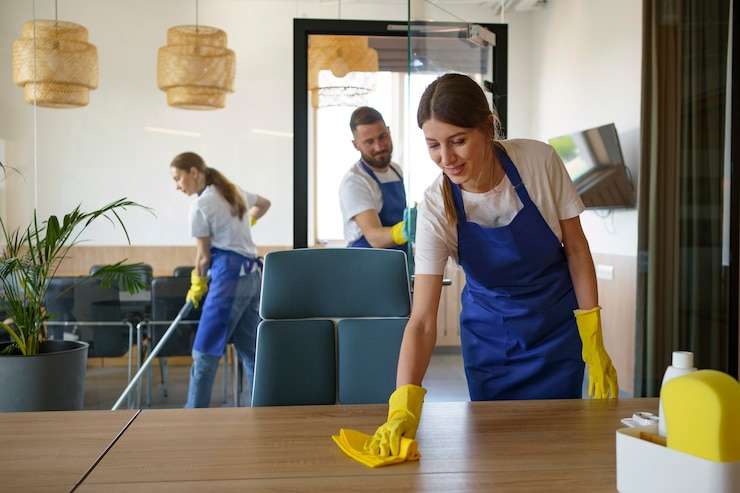
In Singapore, the 3 main differences between a steam deep clean and regular cleaning are the sanitisation method used (heat versus chemicals), how far the treatment penetrates into fabric and padding, and how quickly surfaces are safe to use again. Understanding these distinctions matters in a tropical climate where humidity sits at 70-90% year-round - giving dust mites, mould spores, and bacteria ideal conditions to thrive inside mattresses, sofas, and curtains, well below what surface cleaning can reach.
Whether you live in a 4-room HDB flat in Tampines or a condo in Novena, choosing the right cleaning method affects both your home's actual hygiene and your family's long-term health. This guide breaks down what each method does, where the differences are most pronounced, and what a professional steam deep clean in Singapore realistically costs in 2026.
How steam deep cleaning works in Singapore homes
Steam deep cleaning uses water heated to 130-150 degrees Celsius, converting it to pressurised vapour directed at surfaces, fabrics, and upholstery. The high temperature does two things simultaneously: it dissolves grease and organic matter, and it denatures the proteins in bacteria, dust mites, and mould spores - killing them without chemical input. This is meaningfully different from using a hot cloth or a consumer steam iron, which apply localised heat without the pressure and extraction that professional equipment provides.
In Singapore's climate, relative humidity regularly sits between 70% and 90%. Soft furnishings absorb airborne moisture constantly, creating conditions for dust mites and mould to reproduce inside mattresses, sofas, and curtains - not just on the surface. Steam's pressurised vapour reaches where a damp cloth or vacuum nozzle cannot, penetrating several centimetres into padding and fabric pile where allergen colonies actually live.
Professional-grade steam cleaners differ notably from consumer units sold at electronics retailers. Commercial equipment operates at 4-6 bar of pressure, compared to 2-3 bar for household models, and includes extraction capability - injecting steam while simultaneously drawing loosened moisture and debris back out. That extraction step leaves surfaces barely damp rather than saturated. Without it, you risk introducing moisture into padding and creating the exact mould conditions you were trying to address.
The 3 differences between steam cleaning and conventional deep cleaning
1. sanitisation method - heat versus chemicals
Conventional deep cleaning uses detergents, degreasers, and disinfectant sprays that react chemically with dirt to break it down. These products work on hard surfaces but leave residues - surfactants, fragrances, and antibacterial compounds - that settle into fabric fibres. The US EPA's indoor air quality guidance identifies volatile organic compounds (VOCs) from cleaning products as a notable contributor to poor indoor air quality, particularly in homes with limited natural ventilation - which describes most Singapore HDB units during the afternoon heat.
Steam cleaning replaces chemical action with thermal action. Water heated past 130 degrees Celsius produces vapour that simultaneously loosens contamination and kills pathogens on contact - no residue, no off-gassing, no concern about children or pets encountering surfactant traces hours after the session. For households with asthma sufferers or chemical sensitivities, this is a practical advantage rather than a marketing claim.
2. surface treatment versus subsurface extraction
Regular deep cleaning - vacuuming, scrubbing, shampooing - removes dirt from the top layer of a surface. A thorough vacuuming session lifts surface dust and pet hair from a sofa but will not reach mite colonies or mould spores living 3-5 centimetres below the surface of a Singapore mattress that sits in 85-90% ambient humidity every night. HealthHub (Singapore Ministry of Health) identifies house dust mites as a leading trigger for asthma and allergic rhinitis - conditions that surface cleaning alone does not address, because the source is below the surface.
Steam penetrates fabric fibres because pressurised vapour molecules travel into the substrate. Combined with mechanical agitation and extraction, a professional steam deep clean removes material from inside the item, not just off its face. Mattresses treated by steam extraction often yield visibly darker waste water - residue that surface cleaning would have left embedded in the padding, contributing to odour and allergen load over time.
3. drying time and post-clean safety
Traditional shampooing or foam-based upholstery cleaning saturates fabric with liquid. Without thorough extraction, that moisture sits in the padding for 12-24 hours. In Singapore, a sofa cleaned with wet shampoo at midday and left in a non-air-conditioned room at 85% humidity risks developing mould growth inside the padding before it is fully dry - you may clean the surface while creating a problem underneath it.
Professional steam extraction removes 85-90% of the moisture it introduces. Sofas and mattresses are typically ready for use within 2-4 hours with normal ventilation, and within 1-2 hours if a ceiling fan or dehumidifier is running. For Singapore families who need their sofa usable that evening or their mattresses ready for bedtime, this speed difference is a practical factor that the drying times of traditional methods do not accommodate.
Which surfaces benefit most from steam deep cleaning in Singapore
Mattresses are the highest-priority item in most Singapore homes. A mattress used for two or three years without professional cleaning accumulates dust mite populations inside the padding that surface vacuuming cannot reach. For households with allergy sufferers or young children, learning how to steam clean a mattress to save time and money in Singapore reduces allergen exposure and the frequency of allergy-triggered medical visits. Our mattress steam cleaner guide for germ-free sleep in Singapore explains what a professional session covers and what preparation helps.
Fabric sofas and upholstered chairs accumulate body oils, dead skin cells, pet dander, and food residue in layers with each session of use. For 4-room HDB families where the sofa is a daily gathering point, a professional steam session every 8-12 months maintains hygiene between cleans. Most polyester, cotton, and linen-blend sofa fabrics - which cover the majority of upholstery in Singapore condos and HDB flats - handle steam treatment safely, provided extraction prevents over-wetting the padding.
Carpets in Singapore condos and landed properties accumulate ground-in particulate matter that vacuuming leaves behind, particularly in loop-pile and cut-pile carpets where fine particles migrate to the base of the fibres. Our guide on how often to clean carpets in Singapore provides climate-adjusted frequency recommendations. Steam extraction lifts that embedded layer in a way that dry vacuuming cannot.
Curtains are frequently overlooked but carry notable allergen loads. Singapore homes often keep curtains drawn for privacy and to manage afternoon heat, trapping moisture in pleated folds and creating conditions that favour dust mite reproduction. Steam cleaning curtains in place - without unhanging them - avoids the shrinkage risk of machine washing and is faster than sending them out to a laundry. Day curtains, blackout curtains, and sheer panels all respond well to professional steam treatment.
What steam deep cleaning costs in Singapore in 2026
Pricing in Singapore varies by item size, condition, and whether the service includes full extraction capability. The ranges below reflect professional services using commercial-grade equipment - not consumer steam mop treatments, which lack the pressure and extraction to produce comparable results. For a broader overview of what a professional session covers, see our guide to deep cleaning services in Singapore.
Mattress steam cleaning typically runs SGD $90-$160 for a single bed and SGD $140-$220 for a queen or king mattress. A 3-seater fabric sofa is usually SGD $200-$320. Carpet steam extraction for a medium living room rug (around 120x180cm) costs SGD $130-$220. Whole-home packages for a 3-room HDB flat - covering two mattresses, a sofa, and curtains - typically range from SGD $380 to SGD $580 depending on item count and condition.
These prices sit above basic surface cleaning for a reason. The cost reflects commercial-grade extraction equipment, technicians trained to identify fabric types and apply appropriate settings, and a result that holds for 6-12 months rather than the 2-4 months typical of a surface-only approach. Divided across 12 months, the per-month cost of one professional steam session is generally lower than the combined cost of repeated surface cleaning attempts. For a broader breakdown of how these services compare, see our page on what you need to know about deep cleaning services in Singapore.
How often to schedule a steam deep clean in Singapore
The National Environment Agency (NEA) emphasises regular maintenance cleaning as a public health priority in Singapore's high-density housing environment. For upholstered items specifically, the recommended frequency is higher than you would find in a European or temperate-climate guide - because elevated year-round humidity accelerates allergen accumulation and mould risk inside soft furnishings.
The practical schedule for most Singapore households: mattresses every 6 months for families with allergy sufferers, young children, or pets, and annually for healthy adults with no known sensitivities. Fabric sofas every 8-12 months. Carpets every 6-9 months in high-traffic areas. Curtains annually, or immediately after any visible mould episode or extended period of high humidity exposure such as keeping windows open through the monsoon months.
Post-renovation is a specific trigger that warrants an unscheduled steam deep clean. Construction activity deposits silica dust, fibreglass particles, and formaldehyde from new furniture and finishes throughout a home. The US EPA's formaldehyde facts page documents the health implications of prolonged low-level formaldehyde exposure, making post-renovation cleaning a health priority rather than an optional step. Our page on post renovation deep cleaning in Singapore covers the full scope of what that session should address.
Caring for your home after a steam deep clean
A professional steam deep clean resets the hygiene baseline of your home's soft furnishings. What you do in the weeks following determines how long that baseline holds before the next professional session is needed.
The single most effective habit is running a dehumidifier in bedrooms and the main living area. Dust mites need only 50%+ relative humidity to reproduce, and Singapore's national average sits well above that threshold. Keeping indoor humidity below 60% meaningfully slows mite and mould re-establishment. Setting air conditioning to dry mode during humid afternoons - typically between 1pm and 4pm - achieves a similar effect without a separate appliance.
Vacuum mattresses and sofas weekly using a vacuum with a HEPA filter. This lifts surface debris before it migrates into the substrate, extending the period before the next professional clean is needed. Avoid eating on upholstered furniture - food residue and spill moisture are the fastest route to re-soiling a recently treated sofa. Use mattress protectors, washed monthly, to intercept body oils and moisture before they reach the mattress padding. For households managing ongoing allergy concerns, the full maintenance cycle - professional steam clean, mattress protector, weekly HEPA vacuuming, dehumidifier - is what our guide on 10 effective methods for allergen removal mattress cleaning in Singapore covers step by step.
Comparison at a glance
| Comparison factor | Steam deep cleaning | Conventional deep cleaning |
|---|---|---|
| Sanitisation method | Heat at 130-150 degrees C | Chemical detergents and sprays |
| Depth of treatment | Into fabric fibres and padding (3-5cm) | Surface layer only |
| Average drying time (sofa/mattress) | 2-4 hours | 8-24 hours |
| Chemical residue left behind | None | Surfactants and fragrances may remain |
| Mould and dust mite kill rate | 99%+ via thermal action | Varies by product strength and dwell time |
| Typical single mattress price (SGD) | $90-$160 | $60-$100 (shampoo method) |
| Typical 3-seater sofa price (SGD) | $200-$320 | $150-$230 (shampoo method) |
| Safe for allergy households | Yes - no VOC exposure | Check product formulation before booking |
| Recommended frequency in Singapore | Every 6-12 months | Every 3-6 months (less effective per session) |
Frequently asked questions
Is steam deep cleaning safe for all types of sofa and mattress fabric?
Steam is safe for most synthetic and natural fabrics - polyester, cotton, microfibre, and most upholstery blends used in Singapore homes. It is not suitable for untreated velvet, some delicate silks, or leather. Most HDB and condo sofas use polyester or linen-blend upholstery that handles steam without issue. A professional technician will test an inconspicuous area before treating the full piece, so any fabric compatibility problem is caught before damage can occur.
How long does a professional steam deep cleaning session take?
A single mattress takes 30-45 minutes. A 3-seater fabric sofa takes 60-90 minutes. A full home steam deep clean for a 3-room HDB flat - covering two mattresses, a sofa, and curtains - typically takes 3-4 hours with a two-person team. The actual duration depends on item count, their current condition, and whether stain pre-treatment is needed for stubborn marks before the main steam pass.
Can steam deep cleaning remove mould from mattresses and sofas?
Steam heat at 130-150 degrees Celsius kills mould spores on contact. For early-stage mould - no visible growth but a musty odour - steam cleaning is highly effective at eliminating the colony and the smell. For established mould with visible staining in the fabric, steam removes the live spores but may not fully clear the discolouration. In that situation, a specialist mould pre-treatment is typically applied before the steam session to break down the staining first.
What should I do to prepare before the steam cleaning team arrives?
Strip bed linen and remove pillowcases before the team arrives - leave mattresses on their frames. Clear personal items and cushions from sofas. Move pets to a separate room for the session. There is no need to pre-vacuum; technicians vacuum as part of their preparation process. If items have known stains, point them out at the start so the technician can apply the correct pre-treatment product before steaming.
How is steam deep cleaning different from a regular spring clean?
Spring cleaning addresses surfaces - floors, windows, kitchen fixtures, and bathroom fittings. It rarely touches the interior of upholstered furniture, which is where allergens and mould actually accumulate in a Singapore home. Steam deep cleaning specifically targets what is inside mattresses, sofas, carpets, and curtains. The two complement each other; neither substitutes for the other. If you are deciding which to schedule first, our comparison of deep cleaning vs spring cleaning in Singapore sets out the right sequencing for different household situations.
Sources
- US EPA's indoor air quality guidance
- HealthHub (Singapore Ministry of Health)
- National Environment Agency (NEA)
- US EPA's formaldehyde facts page