
2026 Singapore Office Flu Season Sanitization Guide: How to Sanitize Office Furniture Effectively
Did you know that Singapore's influenza positivity rate climbed to 36.6% in August 2026? As we approach the year-end peak, the pressure to protect your workforce from rising absenteeism has never been higher. You likely understand that a quick wipe-down isn't enough, yet the fear of ruining high-end ergonomic chairs or custom workstations with harsh chemicals often leads to costly hesitation. Learning how to sanitize office furniture effectively is no longer just about aesthetics; it's a vital pillar of your 2026 business continuity plan.
We agree that maintaining a pristine, germ-free environment shouldn't come at the cost of your physical assets. This guide will equip you with a professional-grade defense strategy to minimize sick days and maintain a thriving workspace throughout the flu season. You'll discover a precise, actionable checklist for your internal teams, learn the NEA-approved standards for disinfectant concentrations, and identify exactly when to call in a specialized sanitization service to handle deep-seated pathogens. Our goal is to provide the clarity you need to foster a workspace where employees feel truly cared for and protected.
Key Takeaways
- Prepare for Singapore’s bimodal flu peaks by aligning your sanitization schedule with the December to February and May to July high-risk periods.
- Distinguish between basic surface cleaning and professional-grade disinfection to ensure your workspace isn't just looking tidy but is truly pathogen-free.
- Master how to sanitize office furniture with a focus on overlooked micro-touchpoints like ergonomic adjustments and upholstery seams where viruses often linger.
- Adopt a tiered hygiene strategy that scales your efforts based on staff density and real-time health data from the Communicable Diseases Agency.
- Understand the advantages of specialized technology like electrostatic sprayers for achieving total coverage in complex, high-traffic office environments.
Understanding Flu Season Risks in the 2026 Singapore Workplace
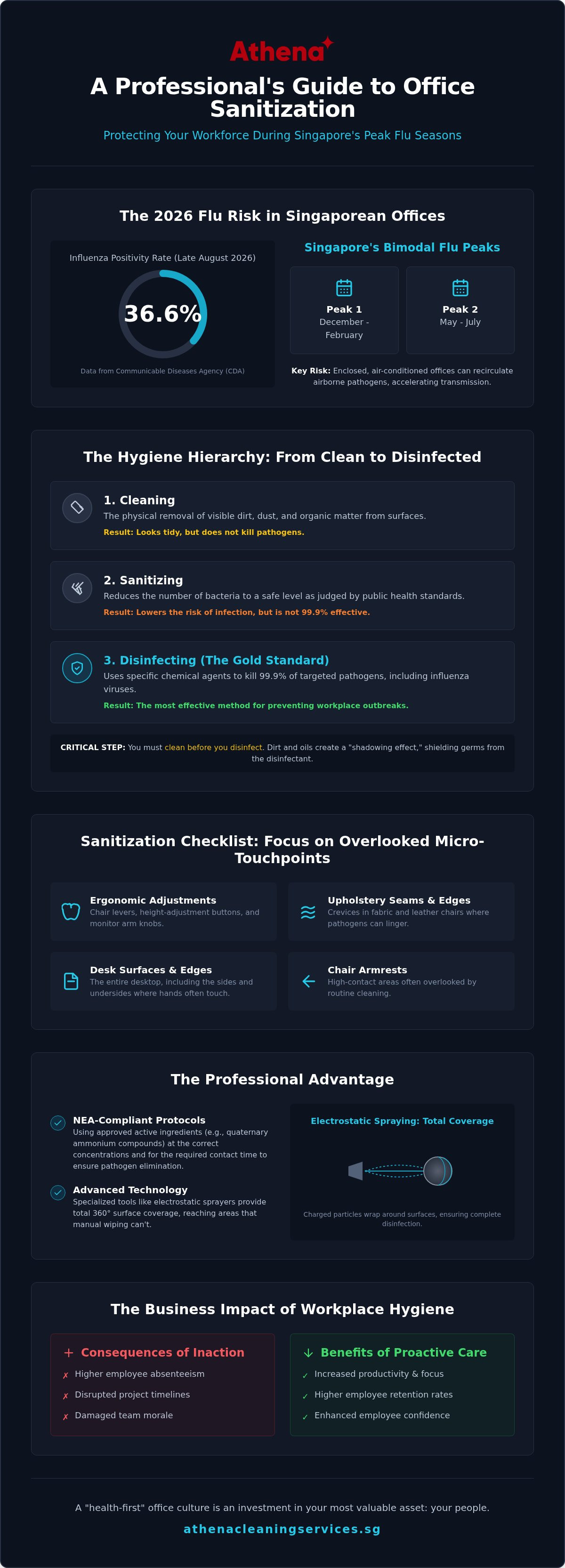
Singapore’s tropical climate presents a unique set of challenges for workplace health that differ significantly from temperate regions. We don't have a single winter flu season. Instead, our nation faces a bimodal cycle with two distinct peaks: December to February and May to July. Data published by the Communicable Diseases Agency (CDA) on September 1, 2026, highlighted a sharp increase in influenza positivity, reaching 36.6% in late August. This environment demands a sophisticated approach to hygiene that goes beyond surface-level aesthetics. Our enclosed, air-conditioned offices are designed for comfort, but they also facilitate virus transmission by recirculating air and maintaining the cool, dry conditions where pathogens thrive.
Every interaction your staff has with their workstation contributes to its "Bio-Load," which is the cumulative buildup of organic matter and germs over a standard workday. When an employee sneezes or touches a shared surface, they leave behind a microscopic footprint. Understanding The Science of Sanitization is essential for breaking this chain of infection. It involves more than just a quick wipe; it requires a targeted strategy to neutralize pathogens before they can spread. Learning how to sanitize office furniture effectively ensures that common touchpoints like armrests and desk edges don't become silent vectors for illness.
The Economic Cost of Workplace Illness
A flu outbreak within the office creates a damaging ripple effect that extends far beyond a few empty desks. High absenteeism disrupts project timelines, forces remaining staff to take on double workloads, and inevitably erodes team morale. In the competitive landscape of 2026, a proactive sanitization plan is a critical cost-saving measure rather than a luxury. When you prioritize a "health-first" office culture, you're investing in your most valuable asset: your people. Employees who see a visible, professional commitment to their well-being feel more confident and secure in their environment, which directly correlates to higher productivity and retention rates.
NEA Standards for Commercial Hygiene
The National Environment Agency (NEA) provides rigorous guidelines to ensure commercial spaces remain safe for the public. It's vital to recognize the regulatory difference between standard housekeeping, which focuses on tidiness, and public health sanitization, which focuses on the elimination of harmful microbes. Meeting these high standards requires specialized knowledge of contact times and chemical concentrations. Partnering with a professional cleaning company singapore ensures that your office remains compliant with the latest 2026 protocols. These experts know exactly how to sanitize office furniture using NEA-approved active ingredients like quaternary ammonium compounds, providing a level of protection that standard janitorial services simply cannot match.
The Science of Sanitization: Cleaning vs. Disinfecting Office Furniture
Most people use the terms "cleaning" and "disinfecting" as synonyms, but in a professional context, they represent very different levels of hygiene. Understanding this technical hierarchy is the first step in mastering how to sanitize office furniture effectively. Cleaning is the physical removal of visible dirt, dust, and organic matter from a surface. While it makes a desk look tidy, it doesn't necessarily kill the pathogens that cause the flu. Sanitization goes a step further by reducing bacterial counts to levels deemed safe by public health standards. However, disinfection is the gold standard for flu prevention; it involves using specific chemical agents to kill 99.9% of targeted pathogens, including the influenza viruses currently circulating in Singapore.
You can't skip the cleaning stage and move straight to disinfection. If a surface is covered in a layer of dust or skin oils, it creates a "shadowing" effect. This organic barrier shields microorganisms from the chemical agent, allowing them to survive and continue spreading. A professional sanitization service ensures every surface is pre-cleaned so the disinfectant can make direct contact with the target pathogens, ensuring a comprehensive and superior result.
Contact Time: The Secret to Pathogen Elimination
One of the most common mistakes in office maintenance is the "spray and wipe" method. For a disinfectant to be effective, it must remain visibly wet on the surface for a specific duration known as "dwell time." If you wipe the solution off immediately, you're essentially just cleaning, not disinfecting. According to NEA guidelines updated in June 2026, typical contact times range from one to five minutes depending on the active ingredient used, such as sodium hypochlorite or quaternary ammonium compounds. Dwell time is the crucial window for 2026 pathogen control where the chemical reaction actually occurs.
Choosing the Right Sanitizing Agents for Office Materials
Effective sanitization shouldn't come at the cost of your infrastructure. Using harsh, acidic chemicals on a marble-top reception desk or unsealed parquet can cause permanent etching, stripping, or discoloration. Professionals prioritize pH-neutral cleaners and non-toxic, office-safe agents that protect both your furniture and the respiratory health of your employees. By selecting chemicals based on specific furniture material science, we ensure that your high-value assets remain in pristine condition while achieving a total elevation of the environment's hygiene and safety.
The Ultimate Office Furniture Sanitization Checklist
Establishing a systematic defense against the flu requires moving beyond visual tidiness to a granular inspection of every surface. Standard janitorial routines often focus on floor care and waste removal, leaving behind a invisible map of pathogens on the furniture itself. When facilities management teams evaluate how to sanitize office furniture, they must prioritize "Micro-Touchpoints." These are the specific, high-contact areas that act as bridgeheads for virus transmission between different departments. By categorizing your office into high-risk zones, you can delegate tasks effectively and ensure no adjustment lever or cable head is left untreated.
Bridging the gap between personal desk hygiene and communal safety is essential for 2026 business continuity. While employees may wipe their own keyboards, the shared furniture in meeting rooms and reception areas often falls through the cracks. A professional approach involves a meticulous sweep of both individual and shared assets to maintain a truly healthy environment.
Communal Furniture and High-Traffic Areas
Shared spaces are the primary zones for cross-contamination. Your reception area is the first point of contact for external visitors and should be treated with the highest level of precision. Focus your efforts on these critical items:
- Reception Area: Disinfect all guest chair armrests, the primary reception countertop, and shared sign-in tablets or styluses.
- Meeting Rooms: Focus on conference table edges where people lean, AV cable heads (HDMI and USB-C), and all remote controls for screens or air-conditioning.
- Breakroom: Thoroughly sanitize pantry chair backs, microwave handles, and the rubber seals of refrigerator doors where bacteria often accumulate.
Individual Workstations and Ergonomic Gear
Personal workstations are where staff spend the majority of their day, making them high-density bio-load zones. Effective sanitization here requires attention to the mechanical parts of ergonomic furniture that are frequently handled but rarely cleaned. Our specialized sanitization services emphasize these often-missed details:
- Desk Surfaces: Don't just clean the top; sanitize under-desk keyboard trays and the digital controllers for height-adjustable desks.
- Task Chairs: Focus on the armrests, adjustment levers for height and tilt, and the very top of the chair back where people grab to pull the chair out.
- Shared Tech: Ensure photocopier touchscreens and communal printer paper trays are disinfected daily, as these are touched by almost every member of the team.
Implementing this checklist provides your team with a clear, actionable roadmap. It removes the guesswork from office maintenance and provides the peace of mind that comes from a meticulously managed workspace.
Strategic Frequency: When and How Often to Sanitize?
A static cleaning schedule is often insufficient during Singapore’s peak flu months. You need a "Tiered Hygiene Schedule" that scales with office occupancy and local infection rates. During the bimodal peaks of December to February and May to July, the frequency of touchpoint disinfection should increase to match the heightened risk. We distinguish between daily maintenance wipes, which keep surface bacteria at bay, and periodic deep sanitization that targets the entire workspace. Knowing how to sanitize office furniture with the right frequency is what prevents a minor cold from becoming a full-scale office outbreak.
Day Porters play a vital role in this ecosystem. Unlike night crews who arrive after everyone has left, these specialists maintain communal furniture hygiene during active shifts. They ensure that high-traffic zones like the pantry or reception desk are wiped down every few hours when the bio-load is highest. You must also identify "Trigger Events" that require an immediate response. If a confirmed flu case is reported within your team, an immediate, professional sanitization response is necessary to protect the rest of your staff. For a comprehensive defense, consider booking our sanitization services to ensure your office remains a safe haven for your employees.
Daily vs. Weekly Sanitization Cycles
Consistency is the foundation of a healthy office culture. We recommend a three-step approach to keep your environment in peak condition:
- Step 1: Daily disinfection of primary touchpoints like pantry handles, elevator buttons, and restrooms.
- Step 2: Weekly deep clean of soft surfaces and less frequent furniture touchpoints like filing cabinet handles and storage units.
- Step 3: Monthly audit of hygiene supplies and office air filter conditions to maintain total environmental clarity.
Soft Surface Sanitization: Carpets and Upholstery
Hard surfaces are easier to treat, but flu viruses often persist longer in fabric fibers than on sleek metal or laminate. Upholstery and carpets act as reservoirs for dust, skin cells, and microbes. Regular vacuuming only removes surface debris; it doesn't address the pathogens living deep within the weave. Professional upholstery cleaning is essential for achieving a true level of sanitization. During peak flu months, we recommend steam cleaning office sofas and rugs at least once a quarter to remove deep-seated contaminants that standard cleaning misses. This meticulous attention to detail is how to sanitize office furniture and soft surfaces to the highest possible standard.
Professional Sanitization: The Athena Team Cleaning Advantage
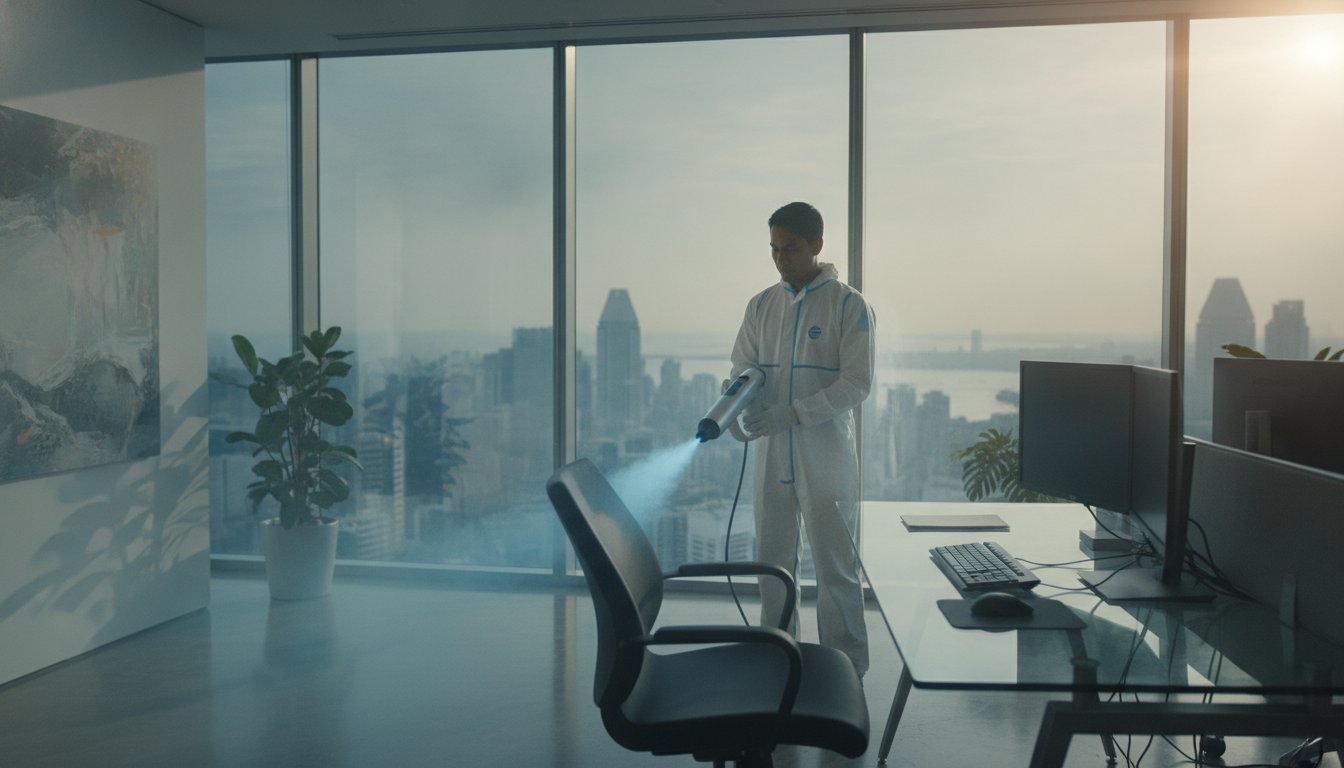
While your internal facilities team can manage basic touchpoints, true pathogen control in high-traffic commercial environments requires industrial-grade technology. We utilize advanced electrostatic sprayers that charge the disinfectant particles, allowing them to wrap around complex furniture shapes and reach the undersides of chairs and desks. This ensures 360-degree coverage that manual wiping simply cannot achieve. When you choose us, you're not just hiring a crew; you're partnering with a dedicated specialist who understands how to sanitize office furniture to the most rigorous 2026 standards. This technical superiority provides the peace of mind that comes with a meticulously maintained workspace.
We recognize that every Singapore office has a unique architectural footprint. Our approach begins with a customized plan tailored to your specific layout, whether you operate a dense open-plan tech hub or a traditional corporate suite. We integrate our sanitization efforts seamlessly with your existing Building Maintenance schedules, ensuring a holistic approach to facility health. This level of coordination provides a complete elevation of your environment, moving beyond simple maintenance to a state of total renewal and safety for every employee.
Comprehensive Disinfection Solutions for Singapore Offices
Our commitment to excellence is reflected in our choice of materials and timing. We use premium, hospital-grade sanitizing agents that are powerful enough to neutralize the 2026 flu strains yet remain completely safe for office materials and staff respiratory health. To ensure your core business operations remain undisturbed, we offer flexible scheduling for after-hours or weekend deep cleans. This attention to detail ensures that your team returns to a workspace that feels fresh, clear, and professionally protected. Knowing exactly how to sanitize office furniture using these high-performance methods is what sets our service apart from standard janitorial options.
Your Partner in 2026 Workplace Wellness
A proactive strategy is your best defense against the rising influenza rates observed by the Communicable Diseases Agency this year. Rather than waiting for a confirmed case to disrupt your operations, establishing a recurring deep-sanitization cycle fosters a culture of safety and trust. We offer flexible commercial packages designed to fit your operational needs without compromising on quality. Requesting a quote is a seamless process; we are here to support you whether you require a one-time intensive service or a long-term hygiene partnership. Ensure your office is flu-ready with Athena Team Cleaning.
Securing a Healthier Future for Your Singapore Workspace
Protecting your team during the 2026 flu season requires a shift from basic tidiness to a rigorous, science-based defense. By identifying high-traffic touchpoints and adhering to strict NEA disinfection standards, you create an environment where productivity thrives and absenteeism declines. Mastering how to sanitize office furniture effectively is no longer a seasonal task; it's a year-round commitment to your employees' well-being and your company's operational resilience.
As a trusted partner for businesses across Singapore, we bring premium commercial sanitization standards and comprehensive upholstery expertise to every project. We understand the delicate balance between thorough disinfection and the preservation of your high-value furniture assets. Don't wait for the peak of the flu cycle to react. Take a proactive step toward a cleaner, more vibrant office today. Request a Professional Office Sanitization Quote Today and experience the peace of mind that comes with a meticulously maintained workspace. Your team deserves an environment that supports their best work.
Frequently Asked Questions
How long can the flu virus survive on office furniture surfaces?
Influenza viruses generally survive on non-porous surfaces like metal or plastic desks for 24 to 48 hours. On porous materials such as office upholstery, the survival time is typically shorter, often less than 12 hours. However, the cool, air-conditioned environment of a Singapore office can extend these windows significantly. Regular disinfection is necessary because a single contaminated surface can infect multiple employees over two full workdays if left untreated.
What is the difference between sanitizing and disinfecting office furniture?
Sanitizing focuses on reducing the number of bacteria to safe levels as defined by public health standards. Disinfecting uses specific NEA-approved chemicals to actually kill 99.9% of targeted pathogens, including influenza viruses. When considering how to sanitize office furniture during a flu peak, disinfection is the superior choice. It ensures that the microscopic bio-load is neutralized, providing a higher level of protection than basic sanitization or surface cleaning alone.
Do I need professional sanitization if we already have a daily cleaner?
Daily cleaners typically focus on general maintenance like emptying bins and mopping floors. Professional sanitization services go deeper by targeting overlooked micro-touchpoints and using specialized equipment like electrostatic sprayers. These tools ensure 360-degree coverage of complex furniture shapes that manual wiping misses. During the 2026 flu season, this specialized approach is a vital addition to your routine to address the pathogens that standard housekeeping often leaves behind in high-traffic zones.
Are the chemicals used in office sanitization safe for employees with allergies?
We prioritize the use of premium, hospital-grade disinfectants that are specifically formulated to be non-toxic and office-safe. These agents are selected to be effective against pathogens while remaining gentle on the respiratory health of your workforce. If your employees have specific sensitivities, we can adjust our protocols to use pH-neutral or fragrance-free options. This ensures a complete elevation of your environment's hygiene without compromising the comfort or well-being of staff with allergies.
How often should office upholstery be deep cleaned during flu season?
We recommend deep cleaning office upholstery at least once every three months during Singapore’s bimodal flu peaks. Fabric fibers act as reservoirs for dust, skin cells, and moisture, which can harbor viruses longer than hard surfaces. Professional steam cleaning or hot water extraction removes these deep-seated contaminants. This frequency ensures that communal sofas and task chairs don't become hidden hotspots for cross-contamination during the high-risk months of December and May.
What are the most overlooked germ hotspots on office furniture?
The most frequent hotspots are often mechanical or hidden components. These include height-adjustment levers on task chairs, digital controllers on standing desks, and AV cable heads in meeting rooms. Shared tech touchscreens and the rubber door seals in the pantry are also major repositories for germs. Our team focuses on these micro-touchpoints because they are handled by multiple people throughout the day but are rarely addressed during a standard cleaning session.
Can professional sanitization help reduce employee medical leave rates?
Implementing a professional-grade sanitization strategy directly breaks the chain of transmission within the workspace. By neutralizing viruses on shared furniture before they reach the next person, you significantly lower the risk of an office-wide outbreak. This proactive approach supports your 2026 business continuity goals by minimizing absenteeism. When employees see a visible commitment to their health, it also boosts morale and confidence, leading to a more resilient and productive office culture.
Does Athena Team Cleaning provide certificates of sanitization for offices?
Yes, we provide official documentation and service reports upon completion of our sanitization sessions. These records serve as a testament to your commitment to Workplace Safety and Health (WSH) standards. Having a formal certificate gives your employees and stakeholders the peace of mind that the environment has been treated according to the latest 2026 NEA guidelines. It demonstrates that you have taken every necessary step to ensure a safe, hygienic, and professional working environment.
Frequently Asked Questions
How long can the flu virus survive on office furniture surfaces?
What is the difference between sanitizing and disinfecting office furniture?
Do I need professional sanitization if we already have a daily cleaner?
Are the chemicals used in office sanitization safe for employees with allergies?
How often should office upholstery be deep cleaned during flu season?
What are the most overlooked germ hotspots on office furniture?
Can professional sanitization help reduce employee medical leave rates?
Does Athena Team Cleaning provide certificates of sanitization for offices?
Related articles