
How Long Does a Deep Clean Take? What Affects the Time
In this article
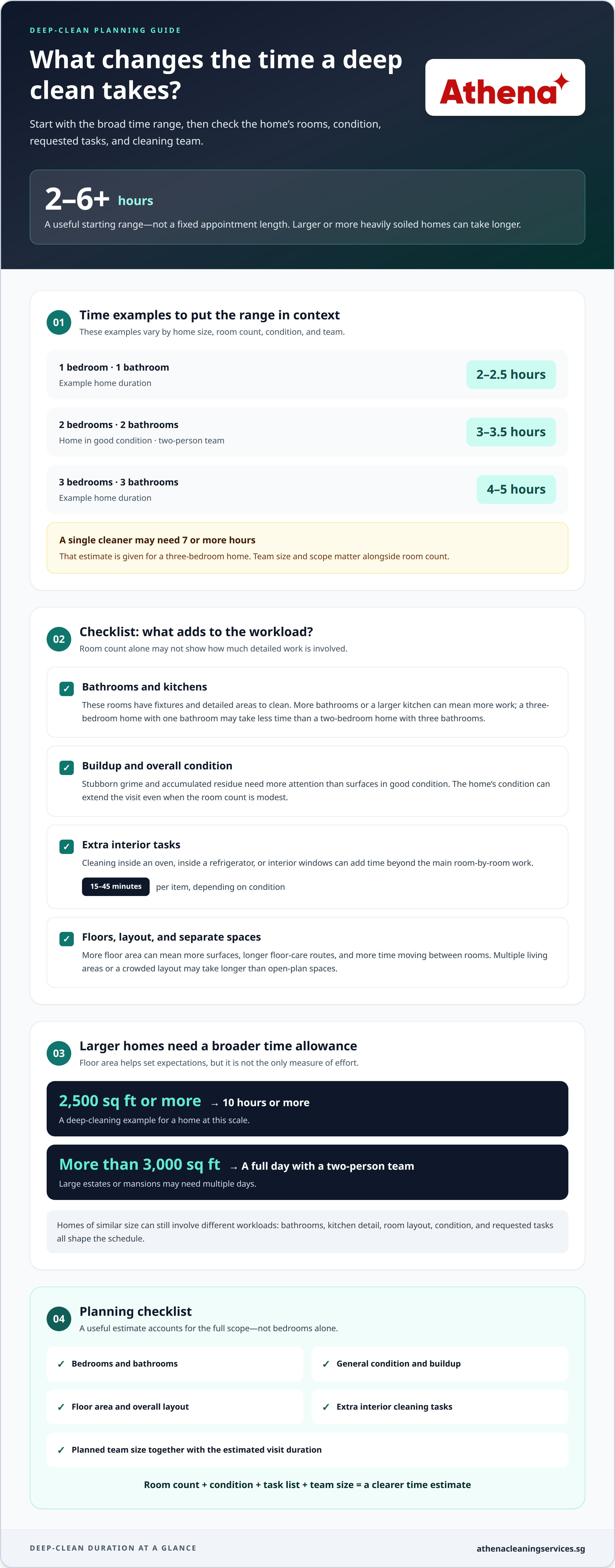
A deep clean is rarely a quick refresh: it can take 2 to 6 or more hours, with larger or more heavily soiled homes taking longer. How long a deep clean takes depends chiefly on the home’s size and condition, the number of cleaners, and the tasks included. That range is a useful starting point, not a fixed appointment length.
If you’re arranging professional cleaning, knowing what can extend the visit helps you plan. The number of bathrooms, stubborn grime, and extra tasks such as cleaning inside an oven all affect how long a deep clean takes.
This article explains how home size, condition, equipment, and team size affect a deep clean’s duration, and how to recognise when detailed cleaning may be due. You’ll get a clearer idea of what to expect and how to plan for a thoroughly cleaned home.
Key Takeaways
- Use the typical 2 to 6+ hour range as a starting point, then account for your home’s condition and the cleaning tasks involved.
- Consider bathrooms as well as bedrooms: room count alone may not reflect how much work a home needs.
- Specialist equipment can support a thorough clean, but the time still depends on the surfaces and buildup being treated.
- Lingering grime and signs of neglected areas can indicate that routine cleaning is no longer enough.
- Learn how accumulated dirt affects cleaning time and when professional cleaning may help restore a fresher space.
Typical deep-cleaning duration
A deep clean can take 2 to 6 or more hours, depending on the home’s condition, size, task list, and crew size. Use that range to plan, then consider which rooms and detailed jobs are included.
Crew size and job duration
Crew size affects how much work can happen at the same time, but it doesn’t remove the detail involved. A two-bedroom, two-bathroom home in good condition takes about 3 to 3.5 hours with a two-person team. A single cleaner may need seven or more hours for a three-bedroom home. For the reader, the key comparison is the planned crew alongside the home’s rooms and cleaning requirements.
A larger team can divide tasks, such as cleaning separate bathrooms while another cleaner focuses on the kitchen. But adding cleaners does not make every task instantaneous: each surface still needs careful attention. Ask about the planned team size and estimated visit duration together to put the time estimate in context.
Tasks that take the longest
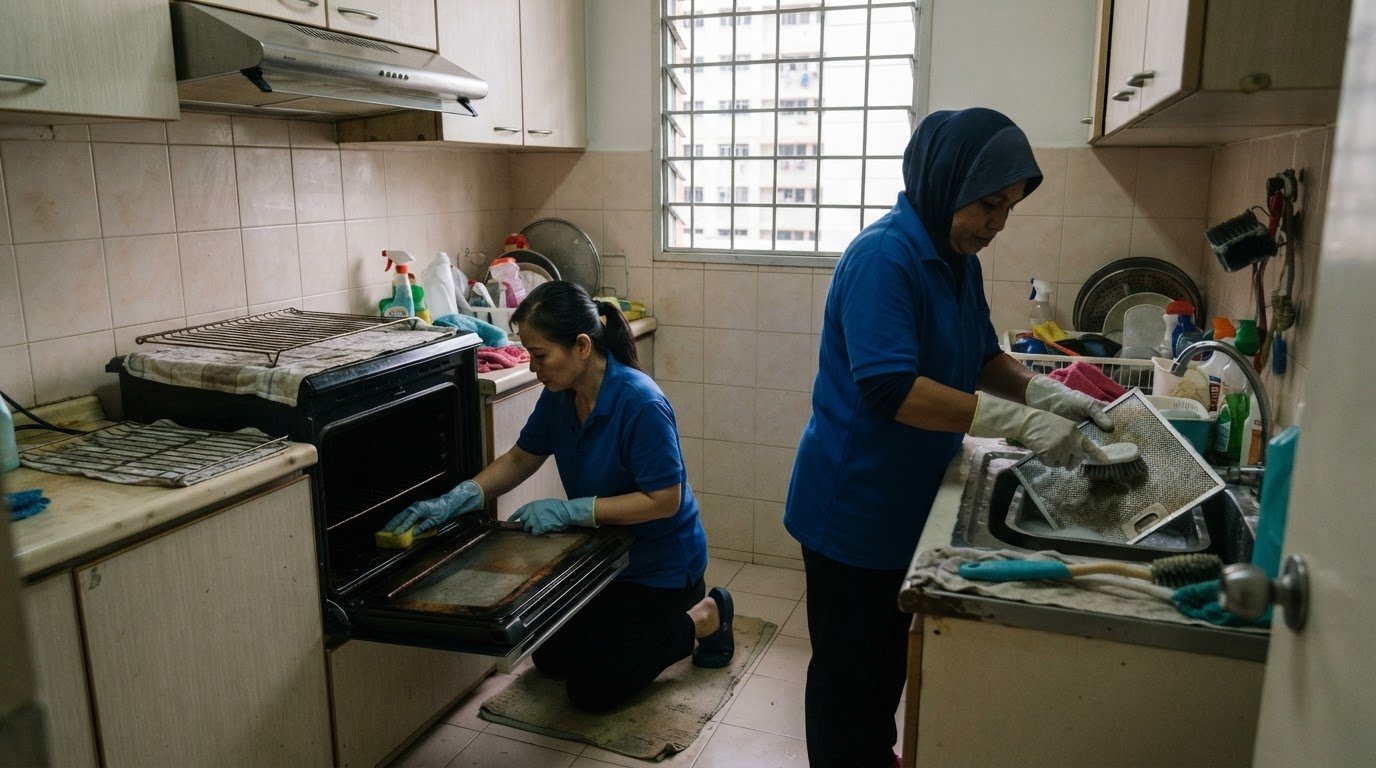
A professional deep clean focuses on detailed cleaning across rooms, especially kitchens, bathrooms, floors, and hard-to-reach surfaces. The longest tasks are often those involving stubborn buildup or extra interior cleaning. Cleaning inside an oven, inside a refrigerator, or interior windows can add 15 to 45 minutes per item, depending on condition. That makes the task list as important as the room count.
For example, cleaning a kitchen that includes the oven and refrigerator takes longer than focusing on accessible surfaces. A bathroom with accumulated residue also needs more attention than one in good condition. Clarifying which interior tasks are included helps set a realistic overall duration.
For a move-in or move-out deep clean in Singapore, allow for the same broad 2 to 6-or-more-hour range, with the home’s condition, size, and requested tasks shaping the timing. A home needing interior appliance or window cleaning may take longer than one without those tasks.
Kitchen and bathroom deep cleaning has no fixed duration. The number of rooms, buildup, and level of detail determine the time required. Plan around the estimate for the whole home, since these rooms are part of the overall job, not a separate, universal time allowance.
Examples show how widely the schedule can vary: a one-bedroom, one-bathroom home takes 2 to 2.5 hours, while a three-bedroom, three-bathroom home takes 4 to 5 hours. A three-bedroom home with one bathroom can take less time than a two-bedroom home with three bathrooms. Bathroom count and detailed tasks can change the estimate even when a home has fewer bedrooms.
To plan the appointment, describe the home’s bedrooms and bathrooms, its general condition, and any extra interior tasks. Compare the estimate with the expected team size and scope. This gives you a more practical answer to how long a deep clean takes than bedroom count alone.
How house size affects cleaning time
Floor area gives a useful starting point, but it doesn’t tell the whole story. A deep clean of a home spanning 2,500 square feet or more can take 10 hours or more, while room layout and cleaning needs also shape the schedule.
More floor space usually means more surfaces to clean, longer floor-care routes, and more time moving between rooms. But homes of similar size can involve different workloads. A home with several bathrooms, a large kitchen, or multiple separate living areas may take longer than an open-plan home with fewer detailed spaces.
Scale matters at the upper end. A home larger than 3,000 square feet can take a two-person team a full day to deep clean. Large estates or mansions may need multiple days. These examples show why a small-home estimate should not simply be multiplied for a much larger property: the number of zones, the level of detail, and how the work is divided all affect the schedule.
Room count is another useful clue, but it works best alongside floor area. Bedrooms add surfaces and floor space, while bathrooms and kitchens have more fixtures and detail. A spacious home with multiple living areas may also take longer than a compact home with the same number of bedrooms. For a realistic estimate, consider the full layout rather than relying on a single measurement.
What affects how long a deep clean takes? The main factors are floor area, the number and type of rooms, the home’s condition, the requested tasks, and team size. For example, a large property with a crowded layout and detailed kitchen work needs a different time allowance from a similarly sized home with open rooms and fewer tasks.
When planning a deep clean, share the floor area and describe the layout, including kitchens, bathrooms, and separate living spaces. Add any requested interior cleaning to the task list. Those details help the cleaning team understand the scope instead of estimating from bedrooms alone. A property over 3,000 square feet may need a full day with two cleaners, so plan around the broader schedule.
For a larger home, a professional cleaning plan can help align the appointment with its size and room layout. Clear scope makes it easier to allow enough time for each area without treating square footage as the only measure of effort.
Professional cleaning companies should send at least two cleaners for deep cleaning, regardless of home size. This staffing recommendation applies to compact homes as well as larger properties, so team size cannot be inferred from floor area alone. Sharing the full layout and requested tasks still helps the company plan the work.
Professional equipment and cleaning time
Equipment can make some cleaning tasks more efficient, but it does not eliminate the time needed for detailed work. The right tool can help avoid repeated passes, while unsuitable equipment may slow the process or risk damage.
Matching tools to surfaces
A professional chooses equipment according to the material and the soil to be removed. For example, a vacuum with suitable attachments can reach dust along upholstery seams and floor edges. A microfibre cloth can collect residue from hard surfaces, while a mop covers open floor areas. Matching the tool to the task helps the cleaner work accurately instead of repeating an unsuitable method.
Surface type matters. Timber, stone, tile, fabric, and glass each respond differently to moisture and friction. A cleaner handles a delicate surface differently from a durable tiled floor, which may require changing tools or methods between rooms. This care takes planning, but helps avoid rushing in a way that leaves residue or damages finishes.
Equipment supports, not replaces, technique
A vacuum can lift loose dust and debris before a cleaner wipes or treats a surface, but it does not remove every mark or replace close attention to corners, seams, and edges. A mop covers broad floor sections efficiently, but areas around furniture and fixtures still need attention. Equipment reduces some physical effort; the order and thoroughness of the work still affect the visit’s duration.
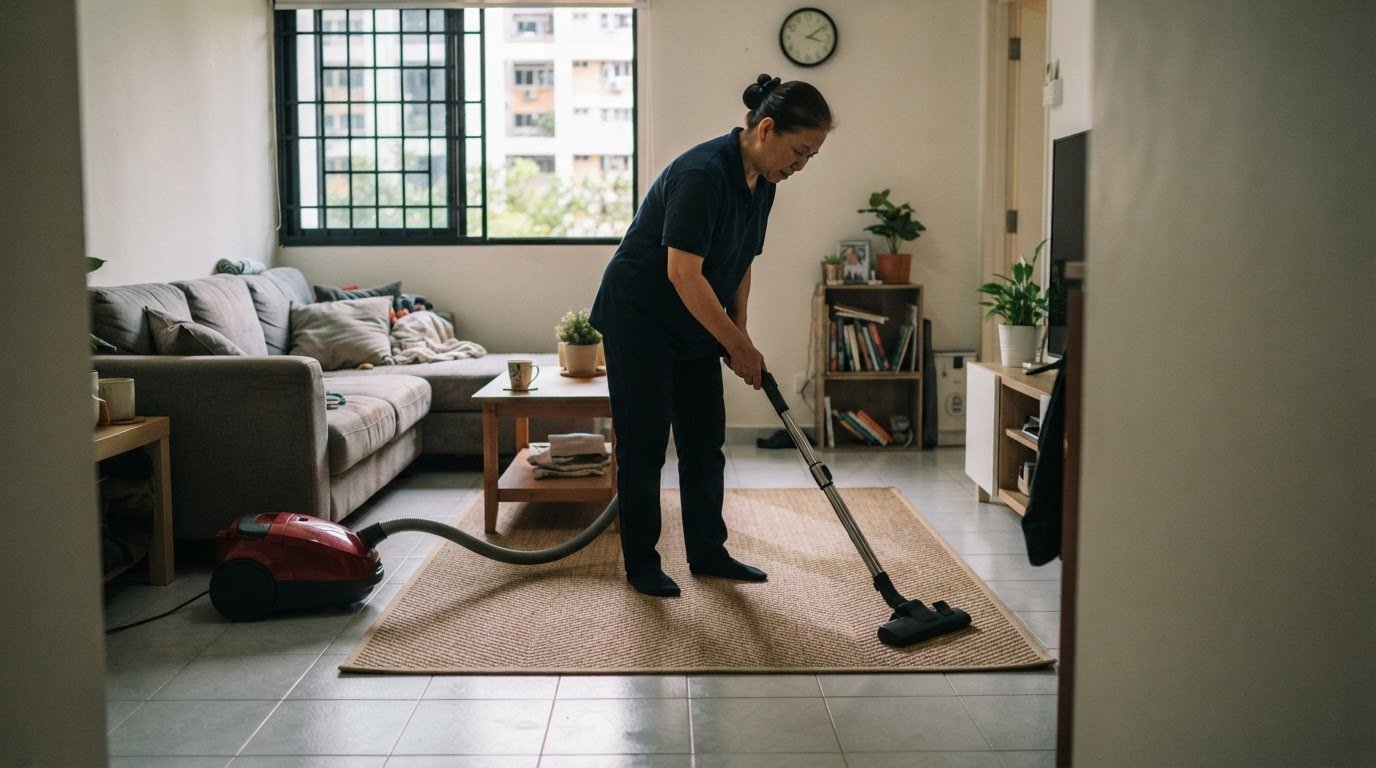
Consider a living room with a rug, upholstered seating, and hard flooring. Each material calls for a different approach, so the cleaner may move between vacuuming, fabric care, and floor cleaning. The number of transitions and the amount of soil affect the pace more than simply having professional tools.
Why preparation and access matter
Equipment works best when surfaces are accessible. A vacuum cannot reach beneath furniture blocking its path, and a cloth cannot clean a window ledge covered with objects. Retrieving tools from other rooms can also interrupt the workflow. A clear scope and accessible surfaces help the team bring suitable equipment and organise tasks efficiently.
Specialist equipment can support carpet and upholstery care, but the fabric type, condition, and treatment required still determine the work involved. A visibly marked rug, for instance, needs more attention than an accessible rug with light surface dust. Equipment helps treat the material, but it does not make different conditions equivalent.
For a useful time estimate, describe the home’s main surfaces and detailed cleaning needs, such as rugs, upholstery, or high windows. Include the condition of those areas. This helps the cleaning team consider equipment, access, and task order together, rather than assuming every room can be cleaned at the same pace.
Signs a home needs a deep clean
A home may need more than routine cleaning when buildup keeps returning or overlooked areas look visibly soiled. In a Singapore flat, examples include greasy kitchen cabinet handles, residue around bathroom taps, dust along skirting boards, or marks on frequently touched surfaces. These signs point to places that need detailed attention, not just a quick surface refresh.
Look at several areas rather than judging by one untidy room. Sticky kitchen surfaces, soap residue in the shower, and dust around furniture suggest routine upkeep has not reached every surface. A persistent stale smell may also prompt a closer look at fabrics, bins, or less accessible corners. These clues help describe the work involved.
- Kitchen: Grease on cabinet fronts or buildup around the hob and sink.
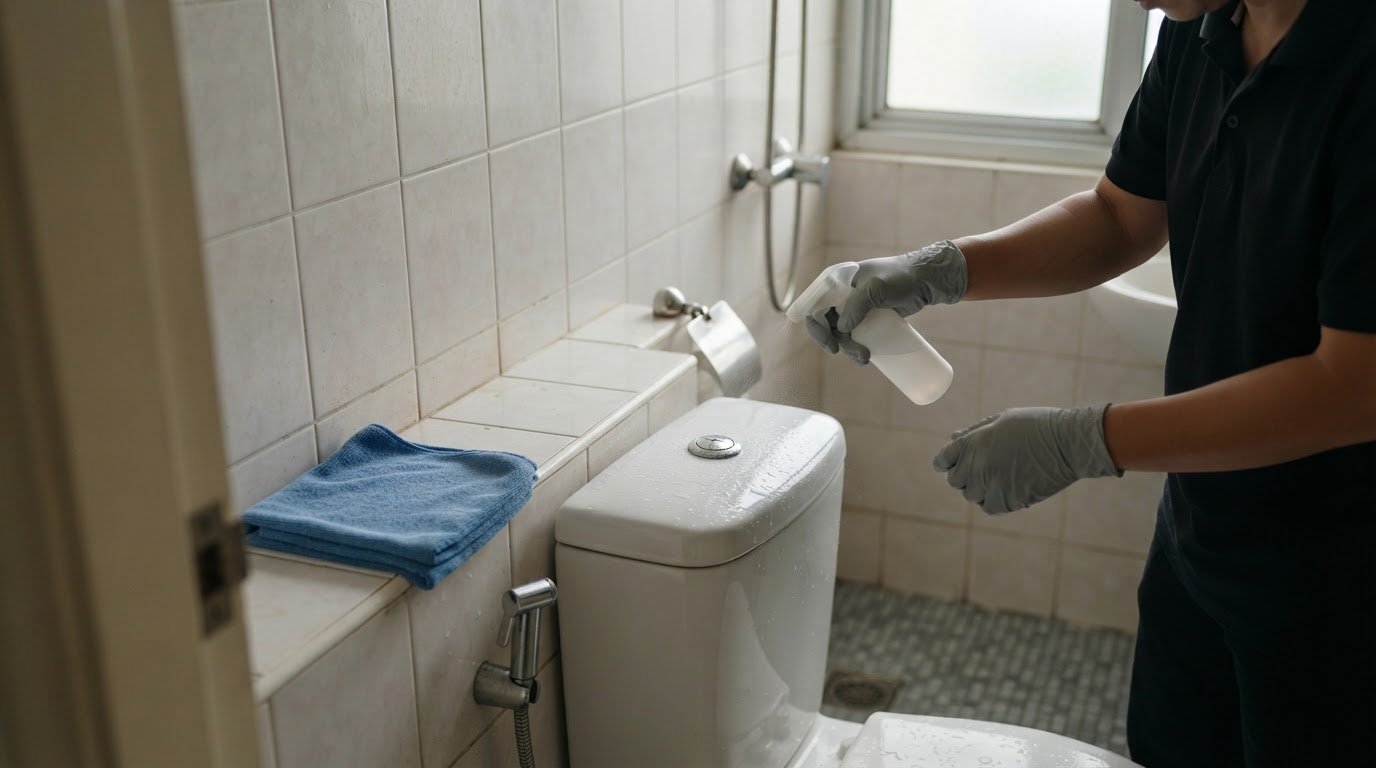
- Bathroom: Soap residue, visible marks around taps, or grime along tile edges.
- Living areas: Dust on skirting boards, marks on doors, or debris beneath furniture.
- Soft furnishings: Visible dirt on a rug or upholstery that routine floor cleaning doesn’t address.
How often should homes in Singapore get a deep clean? There isn’t one fixed interval that suits every home; visible buildup, room use, household routines, and the condition of surfaces are better guides. A kitchen used frequently may need detailed attention sooner than a lightly used guest room.
Pay attention to changes over time. If bathroom residue remains after regular upkeep, or dust keeps gathering in the same corners, those areas may need a more thorough clean. A move, renovation, or change in household routines can also affect which rooms need attention. Describe these changes when planning the work so the scope reflects the home’s current condition.
To help the team work efficiently, identify the rooms and surfaces needing attention, including examples such as the oven, interior windows, rugs, or upholstery. Clear access to those areas and put away personal items on surfaces scheduled for cleaning. This helps the team understand the scope and begin without avoidable interruptions.
Not every mark calls for a whole-home deep clean. A single soiled rug may need focused treatment, while buildup across the kitchen, bathroom, and living areas points to a broader scope. Distinguishing one problem area from several affected rooms helps shape a more useful cleaning plan.
Use specific observations instead of broad descriptions. “Grease on the cabinet fronts” or “soap residue around the shower taps” gives a clearer picture than “the bathroom needs work.” Naming rooms, surfaces, and visible buildup helps set priorities and gives the cleaning team practical context for planning a thorough visit.
A home with four or more bedrooms takes 5 to 6+ hours to deep clean.
How cleanliness and accumulated grime affect timing
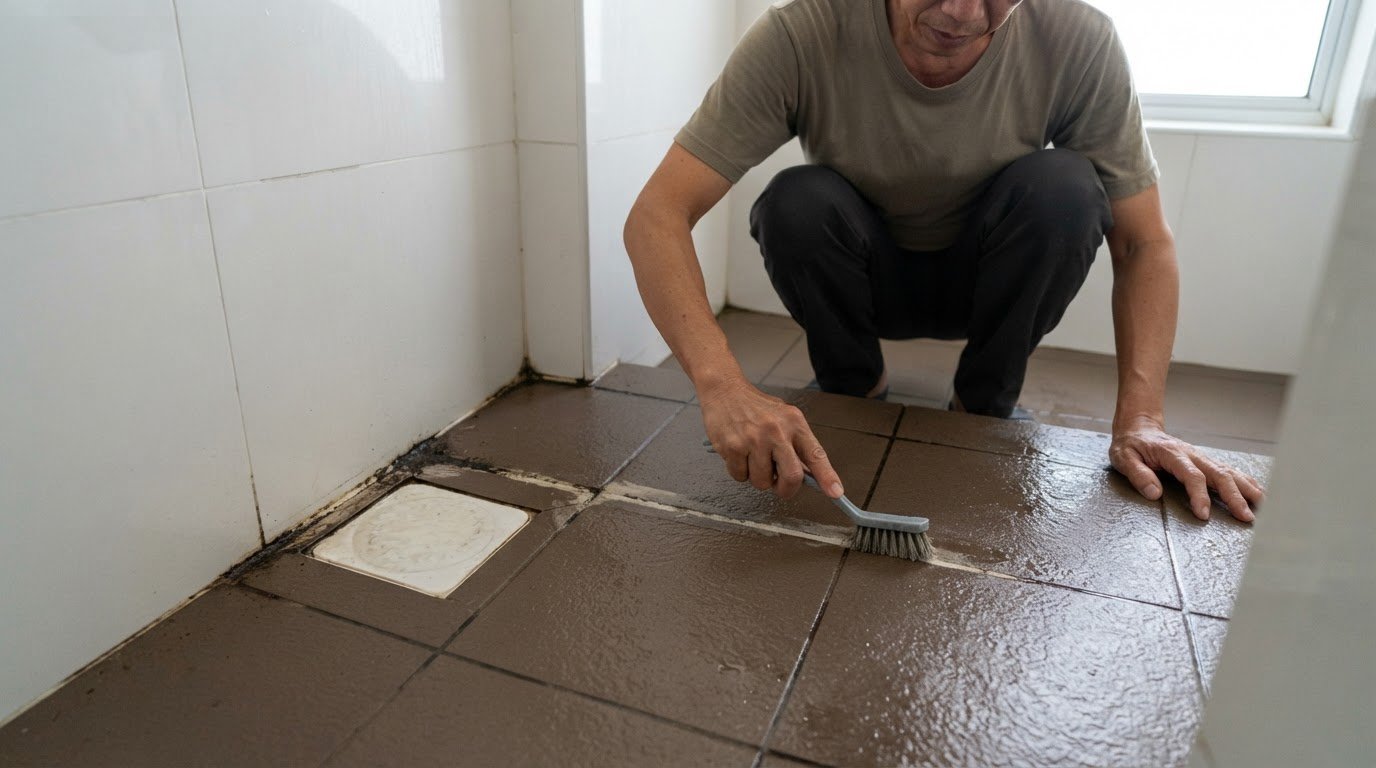
A well-maintained room usually needs less detailed attention than one with layers of grease, dust, or residue. Buildup adds work because cleaners may need to treat a surface, allow the product to work, and repeat the cleaning before it looks clear. A kitchen hob with dried spills, for example, needs more care than a lightly marked countertop.
Grime collects differently across a home. In a bathroom, soap residue can cling around taps, shower edges, and tile joints. In a kitchen, cooking grease settles on cabinet fronts and nearby surfaces. These deposits need targeted attention, so rooms of similar size can take different amounts of time to clean.
Why buildup adds work
Routine cleaning removes recent dust and marks, while accumulated grime may need several careful passes. A cleaner might first loosen residue, then wipe it away and check for remaining marks. Skipping a pass can leave visible buildup behind. This extra attention matters especially on frequently used surfaces such as a dining table or bathroom vanity.
Dust can also collect in less accessible places. A shelf behind furniture or a floor edge beneath a cabinet, for example, may hold debris missed during routine cleaning. Reaching these areas takes longer than cleaning an open, clear surface. The number of affected spots matters as well as how heavily each one is soiled.
How condition changes the schedule
A lightly used guest bathroom may need less detailed work than a family bathroom with residue around the shower and sink. Likewise, a kitchen used for frequent cooking may need extra attention on the hob, backsplash, and cabinet doors. These examples show why a room’s condition is a better guide to the work than its label alone.
Work across multiple affected rooms adds up. If a kitchen needs focused degreasing and a living room has dusty skirting boards, cleaners must allow time for both. A property that has gone longer without detailed attention may also have buildup in less obvious places. Clear descriptions of visible grime help establish a realistic scope.
For a more useful estimate, describe specific examples: dried spills on a hob, residue around shower fittings, or dust behind a sofa. Note which rooms have the most buildup and whether rugs or upholstery also need attention. These details help the cleaning team plan suitable methods and prioritise the surfaces that need the most care.
Don’t judge the whole home by one clean-looking room. A tidy living area can sit beside a kitchen with stubborn grease or a bathroom with persistent residue. Explain those differences, then arrange professional cleaning for the affected areas with a scope that reflects their condition.
Athena Team Cleaning
Athena Team Cleaning helps you match cleaning needs with the right service and scope. Carpet and Rug Cleaning, Upholstery Cleaning, and Sanitization Services address specific surfaces and cleaning needs.
Share which areas need attention, their condition, and your priorities. Those details help clarify whether a focused service or a broader cleaning plan best suits your space. If you’re coordinating several cleaning needs, describe them together so the requirements are easier to understand.
For guidance on cleaning your space, contact Athena Team Cleaning via WhatsApp for a quote.
Plan your next cleaning visit with confidence
Knowing how long a deep clean takes helps you plan your day, but a useful appointment starts with a clear picture of your priorities. Consider which rooms need the most attention, which surfaces concern you, and whether any areas need specialist care. Sharing those details gives the cleaning team practical context for tailoring the work to your space.
You don’t need a long checklist. A few clear examples, such as a heavily used kitchen or a marked rug, can explain where attention matters most. From there, you can discuss a suitable scope and plan your day with fewer unknowns.
A carefully planned clean can make your home or workspace feel more welcoming and easier to maintain. Take the next step when you’re ready: Contact Athena Team Cleaning to discuss your cleaning needs. A clearer plan is a positive start toward a fresher space.
In Singapore, a deep house clean can take 2 to 6 or more hours. Use the estimate to plan your day, then consider the home’s condition, room layout, requested tasks, and crew size. For example, adding interior oven or refrigerator cleaning affects the schedule. Share those details when arranging the clean so the expected duration reflects the actual work, not just the home’s bedroom count.
How long does deep cleaning take for a 1-bedroom, 2-bedroom, or 3-bedroom home?
A one-bedroom, one-bathroom home takes 2 to 2.5 hours; a two-bedroom, two-bathroom home in good condition takes about 3 to 3.5 hours with two cleaners. A three-bedroom, three-bathroom home takes 4 to 5 hours. These examples depend on layout and condition: a three-bedroom home with one bathroom can take less time than a two-bedroom home with three bathrooms.
How many cleaners are needed for a deep clean, and how does team size affect the time?
For a three-bedroom home, a two-person team is the minimum recommended for quality deep cleaning. Two cleaners can divide tasks and may reduce the duration roughly by half while maintaining consistent quality. By comparison, a single cleaner may need seven or more hours for a three-bedroom home. The right estimate still depends on the task list and the home’s condition, not team size alone.
Frequently Asked Questions
How long does a deep house cleaning take in Singapore?
How long does deep cleaning take for a 1-bedroom, 2-bedroom, or 3-bedroom home?
How many cleaners are needed for a deep clean, and how does team size affect the time?
Looking for help? See our house cleaning service in Singapore.
Related articles