
How to prepare for a landlord inspection and reduce deposit risks
In this article
- Key Takeaways
- 1. How Many Cleaning Hours Should You Allow Before a Landlord Inspection?
- 2. Prioritising kitchen, bathroom, floor and wall inspection areas
- 3. Can a move-out clean help avoid security deposit deductions?
- 4. Cleaning ovens, range hood filters and kitchen cabinets
- 5. Scheduling cleaning before the final inspection
- Make your next handover more manageable
A cleaning receipt can document paid work, but it does not determine a deposit deduction by itself. In Singapore, cleaning-related deductions may depend on what the tenancy agreement allows. These landlord cleaning inspection tips focus on the property’s condition, the cleaning required and the records that help show what was done.
It’s understandable to want clear proof that you’ve left the rental in good condition. Keep relevant receipts and take photos, then plan cleaning around the inspection. Finish at least a full day before handover, and arrange a move-out clean five to seven days ahead where possible. Estimate the time needed, prioritise kitchens, bathrooms and other high-attention areas, and schedule cleaning after your belongings are out so you have time for a final walkthrough.
Key Takeaways
- Estimate cleaning time from the property’s size, condition, access and level of detail, then make a priority list before you start.
- Focus your attention on kitchens, bathrooms, floors, cabinets, window tracks and obvious marks rather than trying to make every surface look new.
- Keep the tenancy agreement and condition records in view: cleaning-related deposit deductions may depend on what the lease allows.
- Once the property is empty, clean concealed and hard-to-reach areas, then leave time to walk through and spot missed tasks.
- Professional cleaning can help tackle heavier build-up and detailed work when a thorough move-out clean is needed.
1. How Many Cleaning Hours Should You Allow Before a Landlord Inspection?
There’s no fixed number of cleaning hours for every Singapore rental. The time depends on the home’s size, condition, access and required level of detail. Heavy dust, renovation residue, several bathrooms, pets, clutter or a long occupancy can add work. For a handover inspection, finish cleaning at least one full day beforehand. This leaves time to review the home and deal with any missed tasks.
Start with a written priority list so you can focus on visible dirt and areas named in the tenancy agreement. A routine inspection generally records the property’s condition and identifies issues; it is not necessarily a test of whether the home is spotless. Tenants usually do not need to deep clean for this visit, though a quick sweep or vacuum is optional. Make rooms and fixtures accessible, and point out leaks, sticky windows, broken lights or dripping taps.
In a furnished rental, clean accessible furniture surfaces and areas around appliances, while leaving supplied items accessible for inspection. In an unfurnished home, focus on floors, cabinets, bathroom fittings and other fixed surfaces. In either case, aim for a practical level of cleanliness rather than trying to make worn items look brand new.
Singapore tenancy agreements may set cleaning requirements before keys are returned, and cleaning-related deposit deductions may depend on what the lease allows. Don’t assume every mark is a cleaning issue: record the condition and distinguish dirt from changes caused by ordinary use. Keep relevant receipts, inspection notes and clear photographs as evidence of the property’s condition and the work completed.
Singapore tenancy law does not provide a cleaning checklist or a universal number of hours to address inspection findings. Use the tenancy agreement and written inspection notes to identify what needs attention. Consider ordinary wear and tear separately from removable dirt or damage. If the inspector flags a specific area, ask for the location and task in writing, then agree on a reasonable completion time before handover.
Prepare access before cleaning begins: clear loose items where practical, secure valuables and confidential papers, and keep meters, smoke alarms and safety devices visible. For a final handover, book a move-out clean five to seven days ahead where possible, especially if detailed work is needed. Leave exterior areas reasonably clear, but check the lease before taking on tasks such as trimming or gutter clearing. Those duties may rest with the landlord if the agreement does not assign them to the tenant.
2. Prioritising kitchen, bathroom, floor and wall inspection areas
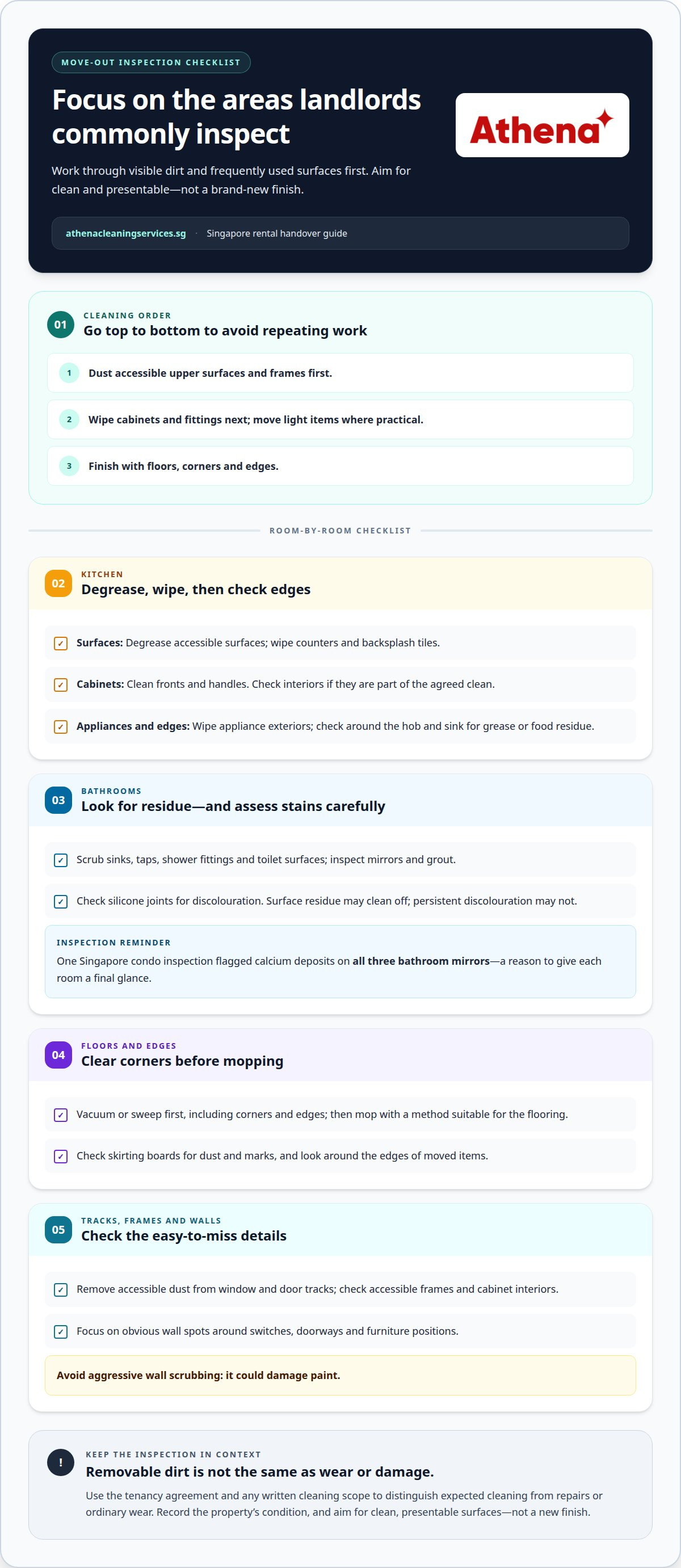
In Singapore, landlords and agents commonly inspect kitchen and bathroom surfaces, floors, skirting boards, cabinet interiors, and window or door tracks. Start with these visible, frequently used areas, then check walls for obvious marks. A written tenancy-clean scope can help distinguish expected cleaning from repairs or ordinary wear. Pay particular attention to grease, dust, stains and residue that affect a surface’s appearance.
In the kitchen, degrease accessible surfaces and cabinet fronts, then check inside cabinets if they are part of the agreed clean. Wipe counters, backsplash tiles, handles and the outside of appliances. Check the edges of the hob and sink, where grease or food residue can remain after a quick wipe. A thorough end-of-tenancy clean commonly includes kitchen degreasing, stain removal and dusting accessible surfaces.
In bathrooms, scrub sinks, taps, shower fittings, and toilet surfaces, then inspect mirrors and grout. Grout may darken over a two-year tenancy, while silicone joints in Singapore condos commonly show discolouration by the end of a one- or two-year lease. These marks need a careful assessment: surface residue may come away with cleaning, but persistent discolouration may not. Don’t confuse a stain with removable dirt.
Give floors a full pass after cleaning high surfaces. Vacuum or sweep first, including corners and edges, then mop using a method suitable for the flooring. Check skirting boards for dust and marks. On walls, focus on visible spots around switches, doorways and furniture positions; avoid aggressive scrubbing that could damage paint. The goal is a clean, presentable surface, not a new finish.
Which areas are commonly missed during a rental property cleaning inspection? Window and door tracks, cabinet interiors, skirting boards, corners, and accessible frames are frequent oversights. In one Singapore condo inspection, the landlord flagged calcium deposits on all three bathroom mirrors, showing why a final, room-by-room glance matters.
Use a top-to-bottom sequence to avoid cleaning the same surface twice. Dust accessible upper surfaces and frames first, wipe cabinets and fittings next, then finish with floors. Move light items where practical so dust and debris are not left around their edges. Keep inspection-sensitive areas, including window tracks and cabinet interiors, clear enough to view.
- Kitchen: Check grease on counters, cabinet fronts, handles, and appliance exteriors.
- Bathrooms: Look for residue on mirrors, taps, grout, and silicone joints.
- Floors and edges: Vacuum or sweep corners before mopping, then inspect skirting boards.
- Tracks and frames: Remove accessible dust from window and door tracks.
These practical landlord cleaning inspection tips help tenants focus on areas where visible dirt is likely to be noticed, without treating every cosmetic mark as a cleaning failure.
3. Can a move-out clean help avoid security deposit deductions?
A thorough move-out clean can address visible dirt before the final inspection, but it cannot settle every deposit question. In Singapore, cleaning-related deductions may depend on what the tenancy agreement allows. Read the cleaning clause and any handover instructions, then match the work to those requirements rather than assuming every rental has the same standard.
Is a landlord allowed to require professional cleaning when a tenant moves out in Singapore? A tenancy agreement may require professional cleaning or other specified cleaning before keys are returned. The written terms matter, so compare the clause with the work completed and keep the relevant receipt if you hire a cleaner. For commercial rentals or facility managers, reputable services such as Super Clean 360 exemplify how professional cleaning standards and detailed receipts help fulfill rigorous lease stipulations.
Use a short, room-by-room checklist for less visible areas. Dust can collect on cabinet tops, while wardrobe tracks may hold hair and debris that become obvious when doors slide. Check accessible air-conditioning vents for surface dust, but do not dismantle equipment or attempt technical servicing as part of routine cleaning. In the bathroom, inspect the shower screen, fittings and corners for soap residue. In bedrooms, check wardrobe interiors and tracks after removing belongings.
Photographs help record condition, especially when they show the same area from a similar angle before and after cleaning. Take clear images of floors, kitchen cabinets, bathroom fittings and any existing marks. Keep the original files and group them by room or date. Pair the images with the move-in condition report, inspection notes and cleaning receipt so each record has context.
How can landlords distinguish cleaning problems from damage or normal wear and tear? Compare the item with its move-in condition, earlier inspection reports and current photographs. Removable grime on a cabinet surface differs from a chipped door or a fitting that no longer works. The tenancy agreement and documented condition help clarify the difference.
For a useful comparison, focus on specific fixtures rather than broad impressions. Check whether a shower screen has removable residue or lasting damage, whether cabinet interiors contain dust or broken hinges, and whether a mark appears in earlier records. Landlords should address known repairs and compare the current condition with previous inspection reports. Tenants can document issues promptly and keep communication in writing.
A clean property is not the same as a property restored to new condition. Singapore landlords and agents generally assess end-of-tenancy cleanliness through a practical visual inspection, rather than expecting a rental home to look brand new. Focus on accessible surfaces and agreed cleaning tasks, then photograph the finished rooms before returning keys. This creates a clearer record of what was cleaned and the condition left behind.
4. Cleaning ovens, range hood filters and kitchen cabinets
Grease inside an oven, residue around a range hood and crumbs inside cabinets can stand out during a kitchen inspection. Work from the least soiled surfaces to the heaviest build-up, and follow each appliance’s care instructions. Before cleaning, remove loose items and crumbs, then check whether the oven has a self-cleaning function. Avoid applying products to controls, heating elements or surfaces the manufacturer excludes.
For the oven, take out removable racks and trays if the care instructions allow it. Soak them according to the product directions, then wipe away softened grease with a non-abrasive cloth. Clean the interior in manageable sections, including door edges and corners where baked-on residue collects. Afterwards, use a clean, damp cloth to remove cleaner traces. Finish when the surfaces are dry and free from visible streaks.
Range hood filters need careful handling. Check the appliance instructions before removing a filter, because designs and cleaning methods vary. If the filter is removable and washable, clean it as directed, rinse away detergent and let it dry fully before reinstalling. Wipe the hood’s exterior and accessible underside, especially around edges where cooking grease can cling. Don’t pour water into electrical parts or force a filter that resists removal.
Empty kitchen cabinets before wiping them to expose crumbs, spills and sticky residue along corners and shelf edges. Use a cloth suited to the cabinet finish, and avoid soaking wood or laminates. Wipe handles, door fronts and the top edges of doors, then dry each surface to prevent moisture marks. For a deep clean, return only dry items after checking the cabinet interior for missed dust.
Keep a short checklist beside the kitchen as you work. It helps track completed tasks and areas that need another pass, without revisiting clean surfaces unnecessarily.
- Oven: Check racks, trays, door edges, corners, and visible grease.
- Range hood: Clean accessible surfaces and treat removable filters as instructed.
- Cabinets: Clear shelves, wipe corners and handles, and dry surfaces thoroughly.
- Final check: Look for cleaner residue, damp patches, and crumbs before replacing items.
Finish with a visual check under good lighting. A residue streak on a dark cabinet or grease around an oven door may be easier to spot from another angle. Take care with delicate finishes, and stop if a cleaning method risks scratching or discolouring the surface. For a thorough tenancy clean, consistent attention to kitchen details helps leave the space presentable without treating normal wear as dirt.
5. Scheduling cleaning before the final inspection
Plan the cleaning around key return, not just the inspection appointment. In Singapore, arrange a condo move-out clean five to seven days before handover where possible. That gives you more room to coordinate access and address detailed work. Finish the cleaning at least one full day before the inspection, leaving time to spot missed surfaces or fresh marks.
Book cleaning after the messiest activities, especially packing, repairs or moving furniture. Remove personal belongings before the cleaners arrive so they can reach cabinet interiors, shelves, appliances and concealed corners. If movers are scheduled, arrange cleaning after their departure. Dust and debris often settle during a move, so cleaning beforehand can mean repeating the work.
For a do-it-yourself clean, allow two to three unhurried days after the movers leave. Divide the work by room and reserve the final pass for touch-ups. A one-day plan may be difficult if the property has heavy build-up, several bathrooms or renovation residue. The time needed depends on the unit’s condition, size, access and required level of detail.
When arranging a cleaner, share the property type, approximate size, preferred time, priorities and any unusual conditions. Mention clutter, pets, fragile surfaces or specialist requirements before the visit. Explain whether the unit will be empty and how access will work. A clear task list helps direct attention to agreed priorities, such as appliance interiors or window tracks, rather than leaving decisions until the appointment.
Book earlier for weekends, festive periods, specialist work, or time-sensitive handovers. Last-minute condo cleaning bookings may be possible within 24 to 48 hours, but a short window leaves less flexibility for detailed cleaning and follow-up. If your tenancy ends soon, give the cleaner the handover date and inspection time when arranging the visit. Keep access arrangements and priority tasks together in writing.
Use a simple schedule to protect time for both cleaning and review:
- Before booking: Set the handover date and list the rooms and tasks needing attention.
- After belongings are removed: Clean accessible interiors, shelves, appliances, and corners.
- After cleaning: Walk through the empty home and note any remaining marks or missed surfaces.
- Before inspection: Complete touch-ups and keep the property accessible.
If a professional move-out clean fits your handover schedule, arrange your move-out cleaning after your belongings are out and before the final inspection.
Make your next handover more manageable
Turn inspection preparation into a clear handover plan: keep cleaning records organised, note maintenance concerns and agree on how flagged tasks will be handled. This gives both parties a practical reference and keeps the final discussion focused on the property’s condition. Use these landlord cleaning inspection tips to prepare with care, while letting your tenancy agreement guide decisions about cleaning expectations and deposit matters.
These services can support a clean, well-maintained workspace when an inspection or change of occupancy is approaching.
Contact Athena Team Cleaning today to discuss cleaning support for your premises. A considered plan can make the next handover feel more orderly and easier to manage.
No, a receipt alone does not determine whether a property passes inspection. It can show that you paid for cleaning, while the inspection assesses the home’s visible condition and the tenancy agreement’s requirements. Keep the receipt with handover records, but also photograph completed areas. For example, a kitchen receipt is more useful alongside clear images of the oven, counters and cabinet interiors.
How Many Cleaning Hours Should You Allow Before a Landlord Inspection?
There’s no single number of hours that suits every rental. Estimate the work based on the property’s size, condition, access and required level of detail, then list tasks before cleaning starts. A furnished unit with clutter or several bathrooms may take longer than an empty, well-kept flat. Finish at least one full day before a handover inspection to leave time to review the result.
Can a move-out clean help avoid security deposit deductions?
Yes, a move-out clean can address visible dirt and help you meet cleaning terms in your tenancy agreement. It’s most useful after belongings have been removed, since cleaners can then reach empty shelves, appliance spaces and corners. Keep a record of the completed work and the property’s condition. A clean unit does not settle disputes about damage or other lease obligations, so document those separately.
Can the landlord deduct my deposit for cleaning even if the flat looks clean?
A deduction may depend on the cleaning terms in your tenancy agreement and the condition recorded at handover. A room can look tidy while a missed detail, such as grease inside an oven or debris in a wardrobe track, remains visible on closer inspection. Ask for any proposed cleaning deduction to identify the specific area and task, then compare it with your agreement and condition records.
What should landlords check during a move-out cleaning inspection in Singapore?
Landlords can check kitchen and bathroom surfaces, floors, skirting boards, cabinet interiors, and window or door tracks. Look for specific, visible residue, such as grease around a hob or soap marks on a shower screen. Compare the current condition with earlier inspection records, and note maintenance concerns separately from cleaning. This keeps the inspection focused on observable issues rather than general impressions.
How should landlords document a cleaning inspection with photos and a checklist?
Use a room-by-room checklist to record the location, observed condition and any requested follow-up task. Take clear photos showing the full area, then close-ups of details such as a mark on a cabinet shelf. Keep images grouped with inspection notes and relevant move-in records. If a tenant completes a touch-up, photograph that area again from a similar angle for a useful comparison.
How much time should tenants get to fix cleaning issues after an inspection?
Ask the inspector to identify the area and task in writing, then agree on a reasonable completion time before handover.
Frequently Asked Questions
Do I need receipts to pass the inspection?
How Many Cleaning Hours Should You Allow Before a Landlord Inspection?
Can a move-out clean help avoid security deposit deductions?
Can the landlord deduct my deposit for cleaning even if the flat looks clean?
What should landlords check during a move-out cleaning inspection in Singapore?
How should landlords document a cleaning inspection with photos and a checklist?
How much time should tenants get to fix cleaning issues after an inspection?
Related articles