

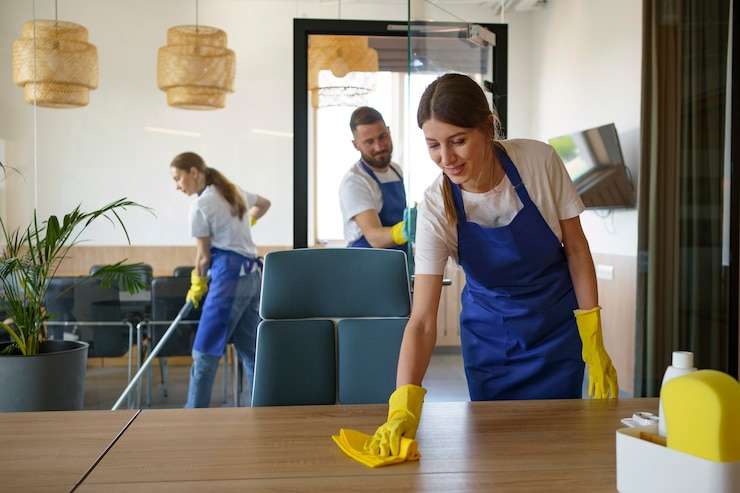
After any renovation in Singapore — BTO flat, resale HDB, or condo — you are left with a layer of fine construction dust that standard household cleaning cannot shift. Here is how to clean post-renovation dust in Singapore: vacuum every surface with a HEPA-filter machine before any wet wiping, work strictly top-to-bottom from ceiling to floor, and isolate completed rooms to prevent dust from resettling. Most 3-room HDB units require at least two full passes across two days to reach a genuinely clean state.
This guide covers the correct room-by-room sequence, tools that actually work, realistic 2026 pricing in SGD for professional services, and the health risks of leaving construction dust untreated in Singapore's 80–90% humidity. If you are still mid-renovation and want to plan ahead, the post-renovation cleaning: when to clean after reno guide explains optimal timing for each trade phase.
Why renovation dust in Singapore behaves differently
Construction dust is not the same as ordinary household dust. Renovation work generates silica particles from drilling into concrete walls, gypsum powder from plasterboard cutting, calcium carbonate from cement mixing, and cellulose fibres from timber sanding. Each sits in a different particle size range — some large enough to see, others under 2.5 microns (PM2.5) and invisible to the naked eye. The World Health Organization notes that fine indoor particles at this size bypass the nose and throat and settle deep in the lungs, making thorough removal a health priority as well as an aesthetic one.
Singapore's climate amplifies this problem in two ways. First, ambient humidity of 80–90% causes fine dust particles to absorb moisture within hours of settling, bonding them to surfaces far more tenaciously than in temperate climates. A particle that would brush off with a dry cloth in a drier environment needs a damp microfibre cloth — and sometimes a light detergent — to release from a Singapore wall or tile grout line. Second, the near-constant use of air-conditioning in HDB flats creates pressure differentials between rooms, actively pulling airborne dust through gaps around doors into areas you thought were already clean.
This is why the advice to "just wipe everything down" after a Singapore renovation produces disappointing results. The dust has already bonded, and wiping without pre-vacuuming smears it across surfaces rather than removing it. Understanding the material composition of your renovation dust — tile grout residue, paint overspray, timber sanding dust — tells you which products to use in the wet cleaning phase and which surfaces risk staining if you reach for the wrong chemical.
What to do before picking up any cleaning tool
The single most effective preparation you can make before cleaning starts is confirming that all contractors have fully left and removed bulky waste and debris. Cleaning while trades are still on site is counterproductive — power tools re-aerosolise settled dust continuously. Once you have a completion sign-off, give the space 24 hours with windows open (where security permits) to allow the heaviest airborne particles to settle onto surfaces. This reduces the concentration of dust still floating in the air when you begin your first cleaning pass.
Switch off and cover all air-conditioning units before starting. Running AC during post-reno cleaning pulls fine particles into the fan coil unit, coating the evaporator coils and filter in construction grit. This forces an expensive aircon servicing — typically $80–$150 per unit in Singapore — and can distribute that grit through the system for weeks after you move in. Tape plastic sheeting over all AC vents and ceiling fan light kits before the first vacuum pass. The checklist for post-renovation cleaning Singapore includes a vent-covering step in its pre-clean sequence that many homeowners overlook.
Block completed zones with plastic sheeting taped across doorways. This matters especially in multi-bedroom BTO and condo units where contractors may have finished one bedroom before completing the living area. Once a room has been vacuumed and wet-wiped, seal it immediately. Dust that resettles in a finished room means repeating the entire process — a notable time cost when you are working against a move-in deadline.
The correct cleaning sequence: top to bottom, room by room
Ceilings and walls first
Always start with the ceiling — cornices, ceiling roses, recessed lighting channels, and any exposed beams or bulkheads. Use a HEPA vacuum with a soft brush attachment, then follow with a dry microfibre cloth on a telescoping pole. Walls come next: run the vacuum brush along skirting board lines and around window frames before wiping the wall surface. Paint splatters on walls respond well to a damp microfibre cloth with a small amount of diluted all-purpose cleaner. Avoid scrubbing — abrasive action pulls off fresh paint if the renovation was completed within the past two weeks.
Fixtures, joinery, and built-ins
Doors, door frames, built-in wardrobes, kitchen cabinets, and bathroom vanities need to be opened and vacuumed inside before exterior surfaces are wiped. Renovation dust settles inside every door hinge gap and drawer runner. Wipe interior cabinet shelves with a lightly damp cloth before loading any belongings. Pay special attention to the tracks of aluminium-framed sliding doors — these collect fine grit that scratches glass panels every time the door moves if not fully cleared.
Floors — always last
Cleaning floors before walls and ceilings is the most common mistake Singapore homeowners make after a renovation. Dust from upper surfaces resettles on the floor during cleaning, requiring the floor to be done again. Once the upper surfaces are complete, vacuum floors thoroughly, then mop with a solution appropriate for your floor type. The guide on how to clean floor tiles after renovation covers this in detail: pH-neutral cleaners on natural stone, no acidic cleaners on cement-grouted joints, and a barely-damp mop on timber and vinyl to avoid swelling or warping.
DIY vs professional cleaning: what Singapore homeowners need to know
Small-scale renovations — a bathroom re-tiling or a single bedroom repaint — are manageable as DIY cleaning projects if you own or rent a HEPA vacuum and have a free weekend. Full-unit renovations of 3-room HDB flats and above are a different matter. The surface area involved, the volume of embedded dust in grouted tiles and timber grain, and the time required to do the job properly — typically 12–20 person-hours for a 3-room flat — make professional cleaning the more practical choice for most households.
Professional post-reno cleaning services in Singapore use commercial-grade HEPA vacuums that capture 99.97% of particles at 0.3 microns, steam cleaners for grout lines, and microfibre systems that trap rather than redistribute dust. They carry third-party liability insurance, which matters if a cleaning product damages your new flooring or built-in joinery. When comparing services, check whether the quote includes aircon vent cleaning, window track cleaning, and appliance exterior wiping — these are routinely excluded from basic packages and can add $80–$150 to the final bill as add-ons.
For a full breakdown of what a professional service covers and what to look for when comparing quotes, the post-renovation cleaning services Singapore move-in ready page covers service tiers and the questions to ask before booking. The post-renovation deep cleaning Singapore guide covers the additional scope required for full gut-and-rebuild renovations where dust penetration is at its deepest — inside false ceilings, behind skirting, and under floating floor panels.
Health risks from construction dust in singapore's climate
Silica dust — generated whenever renovation crews drill into concrete, cut tiles, or grind floor screed — is classified as a Group 1 carcinogen by the International Agency for Research on Cancer. Repeated occupational exposure causes silicosis, a progressive and irreversible lung disease. While a single residential renovation does not carry the same exposure levels as an ongoing construction site, Singapore's compact HDB and condo layouts mean fine particles can circulate through shared ventilation paths for days after work stops. The American Lung Association recommends that anyone with asthma or allergy sensitivities not return to a renovated home until a professional clean has been completed and the space has been properly ventilated.
Beyond silica, freshly renovated spaces off-gas volatile organic compounds (VOCs) from new paint, lacquer, adhesives, and laminate flooring. The US EPA indoor air quality guidance recommends maximum ventilation in newly finished spaces for 48–72 hours before sustained occupancy. In Singapore's context, this means running extraction fans and opening windows during cooler early-morning hours (6–9am) when outdoor humidity is relatively lower, rather than relying on recirculating air-conditioning that simply moves VOCs around the flat without dispersing them.
Singapore's humidity creates a secondary risk specific to the cleaning process itself. Wet-mopping floors or wiping walls before all dust has been vacuumed forms a fine slurry that, as it dries, leaves a white haze on tile grout and timber surfaces. Any organic material in the dust — sawdust, paper-backed plasterboard residue — can support mould growth within 48 hours in Singapore's heat and humidity. Dry vacuuming before any wet cleaning must come first; it is the foundation of every reliable post-reno cleaning sequence, and skipping it costs more time than it saves.
How to stop dust from coming back after cleaning
Most Singapore homeowners do not realise that renovation dust continues to emerge from wall cavities, expansion joints in flooring, and behind built-in furniture for two to four weeks after the initial clean. Slight settling of new joinery and the thermal expansion of new screed in Singapore's heat opens micro-gaps that release trapped particles. A follow-up light vacuum one week after the main clean — focusing on window sills and skirting boards — catches this secondary release before it coats furniture and soft furnishings already moved in.
Air purifiers with true HEPA filtration (H13 or H14 grade) are worth running for the first month in any renovated Singapore home. Models with activated carbon filters also capture residual VOC off-gassing from new paint and laminate. Position one unit in the bedroom where you spend 6–8 hours with closed doors — this placement delivers the highest PM2.5 reduction where it matters most. Change pre-filters after two weeks post-reno, as they will be visibly caked with construction particles that restrict airflow and drop filtration efficiency.
Book aircon servicing within three weeks of completing your post-reno clean, not before. Cleaning the AC while the space is still releasing secondary dust means the freshly serviced units immediately collect another layer of grit. A standard chemical wash for a 3-room HDB with two fan coil units runs $120–$180 in 2026. Confirm the service covers coil cleaning, as renovation dust penetrates past the filter into the coil fins and causes long-term efficiency losses if left in place. The 5 essential steps for effective post-renovation cleaning Singapore covers aircon servicing timing as part of the complete post-reno process.
Comparison at a glance
| Option | Typical cost (SGD) | Time needed | Best suited for | HEPA vacuum | Aircon vent clean |
|---|---|---|---|---|---|
| Full DIY | $0 (equip: $200–400 to buy or $30–50/day to rent) | 3–5 days | Light reno, 1–2 rooms only | Must buy or rent | No |
| DIY + pro floors only | $150–300 | 1–2 days | BTO with specialty tiles or timber | Pro brings for floors | No |
| Professional — studio/1BR condo | $280–450 | 4–6 hours | Studio or 1-bedroom, light full-unit reno | Yes | Add-on: $30–60/unit |
| Professional — 3–4 room HDB | $450–700 | 6–10 hours | Standard BTO or resale HDB full reno | Yes | Add-on: $30–60/unit |
| Professional — 4BR+ condo | $700–1,100 | 8–14 hours | Large condo, full gut-and-rebuild | Yes | Included |
| Industrial/construction clean | $900–1,500+ | 1–2 full days | New bare-shell condo or commercial unit | Yes | Included |
Frequently asked questions
How long does post-renovation dust take to settle in a Singapore flat?
Heavy particles settle within 24–48 hours of renovation work stopping. Fine PM2.5 particles — from concrete drilling, tile cutting, and floor grinding — can remain airborne for 3–5 days in a closed Singapore flat with no ventilation. Running HEPA air purifiers and opening windows during cooler morning hours accelerates settlement considerably. Do not start wet cleaning until at least 24 hours after all trades have left, or you will be mopping resettling dust in a continuous loop that never ends cleanly.
Can I use a regular vacuum cleaner for post-renovation dust?
No. Standard vacuum cleaners do not filter fine particles effectively — they capture large debris but exhaust PM2.5 and PM10 particles back into the room through the motor exhaust, often worsening air quality during cleaning. You need a vacuum with a true HEPA filter (H13 or H14 rated) that captures 99.95–99.995% of particles down to 0.3 microns. These are available to rent from cleaning supply shops in Singapore for around $30–50 per day, or are included as standard in professional post-reno cleaning packages.
Should I service the aircon before or after post-renovation cleaning?
After — always. Servicing the aircon while renovation dust is still settling means the freshly cleaned units will collect the secondary dust release over the following two to three weeks, undoing the service almost immediately. The correct sequence is: complete the full post-reno clean, run HEPA air purifiers for one week, then book an aircon chemical wash — typically $120–$180 for two fan coil units in a 3-room HDB flat. Cover AC vents with plastic sheeting during the initial dust removal phase to protect units from the heaviest particle load.
What is a realistic budget for professional post-renovation cleaning in Singapore in 2026?
For a standard 3-room HDB (approx. 65–70 sqm) after a full renovation, expect to pay $450–$700 for a reputable professional service. This typically covers one team visit of 6–10 hours, HEPA vacuuming, wet wiping of all surfaces, tile and grout scrubbing, window and track cleaning, and built-in joinery cleaning. Aircon vent cleaning is usually an add-on at $30–$60 per unit. Larger 4–5 room flats and condos run $700–$1,100 depending on scope. For a full breakdown of what is included at each price tier, see the post-renovation cleaning Singapore 2026 guide.
Is it safe to move back in immediately after post-renovation cleaning is done?
Not quite. Even after a thorough professional clean, freshly renovated spaces off-gas VOCs from new paint, adhesives, and laminates for 48–72 hours. HealthHub Singapore recommends maximising ventilation after any indoor renovation before children or elderly family members with respiratory conditions return. A practical approach: complete the clean, ventilate with windows open for two days, run a HEPA air purifier on high for 24 hours, then allow vulnerable occupants back in. Healthy adults can typically return after 24–48 hours of good ventilation.
Sources
- World Health Organization
- American Lung Association
- US EPA indoor air quality guidance
- HealthHub Singapore