

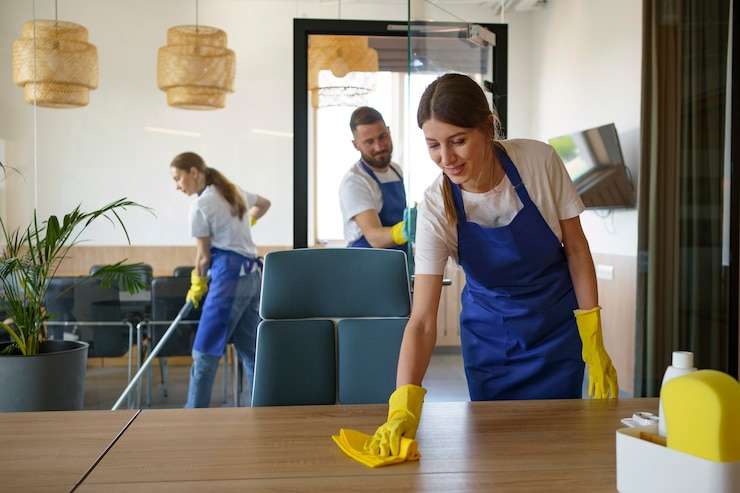
Here is how to clean a fabric sofa in Singapore: vacuum all surfaces first with an upholstery attachment, then spot-treat stains using a mild detergent solution or dry-solvent cleaner depending on the care code tag sewn into your sofa. In Singapore's humid climate, drying fully after any wet cleaning is non-negotiable — residual moisture leads to mould within 24–48 hours. Most fabric sofas can be home-cleaned every three months, with a professional deep clean every six to twelve months.
Singapore households face challenges that most overseas sofa-cleaning guides overlook — year-round indoor humidity averaging 75–90%, dust mites thriving in the heat, and cooking odours from char kway teow and curry that sink into upholstery fast. This guide covers the full process: reading your sofa's care tag, tackling the most common local stains, preventing mould, and knowing when a professional sofa cleaning service in Singapore is the better call.
Reading your sofa's care tag before you touch it
Every fabric sofa sold in Singapore should carry a small care label — usually tucked under a seat cushion or attached to the frame underneath. This label carries a cleaning code that tells you exactly what you can and cannot use on the fabric. Getting this wrong is the most common reason DIY cleaning causes permanent damage.
The four codes you will encounter are: W (water-based cleaners only), S (solvent or dry-clean only — no water), W/S (either works), and X (vacuuming only — no liquid of any kind). Most polyester and microfibre sofas sold in Singapore carry a W or W/S code, making them relatively forgiving. Natural fibres — wool, cotton velvet, linen blends — often carry S codes, meaning a spray of soapy water can cause permanent watermarks or fabric shrinkage.
If the label is missing or faded, which is common in older HDB flats where the sofa has been passed between families, test any cleaner on a hidden seam first. Apply a small amount, leave for two minutes, blot dry, and check for discolouration or stiffness. Wait 24 hours before cleaning the full surface. This one step prevents damage that no subsequent cleaning can reverse.
Step-by-step: how to clean a fabric sofa at home
What you need
- Vacuum cleaner with upholstery brush attachment
- Two clean white microfibre cloths
- Mild dish soap (3–4 drops) or upholstery foam cleaner
- Dry-cleaning solvent spray (for S-code sofas only)
- Small soft-bristle brush
- Fan or portable dehumidifier for drying
The process
Start with a thorough vacuum — not a quick pass, but a deliberate run along every seam, under every cushion, and across the full back and armrests. Loose crumbs and dry dirt that get wet during cleaning turn into paste that sets into the fibres. Spend at least five minutes on this step before any liquid comes near the sofa.
For W or W/S coded sofas, mix three drops of mild dish soap into 500ml of warm water and stir until it lathers slightly. Dampen a microfibre cloth — damp, not wet — and work in small 20cm sections. Use light circular motions, then blot (never rub) with the second dry cloth immediately. Rubbing pushes soil deeper and causes pilling on microfibre. Work from the outside edge of any stain inward to stop it spreading. For S-code sofas, apply dry-cleaning solvent to the cloth rather than directly to the fabric, and follow the same blot-and-section method.
Once the full surface is done, set a fan on low pointing directly at the sofa. In Singapore's humidity, a sofa that dries slowly can grow mould on the inner foam within 24 hours, even if the surface looks and feels dry to the eye. If you have a portable dehumidifier, run it in the same room with windows closed for two to three hours. The sofa should feel completely dry before cushions go back on — typically three to five hours with good airflow and the air conditioning running at around 25°C.
Removing the most common stains on Singapore fabric sofas
Kopi and teh stains
Act within five minutes. Blot up as much liquid as possible with a dry cloth — press firmly, lift, repeat without dragging. For W-code sofas, apply white vinegar diluted 1:3 with water to a cloth and dab from the edge inward. Rinse the area by blotting with a plain damp cloth, then dry immediately with a fan. Tannins in tea and coffee bond to fabric quickly; stains left overnight are notably harder to lift and may require professional treatment.
Curry and oil-based stains
Scrape off any solid residue first with the edge of a spoon. For oily stains, sprinkle a thin layer of baking soda or cornstarch over the affected area and leave for 15–20 minutes to absorb grease before vacuuming it off. Then treat the remaining colour stain using the W-code method if your sofa allows it. Avoid hot water — heat sets oil stains permanently. For S-code sofas, a dry-cleaning solvent applied to a cloth is the right approach. Never pour solvent directly onto the fabric.
Pet accidents
Pet ownership in Singapore BTOs and condos has risen steadily since 2022, and urine stains are among the hardest to remove without the right product. Soap does not work here — you need an enzyme-based cleaner, available at most NTUC FairPrice outlets under the pet care section. Enzymes break down uric acid crystals, which are the source of both the odour and the yellow staining. Blot liquid first, apply enzyme spray, leave for 10 minutes, then blot dry. If the odour returns after drying, the enzyme action was incomplete — repeat the treatment rather than masking it with air freshener, which does not address the underlying residue.
Why singapore's humidity makes fabric sofa care harder than you think
Singapore sits at around 1.3 degrees north of the equator, and indoor relative humidity consistently runs between 70% and 90% year-round, even in air-conditioned homes. Fabric upholstery absorbs ambient moisture, and the foam core of most sofas acts like a sponge. This creates ideal conditions for dust mites — the Health Promotion Board notes that dust mites are a trigger for more than 80% of allergic rhinitis cases in Singapore, and sofas are one of their primary habitats alongside mattresses. Regular cleaning is not just about appearance; it directly affects indoor air quality and respiratory health. For mattress allergen management, which follows the same principles, see our guide on allergen removal for mattress cleaning in Singapore.
Mould is the other persistent risk. The US EPA advises that mould can begin growing on damp surfaces within 24–48 hours. In a Singapore living room that receives limited cross-ventilation — common in HDB units facing a single direction — a damp sofa can develop mould on the underside of cushions before it becomes visible on the surface. The warning sign is smell: a musty, earthy note that intensifies when you sit down and compress the foam.
Prevention is much simpler than remediation. Clean on clear days rather than during the rainy season when ambient humidity spikes; run the air conditioning during and after cleaning; and use a portable dehumidifier after any wet cleaning session. The NEA recommends maintaining indoor humidity below 65% to inhibit mould growth — portable dehumidifiers available in Singapore range from $80 to $250 and are a practical long-term investment for any HDB or condo household that uses fabric upholstery.
When to book a professional sofa cleaning service in Singapore
DIY cleaning handles surface dirt and fresh stains well. It does not remove deep-seated allergens, bacteria embedded in foam, or old set stains from synthetic fibres that have been heat-set through repeated sun exposure. If your sofa smells musty after drying, if stains reappear a few days after cleaning, or if it has not been professionally cleaned in over 18 months, a professional service is the better investment.
Professional fabric sofa cleaning in Singapore typically uses hot water extraction — a machine that injects a fine mist of hot water and detergent solution under pressure into the fabric, then immediately extracts it along with loosened soil, allergens, and bacteria. This reaches the base of the fabric pile and the top layer of foam beneath, which no home method can match. Most professional jobs in Singapore cost $80–$130 for a two to three-seater sofa and $150–$250 for large L-shaped sectionals in 2026. Some companies price by the seat at $25–$40 per seat. Always confirm whether the quote includes eco-friendly solutions, a drying guarantee, and transportation before booking.
When choosing a provider, ask specifically how they handle drying — a professionally cleaned sofa left wet in Singapore's humidity is a worse outcome than no cleaning at all. Reputable companies use high-powered extraction that leaves fabric only slightly damp, with full drying expected in two to four hours when a fan is running. If your household also uses leather furniture, the 5 expert tips for leather sofa cleaning in Singapore outlines a very different care approach that shares none of the water-based methods used on fabric. Providers who handle fabric sofas often also offer steam cleaning for mattresses in Singapore and can cover both in a single visit, which reduces the per-item cost.
Comparison at a glance
| Fabric type | Cleaning code | DIY safe? | Pro cleaning cost (SGD) | Recommended frequency |
|---|---|---|---|---|
| Polyester / nylon blend | W | Yes | $80–$130 | Every 6 months |
| Microfibre | W/S | Yes, carefully | $90–$150 | Every 6 months |
| Cotton / linen blend | W | Spot cleaning only | $90–$150 | Every 3–6 months |
| Velvet (synthetic) | S | No — risk of watermarks | $120–$200 | Every 12 months |
| Wool blend | S | No — risk of shrinkage | $150–$250 | Every 12 months |
Frequently asked questions
How often should I clean my fabric sofa in Singapore?
Vacuum weekly and spot-clean stains as they happen. Do a full home clean — damp wipe-down of all surfaces — every three months. Book a professional deep clean every six to twelve months depending on usage. Households with children, pets, or allergy sufferers should lean toward six months. Singapore's humidity accelerates dust mite accumulation in fabric upholstery, so more frequent cleaning has a direct impact on indoor air quality and respiratory health, particularly for anyone with allergic rhinitis.
Can I use baking soda on my fabric sofa?
Yes, with two conditions. Baking soda absorbs odours and grease effectively — sprinkle a light, even layer, leave for 20–30 minutes, then vacuum thoroughly. It is safe on most W and W/S coded sofas. However, on dark-coloured fabric it can leave a faint white residue if not fully removed by vacuuming. It is also not a stain remover for coloured stains like kopi or curry — it absorbs but does not lift tannins or proteins. For those stains, use the appropriate liquid cleaner based on your care code tag.
How long does a fabric sofa take to dry after cleaning in Singapore?
With a fan running directly at the sofa and air conditioning at 25°C, a lightly damp-cleaned fabric sofa takes two to four hours to feel dry in a typical Singapore condo or HDB flat. If cleaned on a humid day with poor airflow, drying can take six to eight hours — which creates conditions for mould growth in the inner foam. A dehumidifier running in the same closed room cuts drying time notably. After professional hot water extraction, most providers quote two to four hours with adequate fan airflow. Do not replace cushions until the base fabric feels completely dry to the touch.
What does professional fabric sofa cleaning cost in Singapore?
In 2026, expect to pay $80–$130 for a two to three-seater fabric sofa and $150–$250 for a large L-shaped sectional. Some companies charge by the seat at $25–$40 per seat. Additional charges may apply for severe staining, fabric protection coating application, or mould remediation treatment. Prices also vary by method — hot water extraction is the most thorough and typically priced higher than foam or bonnet cleaning. Always confirm whether the quoted price includes eco-friendly cleaning solutions, drying time support, and a guarantee to return if stains reappear within 48 hours.
My sofa has no care label — how do I know what cleaner to use?
Test before you commit. Find the most concealed area of the sofa — the fabric tucked under the frame base is ideal — and apply two or three drops of plain water with a dropper. Watch for five minutes: if the fabric darkens evenly and returns to its normal colour as it dries, water-based cleaning is likely safe. If it stiffens, watermarks form, or colour bleeds, treat the sofa as S-code and use only dry-cleaning solvent on a cloth. If you are uncertain, a professional can physically assess the fabric before applying anything, which avoids the risk of irreversible damage.