

Nanotech vs Sureclean Singapore comes down to two different jobs. Nanotech treatments coat a surface once so it resists dirt, grease and water stains for months. Sureclean sends a crew to physically scrub, mop and wipe your unit on a schedule. Neither replaces the other, and comparing them as if you must pick one is where most homeowners go wrong. If you want tiles, worktops or a sofa to shed grime longer between cleans, a nanotech applicator does that job. If you want a Singapore HDB flat or condo actually scrubbed every week, Sureclean's agency model is built for that.
This guide compares what each one costs, how long results last in our humidity, and where a coating helps a cleaning crew instead of competing with it. We also flag where a third option, an employed cleaning agency like Athena, fits into the decision.
What nanotech cleaning actually covers in Singapore
"Nanotech" in the Singapore home services market almost always means a protective coating job rather than a scrub. A technician applies a liquid nano-polymer to a sealed surface, usually tiles, glass, stone worktops, sinks or car paint, and it cures into a layer a few hundred nanometres thick. That layer makes water and oil bead off instead of soaking in, which is why these treatments get marketed hard for bathroom grout, kitchen worktops and glass shower screens.
The catch is that a coating only works on a surface that is already clean. Applying it over soap scum, limescale or old grout haze just seals the dirt in place. Most nanotech providers in Singapore either require you to pre-clean the area yourself or charge extra for a prep clean before they coat it, which is worth confirming on the quote before the technician is at your door.
Coatings also do not clean floors, carpets, mattresses or upholstery in the way a cleaning crew does, and they do not remove dust, vacuum, or take out rubbish. A household that books only a nanotech service and expects a full home clean is paying for the wrong service entirely.
Job size drives the price more than anything else. A single bathroom's tiles and grout is a smaller job than a whole kitchen worktop and backsplash, and a full car interior falls somewhere in between depending on seat material. Ask for a fixed quote per room or per surface before the technician starts, not an estimate, since "nano-coating" spray cans and salon-grade applications sold as the same product can differ a lot in price and how long the layer actually holds up under daily scrubbing.
How sureclean's agency model works
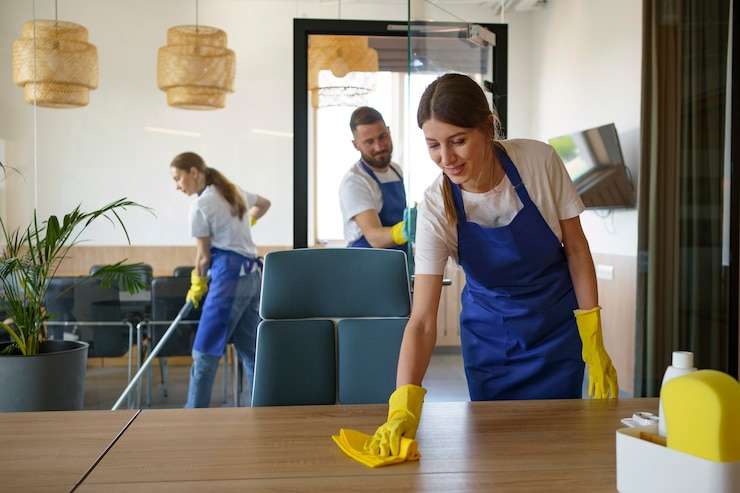
Sureclean is a cleaning agency, rather than a coating specialist. It sends employed crews to physically clean a home on a recurring or one-off basis: mopping, dusting, bathroom scrubbing, kitchen degreasing, and deeper jobs like post-renovation or move-in cleaning. The work is repeated every visit rather than applied once, which is the core difference from a nanotech job.
Because Sureclean employs its own cleaners rather than matching you to independent contractors, liability and scheduling sit with the company, not with an individual you have to chase if something goes missing or breaks. That matters in Singapore, where CASE processes complaints against registered companies far more easily than against a one-person freelancer with no fixed address.
Where the two overlap
A handful of agencies, Sureclean included, now offer add-on sealant or coating services alongside standard cleaning. That is the closest overlap with nanotech providers, but it is still an add-on booked separately from the recurring clean rather than a substitute for one.
Nanotech vs sureclean: cost and what you actually get
Pricing structures are not comparable on an hourly basis because the two services are shaped differently. Nanotech coating is quoted per job, based on surface area: a bathroom's tiles and grout, a kitchen worktop, or a full car interior. Sureclean and other Singapore cleaning agencies quote recurring home cleaning by the hour, with typical rates for a standard 3-4 room HDB flat sitting in the $25-$35 an hour range as of 2026, plus a per-job quote for one-off deep cleans.
A one-time nanotech coating on a bathroom typically needs reapplication every 6-12 months depending on foot traffic and how the surface is used day to day, since the protective layer wears down with regular scrubbing and water contact. Recurring cleaning does not wear off the same way; it is repeated on a fixed schedule, so the two are really solving different problems on different timelines.
What each service typically excludes
Coating jobs generally exclude the deep pre-clean needed for the coating to bond properly, exterior windows, and anything porous like grouting that has already stained. Cleaning agencies generally exclude sealing, waterproofing or coating work unless the quote names it as an add-on.
Which one handles singapore's humidity and mould risk better
Singapore's year-round humidity, often above 80%, is exactly the condition mould needs to establish itself on bathroom grout, window frames and behind wardrobes. A nanotech coating on tiled surfaces can slow moisture absorption into grout lines, which in theory reduces how fast mould gets a foothold. It does not remove mould that is already there, and it does nothing for airflow, which is the actual root cause of most bathroom mould in HDB units with limited ventilation.
A recurring cleaning crew catches early mould growth before it spreads, because someone is physically inspecting and scrubbing those surfaces on a schedule instead of relying on a coating applied once and forgotten. The US EPA's mould cleanup guidance is consistent on this: controlling moisture and cleaning affected surfaces regularly is what actually stops regrowth. A one-time sealant does not.
For bathrooms specifically, a routine that combines a proper bathroom cleaner for tiles, grout and fixtures in Singapore with good exhaust fan use will outperform a coating on its own. A coating is a useful layer on top of that routine, not a substitute for it.
Choosing between nanotech coating and a cleaning agency for your unit
The decision usually maps to what you are trying to fix. If your complaint is "the grout keeps staining within weeks of cleaning it" or "water spots everywhere on the glass shower screen," a nanotech coating addresses that directly. If your complaint is "the flat is never actually clean between our own efforts," you need a recurring crew, and a coating will not fix that gap.
New BTO and condo owners often book both in sequence: a full post-renovation cleaning in Singapore to strip construction dust and debris, then a nanotech coating on the newly cleaned surfaces while they are at their best, followed by recurring cleaning to maintain everything afterward. Doing it in that order protects the investment in the coating instead of sealing renovation grime underneath it.
Renters and short leases
Tenants nearing the end of a lease are usually better off skipping coating treatments entirely and booking a straightforward end of tenancy cleaning in Singapore, since a coating's 6-12 month lifespan rarely pays off against a deposit inspection that happens once.
Condos with marble or natural stone
Marble and other natural stone finishes, common in condo bathrooms and lobbies, are porous and stain more easily than ceramic tile. A nano-coating on stone can genuinely cut down on watermarks and soap residue, but it needs a stone-safe formula, not the same product used on ceramic tiles, and a badly matched coating can trap moisture and discolour the stone instead of protecting it. Confirm with the applicator that their product is rated for natural stone before booking.
Where an employed cleaning agency like Athena fits into this comparison
Neither nanotech coating nor Sureclean covers every job a Singapore home needs. Athena runs the same employed-crew model as Sureclean for recurring home cleaning, post-renovation work, and upholstery, with the same core reason to prefer an agency over a freelancer or a coating-only provider: one company accountable for the whole job, not a patchwork of separate bookings.
If you are comparing quotes, ask each provider directly what is and is not included, and confirm licensing status. The National Environment Agency's public cleanliness guidance is a useful baseline for what a legitimate operator should be following, regardless of whether the service is a coating job or a full clean.
For homes dealing with dust allergies alongside general upkeep, pairing recurring cleaning with the right approach to allergen removal for mattress cleaning in Singapore tends to matter more day to day than whether a nano-coating sits on the bathroom tiles.
Comparison at a glance
| Factor | Nanotech coating | Sureclean (cleaning agency) |
|---|---|---|
| What it does | Applies a one-time protective layer to a surface | Physically cleans the home on a schedule |
| Typical pricing | Quoted per job, by surface area | $25-$35/hour for recurring HDB or condo cleaning* |
| How long results last | 6-12 months before reapplication is needed | Repeated on a fixed weekly or fortnightly cycle |
| Removes existing dirt or mould | No, must be applied to an already-clean surface | Yes, cleans and inspects surfaces each visit |
| Best fit | Bathroom tiles, worktops, glass, car interiors | Whole-home upkeep, HDB, BTO, condo, post-renovation |
Frequently asked questions
Is nanotech coating a substitute for regular home cleaning in Singapore?
No. A nanotech coating protects an already-clean surface from restaining, it does not remove existing dirt, dust or mould. Most Singapore households still need a recurring cleaning schedule for floors, bathrooms and upholstery alongside any coating work.
How much does nanotech treatment cost compared to sureclean's recurring cleaning?
Nanotech coating is quoted per job based on surface area, so a bathroom or worktop job is a one-off cost rather than an hourly rate. Sureclean and other Singapore cleaning agencies typically charge $25-$35 an hour for recurring home cleaning, billed on a weekly or fortnightly cycle rather than as a single project fee.
Does nanotech coating stop mould in HDB bathrooms?
It can slow moisture absorption into grout lines, which makes it harder for mould to establish itself, but it does not remove mould that already exists and does nothing to fix poor bathroom ventilation, which is the underlying cause in most HDB units. Regular cleaning combined with better airflow remains the more reliable fix.
Can I combine a nanotech coating with a sureclean or Athena cleaning package?
Yes, and many Singapore homeowners do exactly this: book a full clean or post-renovation clean first, apply the coating to freshly cleaned surfaces, then keep a recurring cleaning schedule to maintain the result. Applying a coating over an unclean surface just seals the dirt underneath it.
How do I check if a nanotech or cleaning provider in Singapore is legitimate?
Ask for their business registration, any NEA licensing that applies to their service category, and insurance coverage before booking. If a dispute comes up later, CASE is far easier to use against a registered company than against an individual contractor with no fixed business address.