

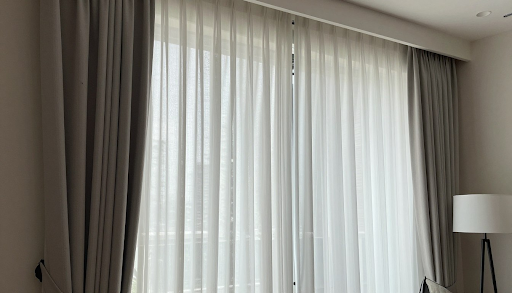
You have just washed your curtains. They look clean. But that musty, stale curtain smell after washing is still there — maybe even stronger than before. Sound familiar? You are not imagining it. When curtains still smell after washing, it is usually not about how you washed them. The real issue lies in what regular wash cannot be fully removed. At Athena Team Cleaning, we fix this every day. Here is exactly what is happening and how to solve it properly.
📌Curtains smell after washing because surface washing removes visible dirt but cannot eliminate mould spores, dust mite waste, bacteria and chemical residues embedded deep in fabric fibres. In Singapore’s humid climate, these hidden contaminants continue producing odour even after a regular wash cycle. Professional curtain deep cleaning in Singapore uses hot water extraction, anti-fungal treatments and high-temperature steam to remove what standard washing leaves behind.
Key Takeaways
- A curtain smell after washing is almost always caused by mould, bacteria or dust trapped in deep fibres
- Regular home washing cycles cannot reach or kill mould spores embedded in curtain fabric
- Singapore’s high humidity accelerates mould growth in curtains, especially near windows and air-conditioning units
- Professional curtain deep cleaning Singapore removes odour from the source, not just from the surface
- Curtains should be professionally cleaned every 6 to 12 months in Singapore’s climate
What Are the Hidden Causes of Curtain Odour in Singapore Homes?
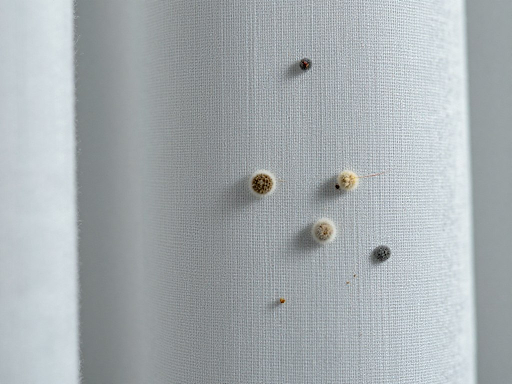
Understanding what is actually causing the curtain smell after washing helps you make the right decision about treatment. There are four main culprits.
1. Mould and Mildew Spores
Mould curtain cleaning in Singapore is one of the most requested services in high-humidity environments precisely because mould is so difficult to remove completely with home methods. Mould spores can survive temperatures below 60 degrees Celsius, the maximum safe wash temperature for most curtain fabrics. A standard 40-degree machine wash does almost nothing to kill active mould colonies.
The musty curtain smell after washing that returns within days is often the spores re-activating as the curtain absorbs moisture again. Unless the spores are killed with anti-fungal treatment, the cycle continues indefinitely.
2. Dust Mite Waste and Allergen Build-Up
Curtains are one of the highest dust-accumulating surfaces in any home. They catch airborne particles continuously and rarely get the deep vacuuming they need. Dust mite waste is a significant contributor to curtain smell after washing because the proteins in dust mite excrement produce a distinct earthy, stale odour. Unfortunately, these particles are too fine to be washed away by a standard cycle.
3. Chemical Residue from Detergents and Dry Cleaning
Sometimes the curtain smell after washing is not biological at all. Detergent residue that has not fully rinsed out can react with moisture in the air and produce a chemical or synthetic odour. This is particularly common when curtains are washed with too much detergent or not rinsed with sufficient water pressure.
Dry cleaning chemicals can also leave residues in certain fabric types. If you have noticed your curtains smell after dry cleaning, this is likely the cause. The solvents used in dry cleaning are not always fully removed from thicker or layered fabrics.
4. Embedded Cooking and Smoke Odours
In open-plan Singapore apartments and HDB flats, cooking fumes and cigarette smoke travel freely through living spaces and are absorbed by curtain fabric over time. These odour compounds bond to the fibres and cannot be removed by washing alone. They require odour-neutralising treatment at a molecular level — something professional odour treatment programmes are specifically designed to deliver.
How Do Professionals Remove Curtain Smell After Washing?
When Athena Team Cleaning handles curtain deep cleaning jobs in Singapore, the process is fundamentally different from anything achievable at home. Here is the step-by-step approach.
Step 1: Fabric assessment
Before any treatment begins, the technician identifies the fabric type, checks for existing mould spotting, assesses the severity of contamination and determines the appropriate cleaning method. Different fabrics like linen, polyester, velvet, blackout, require different treatment temperatures and chemicals.
Step 2: Pre-treatment with anti-fungal solution
A professional-grade anti-fungal pre-treatment is applied to the fabric and allowed to dwell. This begins killing mould spores and breaking down odour-producing compounds at the cellular level before any water or heat is applied.
Step 3: Hot water extraction or steam cleaning
Depending on the fabric, either hot water extraction or steam treatment is used to deep-flush contaminants from the fibres. Water temperatures above 60 degrees Celsius kill dust mites, mould spores and bacteria that survive home washing cycles. This is the core of professional mould curtain cleaning in Singapore. Heat that penetrates the full depth of the fabric.
Step 4: Odour neutralisation treatment.
To remove odour curtains completely, a professional odour neutraliser is applied after extraction. This does not mask the smell but it chemically neutralises the compounds responsible for the odour at a molecular level.
Step 5: Controlled drying
Improper drying is one of the main reasons curtains smell after washing in the first place. Professionals ensure curtains are dried in a controlled, low-humidity environment with sufficient airflow to prevent any residual moisture from re-activating mould spores.
For persistent odour cases, Athena’s Odour Treatment Programme provides an additional molecular deodorisation layer beyond the standard curtain cleaning service.
DIY vs Professional Curtain Cleaning: What Actually Works?
| Method | Removes Surface Dirt | Kills Mould Spores | Eliminates Odour Compounds | Removes Dust Mite Waste | Safe for Delicate Fabrics |
| Machine washing (40 degrees) | Yes | No | Partial | No | Partial |
| Machine washing (60 degrees) | Yes | Partial | Partial | Partial | No (risk of damage) |
| Dry cleaning | Yes | No | No | No | Yes |
| Steam cleaning (home unit) | Partial | Partial | Partial | Partial | Yes |
| Professional hot water extraction | Yes | Yes | Yes | Yes | Yes |
| Professional steam + anti-fungal | Yes | Yes | Yes | Yes | Yes |
The table makes it clear why curtains smell after washing persists even after repeated home attempts. The only methods that fully address mould, dust mites and odour compounds are professional-grade treatments that combine heat, extraction and anti-fungal chemistry. When you need to truly remove odour curtains, a home wash is simply not the right tool for the job.
For Singapore homes and offices, the most effective solution to remove odour curtains fully is professional curtain deep cleaning Singapore — not more frequent home washing. And for homes where mould is already visible, mould curtain cleaning Singapore treatment should be prioritised immediately to prevent spore spread to other soft furnishings.
How Often Should Curtains Be Professionally Cleaned in Singapore?
For most Singapore homes, curtains should be professionally cleaned every 6 to 12 months to remove odour curtains and prevent mould build-up from reaching treatment-resistant levels. Here is a practical guide based on home type and usage.
| Situation | Recommended Cleaning Frequency |
| HDB flat with cooking area near curtains | Every 6 months |
| Air-conditioned condominium unit | Every 8 to 12 months |
| Home with pets or allergy sufferers | Every 6 months |
| Office or commercial space | Every 6 to 12 months |
| Home near coastal areas (higher humidity) | Every 6 months |
| Recently identified mould on curtains | Immediate professional treatment |
If you have noticed a curtain smell after washing that keeps returning, you have likely already passed the point where standard cleaning can help. Professional mould curtain cleaning in Singapore is the appropriate next step — and the sooner it is done, the less mould will have spread to adjacent fabric and wall surfaces. Mould curtain cleaning Singapore treatment is also significantly more cost-effective than replacing curtains entirely, which becomes necessary if mould is left untreated for extended periods.
Frequently Asked Questions — Curtain Smell After Washing
1. Why do my curtains still smell after I wash them?
A persistent curtain smell after washing almost always means mould spores, dust mite waste or odour compounds are embedded too deeply in the fabric for a standard wash to reach. Home washing cycles, even at 60 degrees, rarely penetrate the full depth of thicker curtain fabrics. The smell returns because the source of the odour was never actually removed. Professional curtain deep cleaning in Singapore uses hot water extraction and anti-fungal treatment to address the root cause rather than just the surface.
2. Can I remove the curtain mould smell at home?
You can reduce mild mould odour at home using white vinegar rinses, baking soda soaks and thorough sun-drying. These methods can slow mould growth but cannot kill established mould colonies or remove embedded spore deposits. For significant or recurring mould curtain cleaning needs in Singapore, professional treatment is the only method that fully eliminates the problem. Curtain deep cleaning specialists in Singapore have access to anti-fungal agents and extraction equipment that simply are not available in home cleaning kits. Repeated home attempts without professional mould curtain cleaning intervention in Singapore often allow contamination to worsen over time.
3. How long does professional curtain cleaning take?
A standard curtain deep cleaning session for one room typically takes 1 to 2 hours, depending on fabric type, panel size and the level of contamination. On-site curtain cleaning means your curtains do not need to be removed. Athena’s technicians work with curtains in place. For heavily contaminated curtains with significant mould curtain cleaning Singapore requirements, additional dwell time for anti-fungal treatment may be needed.
4. Is professional curtain cleaning safe for all fabric types?
Yes, when performed by trained technicians who assess the fabric before treatment. Athena Team Cleaning inspects every curtain before cleaning to determine the appropriate method. Delicate fabrics like sheer curtains and velvet require gentler steam treatment rather than hot water extraction. Blackout and polyester curtains can typically withstand extraction cleaning. The fabric assessment step ensures that the cleaning method removes the curtain smell after washing without damaging the material.
5. What other services help with home odour problems beyond curtain cleaning?
Curtain odour is often part of a wider indoor air quality issue. Athena Team Cleaning offers a dedicated Odour Treatment Programme that addresses odour at a molecular level throughout the home, a Mattress Cleaning Service for another major household odour source, and Disinfection Services for broader biological contamination. Combining curtain deep cleaning Singapore with mattress and sofa cleaning gives the most comprehensive remove odour curtains result for the whole home.
Stop Masking the Smell — Fix It Properly
A curtain smell after washing is your home telling you something is wrong inside the fabric. Fabric fresheners and repeated home washes are temporary fixes for a problem that will keep coming back until the mould, dust and bacteria are genuinely removed.
Athena Team Cleaning is one of Singapore’s most trusted cleaning specialists — IICRC-certified, NEA-compliant and experienced across hundreds of curtain deep cleaning and mould curtain cleaning jobs in Singapore. We do not mask odours. We remove odour curtains permanently, treating the source at fibre level so the smell does not return. Every curtain deep cleaning job in Singapore we complete uses the same professional-grade process, such as anti-fungal pre-treatment, hot extraction and odour neutralisation, ensuring you remove odour curtains for good rather than just temporarily.
Book your curtain deep cleaning today:
Professional Curtain Cleaning Service | Odour Treatment Programme | Steam Cleaning Treatment
📞 Call Now: +65 9247 1009
📧 Email: athenateamcleaning@gmail.com
📍 Visit Us: 2 Venture Drive, #14-02, Vision Exchange, Singapore 608526
🌐 Website: www.athenacleaningservices.sg
💬 WhatsApp: Fast quotes and bookings available
Athena Team Cleaning Services—Singapore’s Curtain Odour Elimination Experts Since 2010!
Limited slots available for same-week service. Book today to remove odour curtains permanently!
Related Resources:
How Deep Cleaning Services Improve Home Hygiene
Why Regular Sofa Cleaning Is Important for Singaporean Homes
The Importance of Mattress Cleaning
Toilet Cleaning Services That Go Beyond the Surface
View Our Before & After Gallery