
Carpet cleaner solutions for pet messes in Singapore homes
In this article
- Why pet messes keep smelling in Singapore homes
- What to do in the first ten minutes after an accident
- Enzyme cleaner, extraction or steam: which solution fits
- Home remedies that backfire in humid flats
- Rugs versus fitted carpet in HDB, BTO and condo homes
- What pet mess cleaning costs in Singapore and how long it takes
- When to call a professional
- Comparison at a glance
- Frequently asked questions
- Sources
- Related Athena cleaning services in Singapore
The best carpet cleaner solutions for pet messes in Singapore are an enzyme cleaner for the smell, a wet-dry vacuum or hired extraction for the residue, and a fan to dry the fibres within a day. Blot first, rinse lightly with cool water, soak the spot as deep as the accident went, then dry it fully. Old or repeated spots usually need professional hot-water extraction, which in 2026 typically costs S$80 to S$200 per rug.
This guide covers what to use, what to avoid and what each route costs in HDB, BTO and condo homes, so you can fix the mess once instead of chasing the smell for weeks.
Why pet messes keep smelling in Singapore homes
Fresh urine is mostly water, but what it leaves behind is not. As it dries, it deposits salts and uric acid crystals in the carpet fibres, in the backing and sometimes on the floor underneath. Plain water and ordinary carpet shampoo do not dissolve uric acid, so the crystals stay put. On a dry day you smell nothing. When the air turns humid, the crystals pull in moisture and the odour returns, which is why a patch that seemed fine in the morning can smell again after an afternoon thunderstorm.
Singapore's climate makes this harder than in a temperate country. Relative humidity usually sits between roughly 70 and 90 percent, so a damp rug dries slowly indoors, especially in a bedroom with the windows shut for the air-conditioner. Damp fibres also invite mould. The US EPA mould cleanup guidance advises drying wet materials within 24 to 48 hours to stop mould taking hold, and that is a sensible deadline for any rug soaked by a pet accident.
Hard floors under the rug hold smells too
Most HDB flats and condos have tile, vinyl or timber under a rug. Urine that soaks through can settle in grout lines or plank joints, and cleaning only the top of the rug leaves the source behind. If the floor under your rug is vinyl, our guide to vinyl cleaning service solutions every home singapore explains how to treat the seams without lifting the sheet.
Pets also return to spots they can still smell, even when you cannot. A dog or cat that has soiled one patch is likely to choose it again, so removing the odour completely is what stops repeat accidents, not just making the spot look clean.
What to do in the first ten minutes after an accident
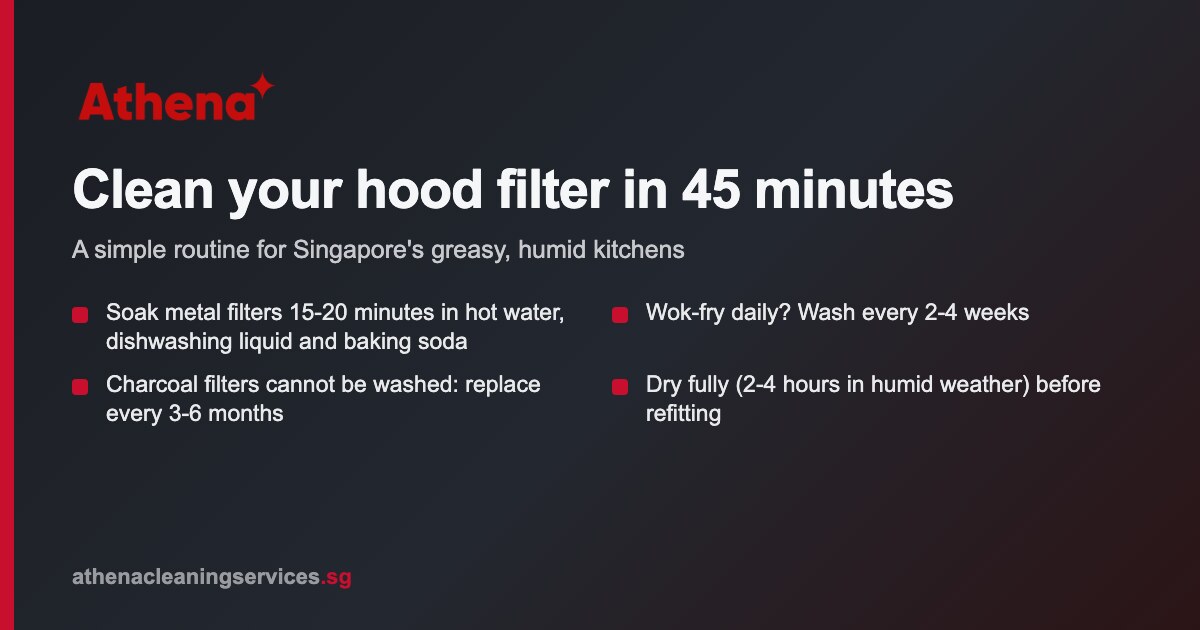
Speed matters more than the brand of cleaner. Fresh urine sits mostly in the top fibres. Urine that has been there for an hour or more has usually reached the backing, and the job gets harder every hour after that. Keep a pack of white paper towels, a small bottle of enzyme cleaner and an old towel near the pet's usual spot so you can start straight away.
Fresh urine
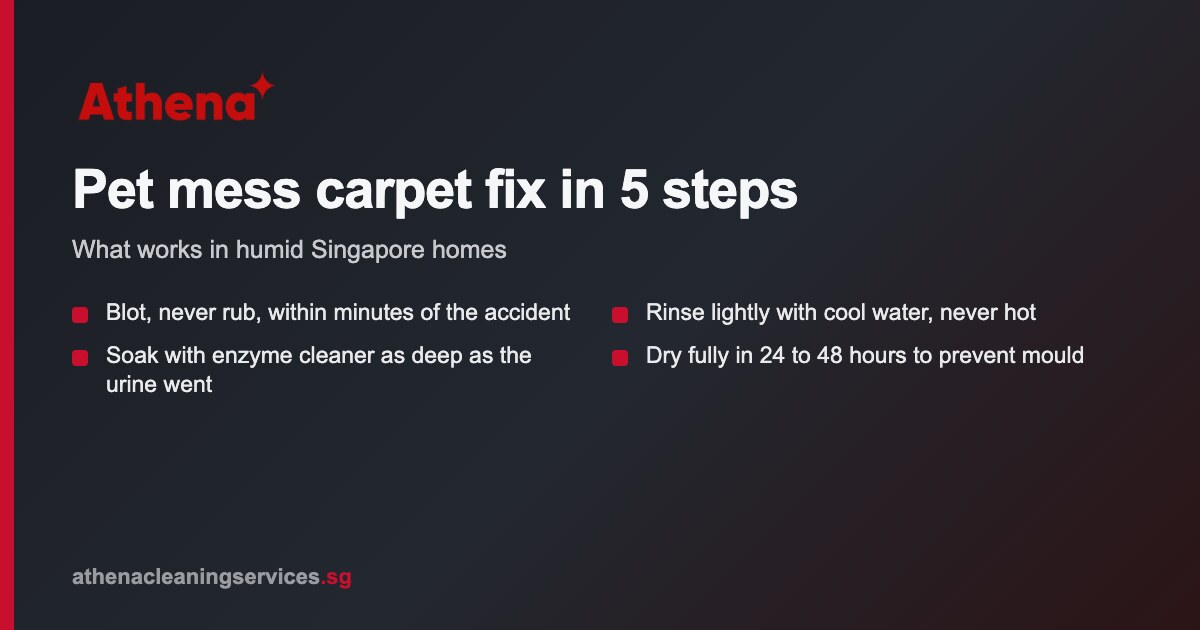
- Blot, do not rub. Press paper towels or an old towel into the spot and stand on it to draw the liquid up. Rubbing spreads urine sideways and pushes it deeper.
- Rinse lightly with cool water and blot again. Use a small amount only, so you do not push urine further down.
- Apply enzyme cleaner until the spot is as wet as the urine made it, then leave it for the time on the label, often 10 to 15 minutes or longer for old spots.
- Blot or extract the excess and set a fan on the area.
Vomit and faeces
Lift solids first with a card or spoon, and work from the edge inward so the stain stays small. Put solids in a bag and bin them. Then blot, rinse lightly and apply enzyme cleaner. Vomit often contains stomach acid and dye from food, so treat it quickly before the colour sets into light carpet.
Wash your hands afterwards and keep the pet and children off the spot until it is dry. Check the floor under the rug before you put it back, and wipe it with a damp cloth if you find any moisture.
Enzyme cleaner, extraction or steam: which solution fits
Each method does a different job, and the best results usually come from combining two. Enzyme cleaners contain enzymes or friendly bacteria that break down the organic compounds in urine, vomit and faeces. They are the right tool for odour because they act on the source. They need contact time and the right amount of liquid, and they work slowly in cold or dry conditions, though that is rarely a problem in a Singapore flat.
Hot-water extraction sprays clean water into the carpet and pulls it straight back out with strong suction. It physically removes salts, residue and dirt that an enzyme leaves behind. Professionals use truck-mounted or portable machines that extract far more water than a household vacuum. Our guide on professional carpet cleaning singapore explains what happens at each stage of a visit.
Steam cleaning is the method to be careful with. Heat can bond protein in fresh urine and vomit to the fibres and make the smell permanent, so steam only after the enzyme treatment has been used and the spot is clean. For beds and soft furnishings hit by accidents, see the mattress steam cleaner guide germ free sleep singapore, and for sofas the page on professional upholstery cleaner singapore.
Here is how the common options compare on cost, drying time and limits. Prices are typical 2026 Singapore ranges.
Home remedies that backfire in humid flats
Many online tips make pet messes worse, and some do real damage to carpet. Know which ones to skip before you pour anything on the spot.
- Hot water or a steam iron on a fresh stain. Heat sets the protein in urine, vomit and faeces into the fibres.
- Ammonia-based cleaners. Urine already contains ammonia compounds, and a cleaner with the same smell can encourage the pet to return to the spot.
- Bleach. It strips dye, weakens wool and nylon, and gives off harsh fumes when it meets urine. Never mix it with other cleaners.
- Vinegar and baking soda. The fizz looks convincing, but it neutralises little uric acid and leaves a damp, powdery residue that traps dirt.
- Scented sprays. They cover the smell for a few hours and leave the source in place.
Strong fragrances and harsh cleaning chemicals also add irritants to indoor air, a point the American Lung Association indoor air guidance raises for homes with asthma or allergies. In a closed, air-conditioned flat that matters, so pick a fragrance-free enzyme product and ventilate while it works.
Over-wetting is the other common mistake. Soaking a rug with cleaner and then leaving it flat in a humid room can produce a musty smell worse than the original accident. Extract or blot the excess, lift the rug off the floor if you can and run a fan on both sides.
Rugs versus fitted carpet in HDB, BTO and condo homes
A loose rug is the easiest case. You can roll it, take it outside or to a cleaner, and check the floor underneath. Most pet accidents in Singapore homes happen on rugs in the living room or bedroom, because few HDB flats have wall-to-wall carpet. Hang a washable rug over a rack in the sun or near a fan after cleaning, and flip it so both sides dry evenly.
Wall-to-wall carpet, common in some condos, older private flats and landed homes, is harder. Urine can pass through the pile and underlay and reach the screed or floorboards. A spot that smells again after a clean usually means the underlay is contaminated, and that calls for deeper extraction. In bad cases the patch gets replaced. Because fitted carpet cannot be moved, drying depends on airflow, so open windows and use a dehumidifier or fan for the first day.
If you rent, check your tenancy agreement before you attempt a heavy treatment. Landlords often hold the deposit against carpet damage and odour, and a documented professional clean is easier to defend than a home experiment. For help choosing a provider, our guide to choosing carpet cleaning service singapore lists the questions worth asking before you book.
What pet mess cleaning costs in Singapore and how long it takes
Budget for two things: the cleaner and your time. A bottle of enzyme cleaner usually costs S$15 to S$40 in pet shops and supermarkets, and a small area needs only a few hundred millilitres. Renting or buying a small wet-dry vacuum is a bigger outlay, and it only pays off if accidents are frequent.
Professional rug cleaning in Singapore typically costs S$80 to S$200 per rug before GST, depending on size, fibre and how much odour treatment is needed. Fitted carpet is usually quoted per square foot or by room, and a typical range is S$0.60 to S$1.50 per square foot with a minimum charge. Heavy urine treatment, underlay work or repeat visits cost extra. These are typical ranges, not fixed prices, so always get a written quote after you describe the pet, the number of spots and the carpet type.
The Consumers Association of Singapore publishes consumer guidance from CASE on getting written quotes, understanding what a service includes and handling disputes, which is worth reading before you pay a deposit. Ask what the quote covers, whether odour treatment is included and what happens if the smell returns.
On timing, a rug cleaned by extraction and then fan-dried typically feels dry in 6 to 12 hours in an air-conditioned flat, and 12 to 24 hours with natural airflow. Air-drying with no fan in a humid room can take 24 to 48 hours, which is when mould risk rises. Ask the cleaner how long drying will take on your type of carpet, and plan the visit for a morning so the carpet dries by night.
When to call a professional
Call a professional if the smell returns on humid days after you have cleaned the spot twice. That pattern means the urine has reached the backing, the underlay or the floor, and surface products cannot get to it. Other signs are a dark ring around the spot, a rug that stays damp for more than a day, visible mould or a pet that keeps returning to the same patch.
Also book help if the accident is large, for example a puppy or an elderly dog that soiled several rugs, or if anyone in the home has asthma, allergies or a weakened immune system. A professional uses stronger extraction than a home machine, can test the carpet fibre before choosing a product and will check the floor under the rug. For a sense of what a good visit looks like, read what to expect from a quality carpet cleaning singapore service.
Prevention helps too. Regular deep cleans remove the residue that holds odour, and our guide on how often should you schedule carpet cleaning singapore for healthier home suggests a schedule that suits homes with pets. Pet waste in shared corridors and lift lobbies is also something owners are expected to clear promptly, in line with NEA public cleanliness guidance.
Comparison at a glance
| Solution | Best for | Typical cost (SGD) | Typical drying time in a humid flat | Main limit |
|---|---|---|---|---|
| Blot and enzyme cleaner (DIY) | Fresh urine, vomit or faeces on a rug or carpet | S$15 to S$40 per bottle | 6 to 12 hours with a fan, 24 to 48 hours without | Does not remove salts and residue on its own |
| Enzyme cleaner plus wet-dry vacuum | Repeat accidents and medium spots at home | S$15 to S$40 for cleaner, plus machine rental or purchase | 6 to 12 hours with a fan | Needs the right amount of liquid and slow, thorough extraction |
| Professional hot-water extraction (rug) | Old, large or recurring urine on a rug | S$80 to S$200 per rug | 6 to 12 hours with fans and air-conditioning | Underlay or floor contamination may need extra treatment |
| Professional extraction (fitted carpet) | Wall-to-wall carpet in condos, landed homes and some older flats | About S$0.60 to S$1.50 per sq ft, with a minimum charge | 8 to 24 hours depending on airflow | Deep urine in the underlay may need patch replacement |
| Steam only | Light, odour-free dirt after enzyme treatment | Varies by provider or machine | 4 to 12 hours | Heat can set fresh urine and make the smell permanent |
Frequently asked questions
What is the best carpet cleaner for dog urine in Singapore?
An enzyme-based pet cleaner is the best first choice, because it breaks down the organic compounds that cause the smell. Pick a fragrance-free product, apply enough to soak as deep as the urine went and leave it for the label time. For old or repeated spots, follow with extraction, either with a wet-dry vacuum or a professional visit.
Can I use vinegar and baking soda on pet urine in a carpet?
You can, but it is not the best choice. Vinegar and baking soda neutralise very little of the uric acid that causes lingering odour, and the powder can leave a damp residue that holds dirt. An enzyme cleaner followed by thorough blotting or extraction is more reliable, especially in humid Singapore homes where weak treatments let the smell return.
How long does a rug take to dry after a pet accident in an HDB flat?
With a fan and the air-conditioner running, a cleaned rug typically feels dry in 6 to 12 hours. Natural airflow alone: 12 to 24 hours. A closed, humid room can need two full days. Aim to dry it within 24 to 48 hours at most, because damp fibres can grow mould after that.
How much does professional pet urine carpet cleaning cost in Singapore?
As a typical range, expect S$80 to S$200 per rug before GST, and about S$0.60 to S$1.50 per square foot for fitted carpet with a minimum charge. Heavy urine treatment and underlay work cost extra. Ask for a written quote that states what is included and whether odour treatment is part of the price.
Is pet urine in a carpet harmful to health?
A single clean-up on a dry, well-ventilated carpet is low risk, but old urine in damp carpet can cause strong odours and encourage mould, which can irritate people with asthma or allergies. Clean fresh accidents quickly, dry the carpet fully and see a doctor if anyone in the home develops breathing problems that seem linked to the room.
Sources
- US EPA mould cleanup guidance
- American Lung Association indoor air guidance
- consumer guidance from CASE
- NEA public cleanliness guidance
Related Athena cleaning services in Singapore
Related articles