
How to deodorise a room in Singapore: find the source, then fix it
In this article
- Why rooms smell stale or musty in Singapore
- Find the source before you clean anything
- How to deodorise a room, step by step
- Musty, cooking, pet and renovation smells need different fixes
- Products and gadgets: what helps and what only masks
- When to call a professional, and what it costs
- Comparison at a glance
- Frequently asked questions
- Sources
- Related Athena cleaning services in Singapore
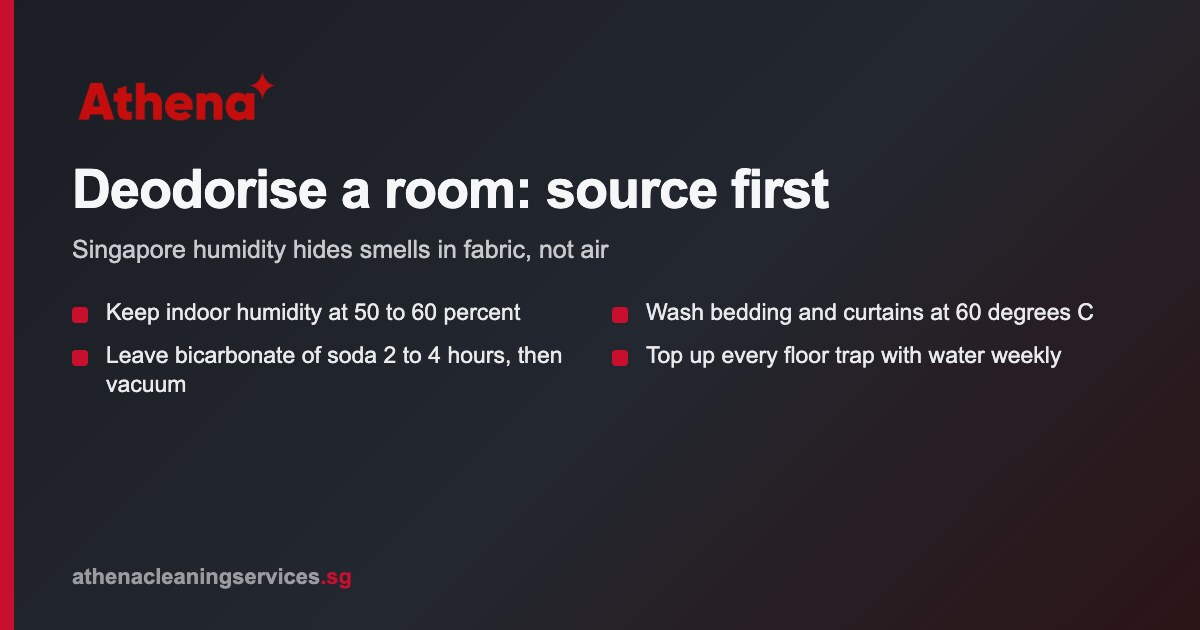
Here is how to deodorise a room in Singapore: find what is holding the smell, clean or wash it, then dry the room out. Open the windows for 30 minutes, wash all bedding and curtains, dust bicarbonate of soda over the mattress and sofa for a few hours before vacuuming, flush the floor traps with water, wipe hard surfaces, and run a dehumidifier until humidity falls to about 50 to 60 percent. Sprays and diffusers only mask a smell for a few hours.
In our humid climate, most stubborn room odours sit inside mattresses, sofas, curtains, rugs and damp drains, not in the air. This guide shows you how to find each source, what works for musty, cooking, pet and post-renovation smells, what each fix typically costs in Singapore, and when a professional clean is the cheaper option.
Why rooms smell stale or musty in Singapore
Singapore sits close to the equator, and outdoor relative humidity typically stays between 70 and 90 percent for most of the year. Mattresses, sofas and curtains soak that moisture up and hold it for days. A mattress, a fabric sofa or a pair of curtains never fully dries out, and mould, mildew and bacteria settle in and give off the stale, musty smell you notice when you walk into a closed room. The US EPA's mould cleanup guidance says the main way to stop mould growing indoors is to control moisture, and it recommends keeping indoor humidity below 60 percent.
Each type of home smells for its own reason. In older HDB flats, a bedroom often has a single window facing the corridor, so air barely moves once the door is shut. New BTO and condo units are tightly sealed, which is good for the aircon bill but traps fumes from paint, adhesives and carpentry for weeks after handover. Landed homes with ground-floor rooms deal with damp rising from the garden and the slab. Open kitchens, now common in condos, let cooking oil drift onto every soft surface in the living area.
Aircon adds its own twist. When the unit cycles off, the cold coil and drip tray stay wet, and a dirty coil blows a sour smell into the room the moment you switch it back on. If the smell is strongest when the aircon starts, the fix may start with the unit, not the room.
Find the source before you clean anything
Spend ten minutes sniffing up close before you buy a single product. A smell is strongest where it starts, and most rooms have two or three sources at once. Fixing only one is the usual reason a smell comes back within a week.
Check these spots in order
- Mattress and pillows: sweat, skin oils and spills soak into the foam. A sour smell near the bed usually starts here. Our guide to allergen removal and mattress cleaning in Singapore covers what deep cleaning removes.
- Sofa and cushions: fabric holds cooking oil, crumbs and pet dander, especially under the seat cushions.
- Curtains: they absorb cooking smoke and outdoor air, and the hem turns musty where it touches a damp ledge.
- Floor traps and drains: a dry or clogged trap in the bathroom or yard lets drain gas drift into nearby rooms.
- Wardrobes and shoe cabinets: closed spaces without airflow grow mildew on bags, shoes and stored clothes.
- Rugs and carpets: pet accidents and spilled drinks soak through to the backing.
- Aircon and washing machine: residue on the coil, the rubber seal and the drum all smell damp.
Use a simple test for stubborn cases
If you cannot pin the smell down, strip the room to the bare minimum and live with it for a day. Take the bedding and curtains out first, then see if the smell drops. If it stays, move on to the mattress and sofa, then the drains. Press a clean white cloth against a suspect fabric for a minute and sniff the cloth. This sounds fussy, but it saves you from washing curtains twice because the real problem was a dry floor trap.
Write each source down as you find it. That list becomes your plan for the rest of this guide.
How to deodorise a room, step by step
Start with the source and work outwards. For a typical HDB bedroom, the whole routine takes a morning of hands-on work plus an afternoon of drying time.
Step 1: ventilate, then keep the room dry
Open the windows and door, and point a fan outwards for at least 30 minutes. If it is raining, skip the windows and use the aircon in dry mode instead, because pulling in 90 percent humidity air defeats the purpose. Fresh air alone will not remove the smell, but it clears the loose odour so you can tell which spots are still bad.
Step 2: wash every washable textile
Strip the bed and take down the curtains. Wash bedding at 60 degrees C if the care label allows it, which also helps with dust mites, and add a cup of white vinegar to the rinse. Dry everything fully, ideally outdoors or in a ventilated drying area, because damp fabric put back on the bed restarts the problem. Cushion covers, throw blankets and soft toys belong in this load as well.
Step 3: treat the mattress and sofa with bicarbonate of soda
Lightly dust bicarbonate of soda over the mattress and sofa seats, leave it for two to four hours, then vacuum it up slowly with an upholstery nozzle. It lifts odour from the top layer of fabric, though it will never get far into thick foam. For leather, check the label first, and see these leather sofa cleaning tips before using any liquid. For fabric stains and smells, the DIY upholstery cleaning recipes give safe mixes you can test on a hidden corner.
Step 4: wipe hard surfaces and flush the drains
Wipe skirting boards, window ledges, wardrobe interiors and the aircon vents with diluted mild detergent, then dry them with a clean cloth. Pour a jug of water into every floor trap in the home, including the ones you rarely use, and keep them topped up weekly. NEA's public cleanliness guidance treats clear, flowing drains as a basic part of a hygienic home, and a water-filled trap is what blocks drain gas from coming up.
Step 5: dry the room and watch the humidity
Run a dehumidifier or the aircon dry mode until a small hygrometer (about S$10 to S$20 at most electronics shops) reads 50 to 60 percent. Check it again the next evening. If the number climbs back above 65 percent overnight, moisture is still coming from somewhere, such as a leaking pipe, a wet wall or an unsealed window.
Musty, cooking, pet and renovation smells need different fixes
The same routine does not fit every smell. Match the fix to what you are dealing with.
Musty and mouldy smells
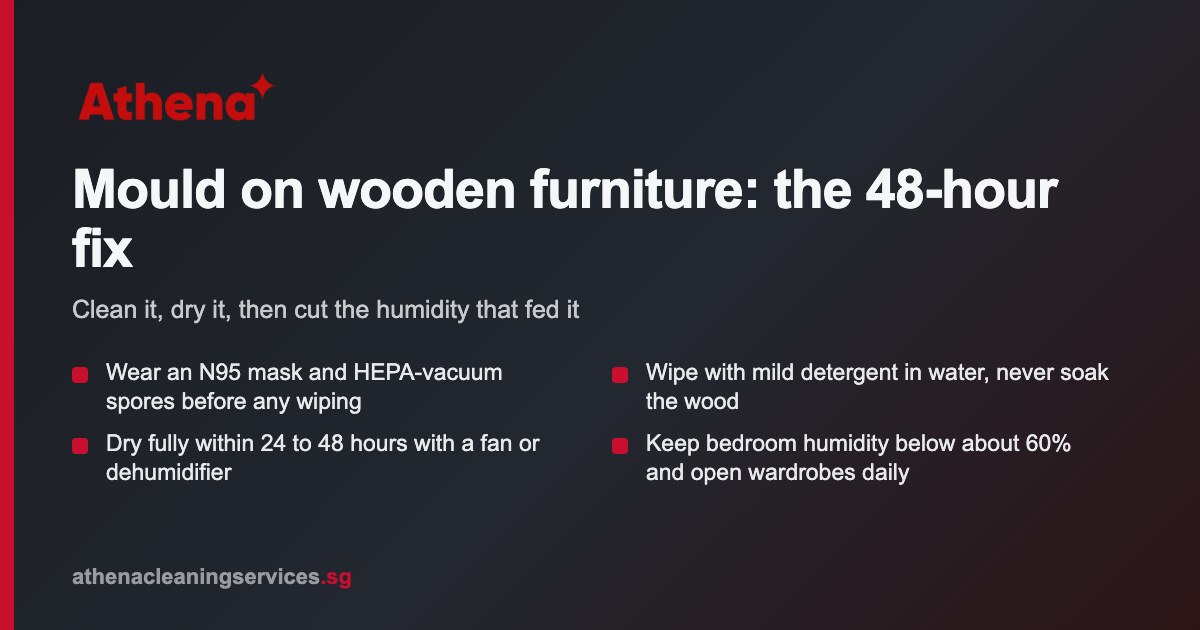
A musty smell means moisture has been sitting somewhere for a while. Wash what you can, dry the rest in the sun, and remove visible mould from hard surfaces with detergent and water. The EPA mould cleanup steps walk through it. Porous items such as a ceiling board or a heavily mouldy mattress are often better replaced than scrubbed. Wear gloves and a mask when you clean mould, and open the windows while you work.
Cooking smells
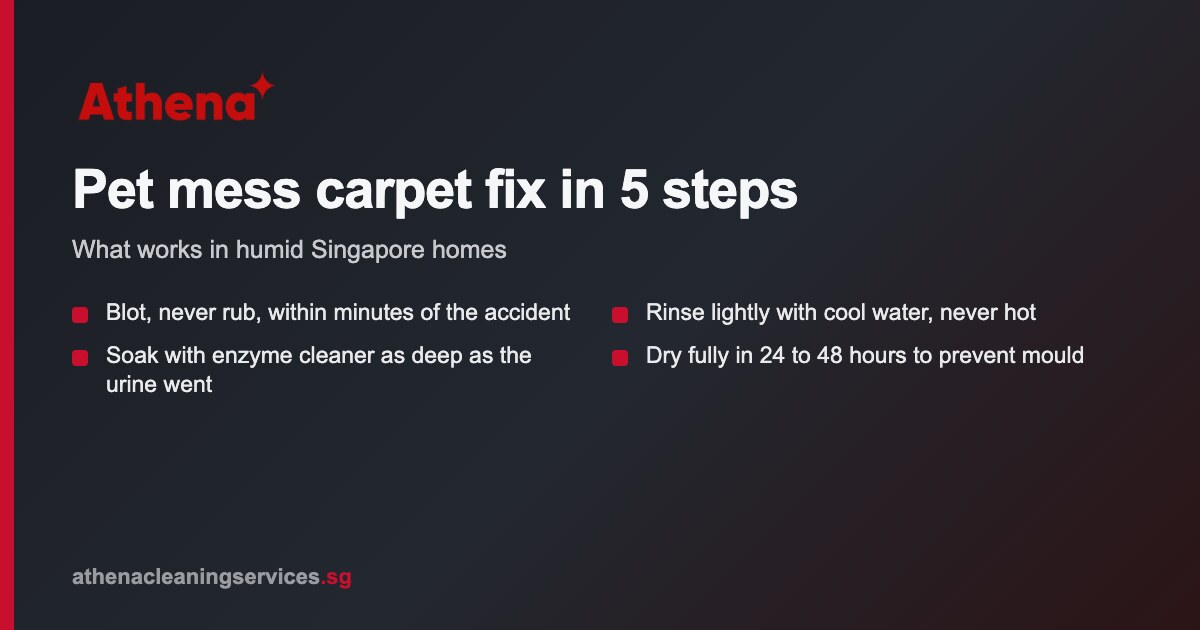
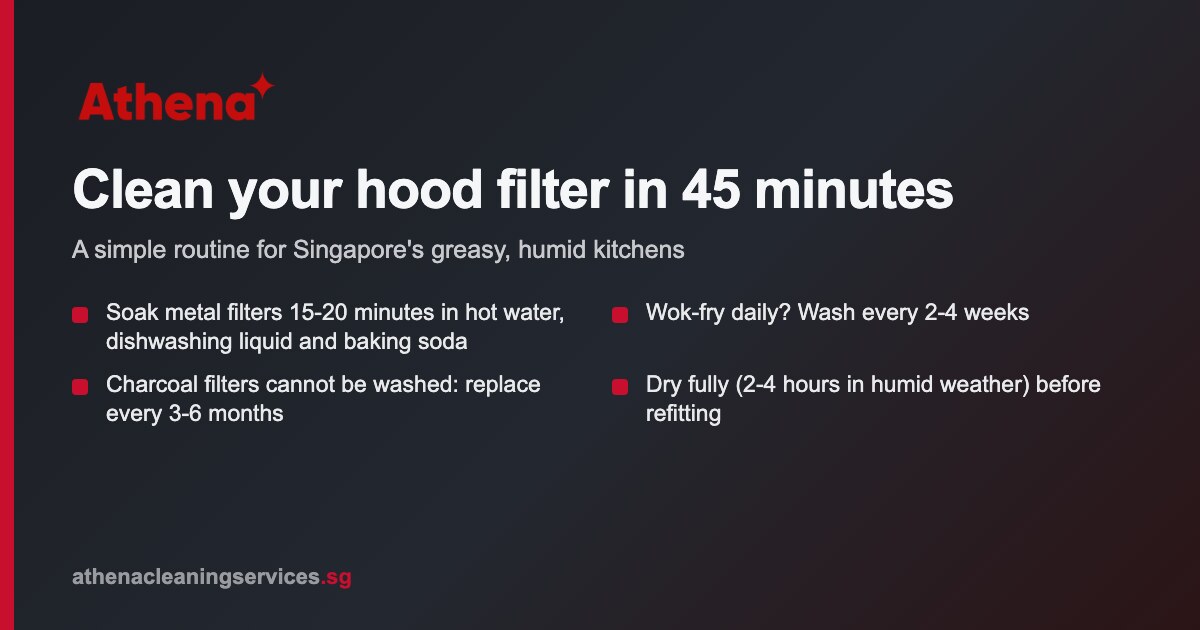
Cooking smells in an HDB or condo come from oil vapour that settles on fabric, so the sofa and curtains hold the worst of it. Run the hood during and for ten minutes after cooking, close the kitchen door where you can, and wash curtains every two to three months. A bowl of white vinegar left out overnight helps a little with air, but the real fix is washing the soft surfaces. Greasy hood filters also recirculate the smell, so degrease them monthly.
Pet smells
Pet urine soaks through carpets and rugs to the backing, and the smell reactivates when humidity rises. Blot fresh accidents, use an enzyme cleaner made for pet urine, and let the spot dry fully. If the smell returns every rainy week, the padding or backing has absorbed it. Check how often carpets should be cleaned in Singapore, and in pet homes plan for the shorter end of that range.
New renovation and carpentry smells
A freshly renovated BTO or condo can smell of paint, glue and new laminate for weeks. The US EPA notes in its formaldehyde facts that pressed-wood products such as cabinets and some furniture can release formaldehyde, and that more fresh air helps. Keep windows open as much as security and weather allow, and run the fan with the door ajar. Fine renovation dust holds on to the smell as well, and a proper post-renovation clean before you move furniture in does more than any air freshener.
Products and gadgets: what helps and what only masks
Walk into any Singapore hardware store and you will find a wall of sprays, gels, charcoal bags and plug-in units. Most of them mask. A few genuinely help because they remove moisture or soak up odour molecules.
A dehumidifier is the best single purchase for a musty room. Compressor models for a bedroom typically cost S$150 to S$350 and pull a litre or more of water a day from a closed room in humid weather. Desiccant tubs and hanging moisture absorbers, typically S$3 to S$10 each, work for wardrobes and shoe cabinets, but they need replacing monthly during wet months. Activated charcoal bags, typically S$8 to S$25, absorb odour in small enclosed spaces and can be reactivated in sunlight for a few hours.
An air purifier only helps with smell if it has a real activated carbon filter. A HEPA filter alone catches dust and pollen but not odour gas. Skip scented diffusers and plug-ins. They stack a second smell on the first, and a damp room smells worse once the scent fades.
Be careful with ozone generators and strong fogging products sold online for odour removal. They can irritate the airways and damage rubber, and they do nothing about the moisture in the mattress or wall that created the smell. If anyone at home has asthma or allergies, the HealthHub healthy living resources are a good starting point, and it is worth speaking to a doctor if the smell comes with coughing or a blocked nose. The US EPA's guidance on improving your indoor environment puts source control and ventilation ahead of air cleaners for the same reason.
If the smell lingers around a bathroom wall or you can smell damp near the shower, the cause may be mouldy grout or a leaking fixture. Our guide to cleaning bathroom tiles, grout and fixtures shows how to deal with that part of the home.
When to call a professional, and what it costs
Call a cleaner when the smell returns within a few days of your own effort. That pattern means the source is deep in foam, backing or fibre, and surface treatments cannot reach it. Hot water extraction and steam cleaning pull dirt and moisture out of mattresses, sofas and carpets in a way that a vacuum and bicarbonate cannot match.
Typical Singapore prices in 2026 are a guide only, and they depend on size, fabric and how bad the smell is. A single or queen mattress deep clean usually runs from about S$80 to S$180, a three-seater fabric sofa from about S$100 to S$220, and carpet or rug shampooing is often priced per square metre or per piece. Whole-room odour jobs after a flood, a heavy smoker or a pet accident can cost more because several surfaces are treated. Always get a written quote on WhatsApp or email before you book.
Before you hire, check that the company is licensed, ask what chemicals they use, and confirm how long the item takes to dry, because a fabric that stays wet for a day can smell worse. The Consumers Association of Singapore (CASE) advises consumers to get written quotes and keep records of what was agreed, which applies to cleaning services as much as any other.
If you rent, ask your landlord first when the smell is tied to a damp wall, a leaking pipe or the aircon unit, since those are repair jobs and not cleaning jobs. Athena Cleaning Services can treat mattresses, sofas, carpets and whole rooms, and we will tell you plainly when a smell needs a plumber or a contractor instead.
Comparison at a glance
| Method | Best for | Typical cost (SGD) | How long until the smell fades | How long it lasts |
|---|---|---|---|---|
| Open windows and fan | Light stale air, new paint | Free | 30 to 60 minutes | A few hours |
| Wash bedding and curtains at 60 degrees C | Sweat, cooking oil, mild mustiness | S$2 to S$10 per load (laundry cost) | Same day once dry | 2 to 3 months |
| Bicarbonate of soda on mattress or sofa | Surface odour on fabric | S$3 to S$8 per box | 2 to 4 hours, then vacuum | Days to 2 weeks |
| Dehumidifier (compressor type) | Musty rooms, mould-prone bedrooms | S$150 to S$350 to buy | 1 to 3 days to lower humidity | As long as it runs |
| Activated charcoal bags or desiccant tubs | Wardrobes, shoe cabinets, small closets | S$3 to S$25 each | A few days | 1 to 3 months |
| Professional mattress deep clean | Deep sweat, urine, dust mite buildup | About S$80 to S$180 per mattress | Same day, dry in 4 to 8 hours | 6 to 12 months |
| Professional sofa or carpet shampoo | Cooking oil, pet smells, spills | About S$100 to S$220 per sofa; carpets quoted by size | Same day, dry in 4 to 12 hours | 6 to 12 months |
Frequently asked questions
How long does it take to get a musty smell out of a room in Singapore?
Light mustiness often clears in one to two days once you wash the textiles, air the room and bring humidity down to 50 to 60 percent. A smell inside a mattress or sofa can take a professional clean and 4 to 12 hours of drying. If the smell returns within a week, the source is still there or the room is still too damp.
Does bicarbonate of soda really remove room odours?
It helps with surface smells on fabric, carpets and the inside of wardrobes, because it absorbs odour and moisture. It does not reach deep into thick foam or fix a damp wall. Leave it on for two to four hours, vacuum it slowly, and treat it as a first step and not a full fix.
Why does my bedroom smell musty even with the aircon on?
Aircon cools the air but does not always remove enough moisture, and a dirty coil or wet drip tray can blow a sour smell into the room. Check if the smell is strongest when the unit starts. Run dry mode, get the aircon serviced, and check the mattress and curtains too, since fabric holds moisture even in a cool room.
How much does it cost to have a room professionally deodorised in Singapore?
Typical prices in 2026 are about S$80 to S$180 for a mattress, S$100 to S$220 for a three-seater sofa, and carpets are quoted by size. Whole-room odour work costs more because several surfaces are treated. Ask for a written quote and a drying time before you book.
Is it safe to use air fresheners or ozone machines in a bedroom?
Standard sprays are safe for most adults in small amounts but they only cover the smell, and they can irritate people with asthma. Ozone machines can irritate the airways and damage rubber and fabric, so we do not recommend them in a home with children, elderly relatives or pets. Cleaning the source and lowering humidity is safer and lasts longer.
Sources
- mould cleanup guidance
- public cleanliness guidance
- formaldehyde facts
- HealthHub healthy living resources
- guidance on improving your indoor environment
- CASE
Related Athena cleaning services in Singapore
Related articles