
Commercial Cleaning Singapore: 2026 Practical Guide
In this article
- Key Takeaways
- Table of Contents
- What Commercial Building Cleaning Services Singapore Businesses Need
- How Commercial Building Cleaning Works Across Different Spaces
- How to Match a Cleaning Schedule to Your Commercial Building
- How to Prepare a Clear, Low-Disruption Cleaning Plan
- Commercial Building Cleaning Services from Athena Team Cleaning
- Build a Cleaning Plan That Works for Your Building
- Frequently Asked Questions
What if the busiest parts of your building need a different cleaning rhythm from the rest? Lobbies, shared facilities, offices and specialist floor surfaces each place different demands on a cleaning plan. Effective commercial building cleaning services singapore should match those needs while fitting around occupants and daily operations.
Planning is easier when the scope spells out which areas are covered, how often routine tasks are done and which surfaces need specialist care. A clear plan also identifies access arrangements and operating hours, helping you manage costs and reduce disruption.
This practical guide explains how to define a commercial cleaning scope, set priorities by zone and plan routine and periodic care. You’ll also see how Athena Team Cleaning can coordinate office cleaning and building maintenance with carpet and upholstery cleaning, floor polishing, sanitization and pressure washing, so high-use areas and specialist surfaces receive appropriate attention.
Key Takeaways
- Build the cleaning scope around individual zones, separating routine presentation and hygiene tasks from specialist surface care.
- Match cleaning methods to the material, type of soiling, how the area is used and relevant manufacturer guidance.
- Set priorities based on traffic and building use. Distinguish routine, periodic and condition-led tasks instead of applying one schedule everywhere.
- Record zones, surfaces, access arrangements, operating hours and priority tasks to make the plan easier to coordinate.
- Use commercial building cleaning services singapore to bring routine cleaning, building maintenance and relevant specialist care together in a flexible schedule.
What Commercial Building Cleaning Services Singapore Businesses Need
Commercial building cleaning is the planned care of occupied business premises and shared spaces, with tasks matched to how each area is used and the surfaces it contains. A building-wide plan goes beyond individual offices. It covers the day-to-day presentation and hygiene of common areas, as well as the specialist care needed for carpets, upholstery and flooring.
For commercial premises, separating these needs helps clarify what belongs in a recurring cleaning scope and what calls for periodic attention. Commercial building cleaning services singapore can bring them into one coordinated plan while keeping the purpose of each task clear.
Which areas belong in a commercial building cleaning plan?
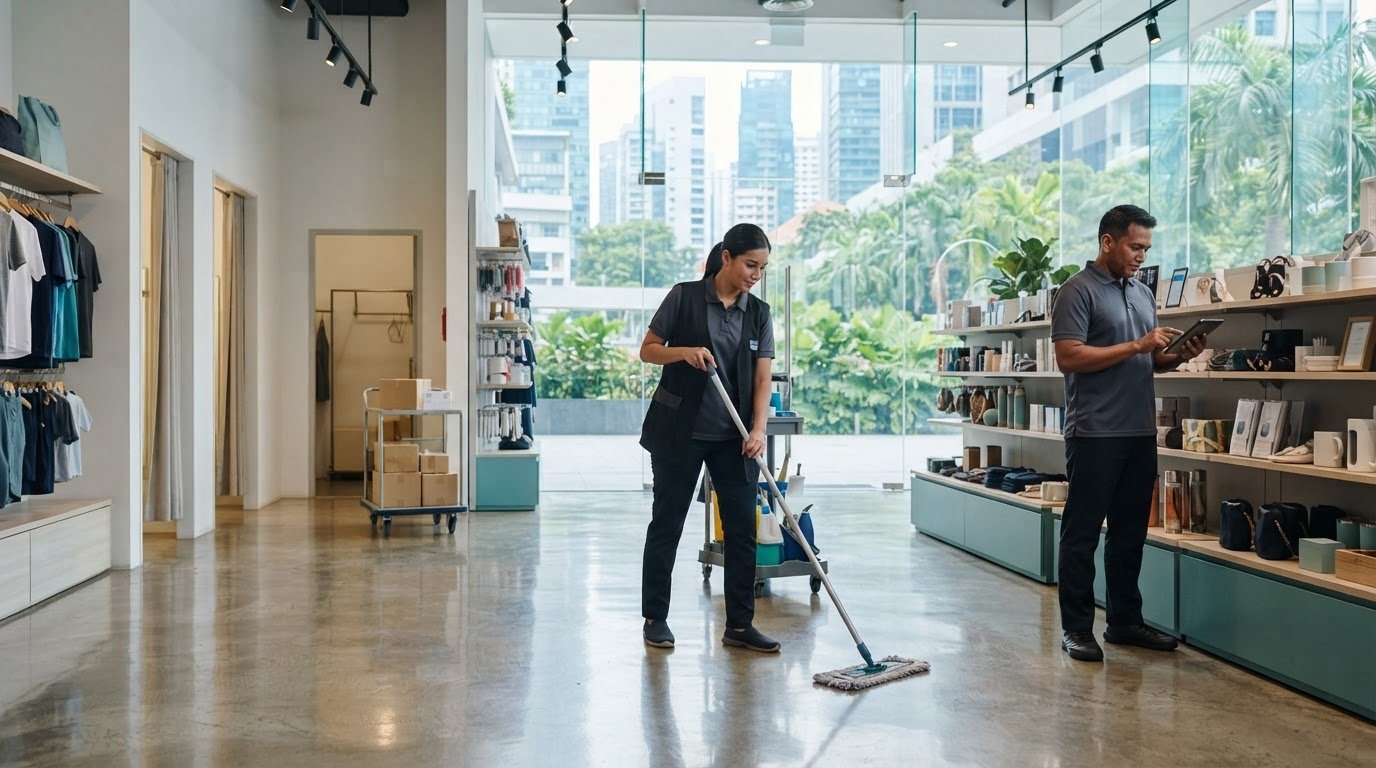
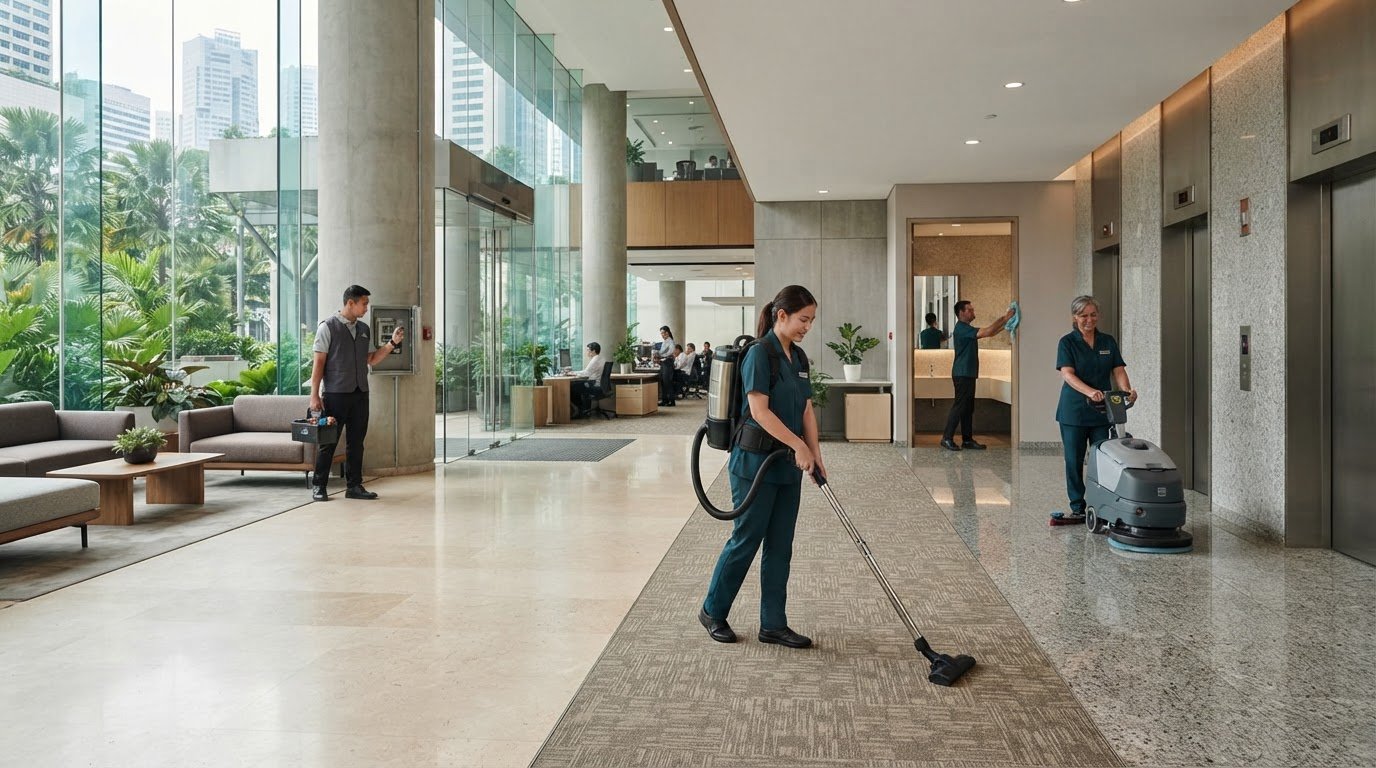
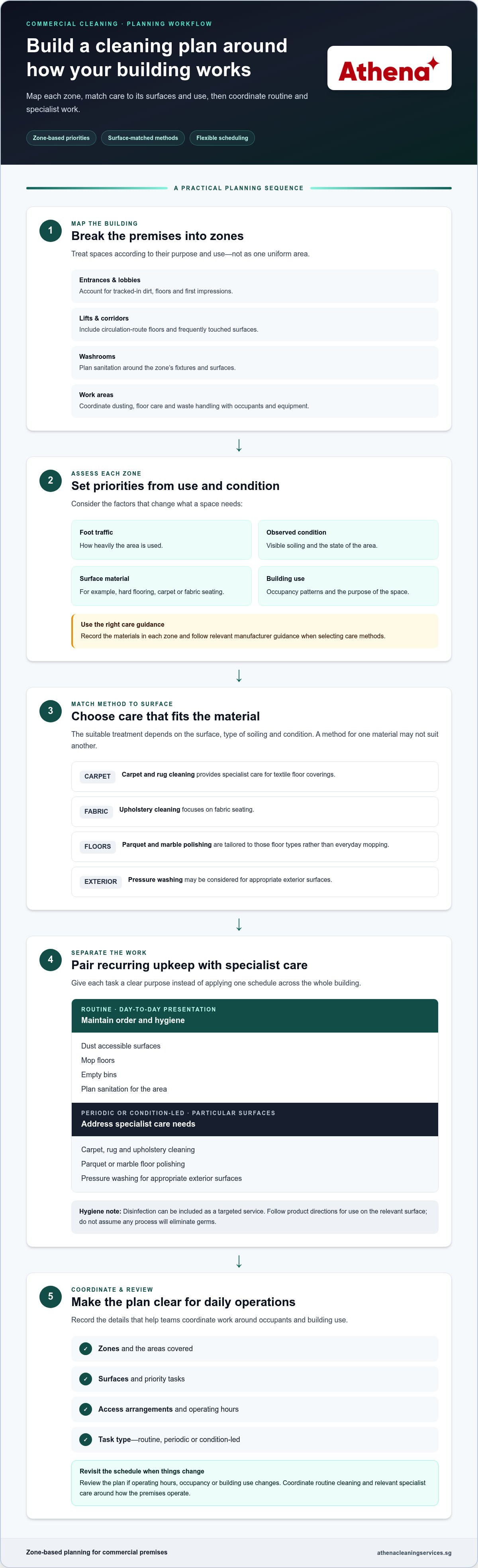
Map the building into zones rather than treating every space alike. Entrances and lobbies collect tracked-in dirt and shape first impressions. Lifts and corridors are busy circulation routes, so include their floors and frequently touched surfaces in the plan. Washrooms have distinct sanitation needs, while work areas may need dusting, floor care and waste handling that is coordinated with occupants and equipment.
Set priorities according to foot traffic, surface types and how each space is used. A hard-floor entrance, carpeted office and shared washroom need different tasks and methods. Record the materials in each zone and any manufacturer guidance relevant to their care.
Routine cleaning and specialist services serve different purposes
Routine cleaning maintains day-to-day presentation through tasks such as dusting accessible surfaces, mopping floors, emptying bins and planned sanitation. Choose methods to suit the material and the type of soiling. The overview of fundamental cleaning principles describes how cleaning can involve different approaches, including mechanical and chemical action.
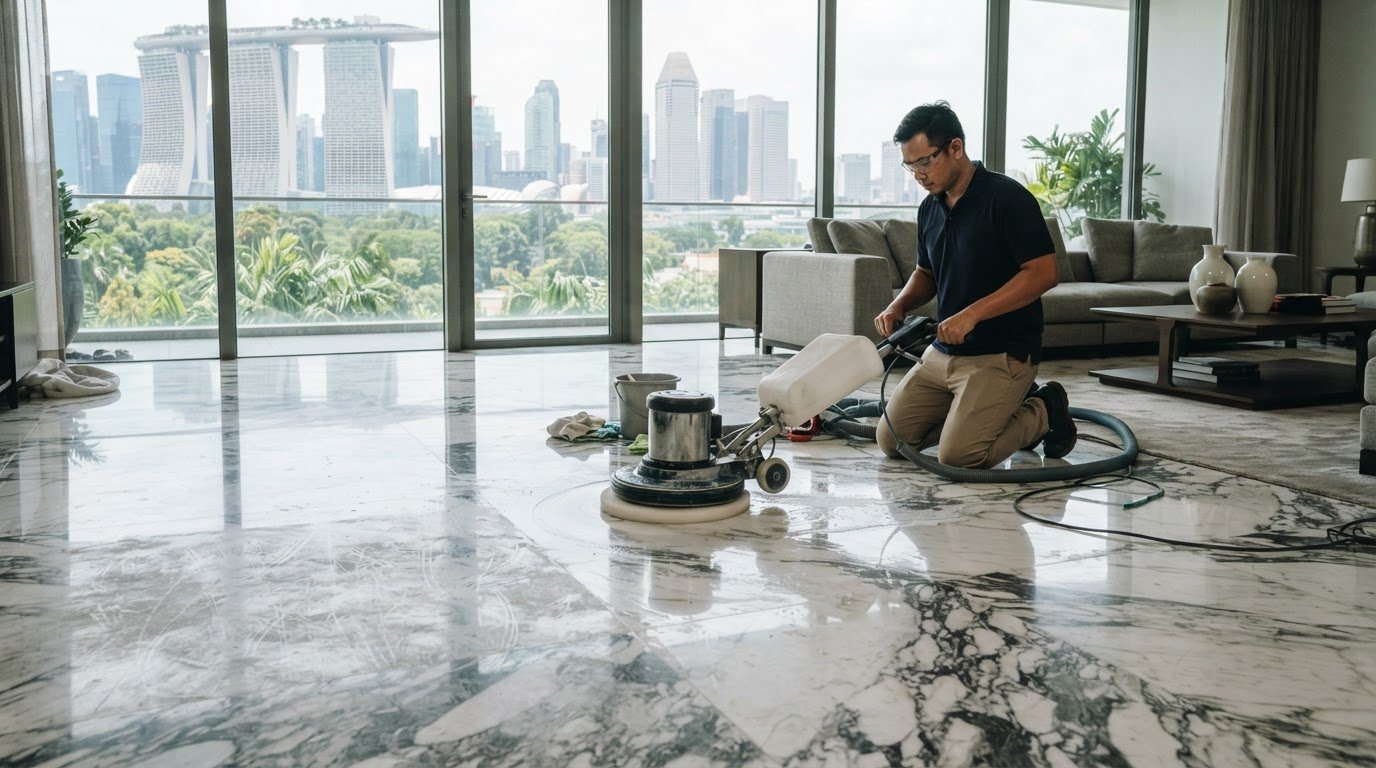
Specialist services focus on surfaces that need more than routine upkeep. Carpet and rug cleaning is for textile floor coverings; upholstery cleaning is for fabric seating; and parquet or marble floor polishing is tailored to those floor types. These services are not substitutes for everyday mopping or dusting.
Keep the distinction clear when defining the scope: routine tasks maintain order, while specialist work addresses particular materials and surfaces. For broader selection context, a professional cleaning company buyer’s guide can help you compare service scope and planning considerations.
How Commercial Building Cleaning Works Across Different Spaces
Effective building cleaning matches the method to the surface, the type of soil and the way people use the space. A routine that suits a tiled entrance may be unsuitable for fabric seating or a polished floor. A well-organised programme accounts for these differences and the needs of shared, occupied premises.
Start with the areas people use most. Entrances and reception spaces collect visible dirt from foot traffic, so include floors and nearby surfaces in the plan. Prioritise lift buttons, door handles and other frequently touched points according to use and observed condition. Plan washroom cleaning and sanitation to suit the fixtures and surfaces. For reference, consult Singapore's environmental cleaning guidelines when considering environmental cleaning requirements for premises.
Shared areas and high-use touchpoints
Base cleaning priorities on how an area is used, its observed condition and its materials. Avoid assuming that any process will eliminate germs. Disinfection can be included as a targeted service within a considered hygiene plan. Follow the product’s directions for appropriate use on the relevant surface. Routine attention to floors and touchpoints helps keep shared spaces orderly, while washroom care should address that zone’s fittings and surfaces.
Carpets, upholstery, floors, and exterior surfaces
Textile surfaces need a different approach from hard floors. Carpet and rug cleaning provides specialist care for floor coverings, while upholstery cleaning focuses on fabric seating. The suitable treatment depends on the material and its condition, so don’t automatically apply a method intended for one surface to another.
Floor care also varies by finish. Parquet and marble may need their respective polishing services, rather than the same treatment used for everyday mopping. For appropriate exterior surfaces, pressure washing can be part of building maintenance. Consider the surface and its condition when selecting the method.
Pair recurring tasks, such as dusting, mopping and sanitation, with periodic or condition-led specialist care. Specify which work maintains day-to-day presentation and which tasks address particular surfaces as needed, rather than imposing one universal frequency across the building. This makes commercial building cleaning services singapore more responsive to how the premises operate. Athena Team Cleaning coordinates routine cleaning with relevant specialist care. Explore Athena’s commercial cleaning services as you shape a suitable plan.
How to Match a Cleaning Schedule to Your Commercial Building
A workable schedule starts with how each space is used, not a one-size-fits-all timetable. Foot traffic, occupancy patterns, visible soiling and the purpose of each area influence its priority. Separate routine presentation tasks from periodic specialist care, then review the plan when operating hours, occupancy or building use changes.
What should determine cleaning frequency?
Set priorities by zone and condition. A busy entrance may need regular attention to keep its floors presentable, while a lower-traffic office may have different day-to-day needs. Plan specialist treatments for carpets, upholstery and floors according to surface condition and use, rather than assigning an unsupported universal interval. The ISSA Clean Standards provide a consistent way to describe and review cleanliness expectations.
| Zone | Use and traffic | Planning priority |
|---|---|---|
| Entrance and reception | Frequent arrivals; visible tracked-in dirt | Prioritise floor presentation and accessible surfaces according to observed condition. |
| Shared washrooms | Shared facilities with ongoing occupant use | Plan routine cleaning and sanitation around use and visible condition. |
| Lifts and corridors | Regular circulation and repeated touchpoints | Include floors, buttons and handles in the zone plan. |
| Work areas | Occupancy varies by team and operating pattern | Coordinate dusting, floor care and waste tasks with access and activity. |
| Carpets and upholstery | Textile surfaces show wear and soiling differently | Schedule specialist care based on condition and use. |
How can cleaning fit around building operations?
Before setting task times, map operating hours, occupied periods, access arrangements and sensitive work areas. Schedule attention to a shared lobby when foot traffic is manageable, and coordinate work in occupied areas with access needs. Clear priorities help cleaning teams and building representatives align work across common spaces and tenant activity.
Cost planning is clearer when the scope separates recurring tasks from periodic or condition-led work. Record the areas covered, tasks assigned to each zone and the conditions that prompt specialist care. This gives decision-makers a practical basis for reviewing the programme without assuming every space needs the same treatment. A monthly commercial-space maintenance checklist can complement this schedule by helping organise recurring building tasks.
For properties with changing occupancy or operating patterns, commercial building cleaning services singapore should allow the schedule to respond to how the building is used. Flexible scheduling helps coordinate cleaning with operations while keeping the scope clear.
How to Prepare a Clear, Low-Disruption Cleaning Plan
Preparation makes a cleaning scope easier to schedule, coordinate and review. Start with a building-wide picture, then record what each area needs and how cleaning can fit around its use. This gives building representatives, occupants and the cleaning team a shared set of priorities.
Map zones, surfaces, and priorities before scheduling
Begin with a zone inventory, not just a list of tasks. Note each area’s purpose, surface types, access arrangements and observed cleaning needs. Flag busy routes and surfaces requiring specialist care so they don’t get lost in a general scope. Then set priorities with relevant building users, keeping routine tasks separate from periodic or condition-led work.
Coordinate timing, access, and service communication
Record operating hours, occupied periods, access procedures and areas where cleaning could interrupt work. Group compatible tasks where practical, while still respecting surface-care requirements. Athena Team Cleaning’s flexible scheduling helps align a service plan with building use and operations, supporting a considered approach to minimising disruption.
Use this sequence to turn observations into a practical brief:
- 1. Inventory the building: List common areas, workspaces, washrooms, circulation routes and exterior areas in scope.
- 2. Record surfaces and condition: Identify flooring, carpets, upholstery and other relevant materials, along with visible cleaning needs.
- 3. Set zone priorities: Note high-traffic routes, frequently used shared spaces and specialist-care requirements.
- 4. Document timing and access: Capture operating hours, occupied periods, entry arrangements and sensitive operational areas.
- 5. Define and review the scope: Specify recurring tasks separately from periodic or condition-led services, then revisit the plan if occupancy or building use changes.
Reusable planning checklist: “List each zone, its use, surfaces, observed needs, access conditions, operating hours and priority tasks before setting the cleaning schedule.”
A clear brief also supports cost planning. Separating regular tasks from specialist services and stating which areas are covered helps decision-makers understand the intended scope and review it as needs change, without relying on vague assumptions about what is included.
For a complementary routine, pair this zone-based plan with a monthly commercial-space maintenance checklist. To shape a cleaning scope around your building’s needs, request a tailored cleaning quote from Athena Team Cleaning.
Commercial Building Cleaning Services from Athena Team Cleaning
A well-maintained commercial property needs a clear plan for everyday cleaning and surfaces that call for specialist attention. Athena Team Cleaning provides commercial cleaning and building maintenance across Singapore, with flexible scheduling to align the work with a building’s use and operating needs. The scope can be shaped around the property’s zones, priorities and cleaning requirements.
A practical mix of routine cleaning and specialist care
Office cleaning and building maintenance provide a foundation for addressing your property’s ongoing needs. Specialist services can then be matched to the spaces and surfaces involved. Carpet and rug cleaning is for textile floor coverings, while upholstery cleaning focuses on fabric seating. Parquet and marble floor polishing provide specific care for those floor types.
Sanitization services can form part of a considered hygiene plan. Pressure washing is also available for appropriate exterior surfaces. It isn’t a universal treatment: the surface and its condition should guide whether it’s suitable. Matching tasks to the building helps keep the scope relevant.
For commercial building cleaning services singapore, coordinating routine cleaning with relevant specialist care gives property managers a clearer view of what each area needs. A shared lobby, carpeted workspace and exterior surface each have different requirements. Athena’s flexible scheduling helps shape service timing around building operations.
Plan the next step with Athena Team Cleaning
Before requesting a quote, outline the building zones to be covered, priority tasks, operating hours and access arrangements. Note specialist needs, such as carpet, upholstery or floor care, and identify exterior surfaces where pressure washing may be relevant. A concise brief makes the intended scope and scheduling considerations easier to discuss.
Athena Team Cleaning coordinates commercial cleaning and building maintenance with relevant specialist services, with scheduling shaped around your property’s needs. Request a tailored quote online through the Athena Team Cleaning homepage or use the company’s contact channels to discuss your building’s requirements.
Build a Cleaning Plan That Works for Your Building
A well-planned cleaning programme treats each zone according to its use, traffic and surfaces. Set clear priorities for routine presentation and hygiene, then plan specialist care for carpets, upholstery and floors based on their condition. Include access arrangements and operating hours so the schedule fits around occupants and day-to-day activity.
That’s the foundation of effective commercial building cleaning services singapore: a defined scope, appropriate care for different surfaces and a schedule shaped around how the property operates. Athena Team Cleaning provides commercial cleaning and building maintenance, with flexible scheduling and relevant specialist services to support a coordinated plan.
Ready to put your building’s requirements into a clear brief? Outline the zones, priorities, timing and specialist needs, then request a tailored commercial cleaning quote online. Athena Team Cleaning can help shape a plan around your property’s use and operations.
Frequently Asked Questions
What do commercial building cleaning services usually include?
For businesses seeking commercial building cleaning services singapore, a plan can combine recurring upkeep with specialist care. Routine tasks may include dusting, mopping, waste handling and sanitation in entrances, reception areas, lifts, corridors, workspaces and washrooms. Specialist options include carpet and rug cleaning, upholstery cleaning and floor polishing. The right scope depends on how the property is used, its traffic patterns and the surfaces that need attention.
How often should a commercial building be professionally cleaned?
There’s no single cleaning frequency that suits every commercial building. Consider foot traffic, occupancy patterns, the function of each space and how quickly visible soiling appears. A busy entrance or shared washroom may need more regular attention than a lower-use area, while carpet cleaning or floor polishing can be planned according to surface condition. Review the schedule as building use or occupancy changes, and distinguish routine tasks from specialist care.
Can commercial cleaning be scheduled outside business hours?
Cleaning times can be planned around business operations, occupancy and access arrangements. Athena Team Cleaning offers flexible scheduling to help align the programme with a property’s practical requirements and reduce unnecessary disruption. Share the building’s operating periods, sensitive areas and access procedures when preparing the scope. The schedule can then be shaped around those details instead of assuming every task needs to happen at the same time.
How do you create a cleaning plan for a multi-use commercial building?
Start by mapping the building into zones, such as shared facilities, work areas, circulation routes and exterior spaces. For each zone, record its use, surface types, visible cleaning needs and priority tasks. Then document access arrangements and operating periods, including times when work could interrupt occupants. Use this information to define a tailored scope that distinguishes recurring upkeep from specialist services, and revisit the plan if building use changes.
What is the difference between routine building cleaning and deep cleaning?
Routine cleaning maintains day-to-day presentation through tasks such as dusting, mopping, waste handling and planned sanitation. More intensive or specialist attention focuses on particular surfaces or needs, such as carpet and rug cleaning, upholstery care, or polishing parquet and marble floors. The terms can be used differently across cleaning scopes, so define the tasks and areas clearly rather than relying on a label alone.
Do commercial building cleaning services include carpet and upholstery cleaning?
Carpet and upholstery cleaning are specialist care options that can be included in a commercial cleaning scope. Carpet and rug cleaning addresses textile floor coverings, while upholstery cleaning focuses on fabric furnishings. The appropriate method depends on the material, its condition and how the space is used. Including these tasks alongside routine cleaning can make the plan more complete, while keeping specialist care distinct from everyday dusting and mopping.
How can I request a commercial building cleaning quote in Singapore?
Prepare a brief outline of the building zones, requirements, priority tasks and preferred timing. Include relevant details about surfaces, access arrangements and operating periods, as well as specialist needs such as carpet, upholstery or floor care. This gives Athena Team Cleaning a clear starting point for discussing a suitable scope. Request a quote online or contact the team through the company’s contact channels.
Frequently Asked Questions
Which areas belong in a commercial building cleaning plan?
What should determine cleaning frequency?
How can cleaning fit around building operations?
What do commercial building cleaning services usually include?
How often should a commercial building be professionally cleaned?
Can commercial cleaning be scheduled outside business hours?
How do you create a cleaning plan for a multi-use commercial building?
What is the difference between routine building cleaning and deep cleaning?
Do commercial building cleaning services include carpet and upholstery cleaning?
How can I request a commercial building cleaning quote in Singapore?
Related articles