
Hourly cleaner in Singapore: what you pay and what you get
In this article
- What an hourly cleaner does in a Singapore home
- How much an hourly cleaner costs in Singapore in 2026
- How many hours your home needs
- Humidity, mould and why frequency matters
- Company crew or independent cleaner
- How to book an hourly cleaner without surprises
- When an hourly cleaner is the wrong choice
- Comparison at a glance
- Frequently asked questions
- Sources
- Related Athena cleaning services in Singapore
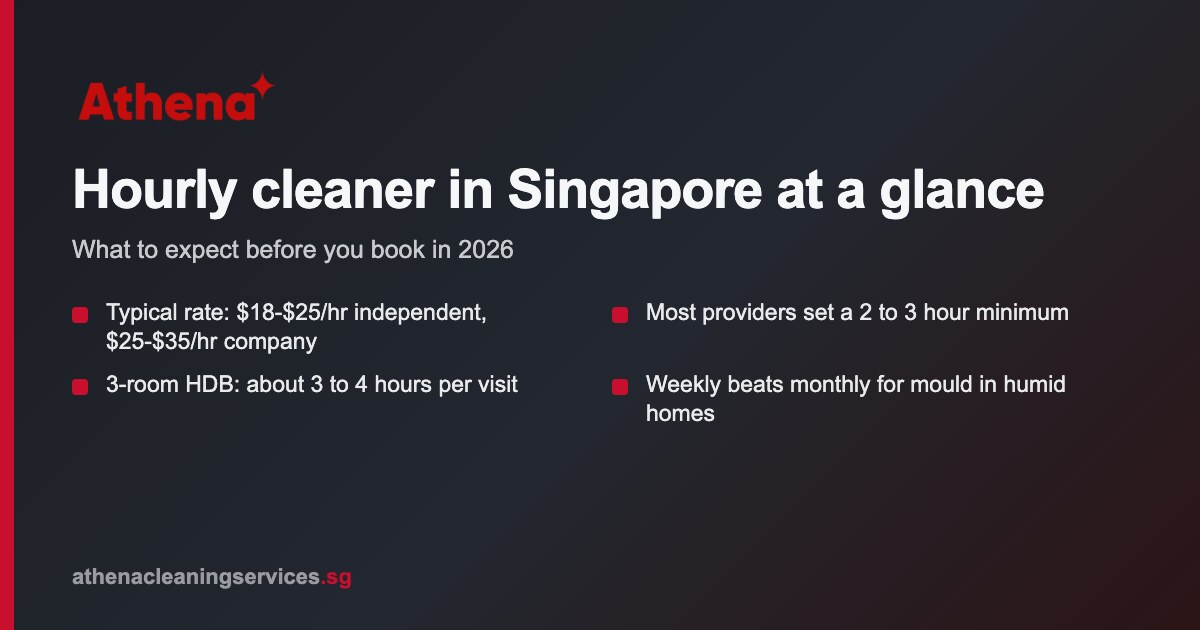
An hourly cleaner in Singapore is a cleaner you book by the hour, usually in a block of 3 to 4 hours, to clean your home on a set schedule. In 2026 the typical rate is roughly $20 to $35 per hour before GST, depending on whether you hire an independent cleaner or a company, and most providers set a minimum of 2 to 3 hours per visit.
Most households book the same slot every week or every fortnight. That rhythm matters in our humid climate, where bathrooms and kitchens go grubby quickly. This guide covers what a session includes, what it costs, how many hours your HDB or condo needs, and how to book without surprises.
What an hourly cleaner does in a Singapore home
An hourly cleaner works through a list of routine chores within a fixed block of time, then leaves. You pay only for the hours booked, which is the big difference from a live-in helper. Think of it as upkeep. The point is to hold a lived-in home where it is; digging a flat out after months of neglect is a different booking.
A typical session covers
- Floors swept, vacuumed and mopped
- Wiping kitchen counters, the stovetop and the outside of appliances
- Scrubbing toilets, basins, showers and bathroom floors
- Shelves, tables and anything within reach dusted
- Fresh sheets on the beds, rubbish out, a quick tidy
Some providers also fold laundry, iron clothes or wash dishes. Others charge extra or leave these out entirely, so confirm the task list before you book. Two quotes at the same hourly rate can buy very different amounts of work.
What is usually left out
Heavy jobs do not fit a routine visit. Inside-oven scrubbing, ceiling fans at height, exterior window cleaning, sofa shampooing and mattress treatment all need specific tools and more time. If you want fabric care, a dedicated professional upholstery cleaner in Singapore will do a far better job than a general cleaner with a damp cloth.
How much an hourly cleaner costs in Singapore in 2026
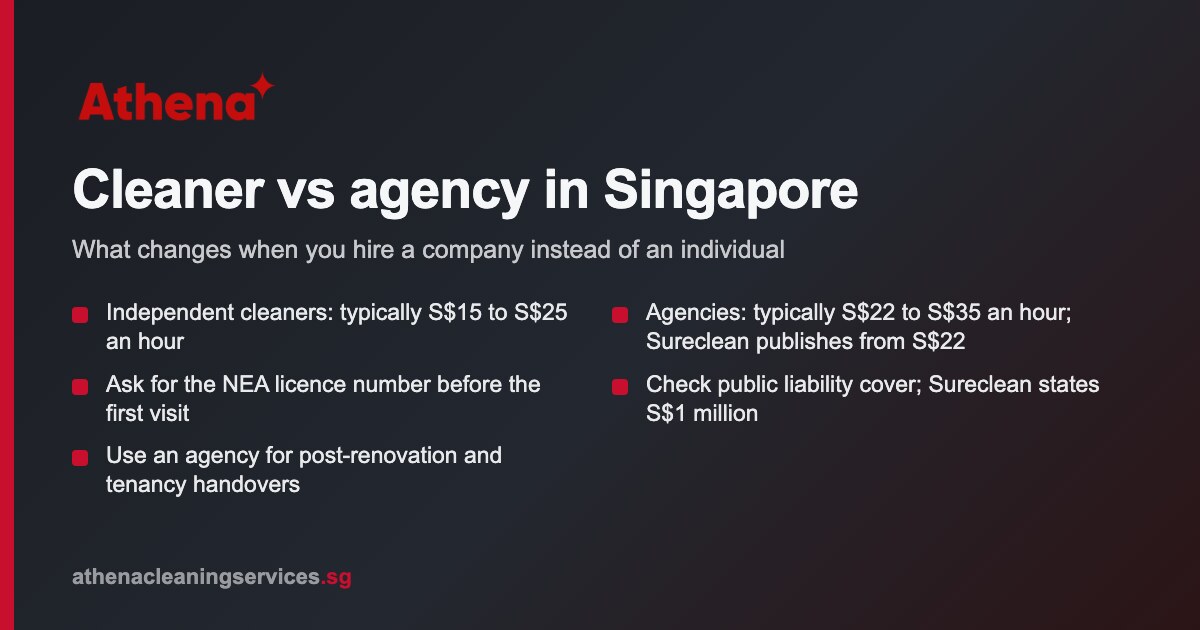
Rates depend mostly on who employs the cleaner. As a typical range, independent cleaners found through word of mouth or online marketplaces charge about $18 to $25 per hour. A company that employs and insures its own staff sits higher, at about $25 to $35. Ask about GST. Most quotes leave it out.
Treat any single headline rate with caution. Companies often advertise their lowest rate, which may only apply to long contracts or weekday mornings. Weekend, public holiday and last-minute bookings usually cost more. The Consumers Association of Singapore (CASE) regularly advises consumers to get the full price, cancellation terms and refund policy in writing before paying any service provider, and that advice applies directly here.
Costs people forget to ask about
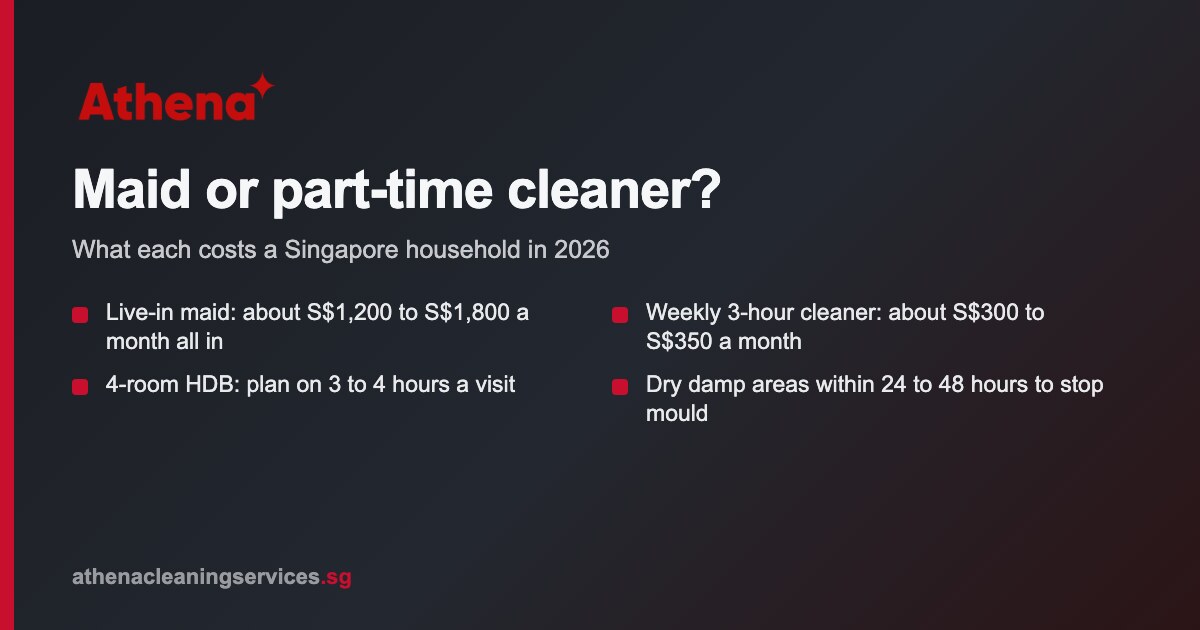
- Minimum hours: a 2 or 3 hour minimum means a quick 90 minute job still costs the full block.
- Equipment and supplies: some cleaners bring a vacuum and products, others expect you to provide them.
- Transport or platform fees: marketplaces can add a booking fee on top of the hourly rate.
- Package discounts: prepaying several visits often lowers the effective hourly rate, but ties you in.
Compare the all-in cost of one visit for the same task list. The hourly figure on its own tells you little. A $22 per hour cleaner who does not bring a vacuum can cost more in practice than a $28 per hour crew who arrives fully equipped.
How many hours your home needs
Hours depend on floor area, the number of bathrooms, how many people and pets live there, and how often someone cleans. A tidy two-person flat cleaned weekly needs far less time than a family of five with a dog. The table below gives typical starting points for Singapore homes, which you can adjust after the first visit.
As a rule of thumb, bathrooms and the kitchen eat the most time because they carry the grease, soap scum and mould. If you have three bathrooms, expect a large share of your session to disappear there.
Start with more time, then trim
First visits almost always run longer, because the cleaner is learning your layout and clearing a backlog. Book a longer first session, then reduce the hours once the home is under control. This costs less over three months than booking too little, getting a rushed job, and then paying for an extra visit.
If you have just finished renovation work, do not use an hourly slot to deal with dust and debris. Builders' dust needs a dedicated clean, and our guide to 5 essential steps for effective post renovation cleaning in Singapore explains why.
Humidity, mould and why frequency matters
Singapore sits a degree off the equator, so relative humidity stays above 70 percent for most of the year. Mould starts in damp bathrooms, window tracks and the back of a wardrobe. In an HDB bathroom with one small window, a surface that stays wet can show spots within days.
The US EPA notes that the way to control mould indoors is to control moisture, and its mold cleanup guidance for the home recommends drying wet areas quickly and scrubbing small patches with detergent and water, which works while the mould is young. Old mould stains grout and sealant, and that is when a regular cleaner pays for itself: a monthly visit lets it settle in, while a weekly or fortnightly one gets there first.
Weekly or fortnightly?
Weekly suits families with children, pets, anyone with allergies, and homes where cooking is heavy. Fortnightly works for couples or singles who are out most of the day and keep things tidy between visits. If you are unsure, start fortnightly and move to weekly if the bathroom or kitchen is clearly slipping.
The US EPA guidance on improving your indoor environment also points to regular cleaning, source control and ventilation as basic steps for indoor air. Bedding is a good example: regular sheet changes and periodic mattress care cut down on dust mites, and our guide to 10 effective methods for allergen removal and mattress cleaning in Singapore covers what an hourly visit cannot.
Company crew or independent cleaner
This is the biggest decision after price. Both models work, and the right one depends on how much risk and admin you want to carry.
Independent cleaners
Hiring directly or through a marketplace is usually cheaper per hour, and you may build a good relationship with one person who knows your home. The trade-offs are practical: if your cleaner is sick or on leave, there is often no replacement. Insurance for accidental damage is rarely included, and you are responsible for checking work pass status. Under Singapore rules, employers and hirers have obligations around who is allowed to work, so ask to see valid documentation.
Cleaning companies
A company sends trained staff, supplies a backup when someone is unavailable and usually carries insurance. You pay more per hour for that reliability. Look for a business with a clear task list, a written policy on breakages, and a way to raise complaints. The National Environment Agency (NEA) sets the public cleanliness framework that licensed cleaning businesses work within, so it is worth asking any company about its licensing and standards.
If your home is a rental you will hand back, an hourly cleaner is not the right tool for the final handover. A specialist service such as the best end of tenancy cleaning in Singapore is built to meet landlord and agent checklists, which routine sessions are not.
How to book an hourly cleaner without surprises
When hourly cleaning disappoints, the usual cause is a vague brief. Five minutes of preparation fixes most of it.
- Write a task list. Rank your top five jobs, such as bathrooms, kitchen and floors, so the cleaner knows what to finish first if time runs short.
- Confirm the hours and the minimum booking, then ask what happens if the cleaner finishes early or needs extra time.
- Clarify supplies. Agree who provides the vacuum, mop and products, and tell the cleaner about any surfaces that need gentle products, such as marble or timber.
- Ask about cancellations. Find out the notice period and whether rescheduling costs anything.
- Do a walkthrough after the first visit. Note anything missed and send it the same day, while it is fresh.
Be at home or leave clear access instructions for the first session. Secure valuables and tell the cleaner about pets. For condos, arrange visitor passes with the management office in advance so the cleaner is not stuck at the gate.
For windows, remember that exterior panes and high-rise glass need trained teams and proper safety gear. Compare options in our roundup of the best window cleaning services in Singapore rather than asking an hourly cleaner to reach out of a high-floor window.
When an hourly cleaner is the wrong choice
Hourly cleaning is built for maintenance. It struggles with big resets. If your home has months of grease, heavy mould, limescale or construction dust, a deep clean first is cheaper and gives better results. After that, an hourly schedule keeps the standard up for far less effort.
It is also the wrong tool for specialist surfaces. Leather, delicate fabrics and mattresses carry their own risks, and the wrong product can cause permanent damage. If you own a leather sofa, read our 5 expert tips for leather sofa cleaning in Singapore before letting anyone wipe it with a general cleaner.
Finally, think about the volume of work. If you routinely need more than 8 hours a week, a fixed-scope contract or a mix of a weekly cleaner and occasional specialist visits may cost less than stacking hourly sessions. Run the numbers over a month before you commit.
Comparison at a glance
| Home type | Typical session | Typical cost per visit | Suggested frequency |
|---|---|---|---|
| Studio or 2-room HDB | 2 to 3 hours | $40 to $105 | Fortnightly |
| 3-room HDB | 3 to 4 hours | $60 to $140 | Fortnightly or weekly |
| 4-room or 5-room HDB / BTO | 4 hours | $80 to $140 | Weekly |
| 3-bedroom condo | 4 to 5 hours | $100 to $175 | Weekly |
| Landed home or large condo | 6 to 8 hours | $150 to $280 | Weekly, often split across two cleaners |
Frequently asked questions
How much does an hourly cleaner cost in Singapore?
As a typical range in 2026, independent cleaners charge about $18 to $25 per hour and cleaning companies about $25 to $35 per hour, usually before GST. Most providers set a 2 to 3 hour minimum, so a short job still costs the full block. Compare the all-in price per visit for the same task list rather than the hourly rate alone.
How many hours does an HDB flat need?
A 3-room HDB usually needs 3 to 4 hours, and a 4-room or 5-room flat about 4 hours, for a routine clean. Add time if you have several bathrooms, pets or young children. Book a longer first visit to clear any backlog, then reduce the hours once the home is under control.
Should I book a weekly or fortnightly hourly cleaner?
Weekly is better for families, pets, allergy sufferers and heavy cooking, because bathrooms and kitchens collect grime and mould quickly in Singapore's humidity. Fortnightly works for couples or singles who are out most days. If you are unsure, start fortnightly and switch to weekly if you see mould or grease building up.
Is an hourly cleaner insured against breakages?
It depends on who you hire. Cleaning companies often carry insurance and have a written breakage policy, while independent cleaners and marketplace workers usually do not. Ask for the policy in writing before the first visit, and report any damage on the same day so it can be handled properly.
What should I do before the first visit?
Write a ranked task list, agree who supplies equipment and products, and confirm the minimum hours and cancellation terms. Put away valuables, tell the cleaner about pets and fragile surfaces, and arrange condo visitor access in advance. A short walkthrough afterwards helps you correct anything missed on the next visit.
Can an hourly cleaner do a deep clean or post-renovation clean?
Not well. Hourly sessions are designed for upkeep, and heavy grease, limescale, mould or builders' dust needs more time, tools and sometimes different products. Book a one-time deep clean or a post-renovation clean first, then use an hourly schedule to keep the home at that standard.
Sources
- Consumers Association of Singapore (CASE)
- mold cleanup guidance for the home
- US EPA guidance on improving your indoor environment
- National Environment Agency (NEA)
Related Athena cleaning services in Singapore
Related articles