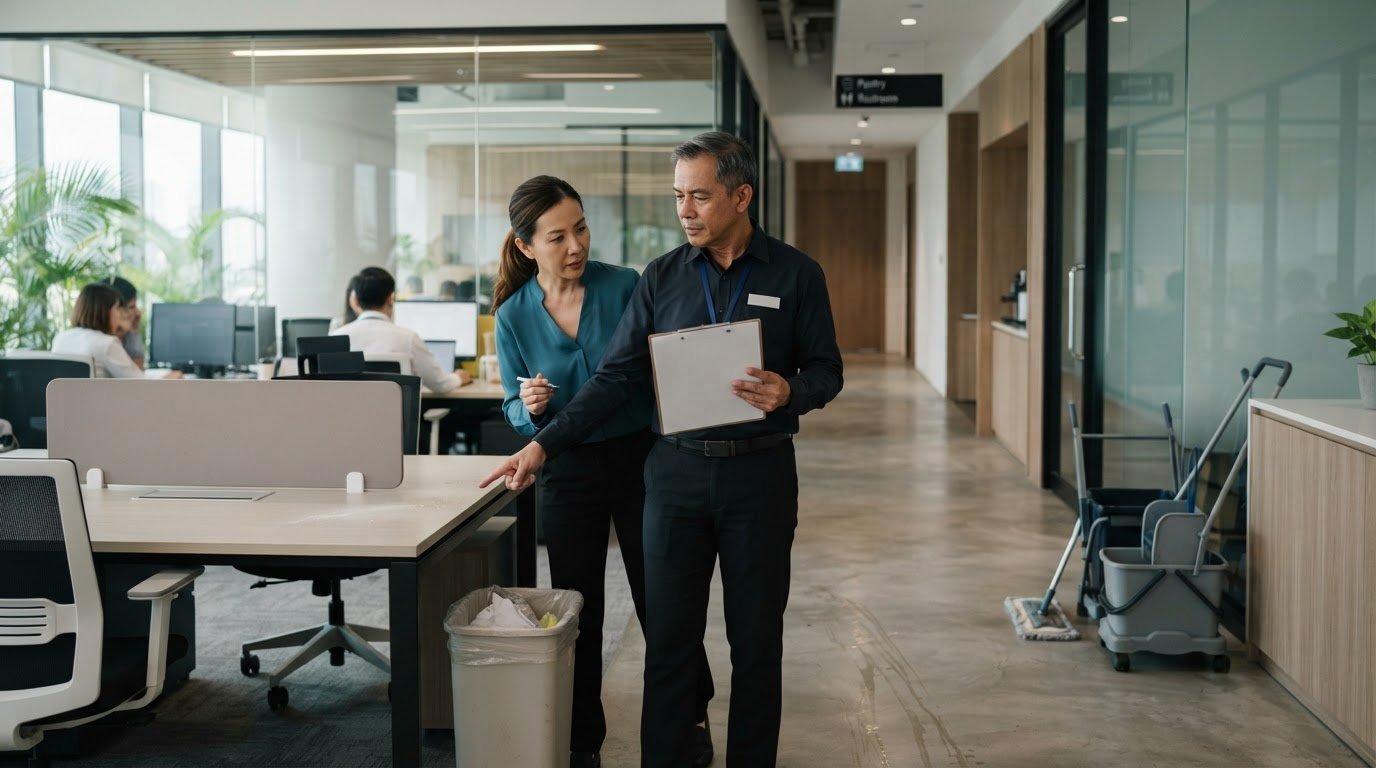

How Clean Offices Boost Productivity: 2026 Guide

In this article
- Key Takeaways
- Table of Contents
- How a Clean Office Can Improve Productivity in Everyday Work
- Why Office Cleanliness Can Support Focus, Comfort, and Wellbeing
- Does a Clean Office Really Improve Productivity, or Is It Just Appearance?
- How to Build an Office Cleaning Routine That Supports Productive Work
- How Professional Office Cleaning Can Support a More Productive Workplace
- Make your next workplace improvement practical
- Frequently Asked Questions
What if a clean office improves productivity not by making people work faster, but by removing small obstacles that slow them down? Cluttered desks, dusty shared equipment and meeting rooms that are not ready to use can distract employees and make everyday tasks less comfortable. Cleanliness does not guarantee better performance, but it can help reduce avoidable friction.
If a shared space feels neglected, it is reasonable to ask whether cleaning can make a practical difference. Look at the conditions people encounter throughout the workday: clear surfaces, unobstructed walkways and maintained common areas can make it easier to focus and use the office comfortably.
This guide explains realistic ways cleanliness can support focus, comfort and smoother work, without relying on sweeping claims or unsupported statistics. You will learn how to spot distractions, prioritise frequently used spaces and surfaces, and set practical routines for maintaining a more welcoming workplace. The goal is to identify small sources of friction your team can address.
Key Takeaways
- Understand how a clean office improves productivity by reducing everyday distractions, while recognising that cleanliness alone cannot guarantee better performance.
- Distinguish a well-maintained workspace from a perfectly styled one. Focus on conditions that make work and shared spaces more comfortable to use.
- Identify office friction points, then prioritise shared areas and assign clear cleaning responsibilities based on how each space is used.
- Assess cleanliness alongside other influences on work, including workload, management and workspace design.
- Professional office cleaning and building maintenance can support a consistently maintained workplace and let employees focus on their responsibilities.
How a Clean Office Can Improve Productivity in Everyday Work
A clean office does not need to look like a showroom. It needs regular care: waste cleared, surfaces cleaned and shared areas left ready to use. Personal items and active project materials do not automatically make a space unclean. The practical test is whether the office helps people get on with their work or creates avoidable interruptions.
Productivity is better understood as useful work completed than as hours spent at a desk. Searching for a meeting-room marker or clearing a table before a discussion takes time without moving the task forward. These small delays may not affect performance on their own, but repeated interruptions can make a workday less smooth.
Office cleanliness supports productivity by reducing everyday friction between employees and the work they need to complete. This is a practical connection, not a promise of measurable performance gains. The physical setting is one part of a wider work environment, alongside responsibilities and workplace design. The importance of a positive work environment is best understood in that broader context.
Cleanliness, organisation, and productivity are connected, but different
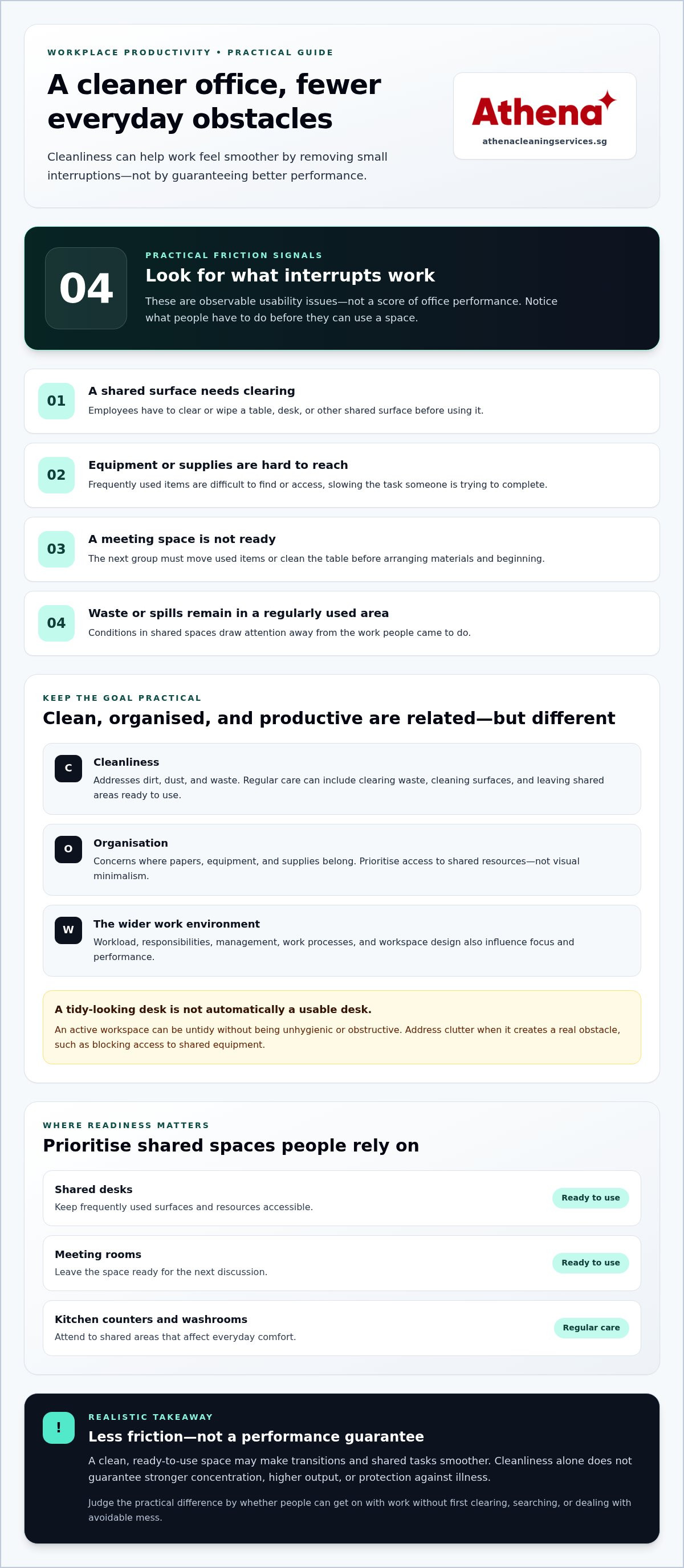
Cleaning addresses dirt, dust and waste. Organisation concerns where papers, equipment and supplies belong. The two can reinforce each other, but they are not interchangeable. A desk can be clean yet difficult to use if documents are scattered. An active desk can look untidy without being unhygienic or getting in the way of work.
Focus on whether clutter creates a real obstacle. Files that block access to shared equipment or supplies without a clear storage place can slow a task. Personal notes arranged to suit an employee’s workflow may be useful. The goal is not visual minimalism. It is keeping work surfaces and common resources accessible.
Where employees may notice the difference
Shared areas make the effects of maintenance especially visible because different people rely on them throughout the day. Consider a desk used by rotating staff, a meeting room booked for consecutive discussions, or a kitchen counter where people prepare refreshments. A clean, ready-to-use space can remove the need to tidy before starting, although the benefit depends on the team and its routines.
Washrooms also affect how comfortable and cared-for a workplace feels. An untidy shared area or a maintenance issue can draw attention away from the task at hand. Look for practical signs of friction rather than judging appearance alone:
- Employees have to clear or wipe a shared surface before using it.
- Frequently used equipment or supplies are hard to find or reach.
- Meeting spaces are not ready for the next group.
- Waste or spills are left in areas people regularly use.
These observations help distinguish a genuine usability concern from a personal preference about tidiness. Address the conditions that interrupt work, and cleanliness becomes a practical part of a productive workplace, not a claim that spotless surroundings automatically produce better results.
Why Office Cleanliness Can Support Focus, Comfort, and Wellbeing
A maintained workspace can make it easier to settle into tasks by reducing minor interruptions. For example, if a shared table is ready to use, a meeting can begin without someone first clearing cups and wiping the surface. Removing waste and caring for commonly used areas can also reduce the time employees spend dealing with conditions that distract from their work.
A well-maintained office may support work by reducing small, repeated interruptions. That is different from claiming that cleaning directly increases output. Concentration and performance also depend on workload, work processes, management and individual needs.
How a less distracting workspace can help concentration
Visible mess, unpleasant odours or a shared surface that is not ready to use can draw attention away from the next task. These conditions do not affect everyone in the same way, but they can create extra work. An employee preparing a meeting room, for instance, may need to move used items and wipe the table before arranging materials. A ready room makes that transition more straightforward.
The point is not that a spotless room guarantees stronger attention. A workspace with fewer obvious obstacles can help people move from one activity to another without first resolving avoidable practical issues.
How cleanliness may influence comfort and morale
Communal spaces shape the daily experience of an office. If a kitchen counter, washroom or meeting area regularly feels neglected, employees may find the environment less comfortable. Consistent care can show that shared spaces matter and that the people using them are considered. That perception may contribute to morale, but it is not a reliable measure of how an employee feels or performs.
Keep health claims measured, too. Cleaning removes dirt and waste, while sanitization and disinfection involve specific approaches to surfaces and contamination. Neither routine cleaning nor a tidy appearance guarantees protection against illness. Health is influenced by multiple factors, including how spaces are used and the nature of exposure.
To assess whether cleanliness is making a practical difference, notice what employees have to do before they can use a space. Are they clearing a desk, searching for a clean meeting surface, or avoiding a communal area because it feels unpleasant? These observations identify specific sources of friction without making assumptions about productivity or wellbeing. They can also help distinguish a cleaning issue from a storage or maintenance issue.
Respond to the conditions people actually encounter. Shared areas may need different attention from individual workstations, and a busy office may have different requirements from a smaller team. A suitable routine aims for spaces that are clean and usable, not perfection. Athena Team Cleaning’s commercial office cleaning services can support ongoing care alongside the office’s day-to-day practices.
Does a Clean Office Really Improve Productivity, or Is It Just Appearance?
A clean office can support productive work, but it is not a complete productivity strategy. Maintenance can remove practical obstacles, such as a shared space that is not ready to use. It cannot set clear priorities, balance an excessive workload or fix a process that forces employees to repeat tasks. Treat cleanliness as one condition that helps work run more smoothly, not as a substitute for good management or thoughtful workplace design.
Cleanliness is a supportive condition for performance, not a guarantee of it. This distinction matters when interpreting claims about how a clean office improves productivity. A more usable workspace is an observable change. A measurable rise in output is a separate claim that requires stronger evidence.
What cleanliness can influence, and what it cannot
Office cleaning can help keep common areas usable and may reduce distractions linked to neglected spaces. Those benefits are practical but limited. Employees may spend less time dealing with a dirty or unavailable work area, while the work itself remains demanding. Cleaning will not resolve unclear roles, unmanageable workloads, poor communication or inefficient systems.
Use this distinction to set realistic expectations. If a team identifies a recurring cleaning-related interruption, address it and observe whether the obstacle eases. Do not assume that a tidier office alone will improve concentration, morale, attendance or completed work. Each outcome depends on other conditions, and a change that helps one team may have little effect on another.
How to judge productivity claims responsibly
Before relying on a headline figure, look beyond the percentage. Ask who conducted the research, which workers or workplaces were included, and what the researchers measured. A survey asking employees whether they feel more productive captures their perceptions. It does not establish that they completed more work, made fewer errors or took fewer days off.
Study design matters, too. If employees in cleaner offices also have better management or more usable layouts, cleanliness may not explain the difference by itself. Two factors occurring together does not automatically show that one caused the other. Stronger conclusions require transparent methods and a clear way to separate cleaning from other workplace influences.
- Check the source: Is the research clearly attributed, with enough detail to assess its methods?
- Check the measure: Does it report employee opinion, observed behaviour or a defined work outcome?
- Check the comparison: Were relevant differences between workplaces considered?
- Check the claim: Does the conclusion stay within what the evidence can support?
Be cautious with bold productivity percentages when the original source and methodology are unavailable. Rather than repeating an unsupported figure, describe the reasonable mechanism: maintenance may reduce avoidable friction and make shared spaces easier to use. Then assess your own workplace through concrete observations, keeping workload, management and workspace design in view.
How to Build an Office Cleaning Routine That Supports Productive Work
A useful cleaning routine starts with the problems employees actually encounter, not a checklist copied from another workplace. Notice which areas become uncomfortable or difficult to use, then match attention to how often and intensively those spaces are used. This turns the question of how a clean office improves productivity into a practical review of workplace friction, rather than a promise of higher output.
Build the routine in clear steps:
- Identify friction points. Observe recurring mess, spills, complaints or delays. Invite employees to flag shared areas that need attention.
- Prioritise by use. Start with spaces used frequently or by many people, then consider less-used areas according to their condition and purpose.
- Assign responsibility. Set out which tasks belong to employees, which are part of building maintenance, and which require professional office cleaning. Clear ownership helps prevent tasks from being overlooked or duplicated.
- Review and adjust. Compare feedback and observations over time. Revise priorities when the team’s use of the office changes.
Prioritise shared areas that affect daily work
Shared desks, meeting rooms, kitchens, washrooms and walkways are useful starting points because their condition affects more than one person. Note what makes each space less ready or comfortable: a meeting surface that needs clearing, a kitchen area employees avoid, or a walkway that is repeatedly obstructed. Plan cleaning around how these spaces are used, so the work does not disrupt normal operations unnecessarily.
Keep the review specific. Record the area, the issue and how it affects use rather than relying on a broad label such as “the office is messy.” This helps distinguish a cleaning need from a storage problem, maintenance issue or unclear responsibility.
- Which shared areas generate repeated comments?
- Where do employees need to tidy before they can use the space?
- Are any work areas regularly disrupted during cleaning?
Review whether the routine is working
Use employee feedback alongside what you can observe. A simple record of recurring complaints, room readiness and repeated interruptions can reveal whether the same problems continue. Ask whether shared areas are available for their intended use, and note any changes in how often employees raise specific concerns. These indicators assess the routine, not individual performance.
Review patterns over time and adjust where needed. If employees still report the same issue, revisit responsibility, attention and timing. Avoid claiming productivity gains unless you have a reliable way to measure work outcomes and account for other influences. A cleaner or more usable space is a meaningful result in its own right, even without attributing a change in output to cleaning alone.
For help maintaining shared workspaces, request a quote for office cleaning from Athena Team Cleaning. A tailored approach can align professional cleaning with the needs and use of your workplace.
How Professional Office Cleaning Can Support a More Productive Workplace
Employees can keep personal work areas orderly, but shared spaces and specialist cleaning needs often call for a coordinated approach. Professional office cleaning can help maintain common areas, so staff spend less time managing workplace upkeep and more time on their responsibilities. It is practical support for a well-maintained environment, not a promise of higher productivity.
Athena Team Cleaning provides commercial office cleaning and building maintenance. The right support depends on the workplace: an office with frequently used meeting rooms may have different priorities from one with shared desks or busy communal areas. Identify the conditions that repeatedly interrupt work, then choose cleaning or maintenance support that addresses them.
Match cleaning support to the workplace
Start with how your office operates. Note the layout, how employees use shared spaces, and which areas need focused attention. Carpet and rug cleaning or upholstery cleaning may suit particular surfaces, while sanitization services provide specialised support for workplace hygiene needs. Flexible scheduling can help plan cleaning around office operations, as one routine may not suit every workplace.
A tailored plan can keep priorities clear while helping limit disruption to normal work. The professional cleaning company buyer’s guide offers further considerations for assessing cleaning support and workplace requirements.
Choose a practical next step
Before arranging professional support, write down the cleanliness concerns that recur most often. Include the shared spaces affected, the issue employees encounter, and any operating routines that matter for planning. Specific observations make it easier to discuss what needs attention without overstating what cleaning can achieve.
Professional cleaning works best as part of a broader effort to maintain a comfortable, usable workplace. It can take recurring cleaning tasks off employees’ hands, while clear internal responsibilities help keep everyday spaces in good order between services. Together, these measures may reduce avoidable friction, although wider productivity also depends on management, workload and work design.
Athena Team Cleaning provides commercial office cleaning and building maintenance, with specialist cleaning for carpets, upholstery and sanitization needs. Visit the website to request a quote and discuss a suitable approach for your office.
Make your next workplace improvement practical
Choose one recurring cleanliness concern and make it the starting point for your next step. Note where it happens, who uses the space and what would make it easier to use. That gives your team a clear, realistic priority instead of an abstract goal to make the whole office “more productive.”
Keep expectations grounded. The value of considering how a clean office improves productivity is in finding practical ways to reduce friction, not expecting a spotless space to solve wider workplace challenges. Shape a thoughtful cleaning plan around your office’s needs and operating routines, then refine it as those needs change.
Ready to discuss support for your workplace? Request a quote for professional office cleaning from Athena Team Cleaning and take a practical step towards a more comfortable, well-maintained office.
Frequently Asked Questions
Can a clean office improve productivity without a major redesign?
Yes. A cleaner workspace may help without changing its layout. Keeping shared equipment in a consistent, accessible place and ensuring desks are ready to use can remove small obstacles from routine tasks. That is one practical way to understand how a clean office improves productivity, but it does not guarantee more output. Results depend on the team’s needs, processes and management, so treat cleaning as one part of a supportive workplace.
Is office cleanliness the same as office organisation?
No. Cleanliness and organisation address different needs. A workstation can be free of dirt but still difficult to use if essential supplies are stored inconsistently. Conversely, a well-labelled supply cabinet may still need cleaning. To identify the right task, ask whether employees are dealing with residue or waste, or struggling to find and return items. That distinction can direct attention to cleaning surfaces or agreeing on shared storage arrangements.
How can managers tell whether workplace cleanliness is affecting productivity?
Look for repeated, specific disruptions rather than relying on a general impression. Note how often a team has to relocate a discussion because a room is unavailable, or whether staff repeatedly report an unusable shared workstation. Invite employees to describe when and where the issue occurs. These observations can help refine cleaning priorities, but they do not prove that cleaning caused a change in output.
What happens if office cleaning tasks are left entirely to employees?
Some everyday upkeep may be straightforward, but leaving all cleaning to employees can create uncertainty about who handles shared areas and tasks requiring specialist attention. One team member may wipe a pantry counter while another assumes someone else will do it. Set simple expectations for tidying after use, then establish a clear arrangement for broader cleaning needs. This helps avoid uneven responsibility without making employees accountable for every workplace cleaning requirement.
Does office cleaning include carpets and upholstery?
Some surfaces need specialist care beyond general office cleaning. Athena Team Cleaning provides carpet and rug cleaning, as well as upholstery cleaning, for workplaces with these needs. A business may want attention focused on carpeted areas or fabric seating in shared rooms. When requesting a quote, describe the surfaces and areas you want addressed so the discussion reflects your workplace’s requirements.
Is disinfection always necessary for a productive office?
No. Intensive disinfection is not automatically required to support a productive workplace. Cleaning and disinfection serve different purposes, and the appropriate approach depends on the office’s circumstances and needs. Maintain everyday cleanliness across commonly used surfaces, then consider specialised sanitization where appropriate. Do not treat disinfection as a guarantee against illness or as proof that employees will perform better. Keep the plan proportionate to the concern.
Frequently Asked Questions
Can a clean office improve productivity without a major redesign?
Is office cleanliness the same as office organisation?
How can managers tell whether workplace cleanliness is affecting productivity?
What happens if office cleaning tasks are left entirely to employees?
Does office cleaning include carpets and upholstery?
Is disinfection always necessary for a productive office?
Related articles