
How to clean walls and remove stains in Singapore homes
In this article
- Why walls stain so fast in Singapore homes
- Check your paint before you clean
- Step-by-step method that works on most walls
- Remove common stains one by one
- Mould, damp and humidity on walls
- What it costs: DIY versus professional in Singapore
- When to call a professional
- Comparison at a glance
- Frequently asked questions
- Sources
- Related Athena cleaning services in Singapore
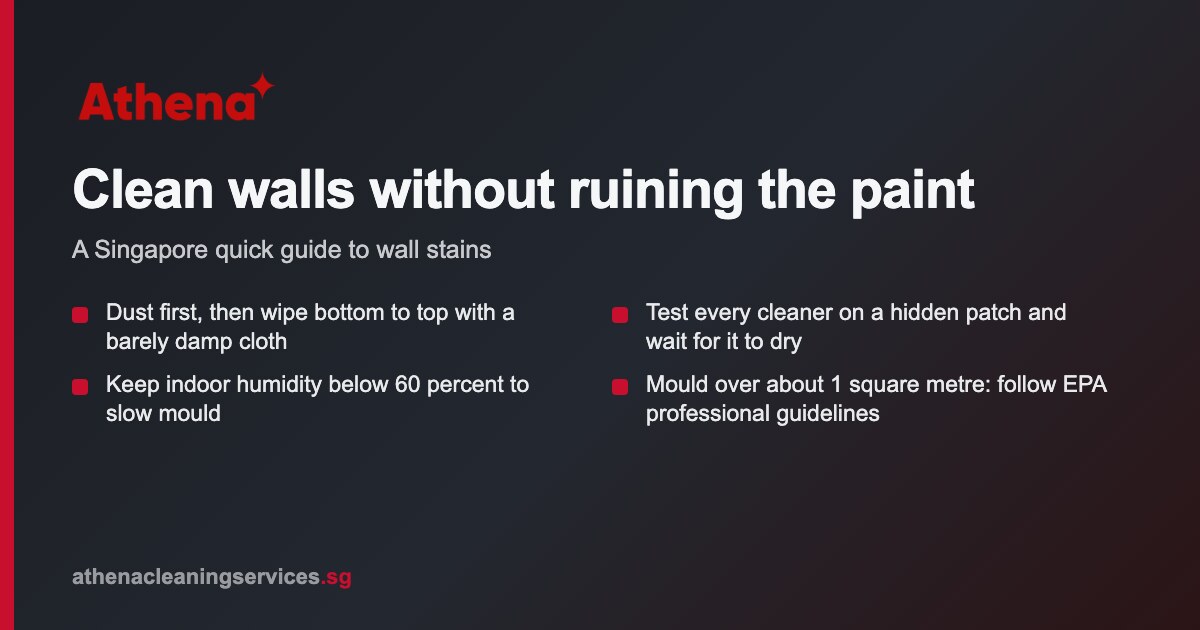
Here is how to clean walls and remove stains in Singapore homes without damaging the paint: dust the wall first, then wipe it with a soft microfibre cloth wrung out in warm water with a few drops of dishwashing liquid, and work from the bottom up. Treat each stain with the mildest product that works, such as baking soda paste for crayon and scuffs, diluted degreaser for kitchen grease and a mould cleaner for black spots, and always try it on a hidden patch first.
Most HDB, BTO and condo walls are painted in matt water-based emulsion, which is soft and porous. Scrub it hard and the area turns shiny, and that patch shows up every afternoon when the sun hits the wall. The rest of this guide covers the paint types, the method, stain-by-stain fixes, mould in our humid climate, typical costs in SGD and when to hand the job over.
Why walls stain so fast in Singapore homes
Walls here pick up dirt faster than in temperate countries, and the climate is the main reason. Relative humidity often sits above 80 percent, so airborne dust and cooking oil stick to paint instead of drifting off. A wall that looks fine in the morning can feel faintly tacky by the weekend, especially near the kitchen.
Layout plays a part too. Newer BTOs and condos have open kitchens, so oil vapour travels into the living room and settles on the nearest wall and ceiling. Homes with young children get crayon, sticker residue and sticky handprints at a height of about one metre. Homes with pets get rub lines along the bottom of the wall. Light switches, door frames and the corridor wall beside the shoe cabinet collect a grey band from hands and bags.
Then there is damp. Wardrobes pushed flat against an external wall, bathrooms with weak ventilation and rooms where the air-con is switched off all day give mould what it needs. Dealing with the source matters as much as the cleaning, which we come back to below.
The usual suspects
- Hand and furniture contact: grey bands, scuffs and bag rubs in corridors and around switches.
- Cooking: a thin yellow film on kitchen and living-room walls that holds dust.
- Humidity: black or green spots behind wardrobes, in corners and near window frames.
- Leaks: brown rings or bubbling paint, usually from a pipe, a window seal or the unit above.
Check your paint before you clean
The finish decides how hard you can work. Most Singapore homes use matt or low-sheen emulsion, and many owners repaint after collecting keys, so your walls may not match what the developer used. Look at the wall from the side under a light. A flat, chalky look means matt. A faint glow means eggshell or satin. A clear shine means semi-gloss, which you usually find on doors and skirting.
Matt paint is the most delicate. Dab and wipe it, never scrub, and keep abrasive pads away. Eggshell and satin take gentle washing well, which is why they are popular in kitchens and children's rooms, while semi-gloss handles a proper wipe-down. Anti-mould bathroom paint resists moisture, but strong bleach can still fade the colour.
Do a patch test every time
Pick a spot behind a sofa or inside a wardrobe. Apply the cleaner on a cloth, wait two minutes, wipe, and let it dry fully before judging. Wet paint always looks darker, so the verdict only counts once the patch is dry. If you see colour on the cloth, a dull spot or a ring, stop and use something milder.
Newly painted walls need time
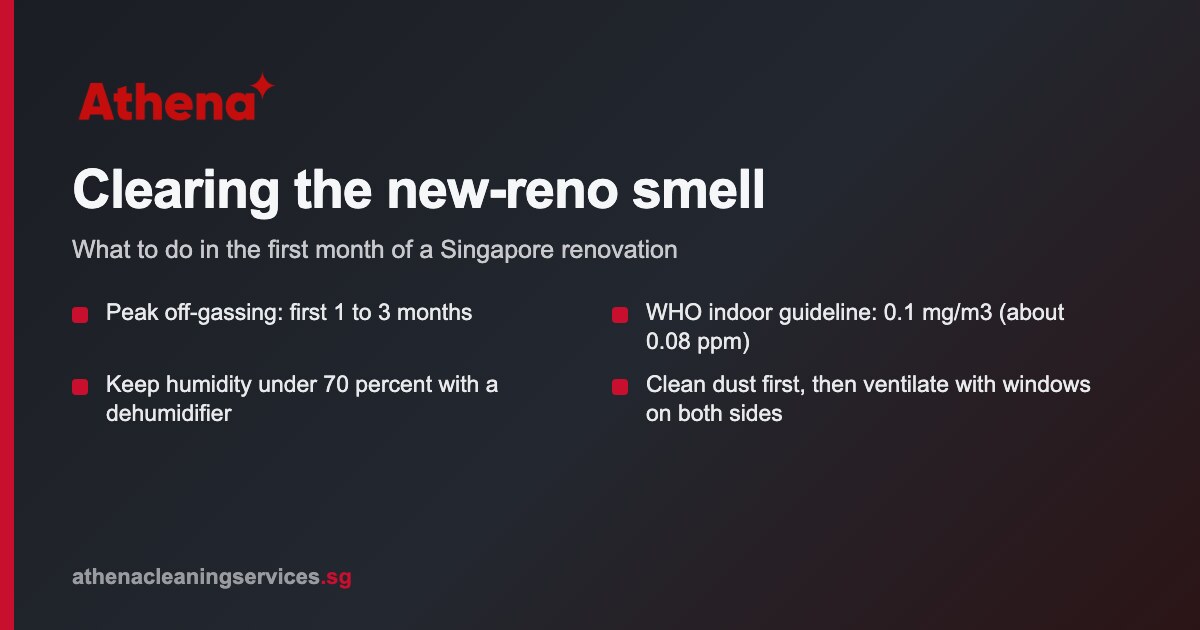
Fresh paint is still curing for roughly two to four weeks, even though it feels dry in a day, and wiping it early can lift colour. If you have just finished renovation work, leave the walls alone for the first month and start with dusting only. Windows open and fans on also help the paint cure, and the US EPA indoor air quality guidance recommends good ventilation after painting and renovation.
Step-by-step method that works on most walls
Start gentle and only step up when the gentler option fails. This order protects the paint and saves you from repainting a whole room because of one over-scrubbed patch.
What you need
- A soft broom or a dry microfibre mop for dusting (about S$10 to S$20 if you do not own one).
- Two or three clean microfibre cloths and a bucket of warm water.
- Dishwashing liquid, white vinegar and baking soda from any supermarket.
- A white melamine sponge, used lightly and only on eggshell or glossier paint.
- A dry towel and a step stool.
The steps
First, dust from the top of the wall down, and take in the ceiling edge and the tops of door frames. Wet dust turns into a grey smear, so do not skip this. Second, mix a few drops of dishwashing liquid into a litre of warm water. Wring the cloth until it is just damp, since a dripping cloth leaves tide lines on matt paint.
Third, wipe in light, even strokes from the bottom upward. Washing top to bottom lets dirty water run over a clean surface and leave streaks that are hard to remove later. Fourth, go over the section with a second cloth dampened in plain water, then pat it dry with a towel. Work in sections of about one square metre so no area sits damp for long. Finally, open the windows or run a fan for an hour. In a closed Singapore room, a damp wall can take several hours to dry, and trapped moisture is how new mould starts.
If you are cleaning after a renovation, wall dust is only one part of the job. Our guide to the 5 essential steps for effective post renovation cleaning in Singapore shows the order to follow so the dust you remove does not settle back on clean surfaces.
Remove common stains one by one
Once the general wipe-down is done, deal with the stubborn spots individually. Always work from the edge of a stain towards the centre so it does not spread, and rinse the area with a damp cloth afterwards so no residue attracts new dirt.
Crayon, pen and sticker residue
Make a paste of baking soda and a little water, dab it on a damp cloth and rub very gently in small circles. For sticker residue, soften it with a cloth soaked in warm water for a few minutes, then peel and wipe with diluted dishwashing liquid. Skip the harsh solvents on matt paint because they can strip the colour along with the stain.
Scuffs and grey hand bands
Scuffs from bags, chairs and shoes often lift with a dry melamine sponge, which works like a very fine eraser. Use almost no pressure and test first, as this is the quickest way to burnish matt paint. Around switches, the warm soapy wipe is usually enough. A thin card held behind the switch plate keeps water out of the socket, and you should switch the power off at the board for that area before wiping near it.
Kitchen grease and cooking film
Dilute a kitchen degreaser according to the label, usually about one part in ten, and apply it to a cloth rather than spraying the wall. Wipe, then rinse twice with clean water. Grease that has sat for years may leave a lighter patch once removed, because the surrounding paint has yellowed. That is a sign the whole wall needs repainting, not more scrubbing.
Nicotine and incense film
Smoke and heavy incense burning leave a sticky yellow-brown layer. Wash with warm water and dishwashing liquid first. If the yellow remains, a diluted vinegar solution of one part to four parts water can help, but test it first. Seal stubborn nicotine stains with a stain-blocking primer before repainting, or they will bleed through the new colour.
Water stains
A brown ring means water got in from somewhere. Cleaning it will not fix the cause, so trace the leak first, whether a pipe, a window seal or the flat above. Once the wall is fully dry, which can take a week or more, wipe the stain and repaint with a stain-blocking primer. If the unit above is the source, report it to your management office or town council rather than patching it yourself repeatedly.
Mould, damp and humidity on walls
Black or green spots in corners, behind wardrobes and around bathroom doors are the most common wall problem in Singapore homes. They come back quickly if the damp is still there, so treat this as two jobs: remove the growth, then remove the cause.
Cleaning small patches
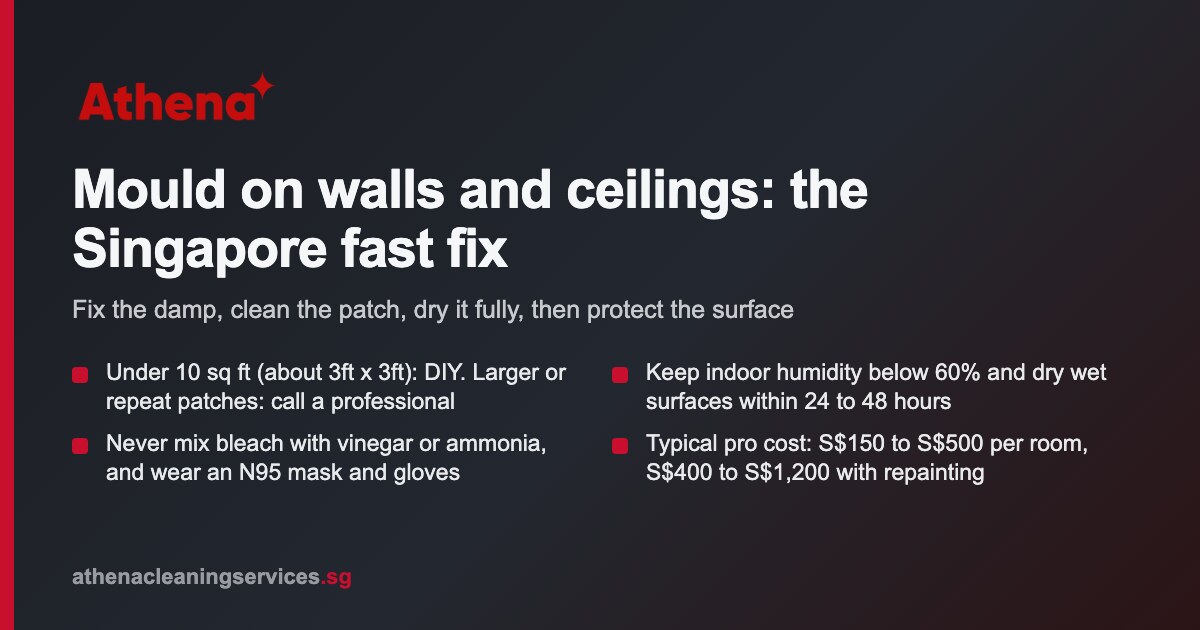
For an area smaller than about a few hand-widths, wear gloves and a mask, then scrub gently with a cloth and detergent in water, and let the wall dry completely. The US EPA mold cleanup guidance says that for areas larger than roughly 10 square feet (about 1 square metre) you should follow professional cleanup guidelines or call a trained contractor. Never mix bleach with ammonia or other cleaners, as this produces toxic fumes. In a small HDB bathroom with little airflow, open the window and run the exhaust fan during and after cleaning.
Stopping it coming back
The EPA advises keeping indoor humidity below 60 percent, ideally between 30 and 50 percent. A cheap hygrometer from an electronics shop, around S$10 to S$25, tells you where you stand. In practice, that means running the air-con or a dehumidifier on dry mode for a few hours, pulling wardrobes 5 to 10 centimetres away from external walls, and opening windows for cross-ventilation on dry days. Fix leaking pipes and failed window seals promptly.
Damp can also affect people in the home, especially those with asthma or allergies. HealthHub has general guidance on healthy living at home, and if someone is wheezing or coughing more in one room, speak to a doctor rather than just scrubbing harder. Soft furnishings in the same room hold moisture too, so if you are dealing with a damp room, look at the bedding as well. Our guide on 10 effective methods for allergen removal and mattress cleaning in Singapore covers the next place allergens collect.
What it costs: DIY versus professional in Singapore
Cleaning a wall yourself costs very little, and most of the supplies are already in the kitchen. A basic kit of microfibre cloths, baking soda, a degreaser and a mould cleaner usually comes to S$20 to S$40 as a typical range at local supermarkets and hardware shops. The real cost is time: a careful wipe-down of one bedroom takes about 1.5 to 3 hours, and a whole 4-room HDB flat can take a full weekend.
Professional wall cleaning is usually bundled into a deep clean or spring clean rather than sold alone. Typical pricing for a full-home clean in Singapore runs from a few hundred dollars for a small flat to well over S$1,000 for a large condo or landed home, and the final figure depends on size and scope. Always ask for a written quote on WhatsApp before booking, and check that the quote lists what is included. The Consumers Association of Singapore (CASE) is a useful place to check your rights if a service falls short.
If the stain will not lift, a fresh coat of paint may cost less than another round of cleaning. Painting a single room in a typical HDB flat often costs a few hundred dollars as a typical range, and a full flat repaint commonly runs into the low thousands, depending on paint brand, wall condition and access, so compare quotes for both before deciding. The table below sets the methods side by side.
When to call a professional
Do it yourself when the marks are light, the area is small and the paint is in good shape. Call someone when the job is bigger than a weekend, or when a wrong move costs more than the service.
Signs it is time to hand over
- Mould covering more than about one square metre, or coming back within weeks of cleaning.
- Walls above stairs, high ceilings or double-volume spaces in condos and landed homes where ladders are unsafe.
- Delicate finishes such as textured paint, wallpaper or fabric-wrapped panels, which can stain or peel from a wet cloth.
- Move-in or move-out deadlines, when walls, floors and windows all need to be done in one day.
Walls are rarely the only surface that needs attention after renovation or a long vacancy. Floors usually need a separate method, and our guide to how to clean floor tiles after renovation covers the grout and cement residue that walls shed onto them. Carpets in the same room also hold the dust you knock down, so it helps to plan around how often to clean carpets in Singapore.
A professional team brings extension poles, the right cloths and a routine that avoids streaks. For a stain you cannot identify, a pro can also test it on a hidden spot before touching the visible wall. That is worth paying for when the alternative is a repaint.
Comparison at a glance
| Stain | Best method | Typical time | Typical supply cost (SGD) | Safe on matt paint? |
|---|---|---|---|---|
| General dust and grey bands | Dry dusting, then warm water with dishwashing liquid | 10 to 15 minutes per wall | Under S$5 | Yes, if wrung out well |
| Crayon and pen | Baking soda paste on a damp cloth, light circles | 10 to 20 minutes per patch | Under S$3 | Test first, dab only |
| Scuffs from bags and chairs | Dry melamine sponge, very light pressure | 5 to 10 minutes per patch | S$3 to S$6 | Risky, may burnish |
| Kitchen grease | Diluted degreaser on cloth, rinse twice | 20 to 30 minutes per wall | S$5 to S$12 | Better on eggshell or glossier |
| Black mould spots | Detergent scrub or mould cleaner, then dry fully | 30 to 60 minutes plus drying | S$8 to S$20 | Test first, can fade colour |
| Nicotine film | Warm soapy wipe, diluted vinegar, then stain-blocking primer | 1 to 2 hours per room | S$5 to S$40 with primer | Test first |
| Water stain rings | Fix the leak, dry the wall, prime and repaint | Several days including drying | S$20 to S$60 for primer and paint | Cleaning alone will not hide it |
Frequently asked questions
What is the safest way to clean painted walls in an HDB flat?
Dust the wall, then wipe with a barely damp microfibre cloth in warm water with a few drops of dishwashing liquid, and work from the bottom up. Dry the area with a towel and let air circulate. Most HDB walls are matt emulsion, so avoid scrubbing, abrasive pads and strong chemicals, and test on a hidden spot first.
How do I remove black mould from walls in Singapore?
Wear gloves and a mask, scrub the patch with detergent and water, and let the wall dry completely. For areas larger than about one square metre, the US EPA advises following professional cleanup guidelines. Then fix the cause, such as a leak or poor airflow, and aim to keep indoor humidity below 60 percent.
Can I use bleach on my walls?
Use it sparingly and only after a patch test. Bleach can fade coloured paint and leave pale spots, and it must never be mixed with ammonia or other cleaners because the fumes are toxic. For most stains, dishwashing liquid, baking soda or a labelled mould cleaner works with less risk to the paint.
How often should I clean the walls in my Singapore home?
Dust walls every one to two months and do a light wipe of high-touch areas, such as around switches and door frames, every few months. Kitchen walls near the stove need a wipe every month or two if you cook often. Check wardrobe walls and bathroom corners for mould every few weeks during the wetter months.
How much does professional wall cleaning cost in Singapore?
Wall cleaning is usually part of a deep clean, so the price depends on home size and scope. As a typical range, small flats start from a few hundred dollars and large condos or landed homes can exceed S$1,000. Ask for a written quote listing what is included, and compare it with the cost of repainting if the stains are old.
Should I repaint instead of cleaning stained walls?
Repaint if the stain has soaked through, such as old water rings or nicotine, or if cleaning leaves a shiny or patchy area. Use a stain-blocking primer first so the mark does not return. For light dirt, scuffs and surface mould, cleaning is cheaper and keeps the existing finish intact.
Sources
Related Athena cleaning services in Singapore
Related articles