
How to remove mould from walls and ceilings in Singapore homes
In this article
- Why mould keeps coming back on Singapore walls and ceilings
- Check the patch before you clean it
- Step-by-step: how to remove mould from painted walls
- Removing mould from ceilings, bathrooms and false ceilings
- When to call a professional and what it costs in Singapore
- How to stop mould coming back in HDB, BTO and condo homes
- Comparison at a glance
- Frequently asked questions
- Sources
- Related Athena cleaning services in Singapore
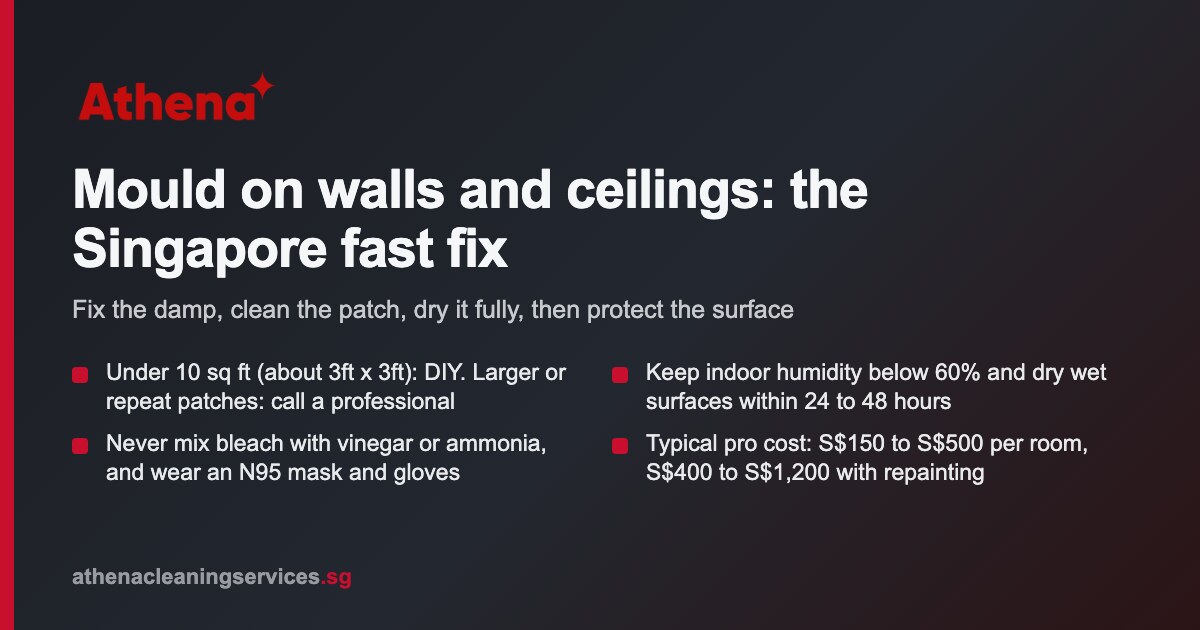
Here is how to remove mould from walls and ceilings in Singapore: find and stop the moisture source, wipe the patch with a mild detergent solution (or diluted bleach on sealed, painted surfaces), dry it fully within 24 to 48 hours, then repaint with anti-mould paint if a stain is left. A patch smaller than about 10 square feet (roughly 3ft by 3ft) is a sensible DIY job. Anything bigger, or a patch that returns within weeks, points to a damp problem that scrubbing will not fix.
Singapore gives mould an easy run. Outdoor humidity regularly sits between 70% and 90%, rain can arrive on any day of the year, and many HDB and condo bathrooms, store rooms and bedroom corners hold still, damp air. This guide covers what to check first, the exact cleaning steps for walls and ceilings, what professionals charge in SGD, and how to keep the patches from coming back.
Why mould keeps coming back on Singapore walls and ceilings
Mould needs three things: moisture, a surface to feed on, and time. Singapore supplies the first two all year. Paint, plaster, skim coat, wallpaper and dust all give mould something to live on, so the real variable is how long a surface stays damp. Once a wall or ceiling stays wet or very humid for a day or two, spores that are already floating in the air settle and start to grow. That is why a wall can look clean on Monday and show grey-green dots by the following weekend after a rainy spell.
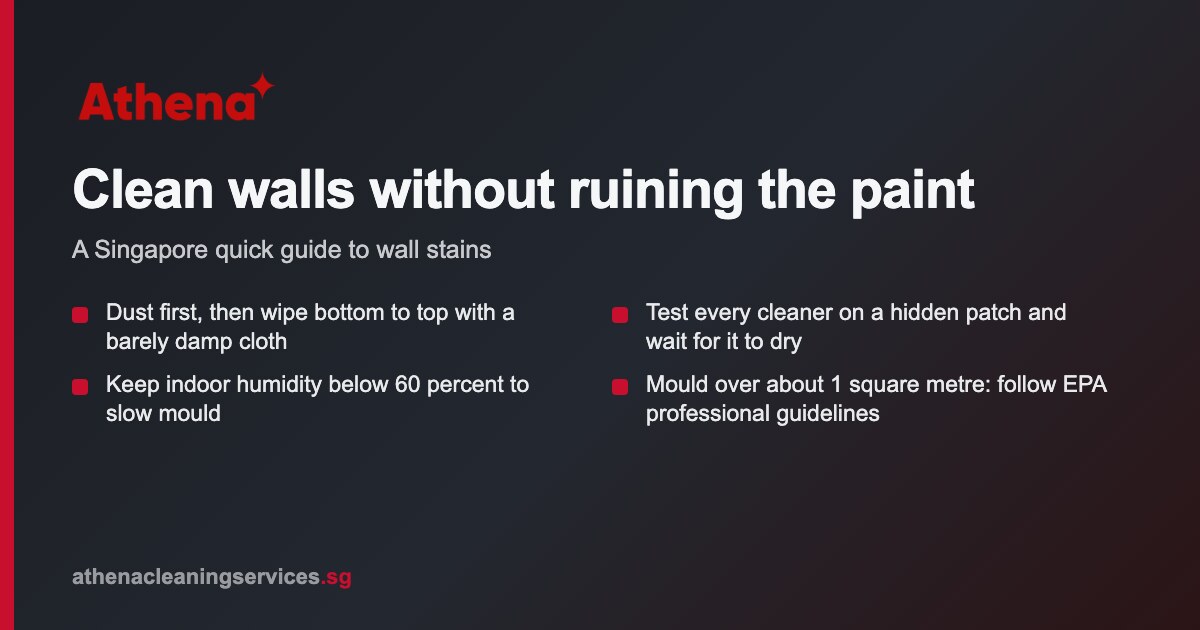
The US EPA advises keeping indoor humidity below 60%, ideally between 30% and 50%, and drying any wet material within 24 to 48 hours (see the EPA guide to mould cleanup in your home). A closed-up Singapore bedroom with the air-con off during the day can easily pass 75%, so the target is realistic only if you manage airflow on purpose.
The usual sources in HDB, BTO and condo units
Most recurring patches trace back to a short list of causes. Check these before you pick up a sponge:
- Leaking or sweating pipes behind a wall, often shown by a stain with a darker edge that grows after showers.
- Seepage from the unit above, which shows up as brown rings on a ceiling that turn black at the edges.
- Window frames and sliding doors that let rain track in during monsoon months.
- Bathrooms with no window and a weak exhaust fan, where steam sits on the ceiling for hours.
- Wardrobes and furniture pushed flat against an external wall, which stops air from reaching the paint.
- Air-con units that drip condensate or have blocked drain lines that wet the wall or false ceiling beneath.
If the moisture source is a leak inside a wall or from a neighbour, a clean only treats the symptom. In an HDB flat, a ceiling leak from the unit above usually needs the management office or the neighbour involved, and you should take dated photos before anything is repainted.
Check the patch before you clean it
Spend five minutes on inspection. It decides whether you are doing a 30-minute wipe-down or booking a repair. Look at the size of the patch, its colour, and whether the surface feels soft, bubbled or powdery. Press gently on the paint. If it flakes off in sheets, or the plaster beneath is crumbly or wet, moisture is coming through the wall and the surface needs repair before cleaning means anything.
Size is the quickest filter. The EPA suggests that mould covering more than about 10 square feet is a job to hand to a professional, and the same rule works well for Singapore homes. Also hand it over if you see mould around an air-con ducting, inside a false ceiling, or on a ceiling that is visibly sagging. Those are hard to dry and easy to spread by accident.
Mould, mildew or just a stain?
Surface mildew tends to be flat, grey or white and wipes away easily. Established mould is often black, green or dark brown, looks fuzzy or speckled, and leaves a shadow even after wiping. Water stains are brown or yellow with a clear edge and no fuzz. A quick test: dab a small area with diluted household bleach. If the spot lightens within a minute or two, it is probably mould. If it does not, you are looking at a water stain or a dirt mark that needs a different fix.
People with asthma, allergies, young children or elderly relatives at home should be careful about disturbing a large patch. For general guidance on keeping your living space healthy, HealthHub has plain-language resources from Singapore's Ministry of Health. If anyone in the home has breathing trouble that gets worse indoors, speak to a doctor rather than treating it as a cleaning problem alone.
Step-by-step: how to remove mould from painted walls
This method suits emulsion-painted plaster walls, the finish in most HDB and condo bedrooms and living rooms. Open windows, switch on a fan pointing outward, and keep children and pets out of the room while you work. Close any air-con vent in that room so spores are not pushed through the unit.
What you need
- N95 mask, rubber gloves and safety glasses (a typical hardware shop set costs about S$10 to S$25).
- Two buckets, a soft sponge, a soft-bristle brush and microfibre cloths.
- Mild dishwashing liquid, or household bleach at about 1 cup per 4 litres of water for sealed painted surfaces.
- Old newspapers or plastic sheets for the floor, plus a dry towel.
The steps
First, dry-dust the area very lightly with a damp cloth so you do not throw spores into the air. Do not dry-scrub or use a household vacuum without a HEPA filter. Second, mix the detergent in warm water, wipe the patch from the outside edge toward the centre, and rinse the cloth often in a second bucket. Third, if a stain stays, apply the diluted bleach with a sponge, leave it for about 10 minutes, then wipe it off with a clean damp cloth. Never mix bleach with vinegar, ammonia or other cleaners, because the fumes are dangerous.
Finally, dry the wall completely. Point a fan at it, open the window, and run a dehumidifier if you have one. Aim to have the surface dry to the touch within a few hours and fully dry inside 24 to 48 hours. If the wall stays cool and damp the next day, stop and look for the leak again. Dispose of the sponge and cloths in a sealed bag, because they carry spores. The same wipe-and-dry logic applies to tiles and grout in wet areas, which we cover in our bathroom cleaner guide for tiles, grout and fixtures in Singapore.
Removing mould from ceilings, bathrooms and false ceilings
Ceilings are harder than walls for two reasons: you work overhead, and moisture collects at the top of a room because warm, damp air rises. Use a stable step ladder, wear safety glasses, and use a sponge that is damp rather than dripping. Water running down your arm and into the room spreads spores and can stain the paint below. For a large ceiling, work in sections of about one square metre and dry each section before moving on.
Bathroom ceilings
Bathroom ceilings in Singapore take the worst of it. A hot shower can push humidity to near saturation in minutes, and a small exhaust fan may move too little air to clear it. Wipe the ceiling with the detergent solution, then use diluted bleach on stubborn black spots. Afterwards, leave the door open and run the fan for at least 30 minutes after each shower. If the paint is peeling or bubbling, scrape off the loose areas, clean again, let it dry for a full day, and repaint with a mould-resistant bathroom paint.
Plaster boards and false ceilings
Gypsum board and false ceilings soak up water and are hard to dry once mould reaches the back of the board. If the patch is on the visible face only and the board is firm, you can clean it as above with as little liquid as you can. If the board is sagging, stained through or smells musty, the safest fix is to cut out and replace the affected panel after the leak is repaired. Do not paint over wet or mouldy board, because the new paint will blister within weeks and trap the problem behind it.
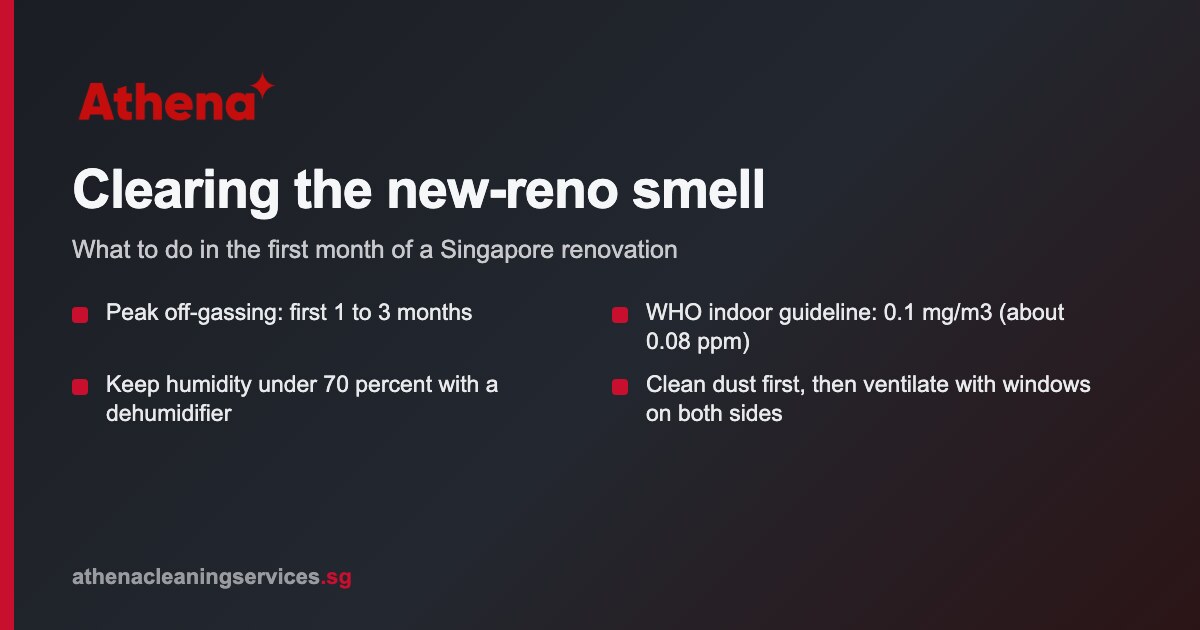
After renovation work, new plaster and fresh paint can hold moisture for weeks, and mould sometimes appears in the first monsoon season. Our guide to 5 essential steps for effective post-renovation cleaning in Singapore covers the dust and residue side of handover, and it is a good time to check ceilings and corners before furniture goes in.
When to call a professional and what it costs in Singapore
Call a professional if the patch is bigger than about 10 square feet, if mould returns within a month of cleaning, if it sits inside a false ceiling or on an air-con duct, or if anyone at home has a respiratory condition. A good cleaner will find the moisture cause, contain the area with sheeting, clean with HEPA-filter equipment, and dry the surface properly. They will tell you if the problem is really a leak that needs a plumber or waterproofing contractor, and that honesty is worth paying for.
Pricing depends on area, height, access and the amount of repainting. As a typical range in 2026, a clean and mould treatment for one room's walls and ceiling often falls between S$150 and S$500. Adding repainting for a single room usually brings the total to roughly S$400 to S$1,200, and anti-mould or waterproofing work behind walls costs more again. Treat any figure as a ballpark and ask for a written quote after the cleaner has seen the room, because photos alone hide the damp. The table below sets out the main options side by side.
Compare at least two quotes, and check what is included: drying time, repainting, a follow-up visit and any guarantee on recurrence. The Consumers Association of Singapore (CASE) is a useful place to check your rights if a service falls short of what was agreed in writing. If mould has also reached fabric items, such as mattresses in the same room, see our guide to 10 effective methods for allergen removal in mattress cleaning in Singapore.
How to stop mould coming back in HDB, BTO and condo homes
Once the wall is clean and dry, prevention is about airflow and humidity. Open windows for 15 to 30 minutes each day when the weather allows, even if only a few at opposite ends of the unit so air crosses the home. Pull wardrobes and beds about 5 to 10 cm from external walls. Keep an inexpensive hygrometer (often under S$20) in the bedroom, and run the air-con in dry mode or a dehumidifier when readings sit above 60%.
For the US EPA's wider advice on moisture and ventilation at home, see its guidance on improving your indoor environment. Repair small leaks quickly, clean air-con filters regularly, and have drain lines checked if you see water marks under a unit. In the bathroom, squeegee walls after showers and leave the door open so steam leaves the room.
Paint and finishes that help
Anti-mould paint contains additives that slow growth on the surface, and it is worth using in bathrooms, store rooms and any wall that has had a past patch. It does not cure a leak, and it works best on a clean, dry, well-prepared surface. Apply it after the wall has been dry for several days, and follow the tin's coverage and drying instructions.
Carpets, rugs and other soft furnishings next to damp walls pick up mould too. If you have wall-to-wall carpet or large rugs in a humid room, a regular cleaning schedule helps, and our article on how often to clean carpets in Singapore sets out sensible frequencies. For public-health and cleanliness guidance across the country, the National Environment Agency publishes useful information, and its pest and dampness advice is worth reading if your block has recurring issues.
Comparison at a glance
| Option | Best for | Typical cost (SGD) | Time to finish | Main limit |
|---|---|---|---|---|
| DIY detergent wipe | Light surface mildew on sealed painted walls | S$5 to S$20 in supplies | 30 to 60 minutes plus 24 to 48 hours drying | Does not fix leaks or deep growth |
| DIY diluted bleach | Black spots on painted walls and bathroom ceilings | S$10 to S$30 in supplies | 1 to 2 hours plus 24 to 48 hours drying | Harsh fumes, damages some finishes, unsafe to mix with other cleaners |
| Professional mould cleaning (one room) | Patches over 10 sq ft or repeat mould | S$150 to S$500 | 2 to 4 hours plus drying | Needs the moisture source fixed |
| Cleaning plus repaint (one room) | Stained or peeling walls and ceilings | S$400 to S$1,200 | 1 to 2 days plus paint curing | Paint fails if the wall is still damp |
| Leak repair or waterproofing | Seepage, damp inside walls, ceiling leaks | Quote after inspection, often from a few hundred to a few thousand | Days to weeks | Needs a licensed contractor and sometimes management approval |
| Replace false ceiling board | Sagging, stained-through or soft boards | Quote after inspection | Half a day to 2 days | Only worth doing after the leak is stopped |
Frequently asked questions
Can I use vinegar instead of bleach to remove mould from walls in Singapore?
Vinegar works on light surface mould and is gentler on paint and on your nose. It is a reasonable first try on small patches. For stubborn black spots on sealed painted walls, diluted bleach lightens the stain more effectively. Never mix vinegar and bleach, because the combination gives off harmful fumes. Whichever you use, the wall must dry within 24 to 48 hours or the mould will return.
Is mould on my HDB ceiling the landlord's or the neighbour's problem?
It depends on the source. If water is seeping from the flat above, speak to the neighbour and the HDB branch or management office, and keep dated photos. If the cause is a leaking pipe inside your own unit or poor ventilation, it is usually your responsibility to fix. Tenants should read their lease and tell the landlord in writing as soon as they see recurring damp.
How much does professional mould removal cost in Singapore?
As a typical range, cleaning and treating one room's walls and ceiling costs about S$150 to S$500, and adding repainting often brings it to S$400 to S$1,200. Prices rise with ceiling height, area, access and any repair work. Ask for a written quote after the cleaner has inspected the room, and check whether the quote covers drying, a repaint and a follow-up visit.
Why does mould come back after I repaint over it?
Paint hides mould but does not remove it, and fresh paint on a damp wall traps moisture. If the surface was not cleaned, fully dried and, where needed, sealed, spores keep growing underneath and show through within weeks. Fix the leak or humidity cause first, clean the patch, let it dry for several days, then use a mould-resistant paint.
Is mould on walls and ceilings dangerous to my family?
Mould can irritate the eyes, nose and throat, and it can trigger symptoms in people with asthma or allergies. Reactions differ from person to person. Clean small patches promptly, wear a mask and gloves, and ventilate the room. If someone has persistent breathing problems at home, see a doctor and ask a professional to assess larger or recurring patches.
How long should walls dry after cleaning mould in singapore's humid weather?
The EPA advises drying wet materials within 24 to 48 hours. In Singapore, use a fan, open windows when it is not raining, and run a dehumidifier or the air-con in dry mode to reach that target. If the wall still feels cool or damp after two days, there is probably a moisture source behind it that needs a proper inspection.
Sources
- EPA guide to mould cleanup in your home
- HealthHub
- CASE
- guidance on improving your indoor environment
- National Environment Agency
Related Athena cleaning services in Singapore
Related articles