
Aircon chemical wash cost in Singapore: is it worth it for your home?
In this article
- What a chemical wash actually does
- Aircon chemical wash cost in Singapore in 2026
- When a chemical wash is worth the money
- When you can skip it
- How often to wash in an HDB, BTO or condo
- How to avoid overpaying or getting a poor wash
- Comparison at a glance
- Frequently asked questions
- Sources
- Related Athena cleaning services in Singapore
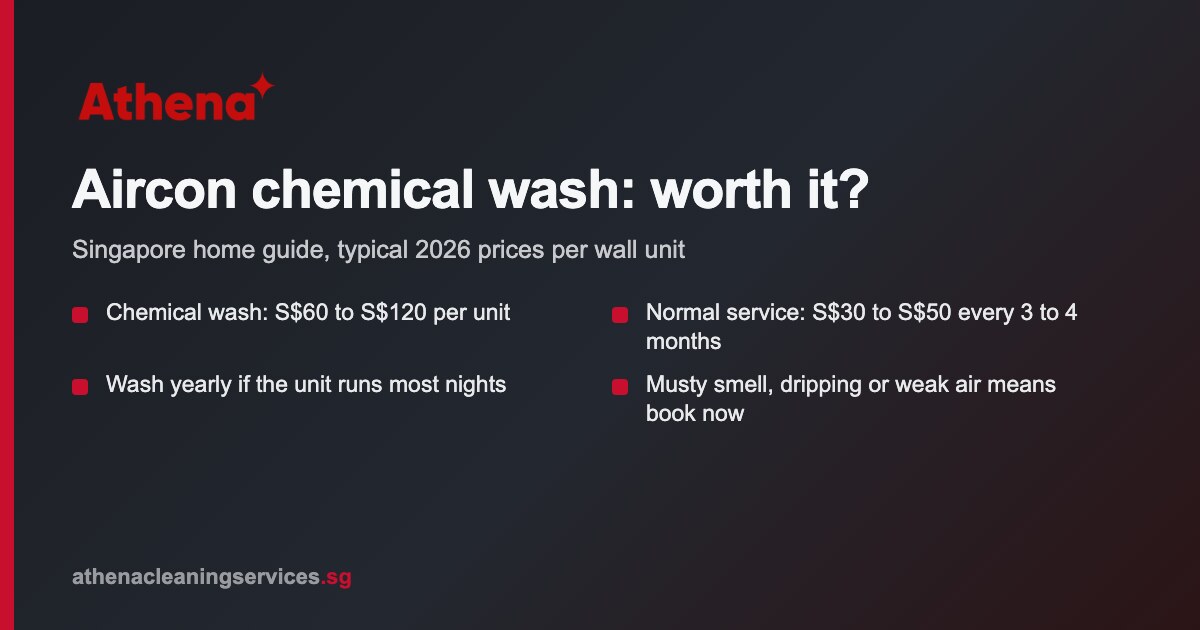
A chemical wash is worth the cost in Singapore when your aircon has gone 12 months or more without one, smells musty, drips water or blows weak air. In 2026, expect to pay roughly S$60 to S$120 per wall-mounted unit for a proper chemical wash, against S$30 to S$50 for a normal service. If your unit was washed this year and still runs cold and odour-free, skip it for now.
This guide shows what the extra money buys, which tier suits an HDB, BTO or condo setup, and how to tell a real wash from a quick rinse. Prices are typical ranges from Singapore quotes, not fixed rates, so treat them as a budgeting guide.
What a chemical wash actually does
A normal aircon service is a surface job. The technician removes the front panel, rinses the filters, wipes the casing and sprays water over the evaporator coil while the unit stays on the wall. It takes 20 to 30 minutes and keeps a lightly used unit ticking over.
A chemical wash goes further. The technician covers the indoor unit with a waterproof sheet, applies a coil-cleaning solution to the evaporator coil and blower wheel, lets it work on the grime, then flushes everything out with water into a bucket. The drain pan and drain pipe get flushed too. Done properly, it takes 45 to 75 minutes per unit.
Why the coil and blower wheel matter
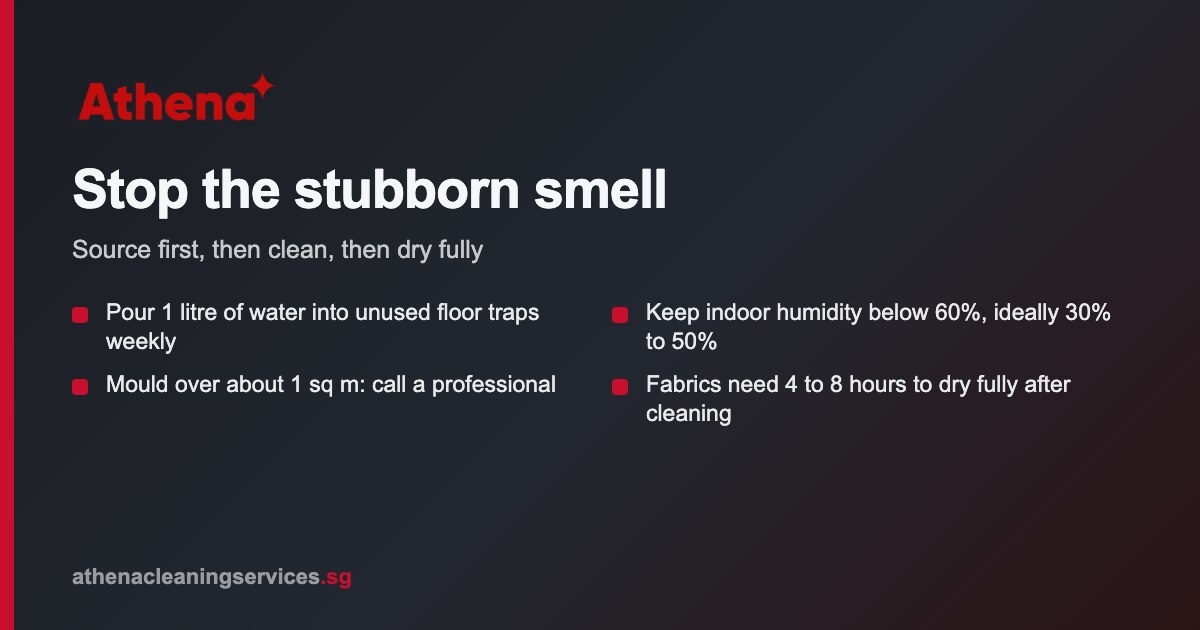
Singapore's humidity sits around 80 percent most of the year, and your aircon pulls moisture out of that air all day. Damp coils collect dust, skin flakes, cooking oil and pet hair, and that film turns into a slimy layer where mould and bacteria settle. A water rinse cannot cut through it. The blower wheel, the drum-shaped fan inside the unit, collects the same layer and throws the smell back into the room.
The US EPA's mould guidance says moisture control is the main way to limit indoor mould growth. An aircon coil is permanently damp by design, so cleaning it on a schedule is the practical answer.
Aircon chemical wash cost in Singapore in 2026
Most Singapore companies price by unit type and number of units. The table on this page shows the typical ranges we see for a standard wall-mounted split unit (system 1 to system 4) in HDB flats and condos. Ceiling cassette and ducted units cost more because they take longer to open up and are harder to cover.
Bulk bookings bring the per-unit price down. A four-room HDB flat with three units often gets a better rate than three separate single-unit jobs, because the crew's travel and setup time is shared. A condo with four or five units benefits even more.
What pushes a quote up
Four things move the price. Height of the unit matters, since a high-mounted unit above a staircase or double-height ceiling needs a taller ladder or scaffold. Access matters in older flats where the outdoor condenser sits in a narrow service yard. Unit type matters, because cassette and ducted units take longer. Condition matters too: a unit with heavy mould or a blocked drain needs extra time and sometimes a second flush.
Watch for add-ons that look cheap on a quote but pile up, such as a separate charge for the drain flush, for a gas pressure check or for travel to a condo with strict access rules. Ask for one all-in price per unit before booking. The Consumers Association of Singapore advises getting the full price, scope and any extra charges in writing before you commit to a service.
When a chemical wash is worth the money
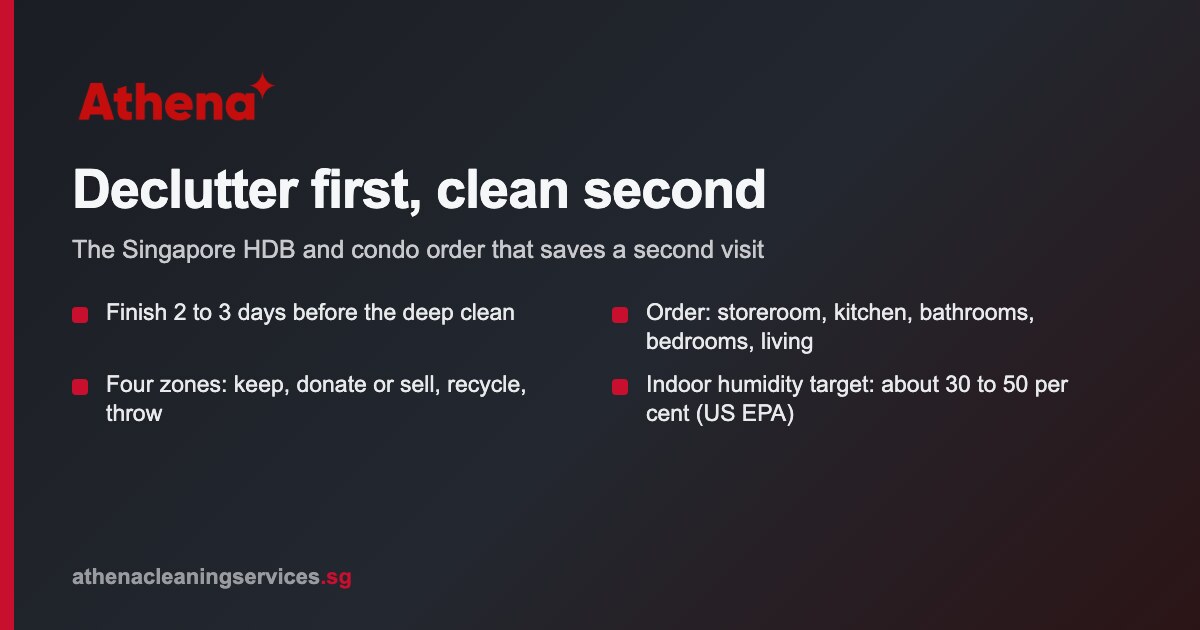
The honest test is symptoms plus history. A chemical wash pays off when the unit shows at least one clear sign of a dirty coil or drain, or when it has been a long time since the last deep clean.
- Musty or sour smell when the aircon starts, especially the first ten minutes.
- Water dripping from the indoor unit, which usually points to a partly blocked drain pan or pipe.
- Weak airflow even on high fan speed, a sign the coil or blower wheel is clogged.
- Black specks on the louvres or on the wall below the unit.
- Rising electricity bills with the same usage, since a clogged coil makes the compressor run longer.
Rooms where the aircon runs 8 hours or more a night, like bedrooms in a BTO flat, build up grime faster than a living room unit used on weekends. Households with young children, allergy sufferers or elderly family members get more out of a wash, because the air from the unit goes straight into the room where they sleep. HealthHub's healthy living resources are a sensible starting point if someone at home has asthma or a dust allergy and you want to know what else to check.
The gas leak caveat
A chemical wash does not fix a refrigerant leak. If the room cools poorly but the coil and filters are clean, the unit may be low on gas, and washing it again wastes money. Ask the technician to check pressure during the visit and quote the gas top-up separately, typically S$40 to S$100 for a wall unit depending on the refrigerant.
When you can skip it
Not every unit needs the full treatment each year. If your aircon was chemical-washed in the past 12 months, cools well, has no smell and drains normally, a normal service every three to four months is enough. Paying S$80 for a wash that finds nothing to clean is a poor trade.
Newly installed units also do not need one. A unit that went in with a new BTO handover or a recent renovation is clean inside the coil. What it needs is regular filter rinsing, which you can do yourself every two to four weeks by sliding the filters out and washing them under a tap.
After renovation, wash anyway
The exception is a unit that sat uncovered during renovation. Drilling, sanding and painting fill the air with fine dust, and the unit pulls it onto the coil the moment it starts. If you ran the aircon before the site was cleaned, book a wash once the work ends. Our guide to 5 essential steps for effective post renovation cleaning singapore covers the order of jobs, and the aircon belongs near the end, after dust-heavy work stops.
If you are handing back a rented unit, a wash is often part of the landlord's checklist. Read our notes on best end of tenancy cleaning singapore to see what landlords commonly ask for, and keep the receipt with the service date as proof.
How often to wash in an HDB, BTO or condo
A rule of thumb for Singapore homes is a chemical wash every 12 months for units used daily, and every 18 to 24 months for units used a few times a week. Normal servicing fits in between, roughly every three to four months for bedrooms and every six months for living room units.
Condos near the sea, such as along the East Coast or in the Sentosa area, tend to see salt air reach outdoor condensers, so those units benefit from an outdoor condenser rinse at the same visit. HDB flats on lower floors near greenery or construction collect more dust and pollen on the filters, which shortens the cycle. Units in homes with smokers, indoor cooking with heavy frying or pets also fill up faster.
Mould in the rest of the home
If your aircon coil is growing mould, the bathroom and bedroom probably have damp spots too. The same humidity causes grout staining and mattress dust mites. Our guides to bathroom cleaner tiles grout fixtures singapore and 10 effective methods for allergen removal mattress cleaning singapore cover those areas. The US EPA's indoor air quality guidance also recommends controlling moisture and keeping HVAC components clean as part of a healthy home.
How to avoid overpaying or getting a poor wash
The cheapest listing is rarely the best value. A chemical wash at S$40 per unit often means a short visit, diluted solution and a rushed flush. A good job takes time because the chemical needs a few minutes to loosen the grime before it is rinsed out.
Before booking, ask four things. Does the quote include a waterproof cover and bucket, so water does not run down your wall? Is the drain pan flushed? Will the technician show the dirty water as proof? And what is the warranty if the unit leaks within a week? Reputable companies answer these without hesitation and send a technician in a uniform with an ID.
Red flags on the day
Be wary if the technician arrives without a cover sheet, finishes a unit in under 25 minutes, or pushes an unplanned gas top-up without showing the gauge reading. Be wary too if the quote jumps on site. Take a photo of the unit before and after, and run it for 15 minutes once the crew leaves to check airflow, cold air and drainage.
If you manage a shop unit or small office rather than a home, the economics change: more units, longer running hours and staff comfort all matter. Our cost of office cleaning services singapore guide shows how commercial rates are built, and the same bulk logic applies to aircon contracts.
Comparison at a glance
| Service | Typical cost (S$) | Time per unit | What it covers | Best for |
|---|---|---|---|---|
| Normal service | 30 to 50 | 20 to 30 minutes | Filter rinse, casing wipe, light coil spray | Units washed within the last 12 months |
| Chemical wash | 60 to 120 | 45 to 75 minutes | Coil and blower wheel cleaned with solution, drain pan and pipe flushed | Yearly deep clean for bedroom and daily-use units |
| Chemical overhaul | 120 to 220 | 90 to 150 minutes | Unit taken off the wall, parts cleaned separately, reinstalled | Heavy mould, post-renovation dust, units not cleaned for 2 or more years |
| Ceiling cassette chemical wash | 150 to 300 | 90 to 150 minutes | Panel removed, coil and drain pan cleaned, drain pump checked | Condo living rooms, shops and small offices |
| Gas pressure check and top-up | 40 to 100 | 15 to 30 minutes | Gauge reading and refrigerant top-up if low | Units that run but cool poorly after a clean coil |
Frequently asked questions
How much does an aircon chemical wash cost in Singapore?
Most Singapore homeowners pay about S$60 to S$120 per wall-mounted unit in 2026, with lower per-unit rates when you book three or more units. Ceiling cassette units run S$150 to S$300, and a full chemical overhaul with the unit taken off the wall costs S$120 to S$220. These are typical ranges, so ask for an all-in quote that includes the drain flush.
Is a chemical wash better than a normal aircon service?
For a unit with a dirty coil, yes. A normal service rinses filters and sprays the coil with water, which handles light dust. A chemical wash uses a cleaning solution to break down the slimy film on the coil and blower wheel, and flushes the drain pan. If the unit was cleaned recently and works well, a normal service is enough.
How often should I do a chemical wash in an HDB flat?
Once every 12 months suits bedroom units that run most nights. Living room units used a few times a week can stretch to 18 to 24 months with normal servicing in between. Shorten the cycle if you smell mustiness, see dripping or live near construction, since dust loads the coil faster.
Can a chemical wash damage my aircon?
A careful technician will not damage it. Problems come from rushed jobs: water on the electrical board, harsh chemicals left on the coil or bent fins from heavy pressure. Ask that the board be covered, the unit be flushed clean and the work be backed by a short warranty. Run the unit for 15 minutes after the visit to check cooling and drainage.
Do I need a chemical wash before moving out of a rental?
Many landlords ask for it in the tenancy agreement, so check your clause. A receipt dated close to your move-out date is the simplest proof. If the agreement says only a general service, a normal service may satisfy it, but confirm in writing with your landlord to avoid a deposit deduction.
Does a chemical wash lower my electricity bill?
It can help a little. A clogged coil forces the compressor to work longer to reach the set temperature, so a clean coil usually cools faster and runs less. The saving depends on how dirty the unit was and how many hours it runs, so do not expect it to cover the wash cost in one month. Think of it as a mix of comfort, air quality and a modest drop in running time.
Sources
- US EPA's mould guidance
- Consumers Association of Singapore
- HealthHub's healthy living resources
- US EPA's indoor air quality guidance
Related Athena cleaning services in Singapore
Related articles