
Hard-to-remove odours in Singapore homes: what works and what to skip
In this article
- Why odours refuse to leave a Singapore home
- Find the source before you buy any product
- Smoke, durian, kitchen and pet smells
- Drains, the washing machine and damp
- Renovation and new-furniture smells
- What it costs and how long each fix takes
- When to call a professional
- Comparison at a glance
- Frequently asked questions
- Sources
- Related Athena cleaning services in Singapore
Hard to remove odours in Singapore homes almost always come from something that stays damp or soaked: a dry floor trap, a mouldy washing machine seal, or a sofa and mattress holding smoke or pet urine. The fix is to find the source, clean it, then dry it fully. Air fresheners only mask the smell for a few hours.
This guide shows how to trace a smell in an HDB, BTO or condo, which problems you can handle yourself, what professional help typically costs in SGD, and when a smell points to mould or a plumbing fault.
Why odours refuse to leave a Singapore home
Most homes here sit between 70% and 90% relative humidity for much of the year. Damp air keeps fabrics, grout and wooden backs of furniture slightly moist, and that moisture is what bacteria and mould need to keep producing smell. So a sofa that was cleaned once but dried slowly can smell worse a week later than before.
Layout adds to it. In many HDB and BTO flats the kitchen and service yard sit close to the bedrooms, and cooking smells drift straight into curtains and bedding. Condo units are often shut for ten hours a day with the air-con off, so smells have nowhere to go. Soft items such as curtains, mattresses, rugs and cushions absorb odour molecules and release them slowly over weeks, which is why a room can smell stale even after you have wiped every hard surface.
The US EPA guidance on improving your indoor environment recommends controlling the source first, then ventilating, and only then considering air cleaners. That order is the right one here too. A diffuser or scented candle sits at the bottom of the list.
Find the source before you buy any product
Spend fifteen minutes tracing the smell before you spend a dollar. Nose low, room by room, at the height of whatever might be causing it. Most people clean the whole flat and still miss the one item behind the smell.
A quick room-by-room check
- Note the timing. A smell that peaks after rain or first thing in the morning usually points to damp or a drain. One that peaks when the fan or air-con runs usually comes from fabric or from the aircon filter.
- Check every floor trap. Bathroom and service yard traps that rarely get used dry out, and sewer gas then rises through the pipe.
- Open the washing machine. Look for black residue on the rubber door seal and in the detergent drawer.
- Smell fabrics up close. Press your nose to sofa cushions, mattress sides and curtain hems.
- Look behind and underneath. Mould likes the cabinet under the sink, the back of the fridge and wardrobe back panels.
- Use a UV torch. Dried pet urine glows under UV light, so you can find spots you cannot see in normal light.
Rule out the building before the furniture
If the smell shows up in more than one room and is strongest near a bathroom wall or a pipe shaft, the cause may be a plumbing fault or a leak behind a wall. Cleaning will not fix that. Take photos and speak to your town council or condo management early, because a seepage or shared pipe issue is not yours to repair alone.
Smoke, durian, kitchen and pet smells
Cigarette smoke and cooking smells
Smoke is the hardest of the common ones. The residue is oily and sticks to every soft surface, including the inside of curtains, the underside of ceiling fans and the mattress. Wiping walls with warm soapy water, washing curtains, and steam cleaning upholstery all help, but a heavily smoked unit often needs several passes. For leather sofas, which trap odours in the surface finish, our 5 expert tips for leather sofa cleaning in Singapore covers what is safe to use. Fabric sofas can start with the 5 must try DIY upholstery cleaning recipes all Singapore homes must have.
Wok-fried and curry smells settle in the kitchen and drift into nearby rooms. Cleaning the exhaust hood filter, wiping the cabinet tops, and running the extractor fan for twenty minutes after cooking solves most of it.
Durian
Durian smells strong but is usually temporary. Eat it near an open window or in the service yard, seal husks in a tied bag and throw them out the same day, and wipe the fridge shelves with a baking soda and water mix. Fresh air and a day or two of cross ventilation clears most of it. If it lingers in a closed condo room, the smell has probably gone into upholstery and needs washing or steaming.
Pets
Dried urine is the real culprit with pets, because the crystals reactivate when humidity rises. Blot fresh accidents, then use an enzyme cleaner rather than bleach, which can leave a sharp smell of its own. Carpets and rugs hold urine deep in the pile, so a professional hot-water extraction is usually the only route. Our piece on the 6 benefits of regular professional carpet cleaning services for Singaporean homes explains what to expect.
Drains, the washing machine and damp
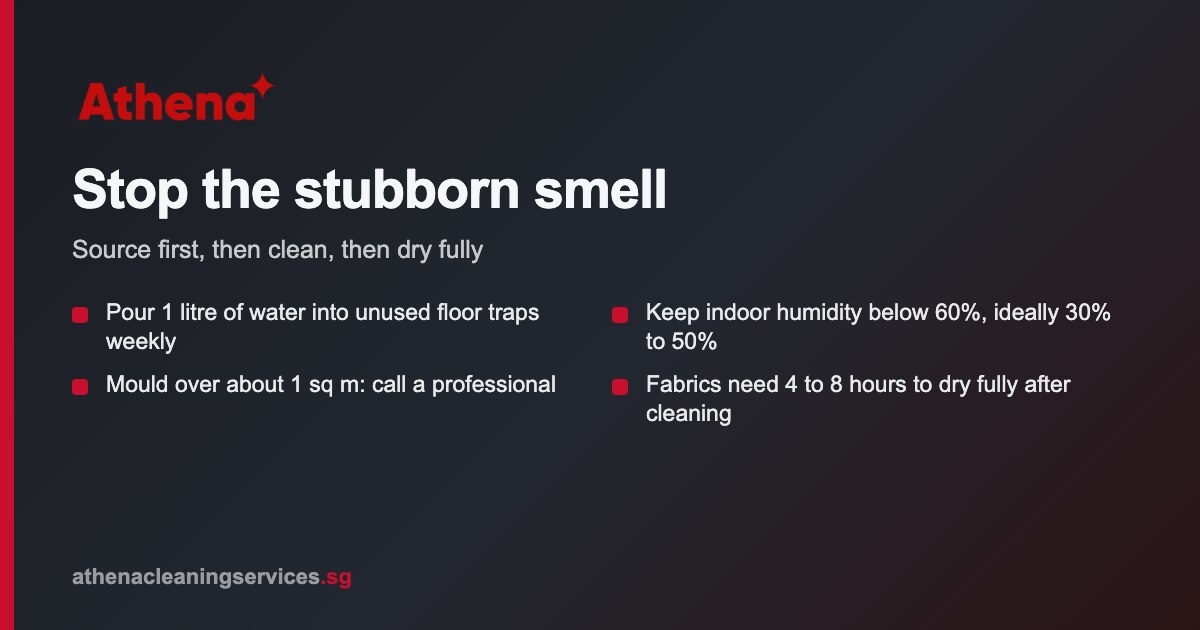
A drain-like smell is the most common complaint in HDB flats, and the cause is often simple. A floor trap holds a small amount of water that blocks gas from the sewer. When the trap dries out after a few weeks of disuse, the gas comes up. Pour about a litre of water into each unused trap once a week. NEA's public cleanliness guidance and its dengue advice both treat floor traps as something households should keep topped up. If the smell returns within days even with water in the trap, the trap or its pipe may be cracked, and that is a job for a plumber.
Washing machine smell
Front-load machines are the usual offenders. Detergent residue and standing water in the rubber seal grow a black biofilm that makes clothes smell sour even when they are clean. Wipe the seal after each wash, leave the door ajar, and run a hot cycle with a machine cleaner once a month.
Damp and mould
A musty smell without a visible cause is often hidden mould. The US EPA mould cleanup guidance suggests that patches larger than roughly 10 square feet (about 1 square metre) may need professional help, and says to fix the water problem before cleaning. Keep indoor humidity below 60%, ideally in the 30% to 50% range the EPA recommends. A dehumidifier or the air-con's dry mode gets you there. Bathrooms with stained grout need a proper scrub, and our bathroom cleaner guide for tiles, grout and fixtures in Singapore lists what works on silicone and grout lines.
Renovation and new-furniture smells
A new BTO or freshly renovated condo often smells of paint, glue and laminate for weeks. Much of this comes from volatile compounds released by plywood, adhesives and finishes. The US EPA facts about formaldehyde note that levels are usually higher in new homes and with new furniture, and that they fall over time, and that ventilation and lower humidity and temperature help reduce them.
In practice, leave windows open for several hours a day when it is not raining, keep wardrobe doors ajar for the first few weeks, and run the air-con with the fresh air setting if you have one. Wipe all carpentry surfaces once builder's dust is gone, because fine dust holds onto smell and releases it when warm.
Post-renovation dust sits in cabinets, on top of wardrobes and inside window tracks, and it keeps the unit smelling chalky until it is removed. Work through the steps in 5 essential steps for effective post renovation cleaning Singapore or the shorter 10 post renovation cleaning tips for SG homes in 2026 before you move furniture in.
What it costs and how long each fix takes
The table below gives typical Singapore ranges for 2026 so you can decide what to do yourself and what to book. Prices depend on size, access and how bad the problem is, so treat them as ranges and ask for a written quote before work starts.
As a rule, hard surface and drain problems are cheap to fix and quick to dry. Fabric problems cost more because the item must dry fully, usually four to eight hours with a fan or air-con running, or longer for mattresses and thick carpets in humid weather. Rushing the drying is how a cleaned sofa ends up smelling musty again.
When to call a professional
Do the simple checks first: floor traps, washing machine seal, a sniff of every fabric. Cleaned the obvious sources and the smell is still there a week later? Get help. Call a professional straight away when the smell comes with visible mould over about a square metre, when a pet has soiled a mattress or carpet repeatedly, or when anyone at home has asthma or allergies that flare when you are indoors.
Mattresses are a good example. They absorb sweat, skin flakes and spills, and surface sprays do nothing for the layers underneath. Our write-up on 10 effective methods for allergen removal and mattress cleaning in Singapore shows what deep cleaning actually involves. For general guidance on indoor health, HealthHub from Singapore's Ministry of Health is a useful starting point.
If you are handing a rental back, odours count as a condition issue. A landlord can claim from your deposit for smoke or pet smells that remain at inspection, so read best end of tenancy cleaning Singapore before the move-out date. Ask any cleaner what they will use on which surface, how long drying will take, and whether the quote includes a re-visit if the smell comes back.
Comparison at a glance
| Odour source | Typical fix | Typical cost (SGD) | Drying or waiting time | DIY or professional |
|---|---|---|---|---|
| Dry floor trap | Pour water weekly, clean trap cover | $0 to $5 | Immediate | DIY |
| Cracked trap or pipe | Plumber repair | $80 to $250 | Same day to 1 day | Professional |
| Washing machine biofilm | Wipe seal, hot cycle with machine cleaner | $8 to $20 for cleaner | 1 hour | DIY |
| Fabric sofa with smoke or pet smell | Steam or shampoo extraction | $80 to $200 | 4 to 8 hours | Professional |
| Mattress sweat or urine | Deep clean, UV and extraction | $50 to $120 per mattress | 4 to 6 hours | Professional |
| Curtains with smoke | Machine wash or steam clean | $15 to $35 per panel | 3 to 6 hours | Either |
| Mould on walls or grout | Fix leak, scrub, dehumidify | $20 to $60 DIY, $150 to $400 professional | 1 to 3 days to dry | Professional if over 1 sq m |
| New renovation smell | Ventilate, dust removal, wardrobe airing | $0 to $300 | 2 to 6 weeks | DIY plus post-renovation clean |
Frequently asked questions
Why does my HDB flat smell like a drain even after I cleaned the toilet?
The usual cause is a dry floor trap in a bathroom or service yard. Pour about a litre of water into each trap once a week so the water seal blocks gas from the pipe. If the smell comes back within a few days, ask a plumber to check the trap and pipe for cracks.
How do I remove cigarette smoke smell from a condo before moving out?
Wash curtains, wipe walls and ceilings with warm soapy water, and have sofas, carpets and mattresses steam cleaned. Smoke residue is oily and sticks to soft surfaces, so expect more than one pass. Book the cleaning at least a week before inspection so everything has time to dry.
Is it safe to use an ozone machine or air purifier to remove odours at home?
Air purifiers with activated carbon filters are safe and help with general odours, but they do not remove the source. Ozone machines can irritate lungs and damage rubber and fabrics, and the US EPA advises caution with ozone generators in occupied spaces. Treat the source first and use ventilation before any device.
How much does professional odour removal cost in Singapore?
Typical ranges are $80 to $200 for a sofa, $50 to $120 for a mattress, and $15 to $35 per curtain panel. Whole-home treatments after heavy smoke or pet damage can run into several hundred dollars. Always ask for a written quote that lists each item and the method.
How do I get rid of the musty smell in my wardrobe in singapore's humid weather?
Empty the wardrobe, wipe the inside with a mild detergent solution, and let it air out with the doors open. Keep humidity under 60% with a dehumidifier or air-con in dry mode, and avoid packing damp clothes. If you see black spots on the back panel, the board is probably mouldy and may need replacing.
Sources
- US EPA guidance on improving your indoor environment
- public cleanliness guidance
- US EPA mould cleanup guidance
- US EPA facts about formaldehyde
- HealthHub
Related Athena cleaning services in Singapore
- 5 expert tips for leather sofa cleaning in singapore
- 5 must try diy upholstery cleaning recipes all singapore homes must have
- 6 benefits of regular professional carpet cleaning services for singaporean homes
- bathroom cleaner tiles grout fixtures singapore
- 5 essential steps for effective post renovation cleaning singapore
Related articles