
How to Create an Office Cleaning Schedule: Practical Guide

In this article
- Key Takeaways
- Table of Contents
- Why an Office Cleaning Schedule Matters, and What It Should Cover
- How to Audit Office Areas and Turn Them into Cleaning Tasks
- How Often Should Each Office Cleaning Task Be Scheduled?
- How to Build, Assign, and Review an Office Cleaning Schedule
- When Professional Office Cleaning Can Strengthen Your Schedule
- Make Your Office Cleaning Plan Work in Practice
- Frequently Asked Questions
A cleaner office often comes from a smarter schedule, not simply more frequent cleaning. Knowing how to create a cleaning schedule for office spaces starts with how people use them. A busy pantry, shared meeting rooms and quieter work areas do not all need the same routine, and unclear ownership can leave tasks missed or repeated.
A useful checklist should be specific enough for everyone to follow without disrupting the workday. Assign clear owners, set practical timings for essential upkeep and plan less frequent tasks separately. That gives staff a reliable routine and helps keep shared spaces consistently cared for.
This guide shows you how to map tasks to each office area, decide what needs daily attention and what can be scheduled periodically, then review the plan as occupancy or workplace needs change. It also explains how professional office cleaning can support in-house upkeep, including planned carpet, floor and sanitization work. The result is a clear, realistic schedule that is easier to maintain over time.
Key Takeaways
- To learn how to create a cleaning schedule for office spaces, start by mapping each area, surface and shared item to the cleaning it needs.
- Use visible soil, foot traffic and shared use to decide which tasks belong in daily, weekly or periodic routines.
- Make the schedule practical by recording task timing and ownership, then review it when workplace needs or occupancy change.
- Plan specialist carpet, floor and sanitization work separately, and consider how recurring professional office cleaning can complement in-house upkeep.
Why an Office Cleaning Schedule Matters, and What It Should Cover
A workplace can look orderly while important tasks are still being missed. One person may wipe a meeting table twice, while nobody is sure who checks the pantry bins or shared equipment. A written schedule replaces assumptions with a clear routine. People can see what needs attention, where, when and who is responsible.
Consistency helps maintain a presentable office and makes upkeep easier to coordinate around daily operations. A schedule also gives you a practical record for spotting gaps. Separate regular tasks, such as clearing waste points, from periodic work that needs more planning, such as carpet cleaning or floor care. Adjust the routine as staff numbers, room use or visible soil changes.
What belongs in a practical office cleaning schedule?
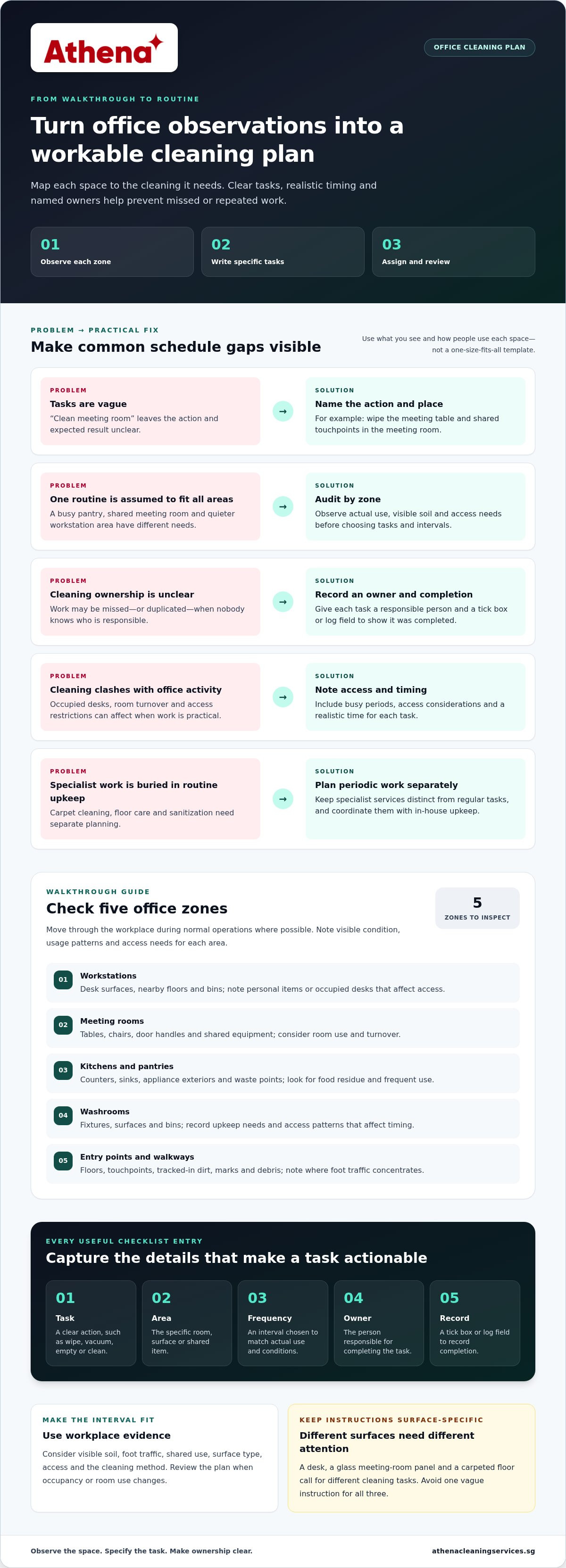
An office cleaning schedule is a written plan that lists each cleaning task, the area it applies to, how often it should be done, who is responsible and how completion is recorded. These five details make a checklist usable rather than merely descriptive.
For example, “clean meeting room” is too broad to guide consistent work. A clearer entry might specify wiping the table and shared touchpoints, identify the room, set a suitable interval, name the owner and provide a tick box or log field. Choose the interval based on actual use, rather than copying a template from another workplace.
Start with general cleaning principles, including choosing a method that suits the surface and type of soil, then turn them into tasks for your office. A desk, a glass meeting-room panel and a carpeted floor need different kinds of attention, so avoid using one vague instruction for all three.
Which office areas need separate attention?
Break the office into zones instead of assigning one broad instruction to the entire workplace. A simple area map can show who uses each space, what gets soiled and when cleaning might interrupt work.
- Workstations: Define expectations for desk surfaces and nearby waste points, while considering access and personal items.
- Shared meeting areas: Account for tables, chairs and shared equipment, especially when rooms turn over frequently.
- Kitchens: Include food-preparation and dining surfaces, sinks, appliance exteriors and bins according to use.
- Washrooms: List the surfaces, fixtures and supplies that need routine attention, with a clear completion record.
- Entry points: Consider floors and touchpoints where outdoor dirt or frequent passage can make soil more visible.
These zones will not necessarily need the same attention. A lightly used workstation area may stay tidy longer than a busy pantry, while a meeting room’s needs can shift with its booking pattern. Observe each space before setting timings, and leave room to revise them as conditions change.
To make how to create a cleaning schedule for office spaces manageable, start with these zones, then assign each task an owner and a realistic time. Keep routine upkeep distinct from planned specialist services, such as carpet and rug cleaning, floor polishing or sanitization. A professional team can complement in-house routines. This professional cleaning company buyer’s guide offers context for considering that support. Next, build a timetable around access needs and office activity, then review it whenever the way people use the space changes.
How to Audit Office Areas and Turn Them into Cleaning Tasks
A useful audit turns what you see in the workplace into instructions someone can carry out. Walk through the office with a notepad or simple table, and assess each room during normal operations where possible. A space that seems quiet at the start of the day may become busy later, and access can affect when cleaning is practical.
How should you inspect each office area?
Move through the office zone by zone. Note visible dust, marks, spills, full bins and other signs of use, along with shared equipment and frequently touched surfaces. Record busy periods, access restrictions and any spots that need specialist attention. Do not assume that every room has the same occupancy or cleaning needs.
- Workstations: Check desk surfaces, nearby floors and individual or shared bins. Note access considerations, such as personal items or occupied desks.
- Meeting rooms: Inspect tables, chairs, door handles and shared equipment, then consider how frequently rooms are used or turned over.
- Kitchens: Look at counters, sinks, appliance exteriors and waste points, noting where food residue or frequent use calls for attention.
- Washrooms: Record the fixtures, surfaces and bins that need upkeep, as well as access patterns that affect task timing.
- Entry points and walkways: Look for tracked-in dirt, marks and debris, and note where foot traffic concentrates.
Use an observation sheet with columns for area, surface or item, visible condition, usage pattern, access notes and possible task. Choose tasks based on observed use and site conditions, including occupancy, visible soil, surface type, shared access, cleaning method and specialist-care needs. For a general reference on workplace sanitation, OSHA sanitation standards for workplaces describe housekeeping and waste-disposal provisions. Treat them as a US reference, not Singapore regulations.
How do you turn observations into a task list?
Translate each observation into a clear action and location. Use specific verbs such as wipe, vacuum, empty or clean, rather than broad instructions like “tidy office.” Specific instructions are easier to assign and review.
- Wipe the meeting-room table and shared equipment after use.
- Vacuum the carpeted floor in the named meeting room.
- Empty the pantry bin and wipe the surrounding surface.
- Clean visible marks from the entry-point floor.
Keep ordinary upkeep separate from specialist work. Carpet and rug cleaning, upholstery cleaning, floor polishing and sanitization may need different methods, preparation or access arrangements. List them as planned services rather than routine daily duties. This makes the task list more realistic and helps prevent occasional work from being forgotten.
Once the audit identifies priority areas, professional office cleaning can complement workplace upkeep and planned specialist care. Explore office cleaning support for help with your workplace cleaning routine.
How Often Should Each Office Cleaning Task Be Scheduled?
There is no fixed schedule that suits every office. A shared pantry used throughout the day may need more frequent attention than a meeting room booked occasionally, while visible soil can signal that a floor or surface needs care sooner than expected. Treat daily, weekly and periodic categories as planning options, then adjust them to your workplace instead of adopting a generic timetable unchanged.
How do you choose a frequency for routine tasks?
Start with how often a space is used, how quickly it becomes visibly soiled, and whether people share its surfaces or equipment. Also consider whether the task can be completed without disrupting work. Begin with a reasonable interval, record what gets missed or needs attention sooner, then revise the timing based on your observations.
Use these categories as a starting framework, not a universal prescription:
- Daily planning option: Checking busy shared areas, clearing waste points or wiping visibly soiled surfaces may suit frequent attention when use warrants it.
- Weekly planning option: More detailed dusting or cleaning less-used surfaces may fit a weekly routine, depending on the room and its condition.
- Periodic planning option: Deeper or specialist tasks can be scheduled separately according to observed condition, workplace priorities and practical access.
For example, if kitchen counters regularly show residue by the end of the workday, review whether the current routine gives them enough attention. If a low-use meeting room stays tidy between bookings, a daily full clean may not be the best use of time. Keep a simple completion record and note recurring issues. That evidence helps you refine the plan without guesswork.
Which tasks belong in a periodic plan?
Routine upkeep maintains day-to-day cleanliness; specialist periodic cleaning addresses deeper or specific needs that are not suited to the regular task list. Separate the two so occasional work has a clear place in the schedule instead of being forgotten or treated as an unrealistic daily duty.
Depending on the office, periodic work may include carpet and rug cleaning, upholstery cleaning, parquet or marble floor polishing, or sanitization. Use visible condition and workplace needs to decide when each task is due. For instance, note a carpet area that shows accumulating soil or upholstery that needs planned attention, then set a review point or service window that fits access requirements. Avoid assigning a fixed interval simply because another office uses one.
As you refine how to create a cleaning schedule for office tasks, keep the cadence flexible. Changes in occupancy, room bookings, shared use or visible condition can all justify a review. A schedule should guide consistent care, not lock the workplace into tasks or timings that no longer match how its spaces are used.
How to Build, Assign, and Review an Office Cleaning Schedule
Turn your audit and frequency choices into a working plan people can follow. A practical answer to how to create a cleaning schedule for office spaces is to make every task visible, assign one clear owner and provide a simple way to record completion. Keep the plan concise enough to use during a busy workday.
- Gather the task list. Group tasks by area and separate routine upkeep from periodic or specialist work. Use precise instructions, such as “wipe shared meeting-room table,” rather than “clean meeting room.”
- Set suitable timings. Place each task in the daily, weekly or periodic category that fits observed use and condition. Consider room bookings, busy periods, access requirements and tasks that could interrupt work.
- Assign ownership. Name one responsible role for each task, such as the facilities coordinator or designated cleaning staff member. Also identify who checks the schedule and follows up if a task is missed.
- Create a completion record. Use a paper sheet or digital log with fields for the task, date, responsible person and exception notes. Keep the format easy to scan and update.
- Review and refine. Look for repeated missed tasks, frequent exceptions or areas that need attention sooner. Adjust the owner, timing or frequency when the evidence suggests the plan no longer fits.
How should responsibilities and timings be assigned?
Make accountability specific without making the schedule complicated. Assign one named role to each task, even if others can provide cover. The person checking completion can be a supervisor or facilities contact. The important point is that follow-up is clear, not assumed.
Plan around how the office operates. A meeting room may be easier to clean between bookings, while a workstation may require access arrangements to avoid disturbing someone at work. Put instructions where responsible people can readily refer to them, and use familiar language so tasks do not need extra explanation.
How can you keep the schedule useful over time?
Use the log to understand patterns, not to create a punitive scorecard. If the same task is missed repeatedly, consider whether its timing clashes with operations, its owner is unclear or the task takes more time than the schedule allows. Exception notes can explain an access issue or an occupied room, helping you choose a sensible adjustment.
Review the plan after a layout change, a shift in occupancy, the addition of shared spaces or a noticeable change in how rooms are used. A schedule that suited one office arrangement may no longer fit after desks move or meeting areas become busier. Keep a current version accessible and remove outdated copies so everyone follows the same routine.
Recurring professional cleaning can also support your plan. See office cleaning support that can be scheduled around workplace needs.
When Professional Office Cleaning Can Strengthen Your Schedule
A well-organised schedule can still leave some tasks difficult to manage in-house. Larger recurring cleans or specialist work may call for dedicated equipment and planned access to the area. Professional office cleaning can complement your team’s routine, helping you separate everyday upkeep from work that needs a distinct service plan.
Keep the handoff clear. Your schedule can identify which tasks employees or facilities staff handle, which areas a cleaning team should cover, and what timing best fits office operations. Professional support should add structure to the plan, not replace it. Your workplace retains clear ownership of daily responsibilities, while planned services address broader or specialist cleaning needs.
Which tasks may be better handled as professional cleaning?
Consider professional support for larger recurring cleans and work requiring specialist attention. Depending on your premises and priorities, this may include carpet and rug cleaning, upholstery cleaning, parquet or marble floor polishing, or sanitization. Keep these activities on a separate planned-services list, with the relevant area and access needs noted, instead of burying them among routine duties.
Athena Team Cleaning provides commercial office cleaning alongside building maintenance and specialist cleaning services. These services can support a schedule that assigns ordinary upkeep internally while reserving selected work for professional care. The right division depends on your workplace. For example, staff may manage day-to-day tidiness while a professional team handles recurring office cleaning and planned carpet or floor care.
How can a professional plan fit your office routine?
Start with a brief that describes your priorities, the spaces to be cleaned, any access considerations and your preferred timing. Include how the office operates, such as busy periods or rooms that need to remain available. This gives the service plan useful context and helps align cleaning with the workplace instead of interrupting its normal rhythm.
Athena Team Cleaning offers flexible scheduling to align office cleaning with workplace needs. As you consider how to create a cleaning schedule for office spaces, identify the tasks that are hardest to manage consistently and the areas that need planned professional attention. Include those priorities, the spaces involved and your timing preferences when requesting a quote. Clear details help shape a practical plan that works alongside your in-house routine.
A current task list or a few notes about your office’s priorities are a useful starting point for planning professional support. Send an office cleaning enquiry to request a quote or discuss your workplace cleaning plan.
Make Your Office Cleaning Plan Work in Practice
A schedule becomes valuable when it fits the way your workplace operates and can be adjusted as needs change. Start with one practical improvement: clarify a task that is often missed, make its owner clear, or reserve space in the plan for periodic care. Review how the change works, then refine the routine. That steady approach makes how to create a cleaning schedule for office spaces less like a one-off exercise and more like a sustainable part of workplace management.
Athena Team Cleaning provides commercial office cleaning and can align service timing with workplace needs. Thorough disinfection is also among its service strengths, supporting a considered approach to maintaining your premises.
Request an office cleaning quote from Athena Team Cleaning and discuss a plan that complements your routine. A clear next step can help you build a cleaner, more consistently cared-for workplace.
Frequently Asked Questions
How do I create a cleaning checklist for an office?
Build the checklist from the tasks your office actually needs, then test whether someone unfamiliar with the routine can follow it. Use clear actions and locations, such as “wipe pantry counter” rather than “clean kitchen.” When working out how to create a cleaning schedule for office areas, walk through the checklist with the person doing the work and remove vague, duplicated or impractical instructions before sharing it.
What should an office cleaning log include?
Include the task, completion date, responsible person, status and a brief note for anything that prevented completion. A status such as “done,” “deferred” or “not applicable” is more informative than a blank box. For example, note that a meeting room was occupied and the task was deferred, so a supervisor can arrange follow-up instead of assuming the work was completed.
How often should an office cleaning schedule be reviewed?
Set a regular check-in that suits your workplace, such as a monthly review, and revisit the plan sooner if a change affects cleaning needs. Look for recurring exceptions, tasks that consistently take longer than expected and areas that no longer match the schedule. A brief review keeps the plan current without requiring a full redesign whenever a small issue arises.
Can employees share responsibility for routine office cleaning tasks?
Yes, employees can share suitable routine tasks if each one still has a clearly assigned owner. For instance, teams might take responsibility for clearing their own meeting-room materials, while a named facilities contact oversees shared-area tasks. If duties rotate, state who is responsible on each day or shift. Avoid assigning a task to “everyone,” since that can leave each person assuming someone else will do it.
How do I schedule cleaning around meetings and working hours?
Use room bookings and normal work patterns to identify low-disruption windows. A meeting room may be available between sessions, while occupied desk areas may need a different arrangement. Share the timing with staff and make instructions clear about access, personal items and rooms that should not be entered during use. If a task is repeatedly interrupted, move it to a more workable window rather than relying on last-minute access.
What should I do when a task is repeatedly missed?
First find out why it is being missed. The task may lack a clear owner, coincide with a busy period, require unavailable access or take longer than the allotted window. Speak with the responsible person, check the completion notes and change the assignment or timing where needed. If the task itself is too broad, break it into smaller actions that are easier to complete and record.
Is professional cleaning needed if employees already tidy their workspaces?
Not necessarily for every task, but tidying personal work areas does not cover every cleaning need. Shared spaces, larger recurring cleans and planned carpet, upholstery, floor-care or sanitization work may need a separate approach. Professional office cleaning can complement employee routines by covering agreed workplace priorities, while staff continue to manage everyday tidiness. The right balance depends on your premises, internal capacity and the tasks your schedule identifies.
Frequently Asked Questions
What belongs in a practical office cleaning schedule?
Which office areas need separate attention?
How should you inspect each office area?
How do you turn observations into a task list?
How do you choose a frequency for routine tasks?
Which tasks belong in a periodic plan?
How should responsibilities and timings be assigned?
How can you keep the schedule useful over time?
Which tasks may be better handled as professional cleaning?
How can a professional plan fit your office routine?
How do I create a cleaning checklist for an office?
What should an office cleaning log include?
How often should an office cleaning schedule be reviewed?
Can employees share responsibility for routine office cleaning tasks?
How do I schedule cleaning around meetings and working hours?
What should I do when a task is repeatedly missed?
Is professional cleaning needed if employees already tidy their workspaces?
Related articles