
Best disinfectant for home Singapore: what to buy and how to use it
In this article
- What makes a disinfectant good enough for a Singapore home
- Which disinfectant works on which surface
- Disinfecting during HFMD season and flu outbreaks
- How to disinfect step by step in a humid home
- Mistakes that make disinfectant useless or dangerous
- What disinfection costs in Singapore
- Comparison at a glance
- Frequently asked questions
- Sources
- Related Athena cleaning services in Singapore
The best disinfectant for a home in Singapore is diluted household bleach (sodium hypochlorite) for toilets, floor tiles and toys, plus a quaternary ammonium or hydrogen peroxide spray for handles, switches and kitchen counters. Most HDB, BTO and condo households need both, because bleach is cheap and strong but harsh on stone and metal. What matters more than the brand is the active ingredient, the dilution and the contact time printed on the label.
This guide shows which product suits which surface, how long to leave it wet in our humid climate, what to do during HFMD season, and what professional disinfection costs in SGD. Prices and times below are typical 2026 ranges, so expect your own quote to vary.
What makes a disinfectant good enough for a Singapore home
A disinfectant is only as good as its label. Look for three things before you buy: a named active ingredient, a stated list of germs it kills, and a contact time in minutes. If the bottle gives only marketing words such as "antibacterial freshness" and a smell, treat it as a plain cleaner.
The National Environment Agency (NEA) publishes public cleanliness guidance, and during COVID-19 it pointed households to products built on a short list of actives. Those same actives are still the sensible shopping list today:
- Sodium hypochlorite: household bleach. Strong, fast and inexpensive, but it corrodes metal, bleaches fabric and gives off fumes in a closed bathroom.
- Quaternary ammonium compounds (quats): often listed as benzalkonium chloride. Common in multi-surface sprays and gentler on most finishes.
- Hydrogen peroxide: breaks down into water and oxygen, so it leaves little residue. Good for kitchens and baby areas.
- Ethanol or isopropanol (70 percent): the alcohol in wipes and sprays. Dries quickly, which is useful for phones and remote controls.
- Chloroxylenol (PCMX): the active in many antiseptic floor liquids. Fine for mopping, weaker as a spot treatment.
Cleaning and disinfecting are two different jobs
Cleaning removes dirt, grease and soap scum. Disinfecting kills the germs left behind. A disinfectant sprayed over a greasy stovetop or a scummy shower wall mostly disinfects the grease. Wash first with detergent and water, then disinfect.
One product rarely does everything
The "best" product depends on the surface. A strong bleach solution is ideal for a toilet bowl and wrong for a marble vanity. Plan on a small kit of two or three products instead of hunting for one miracle bottle.
Which disinfectant works on which surface
Singapore homes mix a lot of finishes: ceramic and homogeneous tiles in the bathroom, vinyl or laminate in living rooms, quartz or solid-surface kitchen tops, stainless steel taps, and fabric on sofas and mattresses. Each reacts differently, so match the product to the surface before you spray.
Bathrooms, toilets and floor tiles
Diluted bleach is the standard choice here. Tile and grout tolerate it, and bathrooms are where bacteria and mould build up fastest in our 70 to 90 percent humidity. Keep the window or exhaust fan on while you work, and rinse the surface after the contact time so residue does not irritate skin.
Kitchen counters and food-contact areas
Use a hydrogen peroxide or food-safe quat spray, and rinse with water afterwards if the label says to. Avoid bleach on quartz and solid-surface tops, which can dull or stain with repeated use, and never spray disinfectant near open food.
Floors, vinyl and laminate
For daily mopping, a diluted PCMX or quat floor cleaner is enough. Strong bleach can lift the print layer of some vinyl planks, so read the care guide for your floor first. Our guide to vinyl cleaning service solutions every home Singapore covers which products are safe on common vinyl finishes.
Soft furnishings, mattresses and leather
Bleach and heavy sprays damage fabric and leather. For sofas and mattresses, use steam or a fabric-safe sanitiser and let the item dry fully, as damp fabric in humid weather invites mould. See 10 effective methods for allergen removal mattress cleaning Singapore and 5 expert tips for leather sofa cleaning in Singapore for surface-specific methods.
Disinfecting during HFMD season and flu outbreaks
Hand, foot and mouth disease (HFMD) is common among young children in Singapore, and cases tend to climb in waves through the year. The virus can survive on toys, tables and handrails, which is why parents with toddlers often disinfect at home after a case at preschool or in the block.
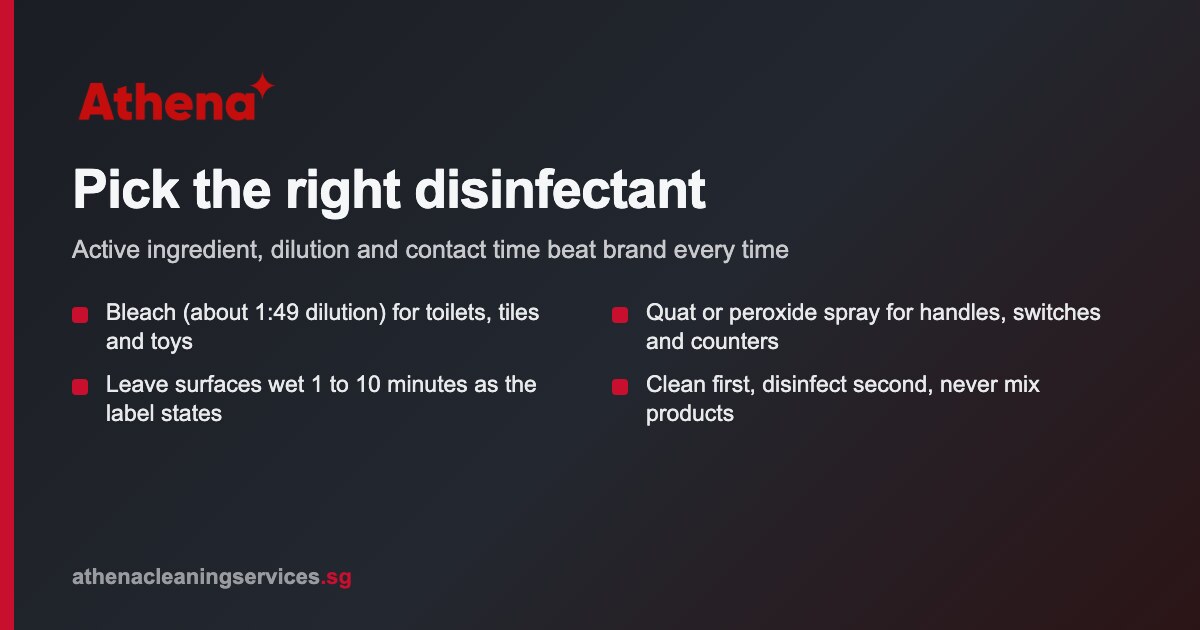
Many common alcohol and quat products are weak against the viruses that cause HFMD, so bleach is the usual recommendation for hard surfaces. The commonly cited home mix is about 1 part household bleach to 49 parts water, which gives roughly 1,000 ppm chlorine when your bottle is 5 percent sodium hypochlorite. Check the strength on your own bottle and follow its dilution chart, because brands differ. For current outbreak advice, see HealthHub, which carries Ministry of Health guidance for families.
Toys, high chairs and play mats
Wash with soapy water first, apply the bleach solution to hard plastic items, leave them wet for the contact time on the bottle, then rinse well and air dry. Anything a child puts in their mouth must be rinsed thoroughly. Soft toys go in the washing machine on a hot cycle instead.
Handwashing still comes first
Surface disinfection supports good hygiene but does not replace it. Washing hands with soap and water for 20 seconds after toilet use and before meals does more to stop spread than any spray.
How to disinfect step by step in a humid home
Our climate changes how disinfectants behave. High humidity slows evaporation, so a damp surface stays wet longer in a shut bathroom. In an HDB flat with a ceiling fan and open windows, a thin film on a kitchen counter can dry in under a minute, well before the label time is up. Adjust for the room you are in.
- Ventilate. Open windows or switch on the exhaust fan. Never close yourself in a small bathroom with bleach.
- Clean first. Wipe or scrub with detergent and water to remove grease, dust and soap scum.
- Apply enough product. The surface should stay visibly wet for the whole contact time.
- Set a timer. Use the contact time printed on the label. Typical sprays need 1 to 5 minutes, while diluted bleach commonly needs 5 to 10 minutes.
- Re-wet if it dries early. A dry surface means the clock stopped.
- Rinse and dry food-contact surfaces, toys and anything touched by skin. Dry well so mould has less moisture to use.
Watch for mould as well
Disinfectant kills germs, but mould needs the moisture source fixed. If black patches keep returning on ceilings, window frames or silicone seals, the US EPA mould cleanup guidance explains why you should dry the area and fix leaks rather than rely on spraying. For stubborn exterior or balcony growth, why pressure washing is the best solution for mold and mildew removal in Singapore explains when a machine is the better tool.
Air out after disinfecting
Fumes from bleach and some sprays irritate lungs, especially for children, asthmatics and pets. The US EPA indoor air quality guidance recommends ventilation whenever you use strong cleaning products. Keep the home airy for at least 30 minutes afterwards.
Mistakes that make disinfectant useless or dangerous
The most common error is wiping the product off straight away. If you spray and wipe in the same motion, you have cleaned the surface but not disinfected it. The second is using too little. A light mist dries before it works.
Never mix products
Do not combine bleach with ammonia-based cleaners, vinegar, toilet acid or other chemicals. The mixtures release toxic gases such as chlorine and chloramine. Use one product at a time, rinse between them, and keep the original bottle so the label stays with the liquid. Do not decant bleach into old drink bottles, which has led to accidental poisonings of children.
Over-diluting or over-strengthening
More bleach does not mean more clean. Stronger solutions damage grout, rust metal fittings and bleach clothes, with no gain in germ kill beyond the label rate. Diluted bleach also loses strength within a day or so, so mix a fresh batch each time you disinfect.
Using disinfectant on everything
Most of the home does not need daily disinfection. Focus on toilets, bathroom floors, kitchen counters, door handles, light switches and shared devices. Overusing harsh products wears out finishes and irritates skin. For consumer rights and safe product labelling, the Consumers Association of Singapore (CASE) is a good place to check before buying unfamiliar brands.
What disinfection costs in Singapore
DIY disinfection is cheap. A 1.8-litre bottle of household bleach typically costs about S$3 to S$6 at a supermarket and makes dozens of litres of working solution. A multi-surface quat or hydrogen peroxide spray usually runs S$6 to S$15, and a pack of alcohol wipes S$3 to S$8. A basic home kit of bleach, one spray, gloves and a spray bottle comes to roughly S$20 to S$40.
Professional disinfection is priced by home size and method. Typical 2026 market ranges are about S$150 to S$300 for a small HDB flat, S$250 to S$450 for a larger HDB or small condo, and S$400 to S$700 or more for big condos and landed homes. Fogging or misting adds coverage for air and hard-to-reach areas, while hand-wiped treatment targets touch points. Quotes differ by provider, so ask what product is used, the contact time and whether GST is included.
When a professional is worth it
Hiring someone makes sense after a confirmed illness in the household, before a newborn comes home, or when you have just finished renovation and need dust and residue gone first. Disinfecting over leftover plaster dust is wasted effort, so start with the steps in 5 essential steps for effective post renovation cleaning Singapore. Landlords and tenants handing back a flat can also combine disinfection with a full clean, as covered in best end of tenancy cleaning Singapore.
Comparison at a glance
| Active ingredient | Best for | Avoid on | Typical price (SGD) | Typical contact time |
|---|---|---|---|---|
| Diluted household bleach (sodium hypochlorite) | Toilets, bathroom tiles, hard plastic toys, HFMD clean-up | Marble, quartz, stainless steel, fabric, some vinyl | S$3 to S$6 per 1.8L | 5 to 10 minutes, rinse after |
| Quaternary ammonium spray | Door handles, switches, kitchen counters, daily wipe-down | Mixing with bleach, unrinsed food surfaces | S$6 to S$12 per bottle | 1 to 5 minutes |
| Hydrogen peroxide spray | Kitchens, baby areas, chopping boards after washing | Unsealed wood, coloured fabric | S$8 to S$15 per bottle | 1 to 5 minutes |
| Alcohol (70 percent ethanol or isopropanol) | Phones, remotes, keyboards, small touch points | Varnished wood, some plastics, near flames | S$3 to S$8 per pack of wipes | 30 seconds to 1 minute, keep wet |
| PCMX floor liquid | Mopping tile and laminate floors | Spot treatment of outbreak surfaces | S$5 to S$10 per bottle | Follow label, usually 5+ minutes |
Frequently asked questions
What is the best disinfectant for home use in Singapore?
For most homes, diluted household bleach is the best value for toilets, tiles and toys, and a quat or hydrogen peroxide spray is best for handles, switches and counters. Choose products that name their active ingredient and state a contact time, then follow the label dilution exactly.
How long should disinfectant stay on a surface?
Leave it visibly wet for the contact time printed on the label. Many sprays need 1 to 5 minutes, and diluted bleach commonly needs 5 to 10 minutes. If the surface dries sooner in a breezy HDB flat, spray again and restart the timer.
What should I use to disinfect after HFMD in the family?
Wash hard surfaces and toys with soap and water, then apply a diluted bleach solution, commonly about 1 part bleach to 49 parts water. Check the strength printed on your bottle first. Leave it for the contact time, rinse items children handle or mouth, and wash hands often. Check HealthHub for current advice.
Is it safe to use bleach in a small HDB bathroom?
Yes, if you dilute it, open the window or run the exhaust fan, wear gloves, and never mix it with other cleaners. Rinse after the contact time and keep children and pets out until the air is fresh and surfaces are dry.
How much does professional home disinfection cost in Singapore?
Typical prices run from about S$150 to S$300 for a small HDB flat and S$400 to S$700 or more for large condos and landed homes. Costs depend on size, method and product, so request a written quote that states the product and whether GST applies.
Can I use the same disinfectant on sofas and mattresses?
Usually not. Bleach and strong sprays can stain or weaken fabric and leather. Use a fabric-safe sanitiser or steam cleaning, and let the item dry fully, since lingering damp encourages mould in Singapore's humid weather.
Sources
- National Environment Agency (NEA)
- HealthHub
- US EPA mould cleanup guidance
- US EPA indoor air quality guidance
- Consumers Association of Singapore (CASE)
Related Athena cleaning services in Singapore
- vinyl cleaning service solutions every home singapore
- 10 effective methods for allergen removal mattress cleaning singapore
- 5 expert tips for leather sofa cleaning in singapore
- why pressure washing is the best solution for mold and mildew removal in singapore
- 5 essential steps for effective post renovation cleaning singapore
Related articles