
How to Disinfect Offices for Flu Season: 2026 Guide
In this article
- Key Takeaways
- Table of Contents
- How office flu disinfection helps, and what it cannot do
- Choose disinfectants and use them correctly on office surfaces
- Which office surfaces should your flu-season routine prioritise?
- How to disinfect an office space safely: a repeatable routine
- When professional office cleaning can support flu-season readiness
- Make workplace care part of your ongoing plan
- Frequently Asked Questions
A longer disinfection checklist doesn’t automatically make an office safer. If you’re wondering how to disinfect office space for flu season, the challenge is knowing which shared surfaces to prioritise, when cleaning is enough, and how to use disinfectants correctly without disrupting work or creating unnecessary chemical exposure. A focused routine is more practical than treating every surface the same way.
This guide explains how to clean first, target frequently touched areas such as door handles, switches, taps and shared equipment, and follow the product label’s contact time. You’ll also learn how to build a repeatable schedule around daily office activity and complement surface care with wider flu-prevention measures, including hand hygiene and staying home when unwell. Professional office cleaning and sanitization can help keep care for shared spaces thorough and manageable.
Key Takeaways
- Learn how to disinfect office space for flu season with a focused routine that supports, rather than replaces, wider prevention measures.
- Choose a disinfectant suited to the surface and follow its label, especially the required wet contact time.
- Prioritise shared touchpoints across entrances, meeting rooms and work areas, then set a practical cleaning frequency for each zone.
- Use a clear, repeatable process and coordinate access so office cleaning can be carried out with minimal disruption.
- Consider recurring office cleaning or sanitization for consistent care of frequently used shared spaces.
How office flu disinfection helps, and what it cannot do
Office disinfection has a specific role: it treats germs on surfaces employees share. It cannot prevent every route of flu transmission, and using more chemicals does not automatically make a routine more effective. Focus on frequently handled surfaces and match the level of care to how each space is used.
Influenza (flu) is a contagious respiratory illness caused by influenza viruses. It can spread through respiratory particles, so surface hygiene is only one part of reducing workplace transmission. Give shared touchpoints appropriate attention without assuming every desk, wall or floor needs constant disinfection.
Cleaning, sanitizing, and disinfecting: what is the difference?
Cleaning removes dirt, residue and germs from a surface, usually with water and detergent or soap. It may reduce the amount of germs present, but it does not necessarily inactivate them. Wiping crumbs and grime from a shared pantry counter, for example, is cleaning.
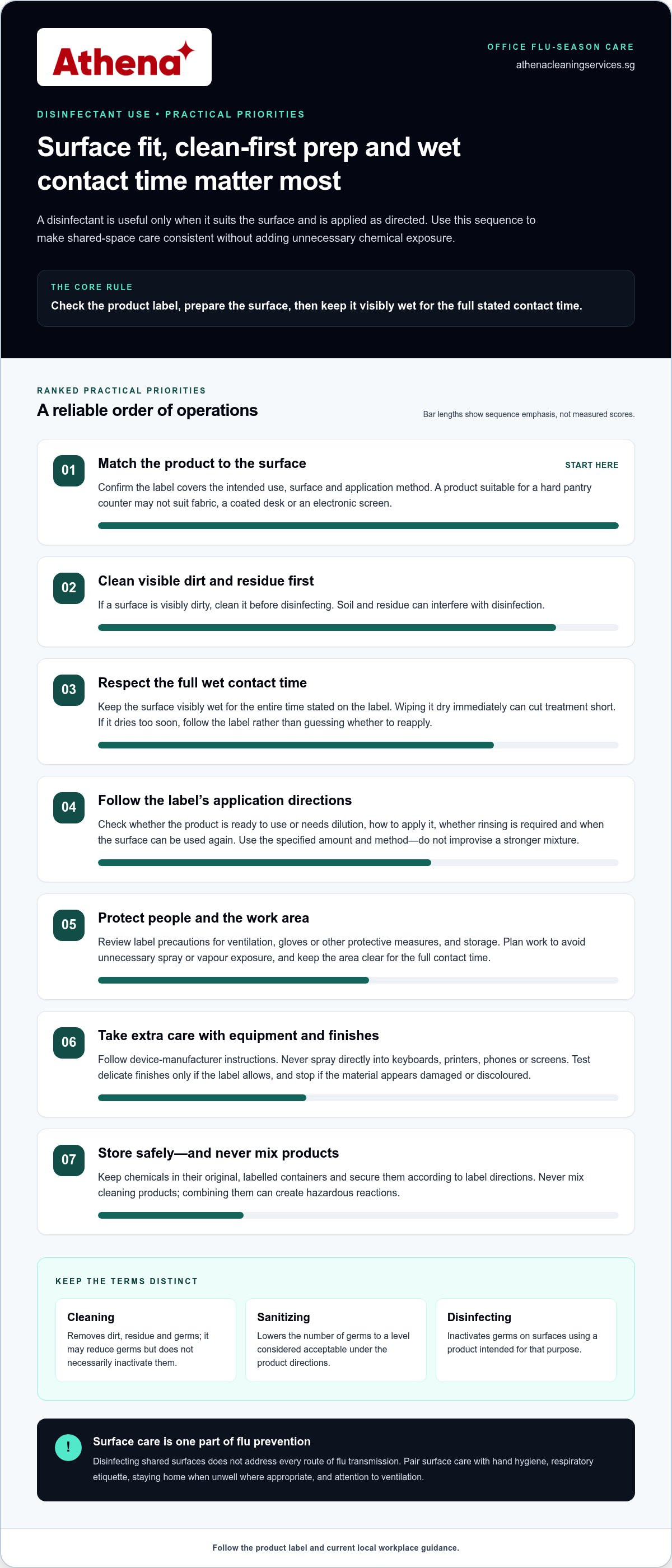
Sanitizing lowers the number of germs on a surface to a level considered acceptable under the product’s directions. Disinfecting inactivates germs on surfaces using a product intended for that purpose. The terms are not interchangeable, so follow the label for the action the product is designed to perform. If a surface is visibly dirty, clean it first because soil and residue can interfere with disinfection. Then apply the product as directed and observe its stated contact time.
Why office disinfection is only one part of flu prevention
A disinfected handle or keyboard does not address respiratory particles in shared indoor spaces. Surface care works best alongside everyday workplace practices, such as encouraging employees who feel unwell to stay home where appropriate and following respiratory etiquette by covering coughs and sneezes. These measures address different parts of a workplace routine. No single cleaning task replaces them.
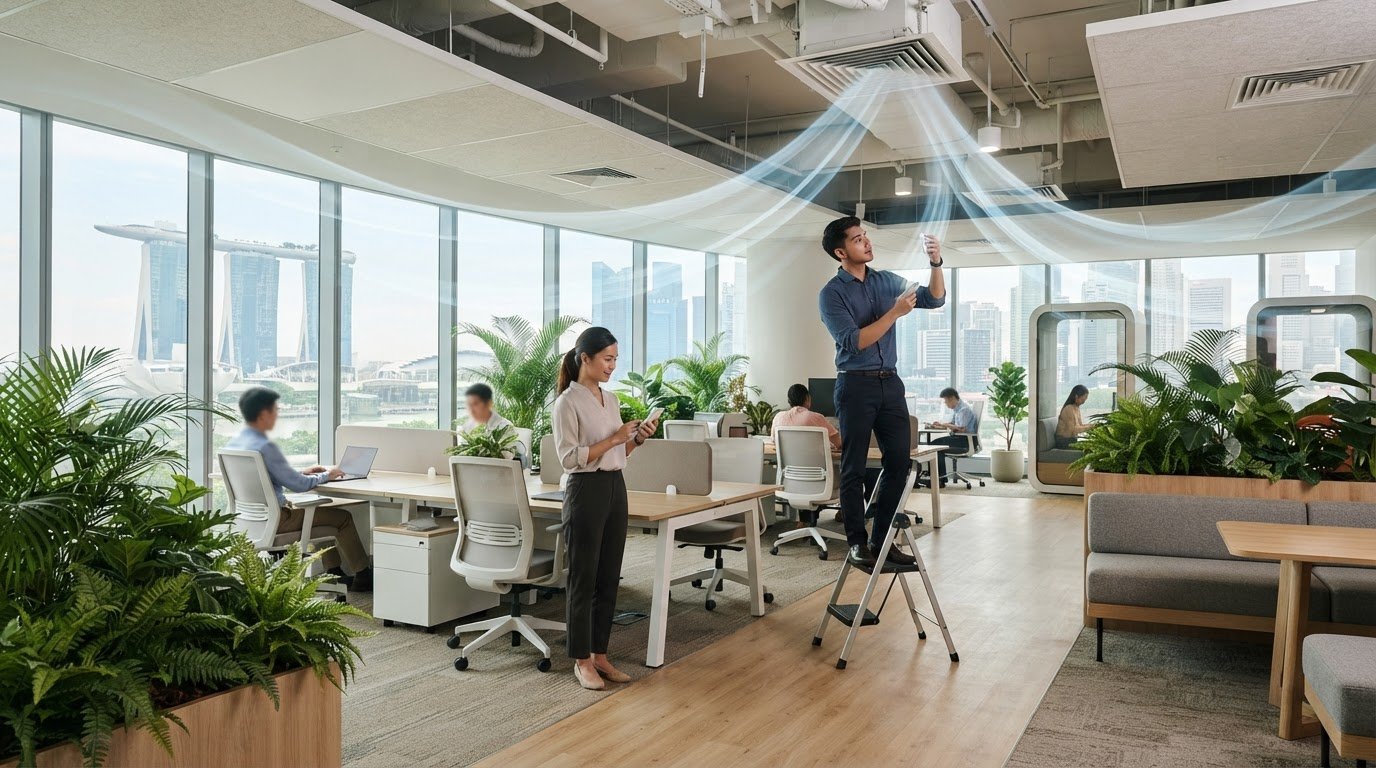
Hand hygiene matters, too. Make it convenient for employees to wash their hands with soap and water, particularly before eating and after using shared facilities. Keep ventilation in mind as a broader consideration for occupied indoor spaces. Surface disinfection is not a substitute for fresh air or appropriate building practices.
Singapore does not follow the same fixed winter-flu calendar as temperate countries. Rather than relying on a seasonal start date, maintain sensible routine cleaning and adjust care to how heavily shared areas are used. For updated local advice, refer to the Ministry of Health Singapore’s current public-health guidance. This context helps clarify how to disinfect office space for flu season: target relevant surfaces, use products properly and include surface care in a wider, practical prevention plan.
Choose disinfectants and use them correctly on office surfaces
A disinfectant is useful only when it is suitable for the surface and applied as directed. When considering how to disinfect office space for flu season, do not choose a product based on a broad “multi-purpose” claim alone. Read the label to confirm the intended use, suitable surfaces, application method and any dilution instructions. A product appropriate for a hard pantry counter may not be suitable for a fabric chair, coated desk or electronic screen.
Follow current Singapore workplace safety guidance where relevant, and use the product label as your practical starting point. The linked OSHA sanitation standard provides a workplace reference, but it is a United States standard, not Singapore law. Do not treat overseas requirements as local rules.
How to read a disinfectant label before use
Before starting, confirm that the label covers the surface and intended application. Check whether the product is ready to use or needs dilution, how it should be applied, and whether rinsing is required afterward. Note the stated wet contact time as well. The surface must remain visibly wet for that full period. Wiping it dry immediately can cut the treatment short. If it dries too soon, follow the label’s directions rather than guessing whether to reapply.
Use the specified amount and method, and do not improvise a stronger mixture. Keep the label accessible so anyone carrying out the task can follow the same instructions. Consistent directions help prevent missed steps across shared areas.
Protect employees, equipment, and office finishes
Product choice matters as much as technique. Review precautions for ventilation, gloves or other protective measures, storage, and keeping the product away from children. Plan the task to avoid unnecessary exposure to spray or vapour, and keep the area clear for the full contact time. Follow the label’s directions for when a treated surface can be used again.
- Check compatibility: Test the product on an inconspicuous area if the label allows, especially on delicate finishes. Stop if the material appears to discolour or become damaged.
- Protect electronics: Follow the device manufacturer’s cleaning instructions. Apply product to a cloth only when both sets of directions permit it, and never spray directly into keyboards, printers, phones or screens.
- Store safely: Keep chemicals in their original, labelled containers and secure them according to label directions. Never mix cleaning products because combining them can create hazardous reactions.
For a repeatable office routine, keep product instructions with the cleaning supplies and make precautions clear to everyone responsible for the task. Athena Team Cleaning provides professional office cleaning and sanitization to support consistent care for frequently used shared surfaces.
Which office surfaces should your flu-season routine prioritise?
Start with what people handle repeatedly, especially objects used by different employees or visitors. These touchpoints can look clean and still need regular attention. Not every workstation requires identical disinfection: an assigned desk used by one person has a different sharing pattern from a meeting-room control panel or pantry tap.
Prioritise shared touchpoints across the office
Map the office by zone, then note how often each item is shared. Use the suggestions below as a starting point, not a universal timetable. Adjust frequency based on occupancy, visible soil, shared use and workplace policy. Clean visibly dirty surfaces promptly, and follow product directions whenever disinfection is part of the routine.
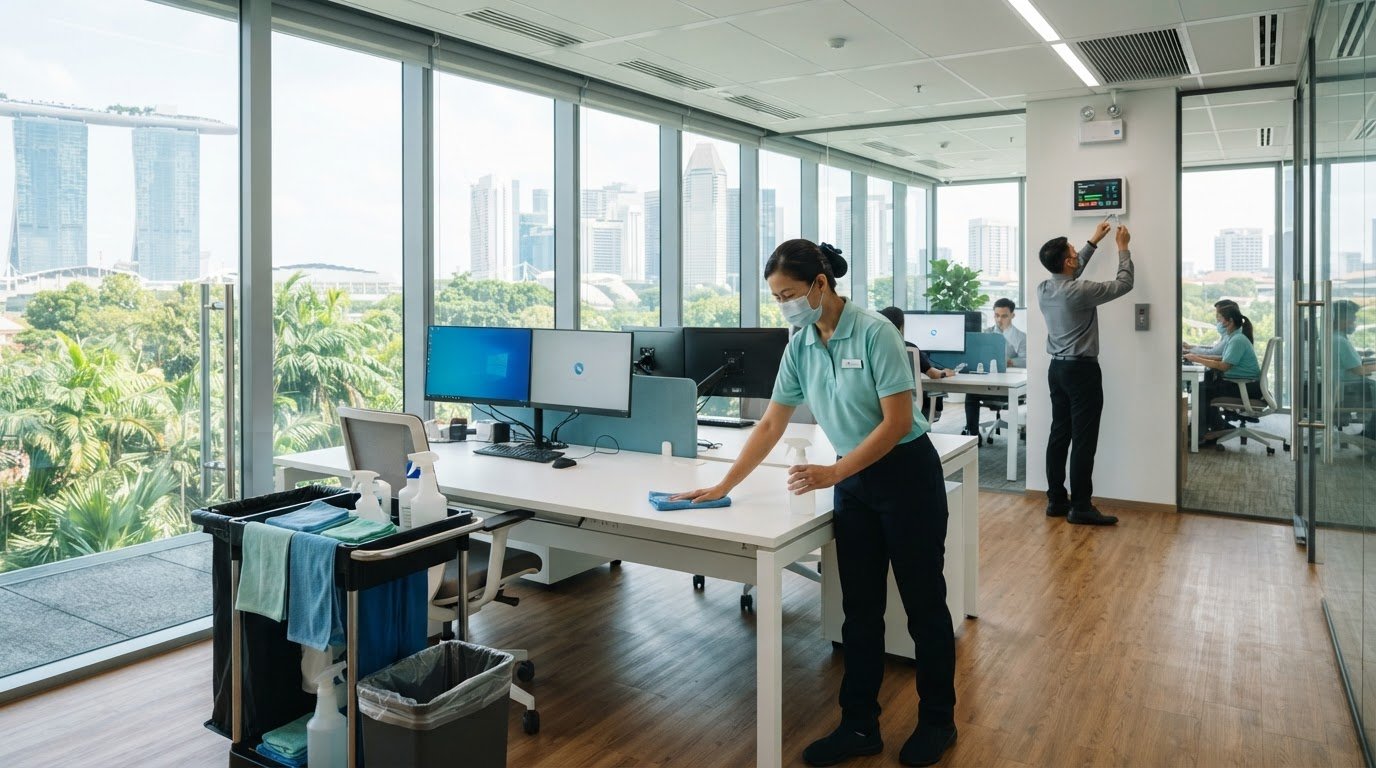
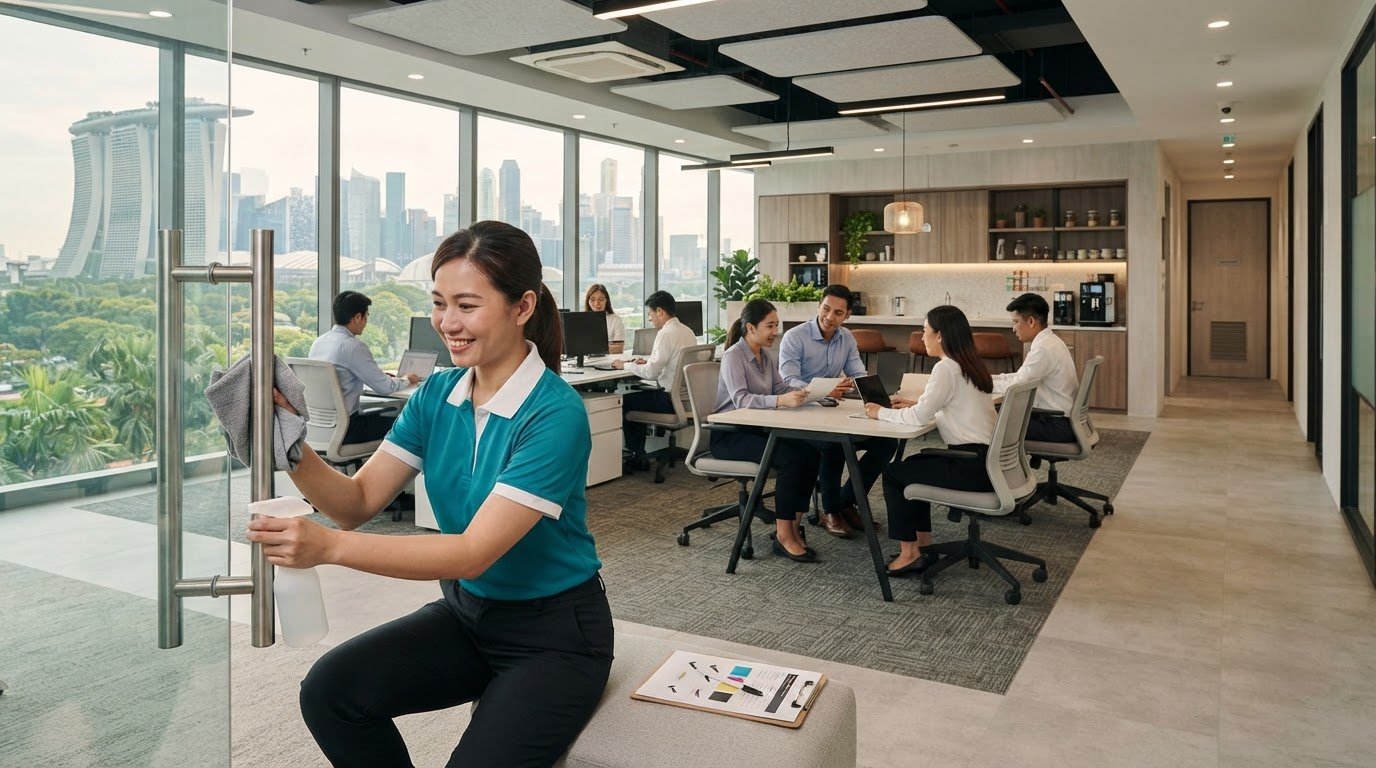
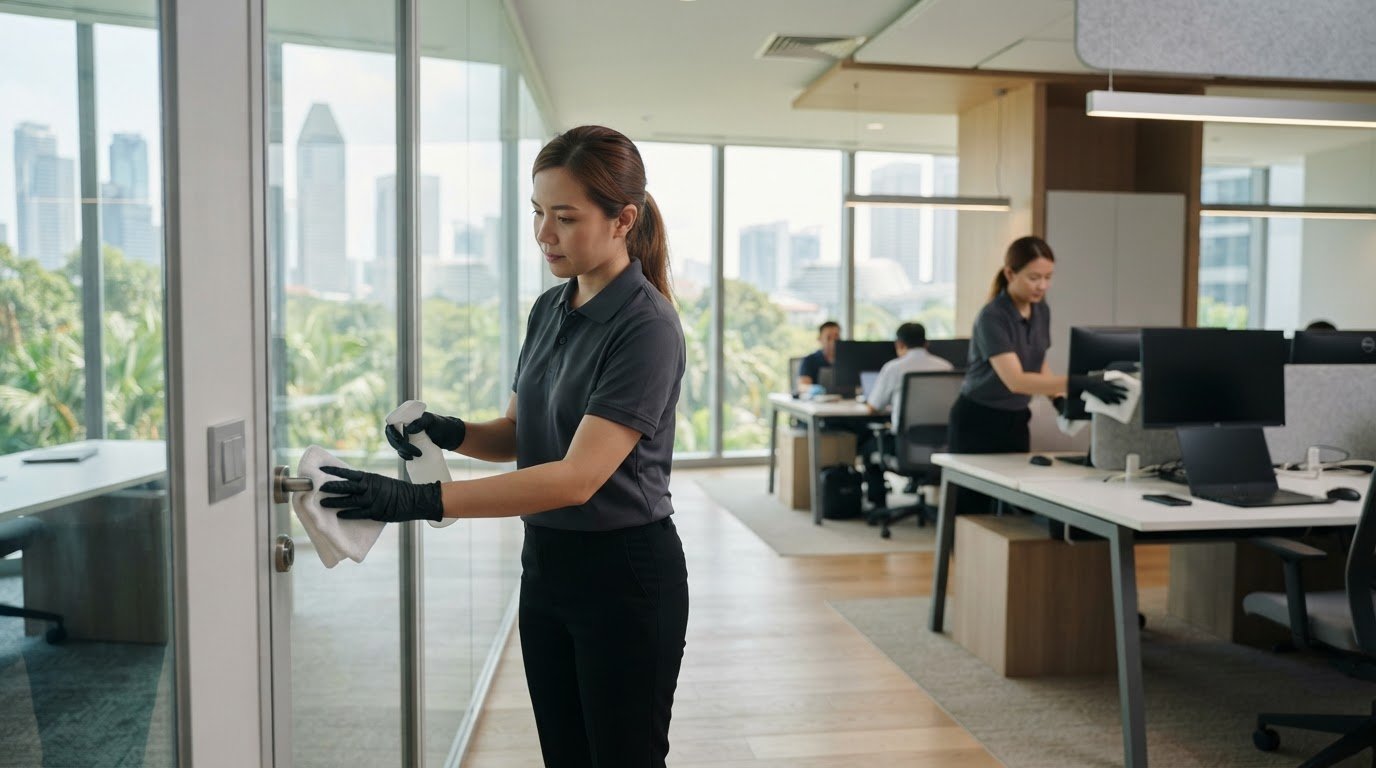
Entrance and circulation: Employees and visitors may touch entrance door handles, lift buttons and light switches throughout the day. Include them in routine cleaning. Consider more frequent attention when visitor traffic is high and workplace policy supports it.
Workstations and shared devices: For hot desks, shared desks, keyboards, phones and printer controls, clean between users where practical and appropriate for the surface. For assigned desks, tailor the routine to actual use and policy rather than applying the same frequency to every workstation.
Meeting rooms: Prioritise door handles, switches, room-booking touchscreens, shared microphones and audiovisual controls. Cleaning between bookings may suit heavily used rooms if schedules allow and the device manufacturer’s instructions permit the method.
Pantry: Pay attention to refrigerator, microwave and cupboard handles, appliance buttons, and shared counters. A daily routine may be practical in a busy pantry, with additional cleaning when spills or visible soil occur.
Restrooms: Include taps, flush controls and door hardware in routine cleaning. Set the frequency according to actual use and workplace policy, and address visible soil promptly.
Adapt the routine to Singapore office operations
Shared workstations, common pantry use, visitor traffic and varied work schedules create different touchpoint patterns from one office to another. A team that hot-desks may need between-use attention for shared equipment, while a lower-traffic meeting room may follow its normal cleaning schedule. Daily or between-use care should reflect real activity and workplace policy, not an assumed rule for every surface.
Keep the zone list accessible to the people responsible for cleaning, and review it when office use changes. A new shared device, busier pantry or increase in visitors may shift priorities. Because flu activity in Singapore does not follow a fixed winter peak date, use current local health updates rather than importing seasonal timing from overseas. This use-based approach makes how to disinfect office space for flu season a manageable routine instead of an indiscriminate checklist.
How to disinfect an office space safely: a repeatable routine
A dependable process makes disinfection easier to carry out consistently and helps reduce disruption in shared areas. Before starting, choose a time when fewer people need the space, let employees know which zones are being treated, and allow enough time to follow each product’s directions. A good routine for how to disinfect office space for flu season is clear, suited to each surface and easy to record.
A practical sequence for routine surface disinfection
Use this sequence for surfaces designated for disinfection. Always follow the product label and the equipment manufacturer’s care instructions.
- Prepare the area. Gather labelled supplies, read the directions and precautions, and arrange access so people do not need to touch treated surfaces before they are ready for use.
- Remove visible soil. Clean dirt, spills and residue first using a method suitable for the surface. Prepare the surface according to the product instructions so the disinfectant can be used as directed.
- Apply the product correctly. Use the label’s application method and dilution directions, if any. Do not spray directly onto electronics or delicate finishes unless their care instructions permit it.
- Observe contact time. Keep the surface visibly wet for the full time stated on the label. Do not wipe it dry early. If it dries before the time is reached, follow the label rather than improvising.
- Finish safely. Let the surface dry or rinse it only if directed. Store supplies as instructed, clear any waste safely, and reopen the area when the label’s directions allow.
Communicate the plan and make it easy to follow
Assign each zone to a responsible role, such as the facilities lead for meeting rooms or the pantry team for shared counters. Coordinate timing around bookings, shift changes and busy pantry periods. A short notice can tell employees which area is being treated and when it will be available again.
Use a simple completion record to make tasks visible and repeatable. A shared log can include:
- Zone and touchpoints: for example, pantry appliance handles or meeting-room controls.
- Responsible role: the person or team assigned to the task.
- Completion record: date, time and initials, plus a note if a surface was inaccessible or a supply was missing.
Keep the log practical, not burdensome. Review it when occupancy, shared use or current public-health guidance changes, then adjust assignments or timing as needed. Place hand-hygiene supplies and tissues where employees can access them easily, supporting wider workplace habits alongside surface care.
For consistent care across shared spaces, explore professional office cleaning and sanitization.
When professional office cleaning can support flu-season readiness
A clear routine is easier to sustain when responsibility, timing and shared-space priorities are established. Recurring professional office cleaning can help maintain predictable care for work areas, meeting rooms, pantries and other common spaces. It supports a well-organised workplace, but it cannot guarantee that flu transmission or illness will be prevented.
What professional support can add to an office routine
Professional cleaning complements the day-to-day steps employees take by providing consistent attention to shared areas. A schedule can be tailored around how the office operates, including which spaces receive the most use and when staff can access them with minimal disruption. This helps keep routine cleaning on track and makes it easier to identify when frequently used surfaces need additional attention.
Sanitization services provide an extra focus on shared touchpoints. The scope can be shaped around the office’s needs and operational preferences. Keep the purpose clear: professional cleaning and sanitization support a practical workplace routine. They are not a substitute for wider flu-prevention measures or a promise of specific health outcomes. For regional businesses or organizations seeking examples of comprehensive workplace maintenance programs, visit Showpiece Commercial Cleaning to see how contract cleaning services are coordinated across commercial facilities.
Athena Team Cleaning provides commercial office cleaning and sanitization services in Singapore, with flexible scheduling. If you’re considering how to disinfect office space for flu season, professional support can help make care for shared spaces more consistent while your team maintains its wider workplace practices.
Plan your next step with Athena Team Cleaning
Make a quote request more useful by outlining the office type, the shared areas that need attention, and your preferred schedule. Note specific sanitization needs, such as frequently used meeting-room equipment or common pantry surfaces. This gives the team a practical picture of your workplace routine and helps shape a suitable cleaning plan.
If you’re comparing what to look for in a cleaning arrangement, the professional cleaning company buyer’s guide can help you think through your priorities. Consider which areas are used most, how access should be coordinated, and what level of ongoing support fits your operations. Clear requirements make it easier to turn general flu-season concerns into a manageable plan.
Ready to organise consistent care for your workplace? Request a professional office cleaning quote online and share your office requirements with Athena Team Cleaning.
Make workplace care part of your ongoing plan
A flu-season routine is most useful when it becomes part of how your office is managed throughout the year. Set a review point for your cleaning plan, and revisit it when teams return to shared workstations, visitor traffic changes or office operations shift. This keeps decisions about how to disinfect office space for flu season grounded in how your workplace actually functions, rather than in a checklist that no longer fits.
For support putting that plan into practice, Athena Team Cleaning provides commercial office cleaning and sanitization services with flexible scheduling. Share your office’s priorities and preferred timing to start a conversation about a suitable arrangement.
Discuss your office cleaning needs and take the next step towards a more consistently cared-for workplace. A clear plan can make ongoing upkeep easier to manage.
Frequently Asked Questions
Does disinfecting an office prevent the flu from spreading?
No. Disinfecting shared surfaces can form part of an office hygiene plan, but it cannot prevent flu transmission on its own. Flu can also spread through respiratory particles, so surface care should sit alongside workplace practices such as hand hygiene, respiratory etiquette and encouraging unwell employees to follow current health advice. Treat disinfection as one practical layer of care, not a guarantee that employees will not become ill.
How often should an office be disinfected during flu season?
There is no single frequency that suits every office. Consider how many people share a space, how often they use its touchpoints, whether surfaces become visibly soiled and what workplace policy requires. A shared pantry used throughout the workday may warrant more frequent attention than a low-traffic room. Set a workable schedule, then review it if occupancy or shared use changes.
Should I clean a surface before disinfecting it?
Yes, if it is visibly dirty, remove soil and residue before applying disinfectant. For example, clear a spill from a shared counter and clean away food debris before treating the surface. Follow the product directions for both steps because some products specify a particular preparation method. Cleaning removes material that may interfere with the product’s intended use, helping you apply it as directed.
How long should disinfectant remain wet on an office surface?
Keep the surface visibly wet for the full contact time stated on the disinfectant label. The duration varies by product, so do not assume one general time applies to every spray or wipe. If a desk edge dries before the stated time, follow the label’s instructions rather than shortening the contact time. Plan the task so employees will not need to use the treated surface during this period.
Can I use the same disinfectant on office desks and computer equipment?
Not automatically. Check the disinfectant label for suitable surfaces, then compare it with the manufacturer’s care instructions for each device or finish. A product suitable for a hard desk may damage a screen coating or keyboard. Do not spray directly into electronics. Where the instructions allow, apply a suitable product to a cloth rather than the device, and avoid excess moisture around ports and controls.
What should an office cleaning plan include for flu season?
Include a list of priority zones, the touchpoints in each, the person or team responsible, and how completed tasks will be recorded. Add product directions and surface-care notes where cleaners can refer to them. For example, a meeting-room checklist might identify shared controls and note who prepares the room between bookings. Also state when the plan should be reviewed, such as after a change in occupancy or public-health advice.
Is professional office sanitization necessary during flu season?
Not necessarily. A workplace can maintain routine cleaning internally if it has the time, supplies and clear task ownership to do so. Professional office cleaning or sanitization from companies like Divine Touch Cleaning may help when shared spaces need more consistent attention or the existing routine is difficult to sustain. It supports workplace upkeep, but should not be presented as a guarantee against flu or a replacement for broader prevention practices.
Does Singapore have a fixed flu season for office cleaning?
No fixed temperate-climate winter period should determine an office’s cleaning schedule in Singapore. Base routine care on how the workplace is used, and adjust it when local health advice or operating conditions change. For current public-health information, refer to Singapore’s Ministry of Health guidance rather than relying on flu-season dates reported for another country. A practical year-round plan can then be reviewed as needed.
Frequently Asked Questions
Cleaning, sanitizing, and disinfecting: what is the difference?
Does disinfecting an office prevent the flu from spreading?
How often should an office be disinfected during flu season?
Should I clean a surface before disinfecting it?
How long should disinfectant remain wet on an office surface?
Can I use the same disinfectant on office desks and computer equipment?
What should an office cleaning plan include for flu season?
Is professional office sanitization necessary during flu season?
Does Singapore have a fixed flu season for office cleaning?
Related articles