
How to remove odour from your home in Singapore, step by step
In this article
- Find the source before you spray anything
- Fix humidity first, because Singapore air carries the smell back
- Clean the fabrics that hold smell: mattresses, sofas, curtains and carpets
- Deal with kitchens, drains and bins
- Remove post-renovation and new-furniture smells
- Compare the options: cost, drying time and when to call a professional
- A simple weekly routine that keeps smells away
- Comparison at a glance
- Frequently asked questions
- Sources
- Related Athena cleaning services in Singapore
To remove odour from your home in Singapore, find the source, clean it, and dry it fully. Then bring the humidity down and move air through the flat. Sprays and diffusers only cover a smell for a few hours. In most HDB flats, BTO units and condos, the real cause is damp fabric, a dirty drain trap, a mattress or sofa that has soaked up sweat, or a wet corner where mould has started.
This guide walks through each source in the order we check them on site, with realistic Singapore costs, drying times and the jobs you can do yourself first. The table in the sixth section sums up the lot.
Find the source before you spray anything
A smell that keeps coming back has a source, and that source is almost always something wet, soft or organic. Air fresheners fail because they add a second smell on top of the first. Spend ten minutes tracing it instead.
Close the windows and doors for an hour, then walk through the flat room by room. Smell the mattress, the sofa seat, the curtain hems, the carpet edges, the bottom of the wardrobe, the shoe cabinet and the space under the kitchen sink. Your nose gets used to a smell quickly, so ask someone who does not live there, or step outside for a few minutes and come back in.
Match the smell to the likely cause
- Sour or musty, like a wet towel: damp fabric or early mould, often in wardrobes, curtains or behind furniture against an outside wall.
- Stale body or sweat smell: mattress, pillows, upholstered headboards and fabric sofas.
- Rotten or sewage smell: a dry floor trap, a dirty kitchen sink trap or a bin that has not been washed.
- Sharp chemical smell in a newly renovated unit: paint, adhesive and new board furniture releasing fumes.
Getting the diagnosis right saves money. A musty bedroom usually needs a dehumidifier and a mattress clean, not a deep clean of the whole flat.
Fix humidity first, because Singapore air carries the smell back
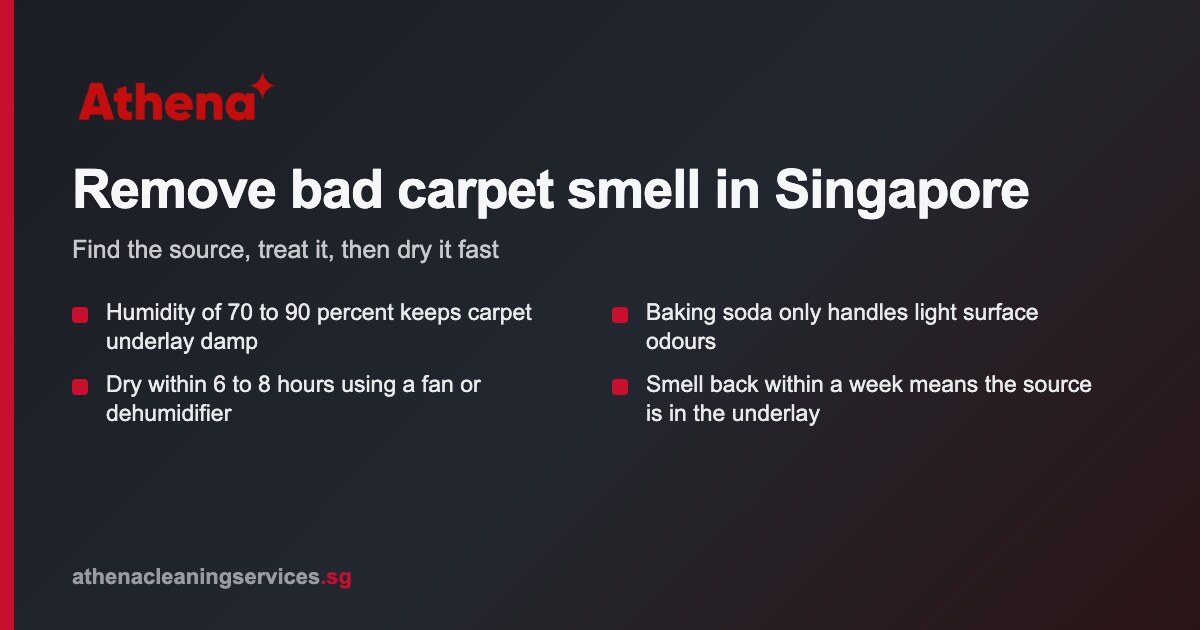
Singapore's relative humidity commonly sits between 70% and 90%, and it rarely drops below 60% even in the drier months. Fabrics and walls hold that moisture, and damp is what lets odour-causing bacteria and mould grow. If you clean a sofa but leave the room at 85% humidity, the smell is back within weeks.
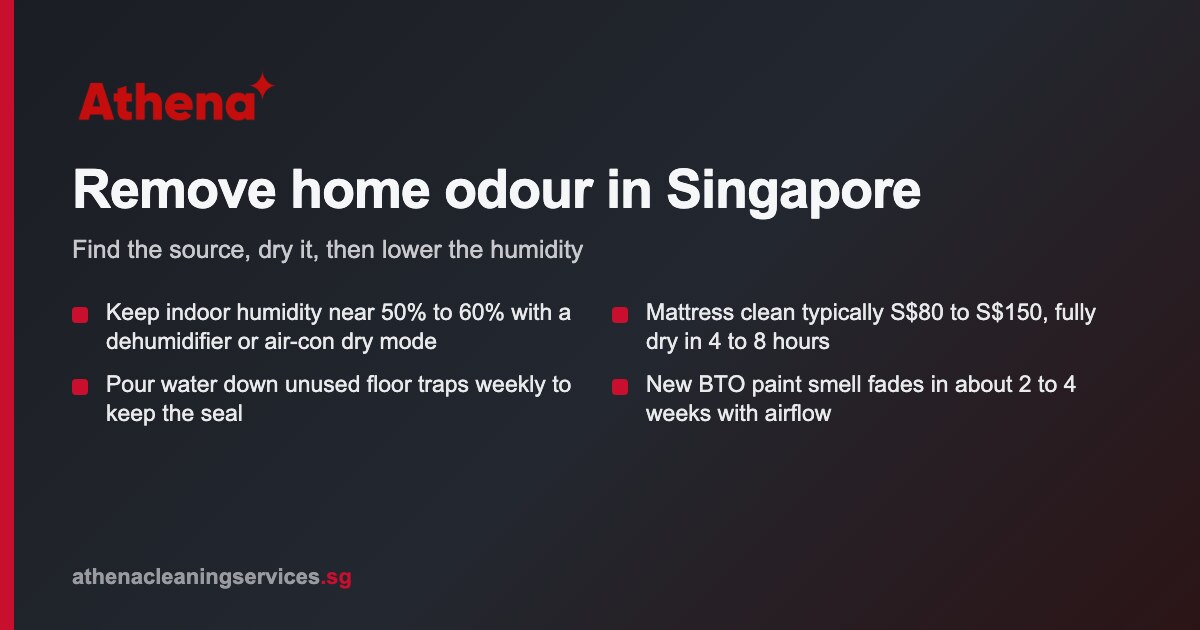
Aim for indoor humidity of about 50% to 60%. The US EPA's indoor air quality guidance suggests keeping indoor humidity below 60%, and ideally between 30% and 50%, to limit mould and dust mites. In Singapore, 50% to 60% is the realistic target with air-conditioning or a dehumidifier running.
Practical ways to bring humidity down
Run the air-conditioner in dry mode for a couple of hours a day in closed bedrooms. A compact home dehumidifier typically costs S$150 to S$350 to buy and uses roughly 200 to 300 watts, so a few hours a day adds only a few dollars to the monthly bill. Open windows on opposite sides of the flat for cross ventilation when it is not raining, and use the bathroom and kitchen exhaust fans during and after use.
Do not dry laundry in closed bedrooms. Wet clothes release a litre or more of water into the air over a day, which is enough to make a small room smell stale. Use the balcony, the service yard or a ventilated laundry room, and let wardrobe doors stay slightly open when the weather allows.
Clean the fabrics that hold smell: mattresses, sofas, curtains and carpets
Soft furnishings act like sponges. They absorb sweat, spills, cooking oil and humidity, then release them slowly as odour. Washing what can go in the machine is the cheapest fix, and deep cleaning what cannot is the next step.
Mattresses and bedding
Strip the bed weekly and wash sheets at 60 degrees Celsius where the label allows. Vacuum the mattress, sprinkle baking soda, leave it for a few hours, and vacuum again. The Sleep Foundation's mattress cleaning guidance recommends spot treating stains lightly and letting the mattress dry fully, because trapped moisture causes mildew. If the smell is deep, hot water extraction is more effective than surface products, and our guide to allergen removal and mattress cleaning in Singapore covers the methods in detail. A professional mattress clean in Singapore typically costs S$80 to S$150 per mattress, and a king costs more than a single.
Sofas and upholstery
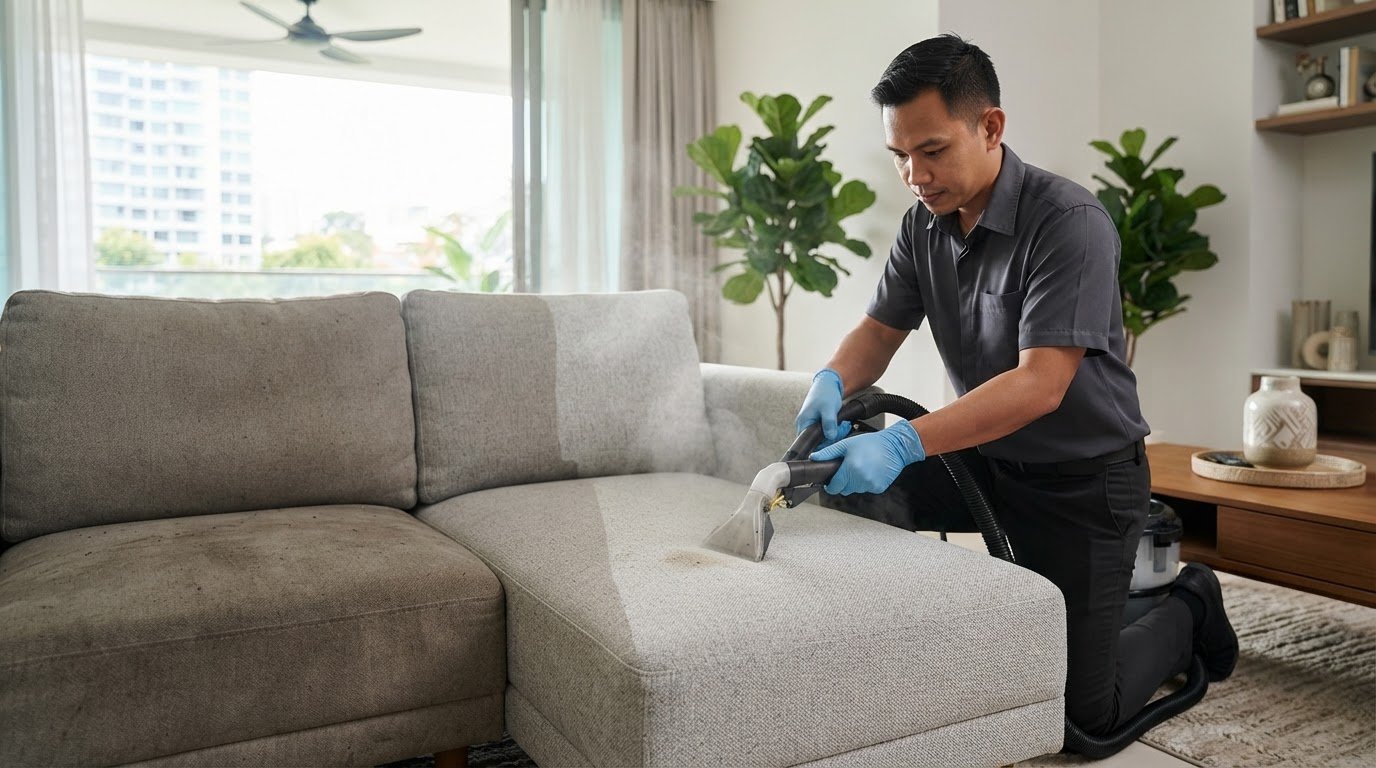
Fabric sofas hold food and sweat smells in the foam as well as the cover. For light odours, the DIY upholstery cleaning recipes we published work well on spot stains. Go easy on water, because a soaked cushion can take a full day or more to dry in humid weather and may smell worse afterwards. Leather needs a different approach, and our leather sofa cleaning tips explain what to avoid.
Carpets and rugs
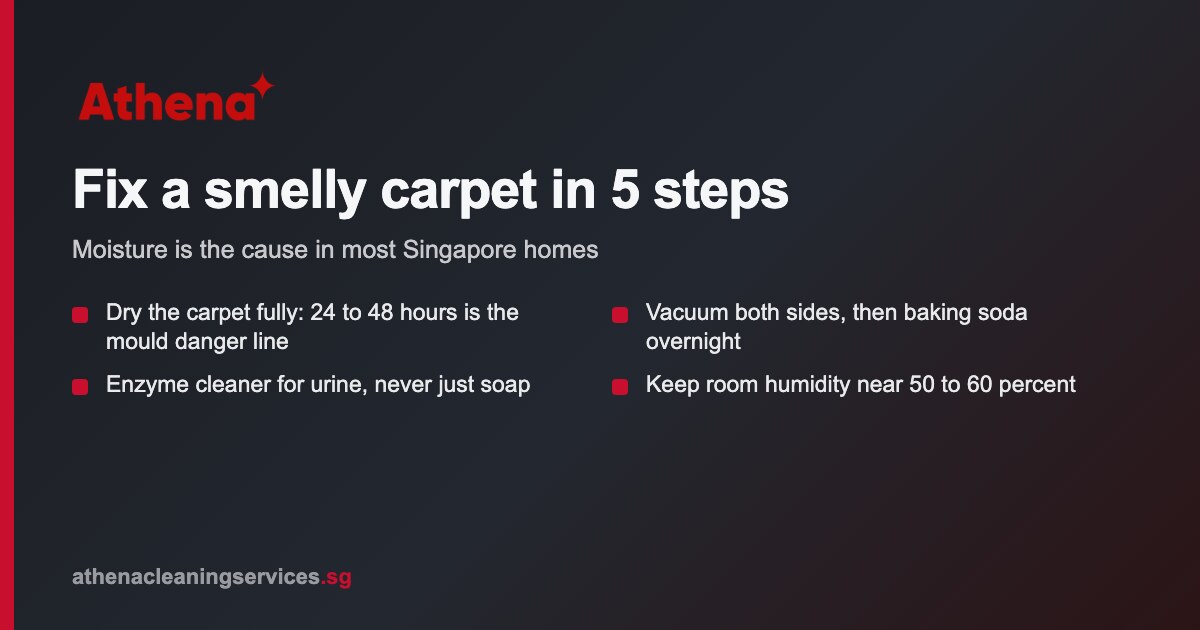
Carpet fibres trap pet odour, spills and damp. Vacuum slowly twice a week, and treat spills within minutes. How often a deep clean is needed depends on foot traffic and pets, which we cover in how often to clean carpets in Singapore. Hot water extraction usually leaves a carpet damp for 4 to 8 hours, and a fan or air-conditioning shortens that.
Deal with kitchens, drains and bins
If the smell is sharp, rotten or sour, look at water and food first. These sources are cheap to fix and cause most complaints of a bad smell that arrives suddenly.
Floor traps and sink traps
Every HDB and condo floor trap has a water seal that blocks sewer gas. In a bathroom you rarely use, such as a spare toilet, that water evaporates within a couple of weeks and the smell comes up. Pour a litre of water down it weekly. For the kitchen sink, pour a kettle of hot water down the drain, then a few tablespoons of baking soda followed by vinegar, and flush again after ten minutes. Grease buildup in the trap is the usual cause of a sour kitchen smell.
Bins, fridge and rubbish chute
Wash the kitchen bin with dish soap and hot water at least once a month, and dry it fully before putting in a new liner. In a hot flat, wet food waste starts to smell within a day, so take rubbish out daily or freeze food scraps first. Wipe the fridge gaskets and the drip tray at the back, which collect moisture and mould. The NEA's public cleanliness guidance is also worth a look if the smell comes from shared refuse areas or common corridors, since the town council or NEA handles those, not you.
If drains keep smelling after you have cleaned the trap, a pipe may be partly blocked or have a faulty seal. That is a plumber's job, not a cleaner's.
Remove post-renovation and new-furniture smells
A freshly renovated BTO or condo often smells of paint, adhesive and sawdust for weeks. Some of that comes from volatile compounds in paints, varnishes and board furniture. Some engineered wood gives off formaldehyde. The US EPA's facts about formaldehyde explain that levels are usually higher in new materials and drop over time, and that more ventilation helps.
Before you move in, remove construction dust from every surface, because dust holds on to smell. Open all windows for as many hours a day as safety allows, and leave cabinet doors and drawers open so they air out. Expect the strongest smell to fade over two to four weeks, though some units take longer when the air is closed up. Our 5 essential steps for post-renovation cleaning shows the order to clean in, so you do not spread dust back onto finished surfaces.
Do not seal new smells in with strong scented products. If a smell is headache-inducing or does not ease after a month, speak to your contractor about the materials used, and see HealthHub's healthy living resources for general advice if anyone at home has breathing problems.
Hard floors hold less smell than soft ones, which is one reason vinyl flooring care is simpler than carpet. Wipe it with a barely damp mop and do not let water pool in the joins.
Compare the options: cost, drying time and when to call a professional
The table below lists the usual odour sources in Singapore homes, the quick fix you can try yourself, and the typical professional cost in 2026. The costs are typical ranges for Singapore and change with unit size and condition, so always ask for a written quote.
As a rule, try the home fix first for light, recent smells. Book a professional when the smell is in the mattress or sofa foam, has lasted more than two weeks after you cleaned the surface, or covers a whole room.
What a professional can do that you cannot
Professional teams use hot water extraction, strong suction and commercial dryers. That removes far more moisture than a household cloth, which is what stops a smell from returning in humid weather. They can also tell you whether the issue is mould that needs a different treatment, or a leak that a cleaner cannot fix. If a leak or seepage is the cause, fix that first, or the smell returns however well you clean.
Ask any company for written pricing before booking, check whether prices include GST, and compare more than one quote. The Consumers Association of Singapore is the place to go for advice if a service dispute arises.
A simple weekly routine that keeps smells away
Once the source is gone, a short routine keeps it gone. Most of it takes under half an hour a week.
- Daily: take out kitchen rubbish, wipe the stove and counter, and air each room for 15 minutes when it is not raining.
- Weekly: change bedsheets, vacuum sofas and rugs, pour water down seldom-used floor traps, and wipe the fridge gaskets.
- Monthly: wash bins, clean the sink trap, vacuum under beds and behind furniture against outside walls, and check wardrobes for damp.
- Every 6 to 12 months: deep clean mattresses, sofas and curtains, depending on use, pets and children.
Silica gel or charcoal bags in wardrobes help with small closed spaces, though they need replacing or drying out regularly. Keep furniture a hand's width from walls so air can move. These small habits matter more than any product, because in Singapore's climate a damp spot left alone for a week becomes a smell by the weekend.
If you have worked through the list and a smell is still there, send Athena a message with photos and where the smell is strongest. We will tell you whether it needs a clean, a drying plan or a different trade.
Comparison at a glance
| Odour source | Quick home fix | Typical drying time | Typical professional cost (SGD) |
|---|---|---|---|
| Mattress (sweat, musty) | Vacuum, baking soda, sun or air-con dry | 4 to 8 hours | S$80 to S$150 per mattress |
| Fabric sofa (3-seater) | Vacuum, light spot clean, airing | 6 to 12 hours | S$120 to S$250 |
| Curtains | Machine wash if label allows, hang in airflow | 3 to 6 hours | S$30 to S$60 per panel for steam or wash |
| Carpet or rug | Vacuum, spot treat spills quickly | 4 to 8 hours | S$100 to S$300 depending on size |
| Floor trap or sink trap | Water seal, hot water, baking soda and vinegar | Not applicable | S$60 to S$150 for a plumber visit |
| Post-renovation smell | Open windows, wipe dust, leave cabinets open | 2 to 4 weeks to fade | S$300 to S$700 for a post-renovation clean, by unit size |
| Damp wardrobe or wall corner | Dehumidifier, wipe with diluted vinegar, air | 1 to 3 days | Quoted on inspection |
Frequently asked questions
How do I get rid of a musty smell in my HDB flat?
Start by lowering humidity, because a musty smell means damp. Run a dehumidifier or the air-conditioner in dry mode, air the room, and look in wardrobes and behind furniture against outside walls for mould, then wash or dry any damp fabric you find. If the smell is still there after a week, check for a slow leak or seepage, which a cleaner cannot fix.
Does baking soda really remove odour at home?
Baking soda absorbs light odours from mattresses, carpets and fridges, so it is worth using for mild smells. Sprinkle it on, leave it for a few hours, then vacuum it up. It will not fix a smell whose source is mould, a blocked drain or a soaked sofa cushion, so you still have to treat the source.
How long does it take for a new BTO or condo smell to go away?
Paint and adhesive smells typically fade over two to four weeks with good ventilation, though new board furniture can keep smelling longer. Open windows daily, leave cabinet doors open and clean away construction dust. If the smell still bothers you after a month, ask your contractor which materials and finishes were used.
How much does professional odour removal cost in Singapore?
Most Singapore companies price by the item, not for odour as a separate service. A typical mattress clean costs S$80 to S$150, a sofa S$120 to S$250, and a post-renovation clean S$300 to S$700 depending on unit size. Ask for a written quote that states whether GST is included.
Why does my house smell worse when it rains?
Rain pushes humidity close to 90%, and damp fabrics, walls and drains release more smell in wet air, and closed windows keep it indoors. Run the dehumidifier or air-conditioner, keep laundry out of bedrooms, and open windows during dry spells to move air through.
Are air fresheners safe to use to hide smells?
Occasional use is fine, but they only mask the smell, and heavy use in small closed rooms can irritate people with asthma or allergies, so remove the source first and open the windows. For general advice on healthy indoor living, see HealthHub or speak to your doctor if anyone at home has breathing trouble.
Sources
- indoor air quality guidance
- Sleep Foundation's mattress cleaning guidance
- NEA's public cleanliness guidance
- facts about formaldehyde
- healthy living resources
- Consumers Association of Singapore
Related Athena cleaning services in Singapore
Looking for help? See our house cleaning service in Singapore.
Related articles