
Smelly carpet fixes in Singapore: what works in humid homes
In this article
- Why carpets smell in Singapore homes
- Smelly carpet fixes you can do at home
- Getting pet urine and food smells out of carpet
- Damp and mould smells: more than an odour problem
- DIY or professional: what each option achieves
- When to call a professional and what it costs in Singapore
- How to stop the smell coming back
- Comparison at a glance
- Frequently asked questions
- Sources
- Related Athena cleaning services in Singapore
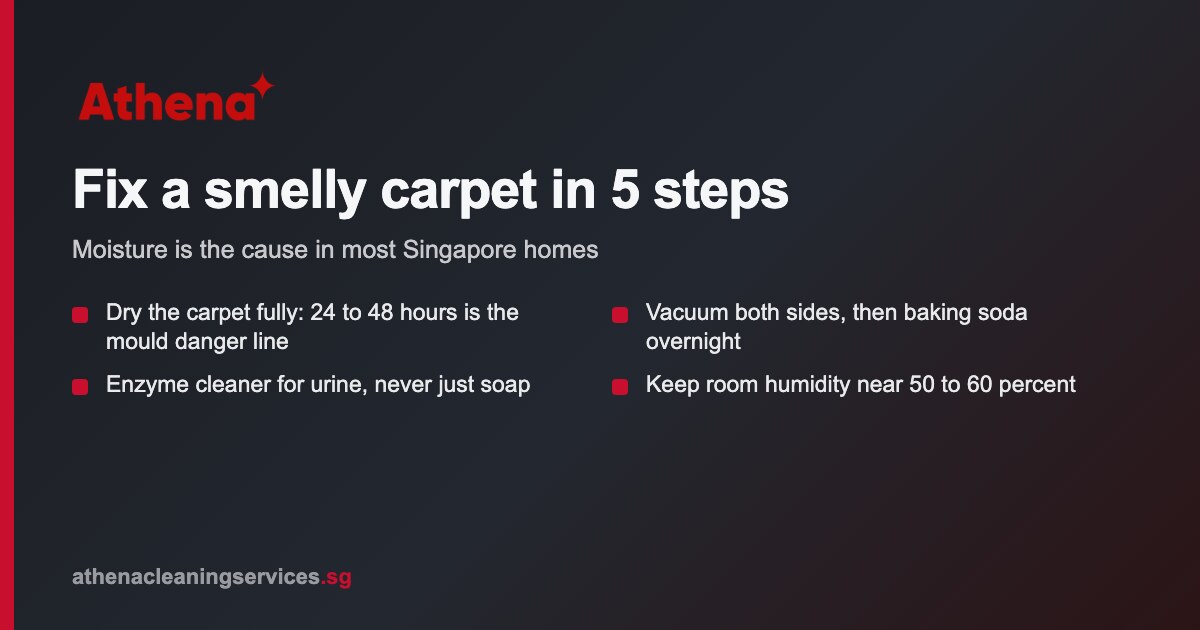
The most reliable smelly carpet fixes in Singapore start with moisture. Spray-on scent only covers it. Dry the carpet completely, vacuum both sides, leave baking soda on overnight, treat urine or food spills with an enzyme cleaner, and run a fan or dehumidifier until the room stays near 60 percent humidity. If the smell is back within a week, it is sitting in the backing or underlay, and hot-water extraction is the fix that reaches it.
This guide covers why carpets turn sour in HDB, BTO and condo homes, which home fixes are worth your time, what pet and mould smells need, and typical Singapore costs when you hand the job over.
Why carpets smell in Singapore homes
Singapore sits near the equator, and outdoor relative humidity usually runs between 70 and 90 percent for most of the year. A carpet is a thick sponge for that air. Wool, polyester and nylon pile all hold moisture, and the backing underneath holds even more. When the fibres stay slightly damp for days, bacteria and mould grow on whatever the carpet has collected: skin flakes, spilled drinks and a film of cooking oil.
The smell people describe is usually musty, sour or like wet dog. It gets worse on rainy days and in rooms with the aircon switched off, because the moisture trapped in the backing rises back into the pile. That is why a spray of air freshener works for an afternoon and then loses.
Where the moisture comes from
In our experience of Singapore homes, the same few causes come up again and again:
- Damp floors: rugs laid down straight after mopping, or placed near a bathroom door, service yard or balcony in an HDB or BTO flat.
- Closed rooms: bedrooms kept shut with the aircon off, especially in condos with sealed windows.
- Rain ingress: landed homes and lower floors where wind-blown rain reaches the floor near sliding doors.
- Pets and children: urine, milk and juice soaking past the surface.
- Post-renovation dust: fine cement and paint dust that holds water; our post renovation cleaning steps cover clearing it before it settles into new carpet.
Work out which of these applies before you clean, because treating the smell without removing the source means you will be repeating the job in a month.
Smelly carpet fixes you can do at home
Work through these in order. Most mild smells clear by the fourth step, and each one costs little. Typical shop prices in Singapore run from a few dollars for baking soda to roughly S$15 to S$40 for a bottle of enzyme cleaner.
1. dry the carpet properly first
Lift a loose rug and hang it over a railing or two chairs in a ventilated room, with a fan pointed at it for a full day. For wall-to-wall carpet, open the windows on a dry day and run a fan low across the floor. Never put a damp rug back down, because that traps the moisture against the floor and the smell returns within days.
2. vacuum slowly, both sides
Go over the pile in two directions, then flip a loose rug and vacuum the back. Grit and dust sitting at the base of the fibres feed odour, and a slow pass pulls out far more than a quick one.
3. baking soda overnight
Sprinkle a thin, even layer, leave it for 8 to 12 hours, then vacuum it up thoroughly. Baking soda absorbs odour rather than masking it, so it works best on mild, general mustiness.
4. blot, do not rub
For a fresh spill, blot with clean towels and then dab with a mix of one part white vinegar to three parts water. Test it on a hidden corner first, and keep it away from wool and silk unless the care label allows it. If you want more cleaning recipes for soft furnishings, our DIY upholstery cleaning recipes use the same safe ingredients.
5. fix the airflow
Open windows on dry days, run a small dehumidifier in the wet months (typically S$150 to S$350 to buy), and keep bedroom doors open while you are out. This step matters most, because the cleaning only lasts if the room stops holding damp air.
Getting pet urine and food smells out of carpet
Urine is the hardest carpet smell to remove because it does not stay on the surface. It travels down through the pile into the backing and, on wall-to-wall carpet, into the underlay. When it dries, the residue crystallises and releases an ammonia smell again whenever humidity rises, which in Singapore is most days.
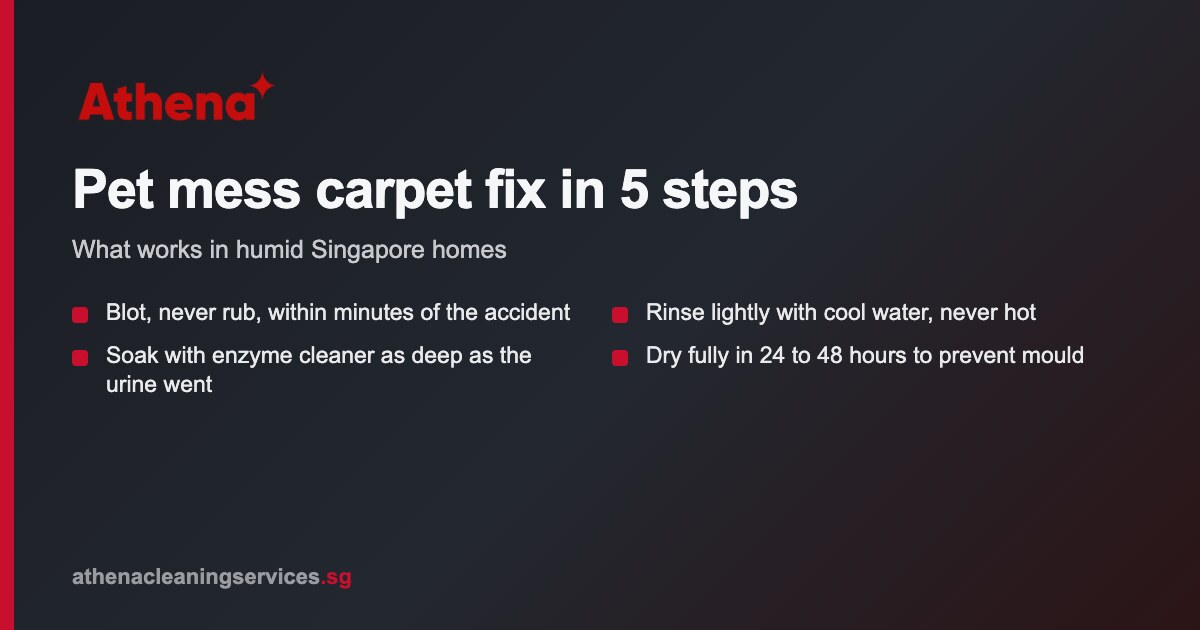
What to do in the first hour
Blot with paper towels, and press from the edges inward so the stain does not spread. Do not scrub. Then saturate the spot with an enzyme cleaner so it reaches the depth the urine reached, and leave it for the time on the label, usually 10 to 15 minutes, before blotting again. Enzymes break down the uric acid that soap and vinegar leave behind.
Old urine and food spills
Old spots are harder. A UV torch in a dark room will show dried urine as a pale glow, which tells you the real size of the problem. If the patch is larger than your palm, or the carpet is wall-to-wall, home treatment seldom reaches the underlay, and extraction is the realistic option.
Food and drink spills follow a similar pattern. Milk, soy sauce and curry sauce leave sugars and proteins that bacteria feed on, so a sour smell weeks later usually means a spill that was wiped on the surface but never fully rinsed out. Rinse with a small amount of cool water, blot, then dry with a fan so the area does not stay damp.
Damp and mould smells: more than an odour problem
A musty, earthy smell that returns after cleaning often points to mould. Check the underside of a loose rug, or lift a corner of the carpet near a wall or a bathroom. Grey, green or black spotting, or a damp feel on the floor underneath, means mould is growing and drying the carpet alone will not fix it.
The US EPA's mould cleanup guidance says wet materials should be dried within 24 to 48 hours to prevent growth, and that porous items such as carpet that stay wet or heavily mouldy may need to be thrown out. That matches what we see locally: a rug that sat wet through a weekend of rain is far more likely to be a replacement than a clean.
Why it matters for your household
Damp and mould can irritate airways, and the American Lung Association's indoor air guidance lists mould among the indoor triggers for people with asthma and allergies. If someone at home has a cough or blocked nose that eases when they leave the room, treat the carpet as a suspect. For general healthy-home advice from a Singapore source, HealthHub's healthy living resources are a sensible starting point.
The same damp logic applies to other soft furnishings. If your bedroom carpet smells, check the mattress too, and see our guide to allergen removal for mattresses in Singapore.
DIY or professional: what each option achieves
The table below compares the common options for a smelly carpet in a Singapore home. Prices are typical ranges in SGD for 2026, based on what local cleaners commonly charge, and your final quote depends on size, material and the severity of the smell.
The pattern is simple. Surface methods are cheap and fast, but they only treat the top layer. Once a smell is in the backing, you need water and suction that go right through the carpet, followed by quick drying. In a humid climate, the drying step decides whether the clean lasts.
Beware of any method that leaves the carpet wet. Over-wetting a carpet and then not extracting properly is how a mild smell becomes a mould problem, so ask any provider how they dry the carpet and how long it should take. A good answer is a few hours to a day with fans. If they say several days, keep looking.
When to call a professional and what it costs in Singapore
Call someone in when the smell returns within a week of home cleaning, when pet urine has soaked a large area, when you can see or smell mould, or when the carpet is wall-to-wall and fixed to the floor. At that point the money goes on removing the source, and a surface refresh will not do it.
Typical costs
As a typical range, professional cleaning of a loose rug in Singapore starts at roughly S$80 to S$200 depending on size and material, while wall-to-wall carpet is usually quoted by floor area, often from about S$0.40 to S$1.00 per square foot. Heavy urine treatment and anti-mould treatment usually cost extra. Always ask for a written quote on WhatsApp before booking, and check whether GST is included.
What to ask before you book
- Which method will be used, and is it suitable for wool, silk or viscose?
- How long will the carpet take to dry, and will fans or dehumidifiers be used?
- Does the quote cover urine treatment and deodorising?
- Is the price per room, per rug or per square foot?
Our guide to choosing a carpet cleaning service goes through the red flags in more detail, and what to expect from a quality carpet cleaning service explains how a proper visit runs. If you want the full picture of the process, see our page on professional carpet cleaning in Singapore. The Consumers Association of Singapore (CASE) is also worth checking if you want to understand your rights before paying a deposit.
How to stop the smell coming back
Once the carpet is clean and dry, the aim is to keep humidity low and catch spills early. Most repeat smells in Singapore homes trace back to the room itself.
- Vacuum weekly, and flip loose rugs monthly so the underside gets air.
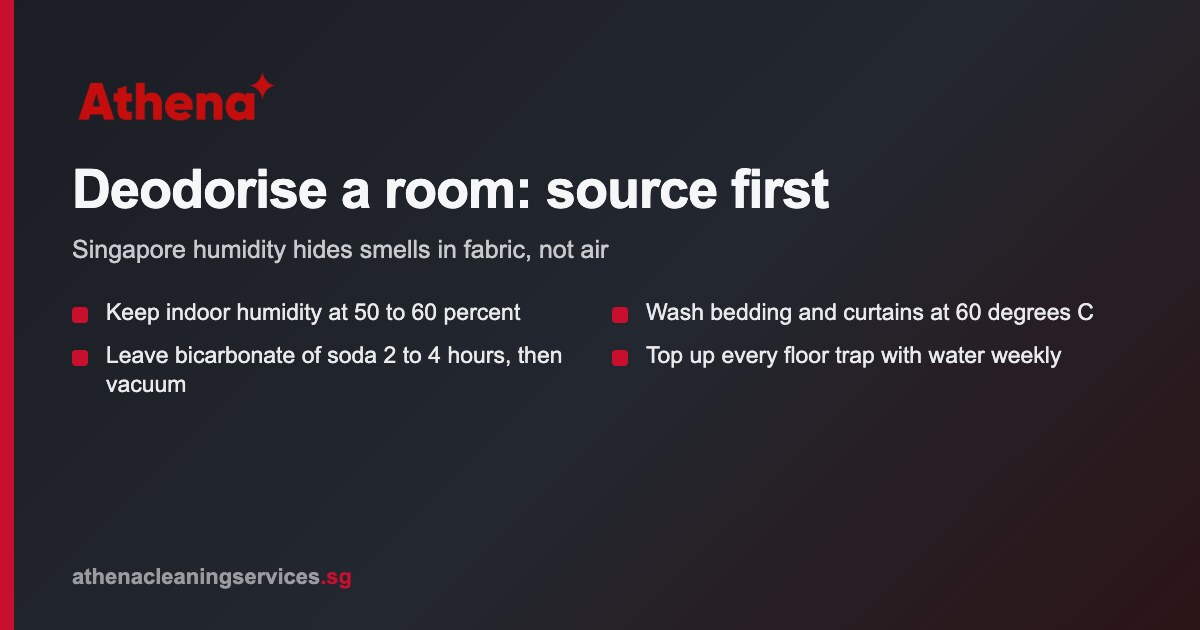
- Keep indoor humidity near 50 to 60 percent with a dehumidifier or regular aircon use; a cheap hygrometer from an electronics shop tells you where you stand.
- Use a breathable rug pad, not a solid plastic mat, so moisture does not sit between the rug and the floor.
- Treat spills the same day and dry the spot with a fan.
- Rotate and sun-dry loose rugs for an hour or two on a dry day. Keep wool and silk out of strong sun, which can fade the colours.
For a routine, most Singapore households do well with a professional clean every 6 to 12 months, and every 3 to 6 months where there are pets, young children or a damp unit. Our article on how often to schedule carpet cleaning helps you set a rhythm, and the benefits of regular professional carpet cleaning show why spacing the visits out is cheaper than waiting for a bad smell.
Comparison at a glance
| Option | Best for | Typical cost (SGD) | Time to work | Drying time |
|---|---|---|---|---|
| Fan drying and sun airing | Mild mustiness on loose rugs | Free | 1 day | Same day |
| Vacuum plus baking soda | General stale odour | Under S$10 | Overnight | None |
| Enzyme cleaner | Fresh pet urine and food spills | S$15 to S$40 per bottle | 15 minutes plus blotting | 2 to 6 hours with a fan |
| Dehumidifier in the room | Recurring damp smell | S$150 to S$350 to buy | A few days | Ongoing |
| Professional loose rug cleaning | Rugs that smell again within a week | S$80 to S$200 | 1 to 2 hours on site or at the facility | Several hours to a day |
| Hot-water extraction, wall-to-wall | Deep urine, backing and underlay odour | About S$0.40 to S$1.00 per sq ft | 2 to 4 hours for a room | 4 to 12 hours with fans |
Frequently asked questions
Why does my carpet smell worse when it rains in Singapore?
Rain pushes indoor humidity up, and a carpet's backing releases the moisture it has trapped. That lifts the smell of bacteria and mould from deep in the fibres. Running the aircon in dry mode or a dehumidifier for a few hours usually reduces it, but a smell that returns every rainy week means the source is still in the carpet.
Can baking soda and vinegar remove a smelly carpet smell completely?
They can clear mild, surface-level mustiness. Baking soda absorbs odour overnight, and diluted vinegar helps with fresh spills. They do not reach urine soaked into the backing or mould in the underlay, so a smell that comes back in days needs enzyme treatment or professional extraction.
How long should a carpet take to dry after cleaning in an HDB flat?
With a fan and open windows, a properly extracted carpet should be dry in roughly 4 to 12 hours. In a closed bedroom on a wet day it can take much longer, and anything still damp after 24 to 48 hours is at risk of mould, as the US EPA's mould guidance notes. Tell your cleaner about poor airflow so they bring extra fans.
How much does it cost to remove a bad smell from a carpet in Singapore?
As a typical range, a loose rug costs about S$80 to S$200 to clean professionally, and wall-to-wall carpet is often quoted from roughly S$0.40 to S$1.00 per square foot. Urine or anti-mould treatment usually adds to the price. Ask for a written quote and confirm whether GST is included before you book.
Is a smelly carpet bad for my health?
A carpet that smells of damp or mould can irritate the airways, especially for people with asthma, allergies or young children, as indoor air guidance from the American Lung Association explains. If anyone at home has symptoms that ease when they leave the room, get the carpet cleaned and dried, and see a doctor if the symptoms continue.
Should I replace a smelly carpet instead of cleaning it?
Replace it when mould has spread across the backing, the carpet has stayed wet for more than a couple of days, or a professional clean has not removed a deep urine smell. For most smelly carpets in Singapore homes, cleaning and proper drying works, and it costs far less than a new carpet.
Sources
- mould cleanup guidance
- American Lung Association's indoor air guidance
- HealthHub's healthy living resources
- CASE
Related Athena cleaning services in Singapore
- 5 essential steps for effective post renovation cleaning singapore
- 5 must try diy upholstery cleaning recipes all singapore homes must have
- 10 effective methods for allergen removal mattress cleaning singapore
- guide to choosing carpet cleaning service singapore
- what to expect from a quality carpet cleaning singapore service
Related articles