
Remove Scuff Marks from Vinyl Flooring Without Damage
In this article
Scuff marks usually need less force, not a stronger cleaner. To remove scuff marks from vinyl flooring, start by rubbing gently with a dry cloth. If the mark remains, try a damp microfiber cloth with plain water. Use light pressure and avoid vigorous scrubbing, which can affect the surface.
It’s tempting to reach for an abrasive sponge or strong cleaner when a dark mark stands out, but starting gently helps protect the floor’s finish. This guide explains which simple methods to try, how to use them carefully, and when a mark may be damage rather than a scuff. Before using products such as a cleaning eraser, follow the flooring manufacturer’s care instructions.
Key Takeaways
- Start with a dry cloth or microfiber cloth, using gentle pressure to lift the mark without rough scrubbing.
- If the scuff remains, try a damp cloth with plain water and rub the area carefully.
- A clean tennis ball or moistened eraser may help with stubborn marks, but use caution with products that could affect the floor’s finish.
- For newly installed flooring, follow the manufacturer’s cleaning guidance before trying chemicals or abrasive tools.
- If a mark doesn’t lift with gentle cleaning, it may be damage to the finish rather than a surface scuff.
How to remove scuff marks from vinyl flooring
To remove scuff marks from vinyl flooring without damaging it, begin with the mildest method and increase effort gradually. A mark from a shoe sole or furniture foot often sits on the surface, so gentle rubbing may lift it. Rough scrubbing can dull or harm the finish. Use a clean cloth and work on one mark at a time.
Work from dry rubbing to a damp cloth
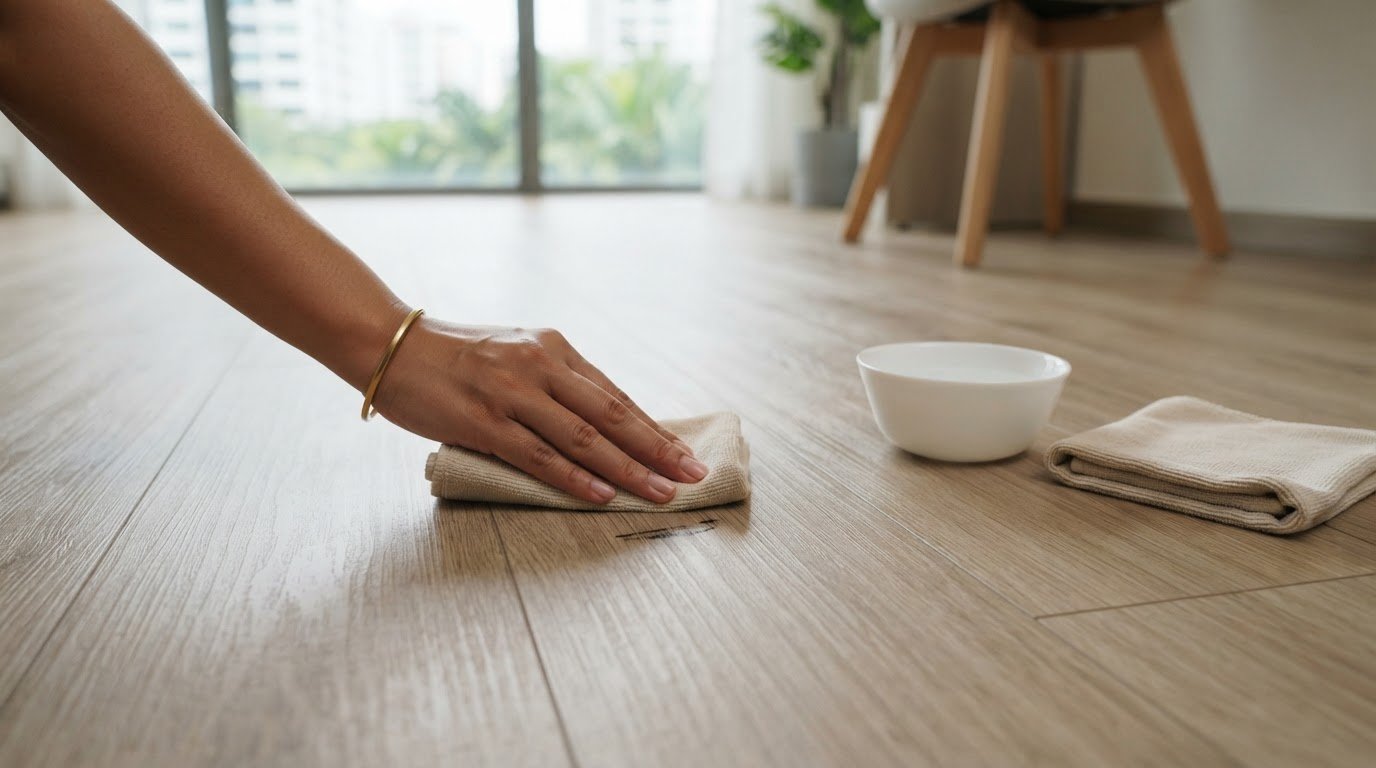
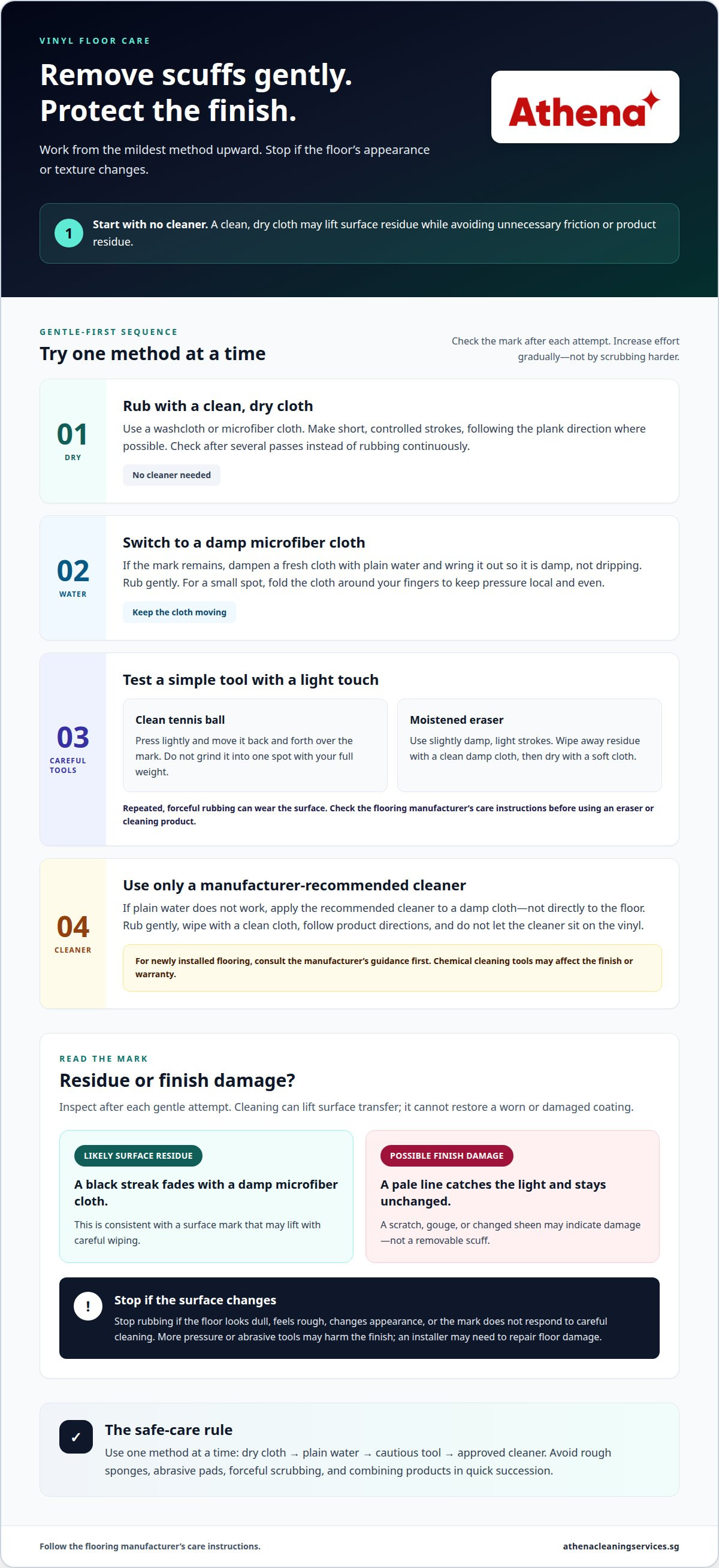
Start with a clean, dry washcloth or microfiber cloth. Rub the mark with short, controlled strokes, following the direction of the plank where possible. Check the spot after several passes instead of rubbing continuously. This step requires no cleaner and helps show whether the mark is surface residue.
If the mark remains, dampen a fresh cloth with plain water and wring it out so it is damp, not dripping. Gently rub the scuff. A microfiber mop cloth can also work on black marks. For a small spot, fold the cloth around your fingers to keep pressure local and even.
Increase pressure only if gentle rubbing leaves the mark unchanged. Keep the cloth moving, and stop if the surface looks dull, feels rough, or changes appearance. Avoid forceful scrubbing with a rough sponge or abrasive pad. On vinyl planks, concentrated friction can affect the printed pattern or protective finish.
Try simple tools carefully
A clean tennis ball is another gentle option. Press it lightly against the mark and move it back and forth, then inspect the floor. This can help with a dark shoe mark across a larger area. Avoid grinding the ball into one spot with your full weight.
A moistened eraser may help with a stubborn mark. Dampen it slightly and test it with light strokes over the scuff. Wipe away residue with a clean, damp cloth, then dry the area with a soft cloth. Use the eraser gently: repeated, forceful rubbing can wear the surface instead of lifting the mark.
Use one method at a time. Try a dry microfiber cloth first, for example, then switch to plain water if the mark remains. Combining tools and cleaners in quick succession makes it harder to tell what is working and can expose the floor to unnecessary friction or product residue.
Use cleaners with care
If plain water does not lift the mark, use only a cleaner recommended by the flooring manufacturer. Apply it to a damp cloth rather than pouring it directly onto the floor. Gently rub the scuff, then wipe the spot with a clean cloth. Follow the product instructions and do not let the cleaner sit on the vinyl.
Take extra care with products such as a Magic Eraser or other chemical cleaning tools, as they can affect the floor’s finish or warranty. For newly installed flooring, consult the manufacturer’s cleaning guidance before trying a chemical product. This matters especially if the installation warranty may cover the floor.
Know when a mark needs more than cleaning
Inspect the spot after each gentle attempt. A scuff usually looks like a surface transfer mark, while a scratch, gouge, or patch of changed sheen may indicate damage to the finish. If careful wiping does not change the mark, stop rather than applying more pressure or using more abrasive tools.
For example, a black streak that fades with a damp microfiber cloth is likely surface residue. A pale line that catches the light and remains unchanged may indicate a finish problem. An installer may need to repair floor damage; cleaning cannot restore a worn or damaged coating. Keep any care instructions and warranty information for reference.
If a gentle pass does not remove the mark, you can increase pressure gradually, but avoid scrubbing the vinyl roughly. Before using chemicals or a product such as a Magic Eraser, consult the flooring manufacturer, as these products may affect the warranty. Do not try stronger products simply because the mark persists. A cautious approach helps protect the finish.
If the spot remains after careful cleaning, consider whether it is really a scuff. Some marks that look like scuffs are damage to the floor finish, which cleaning may not remove. The installer may need to repair the floor. Stop rubbing if the surface changes, rather than applying more pressure or chemicals. Likewise, if wear extends beyond flooring to scuffed trim and walls, property improvement specialists like Colorado Springs Painters can help restore those interior surfaces.
Athena Team Cleaning: Office Cleaning
Athena Team Cleaning provides Office Cleaning for businesses that need help maintaining orderly, well-kept workspaces beyond an isolated floor mark. Regular cleaning addresses everyday dirt across office areas, while Building Maintenance supports broader upkeep. These services are a practical option when floor care is part of a wider workplace cleaning or maintenance task.
For vinyl flooring, follow the manufacturer’s care instructions and do not treat a damaged finish as a removable scuff. Athena Team Cleaning also provides Carpet and Rug Cleaning and Sanitization Services for other workplace cleaning needs. Its Parquet Floor Polishing and Marble Floor Polishing services are for those specific flooring materials, not vinyl.
For office cleaning or building maintenance in Singapore, contact Athena Team Cleaning or visit athenacleaningservices.sg.
Keep Your Space Ready for What Comes Next
A well-kept floor contributes to a room’s overall impression, but lasting care also depends on the space around it. If maintaining a presentable workplace is becoming difficult, consider support that fits your premises’ broader upkeep needs. Athena Team Cleaning provides Office Cleaning, Building Maintenance, and Carpet and Rug Cleaning for residential and commercial properties in Singapore.
For future vinyl marks, keep the floor’s care instructions accessible and try a gentle approach before reaching for stronger products. This simple habit helps you make an informed choice about how to remove scuff marks from vinyl flooring while protecting its finish. When the task goes beyond a single mark, professional cleaning or maintenance can help address the wider environment.
Explore the available services or contact Athena Team Cleaning to discuss your cleaning needs. A considered next step can make caring for your space feel more manageable.
Related articles